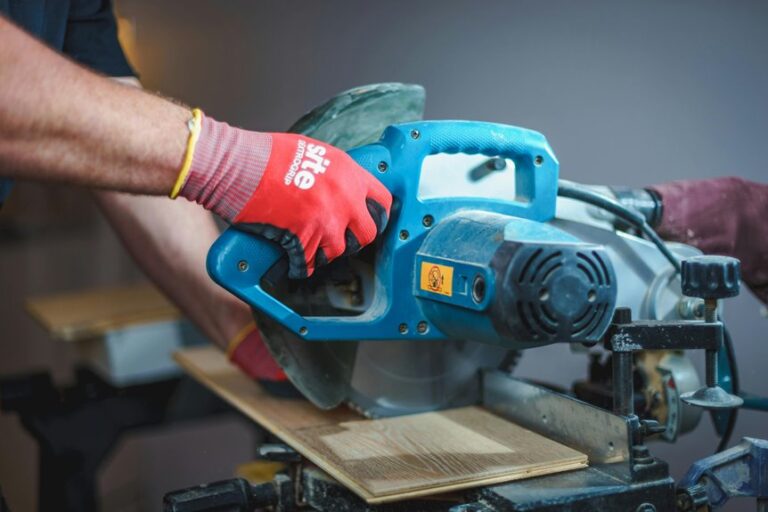
Cutting steel angle, conduit, or tubing with an abrasive wheel means sparks, heat, and edges you have to grind down afterward. Dry-cut saws change that equation, leaving workable finishes straight off the blade. This list covers five machines that handle metal well, from a multi-material sliding saw to a cordless circular option for jobsite runs. Whether you’re fabricating in a garage shop or trimming EMT on site, one of these should fit your bench and your budget.
The Main Contenders

Evolution Power Tools R185SMS+ Sliding Miter Saw, 7-1/4″
Evolution S355CPSL 14 Inch Metal Cutting Chop Saw

DOVAMAN 10-Inch Sliding Miter Saw, Multi-Material, 2-Speed

DEWALT Chop Saw, Quick-Change, 14-Inch (D28715)

M18 Fuel Metal Cutting Circular Saw (Bare Tool)
More On The Choices That Made The List
Most saws ask you to commit to one material. The R185SMS+ doesn’t, since the included blade cuts wood, plastic, and metal without swapping anything out. That makes it a sensible single machine for a garage workshop where today’s project is trim and tomorrow’s is steel tubing.
The 210 mm slide extends your crosscut reach, and the head tilts to a 45-degree bevel while the base swings to 50 degrees of miter. For crown work or compound angles on mixed materials, that range covers most home-shop needs.
Practical Advantages
- One blade handles wood, plastic, and metal, so there’s no mid-project tool change
- 45-degree bevel plus 50-degree miter opens up compound-angle work
- The 210 mm slide gives longer crosscut reach than a fixed-head chop design
- Blade ships included, so it’s ready to cut out of the box
Things To Consider
- The 7-1/4-inch blade caps your material width compared to full-size 10- or 14-inch machines
- Owners commonly note that metal chips collect around the base, so a quick brush-down after steel sessions keeps things tidy
Who It Suits Best
DIYers and hobbyists who want one sliding saw for every material in a small workshop.
Where A Sibling Pick Shines
If your work is almost entirely steel, the Evolution S355CPSL’s dedicated 14-inch metal platform suits serious fabrication better.
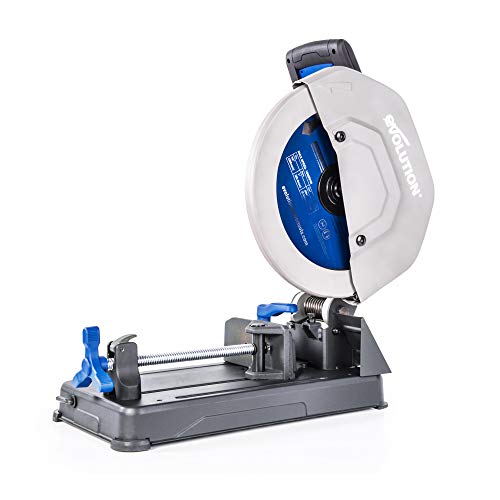
This is the saw built around one job done right. A 15-amp motor drives a tungsten carbide-tipped blade through mild steel using dry-cut technology, meaning no coolant, minimal heat, and far fewer sparks than an abrasive wheel. The finish comes off cool enough to handle and smooth enough to weld without extra prep, which matters more than most spec sheets admit.
Where the R185SMS+ spreads its talent across materials, the S355CPSL concentrates on steel. A pressed steel base keeps weight manageable for moving between bench and jobsite, and an integrated chip deflector throws debris away from you instead of into your lap.
The Case For It
- Dry-cut carbide blade leaves burr-free edges that are instantly workable
- 15-amp high-torque motor handles repeated steel cuts without bogging
- Chip deflector directs swarf away from the operator for easier cleanup
- Pressed steel base balances durability against portability
- 45-degree miter adds angled-cut flexibility to a dedicated metal platform
Small Caveats
- It’s metal-only by design, so woodworkers will still need a second saw
- Carbide blades cost more upfront than abrasive discs, though they last considerably longer per tooth count
At A Glance
Right Fit For
Fabricators and metal-focused tradespeople who cut mild steel daily and value edge quality over versatility.
Reach For A Different Pick When
Generalists bouncing between lumber and steel will get more mileage from the DOVAMAN 10-inch sliding saw below.
A dual-speed motor is the headline here. The lower setting suits soft metals and PVC, while the higher setting handles wood cleanly, and three TCT blades ship in the box so you can match tooth count to material. TCT stands for tungsten carbide-tipped, the same hard-edge construction the Evolution saws use.
Capacity is where this DOVAMAN pulls ahead of the Evolution R185SMS+. A 13-inch sliding rail paired with extendable side tables accepts stock up to 4 x 13 inches, which translates to wide boards and larger profiles without flipping them mid-cut. In our view, that extra reach justifies itself quickly on deck and shelving builds.
Everyday Advantages
- Two-speed control (3200 and 5000 RPM) matches motor pace to material hardness
- Three included TCT blades cover wood, PVC, and soft metals from day one
- 13-inch slide plus extendable tables handles stock up to 4 x 13 inches
- Sliding design gives depth for wider crosscuts than fixed chop heads
Worth Noting
- Soft-metal capability isn’t the same as heavy steel duty; frequent thick steel calls for a dedicated metal saw
- With multiple blades in rotation, owners commonly recommend labeling each one so the right tooth count goes back on
Made For
Intermediate DIYers and remodelers tackling mixed-material projects with larger stock dimensions.
Skip It When
Production steel cutting is the priority; the DEWALT D28715 further down this list is engineered for exactly that workload.
The D28715 is the abrasive-wheel workhorse of this list, and it wears that role honestly. Its 15-amp motor carries a 5.5 HP maximum rating, which gives it overload headroom when a thick chunk of angle iron loads the wheel down. On framing crews and steel erection sites, this pattern of saw has been the default for years, and the reputation holds.
Two details separate it from generic abrasive chopsaws. The Quik-change keyless system lets you swap wheels without hunting for a wrench, and the adjustable Quick-Fence pivots to 45 degrees for fast angled setups. Compared with the Evolution S355CPSL’s clean dry cuts, expect sparks and a hot edge here; that’s the abrasive trade-off.
Notable Gains
- 15-amp motor with 5.5 HP maximum output resists stalling under load
- Keyless Quik-change blade system saves minutes on every wheel swap
- Adjustable 45-degree fence speeds up repetitive angled cuts
- Long-running design with a proven track record on professional sites
Points To Note
- Abrasive wheels throw sparks and leave hot edges, so PPE and clear workspace matter
- Consumable discs add ongoing cost that carbide-blade saws avoid over time
- This listing covers an earlier model generation, worth confirming before ordering replacement parts
Feature Snapshot
Whose Shelf It Belongs On
Contractors and ironworkers running high-volume cuts where toughness and uptime outweigh edge finish.
Another Choice May Suit
Cleaner, spark-free results point toward the Evolution S355CPSL instead, especially indoors.
Not every metal cut happens at a bench. Electricians trimming EMT conduit on a ladder bay or mechanical contractors working overhead benefit from a cordless circular format, and this Milwaukee delivers it. The brushless motor spins at 3900 RPM, and because brushless designs have no wearable brushes inside, the motor itself tends to outlast brushed equivalents.
Note that this is a bare tool, so batteries and charger come separately; if you’re already in the M18 Redlithium ecosystem, that’s a non-issue. Milwaukee rates those batteries for up to 370 cuts in 3/4-inch EMT per charge, which realistically covers a full day of typical electrical rough-in work.
Well-Handled Touches
- Brushless 3900 RPM motor cuts metal fast with fewer wear parts inside
- Up to 370 cuts in 3/4-inch EMT per battery charge supports all-day field use
- Integrated hang hook latches onto ladders and materials, reducing drop damage
- Cordless freedom reaches spots a chop saw physically can’t
Trade Offs To Consider
- Batteries and charger are sold separately, adding cost for new-to-brand users
- Circular-saw freehand cutting trades some accuracy versus a fenced chop saw
Core Details
Built With In Mind
Field electricians and mechanical trades already invested in M18 batteries who need metal cutting anywhere.
Consider Something Else When
Repeatable square cuts on a bench favor the DEWALT D28715, whose fenced setup keeps angles consistent all day.
What Matters Most Before Choosing Metal Chop Saws
Cutting Method First
Dry-cut carbide saws run cooler, spark less, and leave edges ready to weld or paint. Abrasive models cost less per machine but burn through consumable discs and demand fire-safe surroundings. Match the method to where you’ll actually work: indoor garages strongly favor dry cut.
Capacity And Material Range
Blade size sets your maximum cut width, so measure the thickest stock you regularly handle before choosing between a 7-1/4-inch slider and a 14-inch chop platform. Multi-material machines suit mixed workshops; dedicated metal saws pay off once steel dominates your workload.
Motor And Speed Control
A 15-amp motor is the common baseline for serious metal work, delivering torque that keeps blades from stalling under load. Dual-speed designs add flexibility across wood, PVC, and soft metals, letting you slow the blade for harder materials rather than forcing one pace onto everything.
Key Considerations Across These Picks
Traps First Timers Fall Into
The most common mistake is buying a saw sized for yesterday’s project. Measure your largest regular workpiece first, then pick capacity above it. Shoppers also overlook consumables: abrasive discs recur constantly, while carbide blades are an occasional purchase. Budget for both paths honestly before committing.
When Paying More Pays Off
Higher-tier machines earn their price through motor headroom, blade quality, and features like keyless changes that save real minutes daily. Professionals cutting steel hourly recover that premium quickly. Weekend DIYers cutting twice a month rarely need the top shelf, and a solid mid-range slider serves them fine for years.
Frequently Asked Questions
Can a metal chop saw also cut wood?
Some multi-material models can, using the correct blade for each material. Dedicated metal saws should stay on metal to protect their blades and motors.
Why do dry-cut saws produce fewer sparks?
Carbide teeth shear metal like a milling cutter instead of grinding it away. Less friction means less heat, fewer sparks, and a cooler finished edge.
How long do carbide-tipped metal blades last?
Far longer than abrasive discs, often months of regular use depending on material thickness and feed discipline. Abrasive wheels may need replacing within a single large job.
Do I need coolant with a dry-cut chop saw?
No, that’s the core advantage of the category. The blade and cut stay cool enough to handle immediately after the pass.
Is a bare-tool cordless saw a good starting point?
Only if you already own compatible batteries and a charger. Starting fresh means buying those separately, which narrows the savings.
Closing Remarks
Every saw here earns its spot for a different kind of user. Match the cutting method, capacity, and power source to how often you actually cut metal, and the right choice becomes obvious. Take your measurements, check the current product pages, and pick the machine that fits your bench.