


Handheld drills get you close, but close isn’t good enough for clean holes in steel. A dedicated press holds your bit square, controls feed pressure, and keeps both hands free for workholding. This list covers two benchtop machines, a heavy vise that makes any press safer, and two magnetic units built for structural steel work. Whether you’re fitting out a small garage or drilling I-beams on a jobsite, there’s a fit here.
A Snapshot Of The Selections
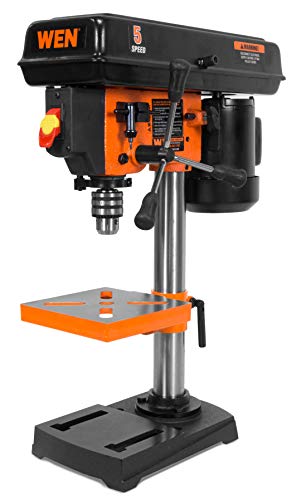
WEN 4206T 8-Inch 5-Speed Benchtop Drill Press

Wilton Low-Profile Drill Press Vise (LP6)

SKIL DP9505-00 10-Inch Benchtop Drill Press with Laser

VEVOR 1450W Mag Drill Press, 2-Inch Core

VEVOR Magnetic Drill Press 1400W, Weldon Shank
The Details Behind The Selections
Bench space is the currency of a small shop, and this machine spends it wisely. The cast iron frame gives the 8-inch throat real mass, which matters when a bit grabs in steel and tries to walk the whole unit across the bench.
Five belt-driven speeds cover slow RPM for metal and faster settings for wood or plastic, and the 2-inch spindle travel handles most hobby-depth holes in one pass. Compared with the SKIL later on this list, you trade laser guidance for a lower profile and simpler setup.
Real Benefits
- Cast iron construction damps vibration, so hole edges stay cleaner in mild steel.
- Five speeds let you match RPM to material instead of burning bits.
- Compact base fits a corner of a shared garage bench without hogging room.
- Ball-bearing supported motor runs smoothly through long drilling sessions.
Points To Note
- The 8-inch swing limits how far from the column you can drill on wide panels.
- Belt changes mean reaching under the head cover between materials, which slows mixed-material days.
At A Glance
Who It Suits Best
Hobbyists and home machinists who want accurate holes on a modest budget and a bench that still has room for other tools.
A Better Fit Elsewhere
Fabricators needing to bore thick structural sections should step up to the VEVOR 1450W Mag Drill Press instead.
A drill press is only as safe as its workholding, and this Wilton vise is the piece that turns any of the presses above into a controlled cutting station. The low-profile body leaves extra clearance under the chuck, which matters most on machines with shorter quill travel like the WEN 4206T.
The 6-inch jaw width and opening swallow bar stock and small plates, while hardened V-grooved jaws clamp round rod both upright and flat. Fine-grain cast iron castings give it the heft to stay planted on the table during tapping and reaming work.
What It Does Well
- V-grooved hardened jaws hold round stock securely in two orientations.
- Low silhouette preserves working room under the spindle on compact machines.
- Cast iron body resists flex, keeping clamped parts from shifting mid-cut.
- Handles drilling, tapping, and reaming setups without swapping accessories.
Things To Consider
- Jaw depth tops out at 2 inches, so tall workpieces may need riser blocks underneath.
- Owners commonly report the raw cast finish benefits from a light oil wipe-down to prevent surface rust in humid garages.
Right Fit For
Anyone running a benchtop press who regularly drills round bar, tube, or plate stock and wants parts held square every time.
Swap It Out When
Shoppers focused purely on the machine itself should look at the SKIL DP9505-00, which bundles precision features into a complete press package.
First-time press owners usually miss one thing: knowing exactly where the bit will land before it touches the work. The built-in Class II laser projects that point onto your layout line, and an integrated work light keeps pencil marks visible under the chuck.
The 6.2-amp induction motor drives five speeds spanning roughly 610 to 2,800 RPM, a wider spread than the WEN’s range, and adjustable depth stop plus table controls make repeatable batches straightforward. For anyone stepping up from a handheld drill, those guides shorten the learning curve considerably.
Standout Benefits
- Laser alignment takes the guesswork out of hitting scribed lines.
- Work light illuminates dark stock right where the bit meets the surface.
- Five-speed system from 610 to 2,800 RPM suits everything from steel to softwood.
- Adjustable depth stop produces consistent hole depths across repeated parts.
Potential Drawbacks
- The laser needs occasional recalibration to stay true, a minor chore some owners note over time.
- Extra electronics add setup steps compared with the plainer WEN 4206T.
Feature Rundown
Who Should Grab It
New woodworkers and DIYers upgrading from handheld tools who value visual guides over raw capacity.
Another Choice May Suit
Tradespeople boring structural steel on-site will find far more capability in either VEVOR mag drill below.
Mag drills stick to ferrous steel with an electromagnet, turning a vertical beam face into a stable drilling platform. This unit’s high-purity iron core pulls down with up to 2,922 lbf of holding force, enough to keep the motor planted overhead or sideways on I-beam flanges.
The 1450-watt copper-wound motor spins annular cutters up to 2 inches in diameter and depth at variable speeds topping out around 750 RPM. Six cutters ship in the box, so fabrication work can start the day it arrives, unlike the benchtop machines earlier in this list.
Useful Touches
- Nearly 3,000 lbf of magnetic hold supports confident overhead and side drilling.
- Variable speed lets you dial in cutter RPM for different steel thicknesses.
- Two-inch coring capacity in both diameter and depth covers most structural holes.
- Six included annular cutters remove the need for a separate tooling order.
- Copper motor windings run cooler during long fabrication sessions.
Less Ideal Details
- It only grips ferrous surfaces, so stainless and aluminum jobs need other fixturing.
- Slug removal and cutter lubrication are part of every session; skipping coolant shortens cutter life noticeably.
- The weight and bulk demand two-handed transport between positions on site.
The Numbers That Matter
Made For
Steel fabricators and erection crews who need big, clean holes in beams and plate on active job sites.
Where A Sibling Pick Shines
Maintenance techs doing smaller twist-drill work on equipment frames may prefer the lighter VEVOR 1400W model reviewed next.
Where the previous VEVOR leans hard into coring muscle, this sibling spreads its talents wider. Its 1400-watt motor accepts both annular cutters up to 2 inches and twist drills from about 3 mm to 16 mm via a Weldon shank mount, the industry-standard flat-sided arbor that resists spin-out under load.
Adjustable speed reaches up to 800 RPM, giving finer control on small-diameter work than the 750-RPM ceiling of pick four. The thick, high-purity iron base generates up to 2,810 lbf of pull, marginally less but still firmly planted on painted-clean structural steel.
Strengths Worth Knowing
- Dual capability covers both large coring and everyday twist-drill tasks.
- Weldon shank interface accepts widely available industrial cutter arbors.
- Roughly 12,500 N of magnetic grip holds steady through demanding cuts.
- Top-end 800 RPM suits smaller bits that prefer higher surface speeds.
Softer Spots
- No cutters are bundled, so budget separately for tooling before first use.
- Like any mag drill, the base needs bare, clean steel contact; rust or paint layers weaken holding force.
The Right Fit
Maintenance technicians and installers who bounce between small anchor holes and occasional large bores on structural steel.
Look Elsewhere When
Crews wanting ready-to-run coring out of the box will get more immediate value from the VEVOR 1450W kit above.
What Matters Most Before Choosing Metal Drill Presses
Match The Machine To Your Material
A 2.3-amp benchtop press handles mild steel brackets and aluminum happily, but thick plate wants slower RPM and more torque than light motors deliver. Annular cutters, which cut a ring rather than the whole hole, remove metal far faster than twist bits once diameters pass about half an inch. Size your motor and speed range to the heaviest job you expect monthly, not the rare one.
Workholding Decides Your Results
Even a rigid press produces crooked holes when the part moves. A cast iron vise with hardened jaws, like the Wilton LP6 here, keeps round stock from spinning and flat stock from lifting. Budget for it alongside the machine; many first-time owners treat it as an afterthought and regret the wobble.
Benchtop Versus Magnetic
Benchtop presses suit fixed shops where parts come to the tool. Magnetic drills flip that equation, clamping directly to beams, frames, and plate wherever the work sits. They require clean ferrous contact surfaces and careful cord management, so they reward tradespeople more than hobbyists.
Speed Range And Depth Control
Multiple speeds matter because each material has an ideal cutting rate: slow for steel, faster for wood and plastic. An adjustable depth stop turns one-off accuracy into repeatable batch work, which saves real time on multi-hole projects.
Key Considerations Across These Picks
Traps First Timers Fall Into
The commonest error is buying on swing alone. Throat depth tells you reach, not power, and an underpowered motor stalls in steel no matter its rating. Second trap: forgetting workholding entirely, then chasing parts across the table. Third, mag drill owners often skip surface prep; even a thin paint film cuts magnetic hold sharply.
Where The Extra Money Goes
Higher-tier machines buy copper windings, heavier castings, and wider speed ranges. On mag drills specifically, stronger magnets and bundled tooling justify the jump for production users. Weekend DIYers rarely recover that premium, so spend up only when output volume demands it.
Frequently Asked Questions
Can a benchtop drill press handle steel?
Yes, within reason. Light-duty machines drill mild steel cleanly at low RPM with sharp bits and cutting oil, though very thick sections call for a mag drill.
What does an annular cutter do differently?
It removes a ring of metal, leaving a slug, instead of grinding out the entire hole. That means less motor load and faster, cleaner large bores.
Why does my mag drill lose grip?
Magnetic force requires direct contact with bare ferrous steel. Paint, scale, oil, or rust between the base and the work surface dramatically weakens holding power.
How important is a vise on a drill press?
Very. A vise keeps hands away from the rotating chuck and prevents part spin-out, which is the leading cause of ruined workpieces and bent bits.
Do I need variable speed?
For mixed materials, yes. Fixed single-speed presses force compromises, while adjustable ranges let you match RPM to each bit diameter and material for longer tool life.
Bottom Line
Pick by workload, not by spec sheet envy. The WEN 4206T covers hobby benches, the SKIL adds guidance for newcomers, and the Wilton LP6 makes any of them safer. Fabrication crews get their money’s worth from either VEVOR mag drill, choosing based on whether bundled cutters or twist-drill flexibility matters more. Match the tool to the steel in front of you and it’ll serve for years.




