


Cutting a clean hole through steel ductwork, an electrical box knockout, or a stainless panel is one of those jobs where the wrong tool turns ten minutes into an hour of swearing and ruined material. A good metal hole cutter bites fast, ejects its plug without a fight, and stays sharp across repeated jobs. That matters whether you’re an electrician running conduit all week or a DIYer fitting a vent through sheet metal once a year.
Below are five options that cover the realistic range: a trusted bi-metal workhorse, an adjustable cutter that replaces a whole saw set, a quick-change carbide specialist, and two full carbide kits for hard metals. Each earns its place for a different shop.
The Main Contenders
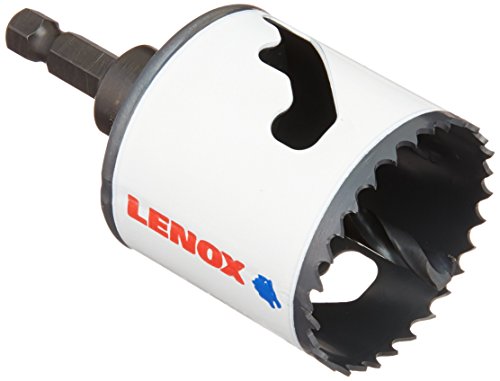
LENOX Speed Slot Hole Saw with Arbor, 2-Inch
Klein Tools 89552 Adjustable Hole Cutter, 2 to 12 Inch

Greenlee 645-7/8 Quick-Change Carbide-Tipped Hole Cutter
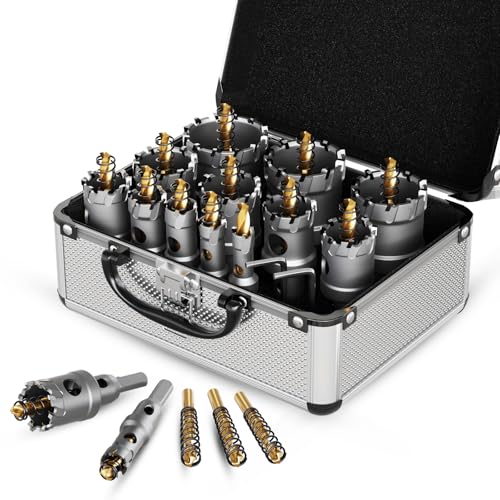
GSTK Heavy Duty TCT Carbide Hole Saw Kit, 14 Pcs

GSTK Heavy Duty Carbide TCT Hole Saw Kit, 10Pcs
The Picks, Examined More Closely
This 2-inch bi-metal hole saw arrives with the arbor already included, so it mounts straight into a standard drill chuck with no extra purchases. Lenox thickened the cylinder walls and reshaped the teeth compared with earlier generations of its own saws, which shows up in fewer snapped teeth when you’re chewing through mild steel or thin stainless.
The detail trades love most is the Speed Slot, a staircase-shaped cutout in the side wall. Once the hole is through, you lever the trapped metal slug sideways and it pops free instead of needing a screwdriver pry session. Electricians punching repeated outlet and junction-box openings will appreciate that time saving most.
Noteworthy Benefits
- Thicker sidewalls resist distortion and reduce tooth loss over a long service life
- Larger, sharper tooth geometry penetrates sheet metal faster than older designs
- Speed Slot design ejects plugs by hand, no prying tools needed between cuts
- Arbor ships in the box, so the saw is drill-ready out of the package
Things To Weigh
- A single fixed diameter means buying additional saws as your project list grows
- Bi-metal teeth handle mild steel well but wear faster on repeated stainless runs, so keep cutting oil handy
Who It Suits Best
Anyone who cuts the same common size repeatedly, like electricians and HVAC techs doing routine 2-inch penetrations.
Where Another Pick Suits Better
Shoppers who need many diameters in hard metals should look at the GSTK 14-piece kit instead.
Instead of a fixed cup, this Klein uses sliding cutters mounted on a graduated bar, letting you dial any diameter from 2 up to 12 inches. Measurement scales molded into the body in both inches and centimeters make sizing adjustments quick and less error-prone mid-job.
It’s rated for up to 24-gauge steel and 26-gauge stainless, which covers ductwork, enclosures, and appliance panels rather than thick plate. Quality bearings support the rotating head for smoother spinning and longer tool life, and a replacement bit plus L-style hex key come along for tightening and swaps. One honest caveat: at larger diameters you’ll want a steady hand and slow drill speed, since wobble shows up quickly in thin sheet metal.
Strengths Worth Knowing
- One tool covers a 2-to-12-inch range that would otherwise cost several separate saws
- Dual inch/cm scales let you set diameter precisely without a tape measure
- Bearings in the head keep rotation smooth through long cutting sessions
- Spare pilot bit and hex key included, so minor maintenance doesn’t stall the job
Small Caveats
- Thin-gauge limit means this isn’t the choice for structural steel or thick plate
- Large holes demand careful setup; owners commonly report better results clamping the workpiece firmly first
Feature Snapshot
Made For
HVAC and sheet-metal workers who regularly face odd or oversized hole diameters on thin stock.
Consider Something Else When
For small, precise conduit knockouts in stainless, the Greenlee 645-7/8 is the more focused tool.
Tungsten carbide tips, a material far harder than the bi-metal edges on the Lenox above, make this 7/8-inch cutter the specialist here. Its stated purpose is burr-free holes sized for half-inch conduit, and it’s built to chew through stainless, mild steel, aluminum, brass, fiberglass, and plastic without cutting oil.
The quick-change connection is the practical win: push, twist, and the cutter releases from its arbor, which matters when a panel job mixes materials and sizes. In our view this is the pick for trade electricians who hit stainless enclosures weekly and can’t afford ragged edges that need deburring afterward.
What Pays Off
- Carbide teeth hold their edge in stainless where bi-metal saws dull quickly
- No lubrication required, cutting prep time down to nearly zero
- Push-and-turn mounting makes swapping cutters on a shared arbor genuinely fast
- Burr-free finish means less cleanup before fittings seat properly
Worth Bearing In Mind
- Fixed 7/8-inch size serves one conduit standard only
- Carbide edges are harder but more brittle; a dropped cutter can chip a tip, so store it protected
Quick Facts
Right Fit For
Licensed electricians and panel builders working stainless enclosures on a regular schedule.
Reach For A Different Pick When
Occasional home users cutting assorted sizes in mild steel get more flexibility from the GSTK 14-piece kit.
Where the Greenlee covers one size brilliantly, this GSTK kit spreads carbide cutting across twelve diameters, from 14 mm up to 54 mm. Every cutter uses tungsten carbide tipping for high hardness, aimed at steel and other tough alloys rather than wood or plastic work.
The kit thinking extends past the cups themselves: two spare titanium-plated pilot center drills and two L-wrenches ride along, so a snapped pilot bit doesn’t idle your afternoon. Compared against the Klein adjustable cutter reviewed earlier, this set trades adjustability for dedicated rigid cups, which generally track straighter and leave cleaner bores. You may find the metric-first labeling takes a moment to map onto imperial job specs.
Points In Its Favor
- Twelve sizes from 9/16 to 2-1/8 inches cover most electrical and plumbing hole standards
- Natural tungsten carbide tipping handles hardened steel that ruins bi-metal saws
- Spare titanium-plated pilots double the usable life of the kit’s guidance bits
- Two L-wrenches mean one can live in the toolbox and one in the truck
Less Ideal Details
- Metric sizing requires conversion against imperial drawings
- Carbide demands slow drill speeds; rushing generates heat that shortens tip life, a commonly reported issue among new users
Who Will Love This
General contractors and serious DIYers facing varied hole sizes across mixed metals on one project.
A Better Fit Elsewhere
Trade electricians needing just one precise stainless knockout size will find the Greenlee 645-7/8 more efficient.
This sibling to the 14-piece GSTK trims the count to eight cutting sizes starting around 13 mm, targeting users whose work clusters in the smaller range. Construction remains tungsten carbide tipped throughout, positioned explicitly for hard metals, with rust-resistant build quality for damp workshop storage.
Two refinements stand out versus the larger kit: a precision-ground center drill that resists breakage, and double circular grooves in each cup that clear metal filings and help cooling during continuous cuts. Fabricators running back-to-back holes in steel plate will notice the difference in how much less often they stop to clear chips.
Everyday Wins
- Chip-clearing groove design keeps cuts cooler and reduces clogging mid-hole
- High-accuracy center drill starts holes true, minimizing bit walk on curved surfaces
- Rust-proof construction survives humid garages and unheated job trailers
- Duplicate pilots and wrenches mirror the bigger kit’s redundancy at a leaner size count
Points To Keep In Mind
- Skips the larger diameters, so jobs needing 2-plus-inch holes require the 14-piece version
- Carbide cups benefit from periodic cleaning of packed swarf after heavy use
The Numbers That Matter
The Right Fit
Metal fabricators and maintenance techs whose recurring work lives under about two inches in diameter.
Swap It Out When
Projects spanning up to 2-1/8 inches call for the GSTK 14-piece kit’s wider size ladder.
What Matters Most Before Choosing Metal Hole Cutters
Tooth Material Sets Your Ceiling
Bi-metal teeth, a flexible steel body fused to a harder cutting edge, handle mild steel and thin stainless affordably. Tungsten carbide tips cost more but stay sharp in hardened alloys and stainless where bi-metal wears out fast. Match the material to the hardest metal you realistically cut, not the easiest.
Size Strategy Beats Size Count
A single fixed saw suits repeat work at one diameter, while kits pay off when your hole sizes vary. Adjustable cutters fill the gap between, covering huge ranges on thin-gauge stock. Buying twelve sizes you’ll never spin wastes money and drawer space alike.
Drill Compatibility And Speed Discipline
Nearly every option here mounts into a standard drill chuck, but carbide cutters demand low RPM and firm pressure. A drill with variable speed control protects both the tool and your workpiece. Corded drills hold torque steadier through long cuts than many battery models.
Plug Ejection And Cooling
Features like slotted walls and chip-clearing grooves sound minor until you’ve pried a welded-in slug from a dozen holes in one morning. They also aid cooling, which directly extends tooth life in metal work.
Key Considerations Across These Picks
Traps First Timers Fall Into
The classic mistake is buying a cheap multi-pack of bi-metal saws and running them hot on stainless, then blaming the brand. Slow your drill down and the same saw lasts dramatically longer. Another slip: ignoring gauge ratings, like driving the Klein into thick plate it was never designed for.
The Upgrade Payoff
Carbide-tipped cutters cost noticeably more per piece, and the premium buys real hardness plus oil-free cutting. Tradespeople billing hourly recover that difference within a few stainless jobs. Weekend users cutting soft steel rarely need to spend up.
Frequently Asked Questions
Can these hole cutters be used with a cordless drill?
All five mount into standard drill chucks, including most cordless models. Use a low-speed setting and a fully charged battery, since metal cutting drains power quickly.
Do carbide hole saws need cutting oil?
The Greenlee and GSTK carbide models are designed to run without lubrication. Adding a little oil on very thick stock still helps extend tip life.
What does bi-metal mean in a hole saw?
It describes a tooth edge of hardened steel electron-welded to a softer, flexible body. The combination resists shattering while holding a sharp cutting rim.
How do I remove the metal plug after cutting?
Slotted designs like the LENOX Speed Slot let you lever the slug out by hand. On solid-wall saws, invert the cutter and tap it gently on a bench.
Are adjustable hole cutters accurate for round holes?
The Klein holds roundness well on flat, clamped workpiece surfaces. Wobble increases on unsupported thin sheet, so secure the material before starting.
Closing Thoughts
Your workload should drive the choice here. Routine 2-inch penetrations point to the LENOX, oversized thin-sheet holes to the Klein, and daily stainless work to the Greenlee. The two GSTK kits suit anyone building a carbide arsenal across mixed sizes. Whichever direction fits, match the cutter to your hardest common material and keep the drill speed low. The right pairing makes metal work feel almost easy.




