A full-size sliding miter saw eats half a garage wall, and plenty of projects never need that kind of reach. Trim work, picture frames, PVC pipe, soft metal stock, these jobs ask for something smaller, lighter, and easier to store. The five options below cover the realistic range: two multi-material sliders, one hand-powered mitre box, one cordless mini circular saw, and one compact metal-cutting slider.
Each pick suits a different workshop reality. Renters with a balcony bench have very different needs than a hobbyist framing out a shed, so the reviews flag who each saw actually fits. Read the trade-offs closely, because small cutting tools punish the wrong match more than big ones do.
The Essentials At A Glance

Evolution Power Tools R185SMS+ Sliding Miter Saw

DOVAMAN 10-Inch Sliding Miter Saw

DOVAMAN 10-Inch Sliding Miter Saw
Olympia Tools Mitre Box with 14-Inch Backsaw

WORKPRO 20V Cordless Mini Circular Saw
A Closer Look At Each Pick
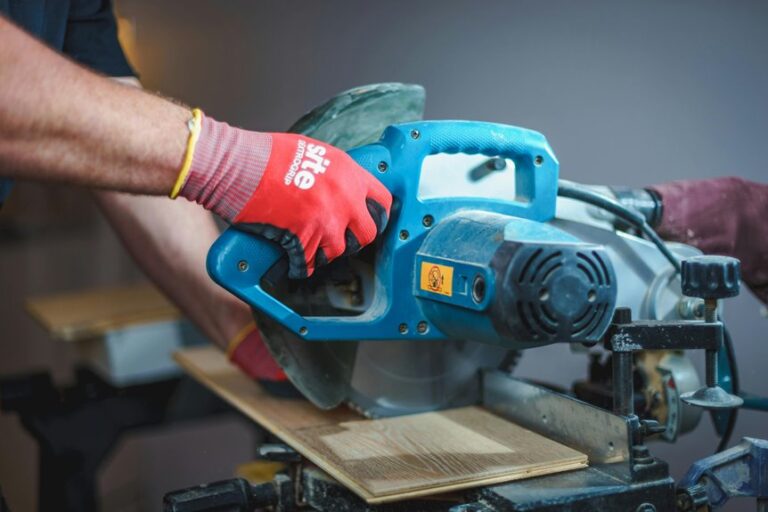
The Evolution R185SMS+ runs a 7-1/4 inch blade on a 210 mm slide, which keeps the whole machine short enough to live on a workbench rather than demand its own stand. The headline trick is multi-material cutting: one blade handles wood, plastic, and metal without swapping anything between tasks.
Bevel travel reaches 45 degrees and miter range extends to 50 degrees in one direction, so crown-style angles and deep compound cuts stay within reach. For a garage shop that touches aluminum tubing as often as pine, that flexibility removes an entire second tool from the shopping list.
What Makes Sense
- A blade ships included, so you can make your first cut the day it arrives instead of budgeting for accessories.
- Multi-material capability means one setup covers framing lumber, PVC trim, and light steel or aluminum stock.
- The 210 mm slide gives real crosscut reach while keeping the footprint friendly to cramped benches.
- 50 degrees of miter swing covers the odd angles that standard 45-degree stops miss.
Points To Keep In Mind
- Multi-material blades dull faster on abrasive metals than dedicated wood blades, so keep a spare on hand if metal cuts become routine.
- Owners commonly report wanting a proper stand or solid bench, since any slide saw punishes a wobbly surface.
Key Specs
Who It Suits Best
Home woodworkers who bounce between lumber, plastic, and soft metal on one bench and want a single saw to handle all three.
Where A Sibling Pick Shines
The DOVAMAN 10-inch slider below fits you better when wider boards and dual-speed control matter more than a compact footprint.
Where the Evolution stays deliberately compact, this DOVAMAN swings for capacity. The 15-amp motor drives a 10-inch blade through a 13-inch sliding rail, and extendable side tables support long stock so a 4-by-13 workpiece has somewhere to rest besides your hands.
The dual-speed switch is the detail worth understanding. High speed around 5000 RPM suits clean wood and PVC work, while the slower setting near 3200 RPM treats soft metals far more gently. Three TCT blades ship in the box, two 40-tooth and one finer 48-tooth, which is TCT meaning tungsten carbide tipped, the standard tooth material for hard-wearing general-purpose blades.
Reasons It Performs
- Three included blades mean you can move from rough lumber to finish trim without an extra purchase.
- The low-speed mode reduces heat and grab when cutting soft metal, extending blade life noticeably.
- Extendable tables turn a solo crosscut of long trim from a balancing act into a controlled cut.
- A 13-inch slide accommodates wide shelving stock that smaller saws simply cannot span.
Softer Spots
- With side tables extended, the machine claims serious floor space, so measure your shop before committing.
- Blade changes between materials are part of the routine here, and owners commonly note the hex bolt wants a firm wrench and patience.
Built With In Mind
Serious DIYers finishing basements, decks, or trim packages who need wide crosscuts and material flexibility in one powered tool.
Reach For A Different Pick When
Shop space is tight, because the Evolution R185SMS+ delivers similar versatility in a much shorter body.
This listing shares its core design with the previous DOVAMAN: a 15-amp motor, dual-speed settings of roughly 5000 and 3200 RPM, and a trio of carbide-tipped blades covering wood, PVC, and soft metals. The distinction lives in how it earns its place on your bench, and checking both listings against current availability makes sense before deciding.
In practice, either version rewards the same workflow. Set high speed for dimensional lumber and molding, drop to low speed for aluminum angle, and lean on the extendable supports when a shelf-length board needs a square cut. You may find the slower speed setting becomes your default once you cut anything beyond softwood regularly.
Useful Strengths
- One motor, two speeds, three materials: the setup cost of switching between project types stays near zero.
- The wide cutting envelope up to 4 by 13 inches handles chunky posts and broad panels alike.
- Sliding rails plus side supports give repeatable results on long stock without a separate roller stand.
Honest Caveats
- Two nearly identical DOVAMAN models can confuse comparison shopping, so confirm the exact ASIN before ordering.
- Like most value-tier sliders, dust collection is functional rather than exceptional; a shop vac hookup is worth arranging from day one.
Feature Rundown
Whose Shelf It Belongs On
Reno-focused DIYers who want maximum cutting range per dollar and will genuinely use both speed settings across mixed materials.
Swap It Out When
Your projects are all small craft-scale pieces, where the Olympia mitre box costs less and stores in a drawer.
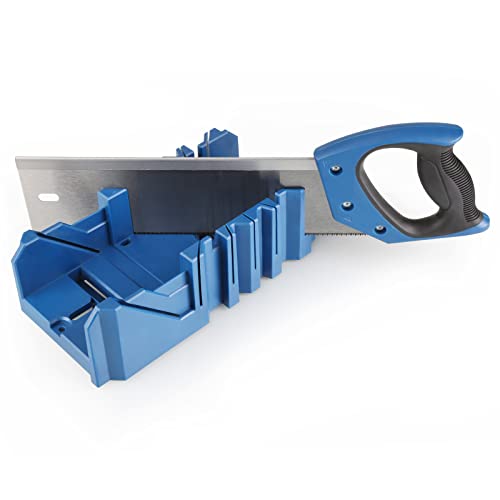
Not every angled cut needs a motor. This Olympia set pairs a molded plastic mitre box with a 14-inch backsaw, the stiff-bladed handsaw whose reinforced spine keeps the kerf straight, and guides it through slots cut at 90, 45, and 22-1/2 degrees. The box doubles as storage once the saw slides back inside.
For picture frames, dollhouse parts, shelf edging, and craft lumber, the guided slots produce cleaner joints than many first-time power-saw users manage. There’s also nothing to plug in, nothing to maintain beyond keeping the blade clean, and no noise complaint to worry about in an apartment. The honest limit is muscle and patience: dense hardwood goes slowly, and long boards need clamping to stay put.
Everyday Wins
- Pre-cut angle slots remove guesswork, so your first 45-degree joint can still be a tight one.
- The box stores the saw inside itself, making this the easiest tool on this list to stow.
- Silent operation lets you work evenings in shared spaces without friction.
- At a fraction of the cost of any powered pick here, it’s a low-stakes entry into accurate cutting.
Things To Consider
- Plastic walls wear over years of heavy use, and the slots can open slightly with aggressive sawing.
- Hardwood and thick stock demand steady effort; owners commonly report slower progress than they expected on oak.
Who Should Grab It
First-time makers, students, and craft woodworkers cutting softwood trim in small living spaces.
Not Your Match When
Deck boards and fencing are on the agenda, since the WORKPRO mini circular saw below powers through those far faster.
This WORKPRO trades the miter saw’s guided precision for pure portability. At about 4.4 pounds including the 4.0Ah battery, a 20-volt platform driving a 4-1/2 inch blade at roughly 4500 RPM, it goes where a bench saw cannot: up a ladder, into an attic, out to the garden bed for trimming a planter board.
Adjustable cutting depth lets you dial the blade to just clear the material, which reduces strain on the small motor and keeps cuts tidy. Wood, tile, plastics, PVC, and soft metals all fall within its stated range, though like every mini circular saw it freehands rather than locks to an angle gauge. Compared with the DOVAMAN sliders above, think of it as the companion tool for quick breakdown cuts, not a replacement for repeatable miters.
The Practical Payoff
- No cord and no outlet hunt, so sheet goods get sized up right where they’re leaning.
- Under five pounds total, wrist fatigue on overhead or awkward cuts drops dramatically.
- Depth adjustment protects both the blade and the surface beneath thin stock.
- One battery covers a full afternoon of trim and repair cuts for most users.
Small Limitations
- Freehand accuracy depends entirely on your layout lines and clamp discipline; there’s no fence doing the work for you.
- Blade changes and battery charging are recurring chores, and a second battery is a common early upgrade among owners.
Right Fit For
DIYers doing repairs, installs, and outdoor builds who already own accurate cutting elsewhere and need fast, mobile sizing cuts.
Consider Something Else When
Precise repeated angles are the job, because the Olympia mitre box or either DOVAMAN slider will hold angles this saw cannot.
What Actually Matters Before You Buy
Match The Tool To The Material
Wood-only shops can ignore multi-material marketing and prioritize tooth count and crosscut capacity. Anyone touching PVC, aluminum, or light steel should look for a lower RPM mode, since slowing the blade down is what keeps plastic from melting and metal from scorching. The DOVAMAN pair and the Evolution both address this directly.
Footprint Is A Real Spec
Sliding saws need clearance behind and beside the blade path, not just under their base. Measure your bench depth before falling for a 10-inch slider, and remember extendable side tables double the claimed footprint during use. Apartment and garage-bench users should weigh the 7-1/4 inch Evolution or the cordless WORKPRO first.
Power Source Changes Your Workflow
Corded tools deliver consistent torque all day but tether you to an outlet and a heavy gauge extension cord. Battery platforms buy mobility at the cost of charge management. Hand tools like the Olympia set remove power entirely, which suits quiet, occasional, small-stock work better than any spec sheet suggests.
Key Considerations Across These Picks
Traps First Timers Fall Into
The classic error is buying capacity you’ll never use, then storing a machine too heavy to drag out. Another common slip is skipping blade quality: a bargain saw with a sharp premium blade outcuts a premium saw with a dull one. Confirm included accessories before assuming you’re ready to cut.
Where The Extra Money Goes
Higher-tier saws spend their cost on motor amperage, bearing quality, and slide rigidity, which shows up as straighter cuts years later. Paying more pays off once weekly use becomes normal. Occasional users rarely feel the difference.
Frequently Asked Questions
Can a mini-miter saw cut metal?
Several picks here can, specifically those with multi-material blades and lower speed settings. Soft metals like aluminum cut cleanly; hardened steel demands a purpose-built chop saw.
Do I need a stand for a sliding miter saw?
A rigid bench works fine for compact models like the Evolution R185SMS+. Larger 10-inch sliders benefit from a dedicated stand once side tables deploy.
Are cordless mini saws powerful enough for hardwood?
The WORKPRO handles hardwood trim and thin boards well. Thick dimensional hardwood goes faster on any corded pick in this list.
How accurate is a manual mitre box compared to a power saw?
For the fixed angles molded into it, very accurate. It can’t match a power saw’s adjustable bevel and miter range, though.
What maintenance do these tools require?
Keep blades clean and sharp, blow dust from vents after sessions, and check slide rails for debris. Manual boxes need little more than dry storage.
Closing Remarks
Small cutting tools succeed when they match the actual scale of your projects, not the size of your ambitions. Pick the Olympia set for quiet craft work, the WORKPRO for mobile repairs, and either DOVAMAN or the Evolution for a genuine bench saw that spans materials. Start honest about your space and stock, and any of these will earn its corner.