A stripped screw on a pair of eyeglasses or a game console can stall your whole afternoon. The right mini-screwdriver set turns that frustration into a five-minute fix. This roundup covers five options that fit different hands, budgets, and repair habits, from a 51-piece electronics kit to a two-driver pocket set you can toss in a junk drawer.
Your Options, Compared

MECHMAX 51-Piece Precision Screwdriver Set

SEDY 11-Piece Magnetic Precision Screwdriver Set

CRAFTSMAN CMHT65047 Acetate Pocket Screwdriver Set

Steinwhale 10in1 Double-Headed Stubby Screwdriver Bit Set
Banshu Mini Screwdriver Set, 46 in 1
More On The Choices That Made The List
Tiny gadget screws love to hide behind tamper-resistant heads, and that’s exactly where this MECHMAX kit earns its keep. Alongside standard Torx bits down to T2, it carries Security Star sizes TR6 through TR20, the center-holed variants used on consoles and server hardware.
The layout is simple: one driver handle, one extension bar, and 49 bits. Compared with the SEDY set further down, this is the deeper bench for anyone opening devices regularly rather than occasionally.
Why It Works Well
- Security Star coverage means console repairs don’t dead-end at a tamper screw.
- T2 through T5 tips reach the smallest smartphone and camera fasteners.
- An extension bar adds clearance inside recessed housings.
- 49 bits in one case cut down on loose drawer clutter.
Things To Consider
- With dozens of loose bits, owners commonly report needing a habit of returning each tip to its slot after use.
- Precision handles trade leverage for control, so stuck screws may need patience.
At A Glance
Who It Suits Best
Avid electronics tinkerers who open consoles, laptops, and cameras often enough to justify a full bit library.
Where A Sibling Pick Shines
Occasional fixers who only tighten eyeglass hinges will find the SEDY 11-piece set lighter, cheaper to store, and easier to manage.
Eleven fixed drivers instead of swappable bits: that’s the whole philosophy here. Each tool is dedicated, so there’s nothing to lose between the couch cushions, and the non-slip grips give new repairers something forgiving to hold. A zippered storage bag keeps the lineup together in a glovebox or desk drawer.
The magnetic tips are the quiet hero. Anyone who has chased a watch spring bar across a hardwood floor understands why a tip that holds its screw matters more than raw piece count.
Bright Spots
- Magnetic tips keep Phillips, slotted, and Torx screws seated during delicate work.
- Fixed drivers mean no fumbling with bit swaps mid-repair.
- A demagnetizer lets you switch magnetism off around sensitive components.
- Soft pouch storage suits travel kits and office drawers alike.
Points To Note
- Eleven drivers cover common heads only, so pentalobe or tripoint phone screws fall outside its range.
- Magnetized tips can attract metal shavings over time; a quick wipe keeps them clean.
The Right Fit
First-time repairers handling eyeglasses, watches, and laptop back panels who want a simple, low-fuss starter kit.
Reach For A Different Pick When
Gamers facing security screws should step up to the MECHMAX 51-piece set, whose TR-series bits handle those center-holed fasteners directly.
Sometimes two good drivers beat forty mediocre ones. This CRAFTSMAN pocket pair is built from heat-treated alloy steel, a process that hardens the shaft so tips resist rounding under torque. The satin-nickel finish resists corrosion, which matters in humid garages or damp basements.
The acetate handles are shaped for both high-torque twisting and light precision turns, so they bridge household and hobby work. Where the Steinwhale stubby below wins on compactness, this set wins on shaft strength.
What Helps Most
- Heat-treated alloy steel shafts hold their edge through repeated use.
- Satin-nickel plating shrugs off rust in damp storage spots.
- Contoured acetate grips stay comfortable during longer jobs.
Honest Caveats
- Only two drivers means limited head variety compared with any bit-based kit here.
- No carrying case, so you’ll want a drawer slot or pouch of your own.
Quick Facts
Made For
Homeowners who mostly need a reliable flathead and Phillips within arm’s reach, not a full repair station.
Another Choice May Suit
Anyone repairing phones or watches should pick the Banshu 46-in-1 instead, since its specialty bits match those proprietary screw heads.
Stubby drivers exist because real appliances don’t leave room for a six-inch shaft. Behind a dryer drum or inside a car dashboard, a short body with a double-headed design, meaning two working ends per driver, doubles your head options without adding length.
The cellulose acetate bodies feel closer to an eyeglass frame than a shop tool: smooth, slightly warm in the hand, with machined grooves for grip. In our view that finish also makes these easier to spot in a crowded toolbox than all-black plastic rivals.
The Practical Payoff
- Double-ended tips give ten configurations from fewer tools.
- Stubby length reaches recessed screws long shafts can’t angle into.
- Acetate construction dries quickly and wipes clean after greasy jobs.
Small Limitations
- Short handles limit leverage on corroded or overtightened screws.
- General-purpose heads won’t address specialty electronics fasteners.
Right Fit For
DIYers working on appliances, furniture, and automotive panels where clearance, not bit variety, is the bottleneck.
Swap It Out When
For broader head coverage in normal-clearance spaces, the CRAFTSMAN CMHT65047 pair offers stronger full-length shafts for the same everyday role.
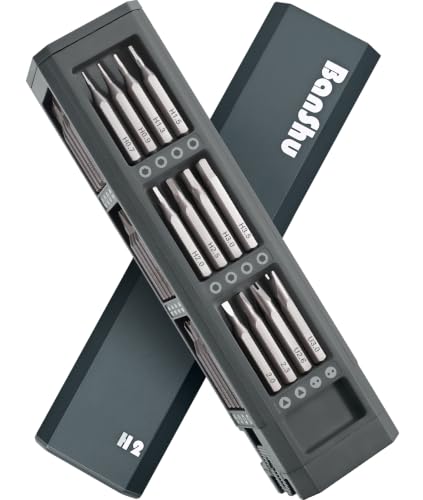
This Banshu kit aims at the middle ground: far more capable than the SEDY eleven-piece, less specialized than the MECHMAX console kit. Its twelve bit families include Pentalobe and Triwing, the Apple-specific and Nintendo-specific heads most generic sets skip entirely.
Two extras push it past a plain bit case. Tweezers handle ribbon cables and dropped screws, while a pry bar opens snapped-shut phone backs without marring plastic. For a household that repairs a little of everything, that combination covers most daily needs in one lidded box.
Features That Help
- Pentalobe and Triwing bits unlock iPhone and Nintendo hardware repairs.
- Included tweezers make small-part handling far less fiddly.
- The pry bar spares you from using a knife blade on clips.
- A cased layout keeps 46 pieces organized between projects.
What To Weigh
- Bit storage demands discipline; owners commonly report misplacing tips when the lid stays open on a busy bench.
- It lacks the deep Security Star run that console-focused repairers need.
Product Snapshot
Who Will Love This
Mixed-use households juggling phones, tablets, watches, and glasses who want one case that answers nearly every small-screw question.
Not Your Match When
Dedicated console modders chasing TR6-to-TR20 security screws will get better mileage from the MECHMAX 51-piece set’s focused selection.
Choosing Between These Mini-Screwdriver Sets
Match Bits To Your Devices
Start with what you actually open. Eyeglasses and watches need slotted and Phillips tips under 2 mm. Phones demand Pentalobe; Nintendo gear wants Triwing; consoles hide Security Star screws behind center holes. A set missing your device’s head type is decoration, not a tool. Count the screw types in your own home before comparing piece counts.
Handle Comfort Drives Control
Precision work lives or dies on grip. Spinning a T3 bit into a laptop hinge takes steady, low torque, which knurled or contoured handles deliver far better than slick plastic. Longer sessions amplify the difference, so anyone repairing weekly should prioritize handle geometry over raw accessory count.
Storage Decides Longevity
Loose bits vanish; cased sets survive. A labeled case like the Banshu’s keeps every tip accounted for, while open trays invite loss. Fixed-driver designs such as SEDY’s sidestep the problem entirely by having nothing to detach. Honest self-assessment helps here: tidy people can go modular, everyone else benefits from fixed tools.
Shaft Steel Sets The Ceiling
Hardened alloy shafts, like CRAFTSMAN’s heat-treated steel, hold their tip shape under years of twisting. Softer metals round off and cam out, stripping screws along the way. Frequent users should treat metallurgy as a feature worth paying attention to, not fine print.
Key Considerations Across These Picks
Traps First Timers Fall Into
The classic error is buying a 100-piece kit for three actual devices, then losing half the bits within months. Another slip is ignoring security screws until a repair is already halfway done. Check your target device’s screw types first, then buy the narrowest set that covers them plus one tier of growth.
The Case For Spending Up
Higher-tier kits earn their cost through hardened shafts, tighter tip tolerances, and specialty heads like Pentalobe. Cheap soft-metal tips round out quickly and chew screw heads, turning a ten-minute job into a drilled-out mess. Anyone repairing electronics monthly will recoup the difference in avoided damage alone.
Frequently Asked Questions
What size bits do eyeglasses require?
Most frames use tiny slotted or Phillips screws around 1.4 to 2.0 mm. Any precision set here, including the SEDY kit, covers them comfortably.
Are magnetic tips safe near electronics?
Lightly magnetized tips are generally considered acceptable around modern devices. Still, many sets include a demagnetizer for cautious users working near sensitive parts.
Why do some screws have a hole in the center?
That’s a tamper-resistant Security Star design meant to block casual opening. You’ll need matching TR-series bits, which the MECHMAX set carries.
How do I keep small bits organized?
Return each bit to its labeled slot immediately after use; that single habit prevents most losses. A cased set beats a loose tray for most households.
Can one set handle both phones and game consoles?
Partially, since phones need Pentalobe and consoles need Security Star bits. The Banshu covers phones well, while the MECHMAX leans console-first.
Bottom Line
Your devices should decide this purchase, not the biggest number on the box. Console owners get clear value from the MECHMAX 51-piece, mixed households suit the Banshu 46-in-1, and minimalists will be happy with the CRAFTSMAN pocket pair. Match the bit list to the screws actually in your home, and whichever set you land on will pay for itself the first time it saves a repair bill.