


A miter gauge is the guide that rides in your saw’s slot and sets your crosscut angle, and a sloppy one shows up fast in crooked picture frames and gappy boxes. The five options here cover different needs: a bandsaw-specific gauge from JET, a track-and-bar combo that stretches your existing setup, a budget-friendly universal gauge, Kreg’s fence-equipped system, and VEVOR’s long-fence value play. Whether you’re squaring up shelf stock on a weekend or dialing in repeated angles all afternoon, one of these should fit your bench.
An Overview Of The Picks

JET JMG-14 Miter Gauge (708716)

POWERTEC 32″ Miter T Track with T-Bar
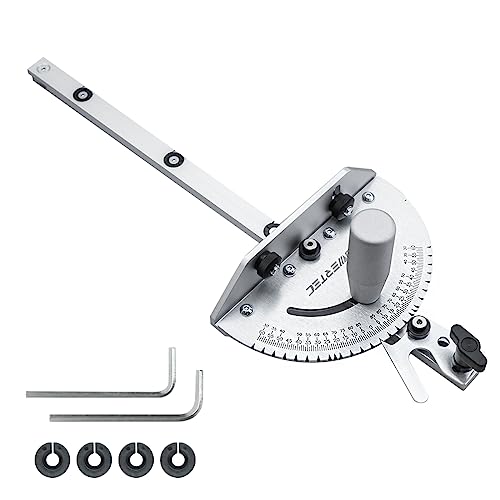
POWERTEC Universal Miter Gauge with Aluminum Bar

Kreg Precision Miter Gauge System KMS7102

VEVOR Precision Miter Gauge with 18 in Fence
What Each Pick Brings To The Table
Most miter gauges chase universal fit. This one doesn’t bother. The JMG-14 is made specifically for the JET JWBS-14 bandsaw, so the bar sits properly in that machine’s slot without shimming or wobble.
The head pivots 30 degrees in either direction, which covers the angled cuts bandsaw users actually make: bracket shoulders, small tenons, trim work on narrow stock. Its compact, lightweight build also means less overhang past a narrow bandsaw table, so short offcuts stay supported instead of tipping into the blade.
What It Does Well
- Drops straight into the JWBS-14 slot with no fitting fuss
- 30-degree swing each way handles common bandsaw angles
- Light body keeps small workpieces stable near the blade
- Backed by a one-year manufacturing-defect policy from JET
Things To Consider
- It won’t fit other machines, so check your model before ordering
- No extended fence, so long boards need separate support
Made For
JWBS-14 owners who want a proper angled-cut guide instead of eyeballing against the fence.
A Better Fit Elsewhere
If you run a table saw rather than this specific bandsaw, the POWERTEC Universal Miter Gauge below is the more sensible match.
This isn’t a gauge at all, and that’s the point. It’s a 32-inch aluminum T-track paired with a miter bar sized for standard 3/4 by 3/8-inch slots, the same footprint most gauges and jig hardware use. Screw the track to a sled, a crosscut platform, or a router-table fence, and suddenly your existing gauge has somewhere better to live.
Shop-builders get the most from it. A sliding crosscut sled built around this track turns an average factory gauge into something far steadier, because the long track spreads the load across the whole cut. Compared to buying a premium gauge outright, this route costs less and teaches you your own workflow along the way.
What Stands Out
- Works with most standard 3/4 x 3/8 miter bars, with or without a T-slot plate
- Suits table saws, router tables, drill press tables, and band saws alike
- Aluminum construction resists wear where wooden runners swell and stick
- 32-inch length supports full-width sled bases
Honest Caveats
- You supply the gauge, the screws, and the labor; nothing works out of the box
- Installation accuracy depends entirely on how square you mount the track
- Owners commonly report needing to deburr machining edges before smooth travel
Feature Rundown
Right Fit For
Hobbyists who enjoy building their own jigs and already own a serviceable gauge.
Reach For A Different Pick When
Anyone wanting a ready-to-use angle guide out of the box will be happier with the VEVOR Precision Miter Gauge further down.
Where the last entry was raw material for builders, this one arrives finished and ready. The head carries 27 positive stops, which are preset detents that click into common angles like 90, 45, and 22.5 degrees so you’re not reading a scale and hoping. For repetitive cuts such as picture-frame miters, that alone saves real time.
The universal design targets most table saws, band saws, and router tables using the standard slot format. You may find the shorter bar offers less side support than a fenced system on wide panels, but for everyday crosscutting and small-project angles it holds its line well. Think of it as the dependable middle path between a basic stamped gauge and a premium setup.
What Makes Sense
- 27 positive stops cover incremental angles without scale-reading errors
- Aluminum bar glides in standard slots on multiple machine types
- Compact profile stores easily in a crowded shop drawer
Points To Keep In Mind
- No dedicated fence included, so tall or long stock wants extra backing
- Slot fit can vary slightly between machine brands; a light waxing usually settles it
Quick Facts
Who Should Grab It
Beginners and intermediate woodworkers upgrading past the flimsy gauge that shipped with their saw.
Swap It Out When
Cabinetmakers cutting long, heavy panels will prefer the fence-backed stability of the Kreg system next.
Kreg built this one around a simple idea: a gauge is only as accurate as what backs up your workpiece. The adjustable fence does that job, giving tall, flat support right at the blade so thin strips don’t wander and long pieces don’t twist mid-cut. In a busy shop turning out cabinet doors or drawer parts all day, that stability translates directly into fewer ruined boards.
The heavy-duty body and smooth slot travel are aimed at people who cut angles daily, not occasionally. It’s a bigger investment than either POWERTEC option above, and honestly more gauge than a weekend hobbyist needs. But for furniture-grade joinery where a half-degree error compounds across eight frame members, the precision earns its keep.
What Pays Off
- Adjustable fence supports stock vertically at the cut line
- Glide-tuned bar movement keeps repeat cuts consistent
- Heavy-duty construction suits daily production use
- Designed specifically for high-accuracy angle repeatability
Small Caveats
- Larger footprint demands more storage space than compact gauges
- Setup and calibration take longer than a basic stop-based design
- Overkill for occasional hobby cuts, in our view
Who Will Love This
Intermediate-to-advanced woodworkers producing furniture, cabinetry, or any project where angle consistency is non-negotiable.
Where A Sibling Pick Shines
Newer hobbyists watching their budget will find the VEVOR Precision Miter Gauge delivers similar fenced support at a friendlier entry point.
Here’s the interesting one: an 18-inch fence and 15 angle stops on an aluminum alloy body, packaged at a price point that undercuts the Kreg considerably. The spring-loaded plunger locks each stop positively, and the removable disc lets you fine-tune settings beyond the presets when a project calls for an odd angle.
It fits the standard 3/4 by 3/8-inch slot found on most table saws, though measuring your own slot first is smart since older machines vary. Owners commonly report solid accuracy once calibrated, with the main gripes being finish quality and occasional burrs that a quick pass with fine paper resolves. For a first serious upgrade from a stock gauge, the value here is hard to argue with.
Real-World Strengths
- 18-inch fence gives real backing for taller workpieces
- 15 angle stops handle the angles most projects demand
- Spring-loaded plunger locks settings firmly during cuts
- Removable disc allows custom angle adjustment
Worth Noting
- Fit tolerances vary; verify your slot dimensions before committing
- Some units arrive needing light deburring for smooth travel
Details At A Glance
Whose Shelf It Belongs On
Budget-conscious DIYers and first-time table saw upgraders who want fenced accuracy without premium pricing.
Consider Something Else When
Production shops cutting all day will appreciate the heavier build of the Kreg Precision Miter Gauge System instead.
Choosing Between These Miter Gauges
Match The Gauge To Your Machine
Start with the slot, not the features. Standard table saws accept a 3/4 by 3/8-inch bar, but bandsaws vary widely, which is why the JET JMG-14 exists only for the JWBS-14. Measure your slot width and depth before anything else, because even the finest gauge is useless if the bar rattles or binds.
Fences Change Everything
An extended fence is the single biggest functional difference in this group. It holds your workpiece square to the blade through the entire cut, which matters most on narrow rip strips and long miters. Skip it only if your projects stay small and forgiving.
Positive Stops Versus Free Adjustment
Positive stops snap to preset angles, trading flexibility for speed and repeatability. Free-swing heads adjust anywhere but rely on your scale-reading discipline. Frequent frame makers benefit enormously from stops; sculptural or odd-angle work favors open adjustment.
Build Quality Shows Up Over Time
Aluminum bodies hold tolerance through seasonal humidity swings, while cheaper castings drift and wear at the plunger points. A gauge gets handled constantly, so sturdier construction pays back in years of consistent travel.
Key Considerations Across These Picks
Traps First Timers Fall Into
The classic error is buying a premium gauge for a saw whose miter slot is worn or out of spec. Another is ignoring fence height, then wondering why thin strips climb the blade. Measure first, match second.
Why Top Tier Costs More
Higher-priced systems spend their budget on machined bars, tighter tolerances, and adjustable fences. That money converts directly into repeatability across hundreds of cuts. Casual users won’t feel the difference; production woodworkers will, every single day.
Frequently Asked Questions
Will a miter gauge fit every table saw?
Most modern saws use the standard 3/4 by 3/8-inch slot, so universal gauges fit them. Older or imported machines sometimes deviate, so measure before purchasing.
Do I really need an extended fence?
For small craft projects, probably not. For cabinet doors, drawer fronts, or any repeated angle work, a fence dramatically improves both safety and accuracy.
What are positive stops?
They’re preset detents that lock the gauge head at common angles like 90 and 45 degrees. They eliminate scale-reading mistakes and speed up repetitive cutting.
Can I use a miter gauge on a router table?
Yes, provided the router table has a compatible miter slot. Gauges like the POWERTEC Universal are designed to move between table saws, router tables, and band saws.
How do I keep my gauge accurate?
Keep the bar clean and lightly waxed so it travels smoothly without slop. Recalibrate against a known-square reference whenever you change blades or notice drift.
Closing Remarks
Your saw already came with a gauge; the question is whether it deserves your trust. The JET serves JWBS-14 bandsaw owners precisely, the POWERTEC pair covers builders and budget upgraders, the Kreg rewards serious furniture work, and the VEVOR stretches a modest budget further than expected. Match the tool to your machine and your typical projects, and cleaner crosscuts follow naturally.




