


A miter saw is only as good as what holds it steady. Whether you’re cross-cutting trim in a garage shop or dialing in repeatable angles on a weekend deck build, the right table or gauge turns a wobbly setup into clean, consistent cuts. This roundup covers five options across both sides of that equation: precision miter gauges for your table saw, plus rolling and fixed stands that give your saw a proper home. Each entry below breaks down where it shines, where it doesn’t, and who should actually spend their money on it.
The Shortlist At A Glance

Kreg KMS7102 Precision Miter Gauge System

VEVOR Precision Miter Gauge with 18 in Fence

VEVOR Precision Miter Gauge with 24 in Fence
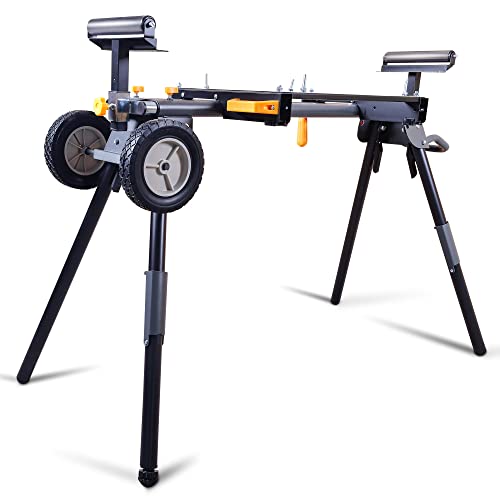
WORKESS Rolling Miter Saw Stand WK-MS029E-2

WORKESS Universal Miter Saw Stand with Grid Tabletop
A Closer Look At Each Pick
A miter gauge is the guide that rides in your table saw’s slot to control crosscut angles, and most stock gauges are the weakest link in the whole machine. Kreg built this one around an adjustable fence so you can square it once and trust every cut after that.
In a working shop, that repeatability matters more than raw features. Cutting twenty identical picture-frame miters becomes a set-it-and-go task instead of a constant recheck. Woodworkers upgrading from a factory gauge tend to notice the difference within the first project.
What Earns Its Place
- The adjustable fence lets you calibrate for dead-square 90-degree cuts and leave it alone
- Heavy-duty construction resists the flex that creeps into thinner gauges under load
- Glides smoothly in standard miter slots, so feed pressure stays even through the blade
- Backed by support coverage for accidental damage and breakdowns, depending on plan choice
Things To Consider
- It carries a premium over basic gauges, which stings if you only make occasional crosscuts
- Owners commonly report a short calibration period at first while you learn its adjustment points
Who It Suits Best
Furniture makers and finish carpenters who demand repeatable angles on every pass will get the most from this system.
A Better Fit Elsewhere
Casual DIYers cutting a few boards a month may prefer the VEVOR Precision Miter Gauge with 18 in Fence, which covers similar ground for less money.
Where the Kreg leans premium, this VEVOR aims squarely at the middle of the market. You get an aluminum alloy body, an 18-inch fence, and a spring-loaded plunger that clicks into preset angle positions, all in a package sized for the common 3/4 x 3/8-inch table saw slot.
That plunger detail deserves a mention. Instead of eyeballing a scale every time, the gauge drops into detents at the angles you actually use, which speeds up repetitive work like shelving and molding. Measure your slot before ordering, since fit depends on it.
Where It Helps
- Spring-loaded plunger locks into preset stops, cutting setup time on repeated angles
- Aluminum alloy construction keeps weight down without feeling flimsy at the fence
- An 18-inch grating supports mid-size workpieces that would tip off a bare gauge
- Fits the majority of standard table saw slots out of the box
Small Caveats
- You’ll want to verify your slot dimensions first, since non-standard saws won’t accept it
- The removable disc adds versatility but one more part to keep track of in a drawer
At A Glance
Made For
Intermediate hobbyists upgrading their first real workshop on a sensible budget will find this gauge hits the sweet spot.
Reach For A Different Pick When
If wide panels dominate your cut list, the VEVOR Precision Miter Gauge with 24 in Fence gives you six extra inches of support for roughly the same design.
This is the big sibling of the previous VEVOR, swapping the 18-inch fence for a 24-inch grating and adding a published angle range of plus or minus 70 degrees. Fifteen positive stops cover everything from 15 to 90 degrees on both sides, including the 22.5 and 67.5 settings crown-molding people reach for constantly.
Laser-marked scales in both metric and imperial readings mean no squinting or converting mid-project. In our view, the longer fence is the real story here: wide cabinet panels and long shelf stock stay supported instead of hanging past the edge.
What Pays Off
- The 24-inch grating stabilizes wide boards that smaller fences let wander
- Fifteen positive stops span ±70 degrees, covering nearly any joinery angle you’ll name
- Laser-marked dual scales read cleanly in metric and imperial
- Published angle precision of ±0.5 degrees keeps repeat cuts honest
Points To Keep In Mind
- At 25.6 inches deep overall, it demands more storage room than compact gauges
- Owners commonly note the spring plunger benefits from a light wipe-down to stay crisp in dusty shops
The Key Facts
Right Fit For
Cabinet builders and anyone routinely crosscutting panels wider than 18 inches will put that extra fence length to work immediately.
Consider Something Else When
Shop space runs tight in a shared garage, the WORKESS Universal Miter Saw Stand with Grid Tabletop folds your whole saw station into a more compact footprint.
Shifting gears from gauges to stands, this WORKESS rolls on 8-inch wheels and carries up to 330 pounds, which covers nearly every sliding compound miter saw on the market. Support arms extend from 45.6 to 78.7 inches, so long trim pieces have somewhere to rest besides the driveway.
Quick-release mounting brackets are the feature contractors will care about most. Swapping saws between the stand and a truck bed takes seconds rather than a wrench session, and adjustable roller supports rise from 35.4 inches to match your working height.
Useful Strengths
- 330-pound load rating handles heavy slide-compound saws without strain
- Quick-release brackets make saw mounting and removal genuinely fast
- Arms extend to 78.7 inches for full-length trim and lumber support
- Extra cross support accommodates saws with trapezoid or triangular hole patterns
- 8-inch wheels roll over gravel and uneven jobsite surfaces
Honest Caveats
- Folding and unfolding takes some muscle until the hinges wear in, based on widely reported owner feedback
- Roller supports can mark softwood if the material sits still under pressure
- It stores upright, so plan wall space accordingly in a packed garage
Quick Facts
Best Suited To
Remodelers and finish carpenters hauling a saw between job sites day after day are exactly who this stand was drawn up for.
Swap It Out When
Home users who never move their saw will get more value from the WORKESS Universal Miter Saw Stand with Grid Tabletop, since they’re paying here for portability they won’t use.
The rolling WORKESS above wins on mobility, but this sibling trades wheels for something quieter and arguably more useful in a fixed shop: a 6-level height adjustment spanning 23.4 to 32.2 inches. Tall users and shorter partners can finally share one saw station without backaches deciding who gets the afternoon shift.
The 18 x 23.6-inch grid tabletop accepts a wide range of saw mounting patterns, which means one stand serves whatever saw you own now or buy later. Load capacity sits at a still-substantial 300 pounds.
The Helpful Details
- Six height levels from 23.4 to 32.2 inches suit different users and tasks
- Grid-pattern tabletop fits varied saw bolt layouts without adapter plates
- 300-pound capacity covers most consumer and prosumer miter saws
- Doubles as a stable platform for other benchtop tools
Softer Spots
- No wheels, so relocating it means lifting rather than rolling
- Height adjustment requires re-leveling your fence setup after each change, as owners commonly report
Whose Shop It Belongs In
Multi-user home garages and basement workshops where the saw stays put will appreciate the ergonomic range most.
Look Elsewhere When
Anyone cutting lumber away from home should step up to the WORKESS Rolling Miter Saw Stand WK-MS029E-2 and its 8-inch wheels instead.
What Matters Most Before Choosing Miter Saw Tables
Match the Tool to Your Saw First
Compatibility beats every other spec. Miter gauges come in standard 3/4 x 3/8-inch slots and T-slots, and a mismatch means returns and lost weekends. Stands follow the same logic: check your saw’s mounting hole pattern against the stand’s bracket layout before committing. Two minutes with a tape measure saves a frustrating delivery cycle.
Think About Where You Actually Cut
A rolling stand earns its keep on job sites and driveways, where 8-inch wheels handle gravel and grass. In a fixed basement or garage shop, height adjustability and footprint matter far more than portability. Honest self-assessment here prevents paying for features that sit unused.
Weight Capacity Is a Safety Margin
Your saw’s weight is only half the load; add long stock resting on the extensions and the total climbs fast. A stand rated well above your saw’s listed weight gives you headroom for those 16-foot boards, and it tends to translate into less frame flex during cuts too.
Key Considerations Across These Picks
Pitfalls Shoppers Hit
The most common mistake is buying a gauge without measuring the miter slot, followed closely by pairing a heavy sliding saw with a stand rated too low. Shoppers also overlook folded storage dimensions, then discover the stand blocks the car door. Measure twice, order once.
What Separates Premium From Basic
Higher-tier gauges add positive stops, laser-marked scales, and tighter tolerances, which show up as faster setups and fewer scrapped boards. On stands, the money goes toward load ratings, quick-release hardware, and smoother rollers. Frequent users recoup that cost in saved time; occasional DIYers often don’t.
Frequently Asked Questions
Do I need a miter gauge if my saw has one included?
Stock gauges usually lack adjustable fences and positive stops, limiting accuracy. An upgraded gauge pays off once you start making repeatable angled cuts.
Can a miter saw stand hold other tools?
Many universal stands with grid tabletops accept benchtop planers, sanders, and drills. Always confirm the tool’s weight stays under the rated capacity.
What does “positive stop” mean on a miter gauge?
It’s a mechanical detent that locks the gauge at a preset angle like 45 degrees. Stops eliminate guesswork and speed up repetitive cuts dramatically.
How much load capacity do I really need for a stand?
Add your saw’s weight plus half again for stock and handling forces. Most 10-inch sliding saws land comfortably under a 300-pound rating.
Are taller stands better for tall woodworkers?
Generally yes, since elbow-height work surfaces reduce back strain over long sessions. Six-level adjustment around 32 inches suits most frames over six feet.
Closing Remarks
Five picks, two distinct problems solved. The Kreg KMS7102 rewards precision-focused table saw users, the two VEVOR gauges deliver strong accuracy per dollar at different fence lengths, and the WORKESS stands split neatly between mobile and stationary shops. Match the tool to your saw, your space, and how often you actually cut, and any option on this list will serve you well for years of projects ahead.




