A garage project starts with a straight cut, and a wobbly saw ruins it fast. Whether you’re trimming baseboard on a Saturday or cutting steel tube for a weekend weld-up, the right machine saves hours of frustration. This roundup covers five options that suit real homes: compact cordless trimmers, a budget-friendly compound saw, and heavy metal-cutters. Each one fits a different kind of homeowner, so read for your projects, not just the specs.
A Fast Comparison Of The Options
PickWhy We Picked ItBest ForAction

Multi-Use Pick
Evolution Power Tools R185SMS+ Sliding Miter Saw 7-1/4″
Cuts wood, plastic, and metal
DIYers with mixed materials
Value Pick
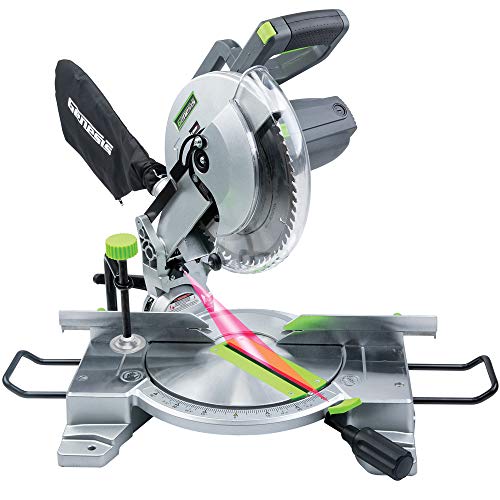
Genesis GMS1015LC 15-Amp 10-Inch Compound Miter Saw
Laser guide at entry cost
First-time tool owners
Heavy Duty Pick
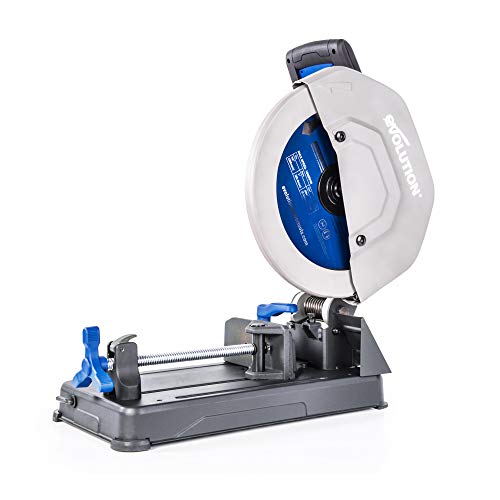
Evolution S355CPSL 14 Inch Metal Cutting Chop Saw
Dry-cut steel without coolant
Welders and fabricators

Compact Choice
DEWALT 20V MAX 7-1/4-Inch Cordless Miter Saw (DCS361M1)
Accurate cuts, no outlet needed
Trim carpentry on the go
Weekend Project Pick
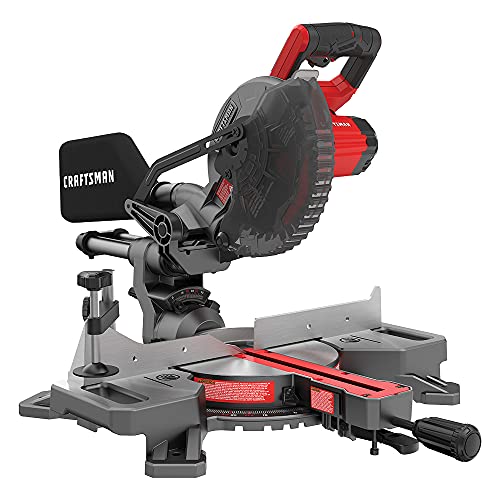
CRAFTSMAN V20 Cordless Sliding Miter Saw 7-1/4 inch
Sliding reach in light package
Deck and fence builds
A Deeper Look At The Lineup
Most miter saws handle lumber and stop there. The R185SMS+ takes a different route: its 7-1/4-inch blade is designed to slice wood, plastic, and even mild steel, which means one machine can cover framing one afternoon and aluminum stock the next. The sliding arm extends the cut width well beyond what a fixed 7-1/4-inch head normally manages.
Angles are generous too, with bevel adjustment up to 45 degrees and miter range reaching 50 degrees. For a homeowner who hates buying a second tool every time the material changes, that flexibility is the whole point.
Real-World Strengths
- ✓One blade covers wood, plastics, and metals, so you won’t need a separate chop saw cluttering the bench
- ✓The slide mechanism widens crosscut capacity, useful for wider boards and shelving stock
- ✓Bevels to 45 degrees and miters to 50 degrees, covering most crown and trim angles you’ll meet
- ✓A blade ships in the box, so the first cut happens the day it arrives
Things To Weigh Up
- •Multi-material blades wear faster than wood-only ones, especially after repeated steel cuts, so budget for replacement blades
- •You may find the 7-1/4-inch wheel leaves thicker hardwood needing slower feed pressure than a 10-inch machine would demand
Made For
Hands-on homeowners tackling mixed-material projects like metal-framed furniture or garden structures from a single small shop.
Where A Sibling Pick Shines
Anyone cutting only dimensional lumber will get more muscle from the Genesis GMS1015LC’s larger 10-inch blade.
This is the classic first serious saw. A 15-amp motor spins the 10-inch blade at around 4,600 RPM, enough torque for repeated crosscuts through 2x lumber, flooring, and molding. Compared with the Evolution above, it gives up metal cutting but gains a bigger wheel that chews through thick boards with less effort.
The built-in laser projects your cut line before the blade touches wood, which matters enormously when you’re learning. Nine positive miter stops lock into the common angles, so repeat cuts stay consistent across a whole room of trim.
Reasons It Performs
- ✓The 15-amp motor holds speed under load, keeping cuts clean through dense dimensional lumber
- ✓Nine positive stops snap to standard angles quickly, speeding up repetitive molding work
- ✓Laser guidance helps beginners line up accurately without guesswork
Potential Sticking Points
- •No slide function, so board width is limited by the 10-inch blade’s fixed crosscut reach
- •Owners commonly note the factory blade benefits from an early upgrade for finer finish work
- •Dust collection is basic, so plan on sweeping the workbench afterward
Feature Snapshot
| | Feature | Specification | Why It Matters |
|---|
| Motor | 15-amp, roughly 4,600 RPM | Sustains power through repetitive hardwood cuts |
| Blade size | 10 inches | Deeper cuts than compact 7-1/4-inch models |
| Miter stops | 9 positive detents plus laser guide | Fast, repeatable angle settings for trim runs |
Who Should Grab It
First-time tool owners furnishing a home workshop who want corded consistency without a premium outlay.
Consider Something Else When
Wide-deck builders should step up to the CRAFTSMAN V20, whose sliding arm reaches roughly eight inches across.
Where the other picks here shape wood, this one eats steel. Dry-cut technology pairs a 15-amp motor with a tungsten carbide-tipped 14-inch blade, slicing mild steel with minimal heat and far fewer sparks than an abrasive wheel. The finished edge comes off cool enough to handle and burr-free enough to weld directly, which is why fabrication-minded homeowners keep coming back to this style of saw.
A pressed steel base keeps weight reasonable for a machine this size, and the integrated chip deflector throws debris away from your line of sight. Mitering to 45 degrees covers angle-iron and tubing joints.
What Works In Its Favor
- ✓Dry-cut action leaves smooth, cool edges, skipping the grinding cleanup abrasive saws force on you
- ✓Chip deflector directs swarf away from the operator, making cleanup quicker and safer
- ✓Pressed steel base balances sturdiness against portability between garage and job site
Honest Caveats
- •It’s a dedicated metal cutter, useless for trim or framing, so it complements rather than replaces a woodworking miter saw
- •Carbide-tipped blades cost more upfront than abrasive discs, though they last considerably longer per cut
- •Clearing accumulated metal chips from the base after sessions keeps the pivot moving freely
The Right Fit
Home fabricators and welding hobbyists cutting steel tube, angle iron, or conduit regularly.
Not Your Match When
Trim carpenters belong with the DEWALT DCS361M1, whose fine-cut positioning system suits delicate finish work instead.
Trim work happens in half-finished rooms where outlets are scarce, and that’s exactly where this DEWALT earns its spot. Running on a 20V MAX battery, it delivers roughly 183 crosscuts of 2×4 pine or about 275 cuts of 3-1/4-inch baseboard per charge, according to the manufacturer, plenty for a full day of casing and crown in a typical room.
Accuracy features carry the experience: an adjustment-free cut-line positioning system shows exactly where the blade lands, and a stainless steel detent plate offers eleven positive stops. Capacity handles 3-5/8-inch nested crown, which covers most residential profiles.
Everyday Wins
- ✓Battery power frees you from extension cords in unfinished spaces and on ladders-side setups
- ✓The integrated cut-line indicator needs no calibration, saving setup time on every move
- ✓Eleven positive detents make switching between common trim angles nearly instant
- ✓Nested crown capacity of 3-5/8 inches suits the majority of home molding profiles
Small Caveats
- •Runtime depends on battery health, so heavy hardwood days may want a spare pack on hand
- •The 7-1/4-inch blade caps crosscut width compared with the sliding CRAFTSMAN below
Core Details
| | Feature | Specification | Why It Matters |
|---|
| Power | 20V MAX battery platform | Cuts anywhere without outlet access |
| Runtime | About 183 cuts of 2×4 pine per charge | Typically covers a full trim session |
| Crown capacity | 3-5/8 inches nested | Fits standard residential molding sizes |
| Detent plate | Stainless steel, 11 positive stops | Durable, precise angle repeatability |
Who Will Love This
Finish-focused DIYers and punch-list workers who value portability and precision over raw cutting capacity.
Look Elsewhere When
Shoppers wanting maximum runtime per dollar on outdoor lumber often prefer the included-battery CRAFTSMAN CMCS714M1.
Deck boards and fence rails run wider than a fixed-head saw can reach, and this CRAFTSMAN solves that with a sliding arm that stretches crosscut capacity to about eight inches. The motor is tuned for 2x dimensional lumber and hardwood, so backyard builds are squarely in its comfort zone. Unlike the fixed DEWALT above, the slide trades a little compactness for genuine width.
An LED worklight casts away the shadows a cordless job site tends to collect, projecting a clear line to follow. Battery and charger come bundled, which makes this the simplest complete kit on the list to start using immediately.
Where It Excels
- ✓Sliding design reaches roughly eight-inch crosscuts, wide enough for deck boards and shelving
- ✓LED shadow-free lighting improves cut-line visibility in garages and evening sessions
- ✓Battery and charger ship together, so there’s nothing extra to purchase before the first cut
- ✓Nine miter detents plus single-bevel capability handle standard angled joinery
Points To Note
- •Single-bevel only, meaning crown work requires flipping the board rather than the head
- •Sliding mechanisms collect sawdust and benefit from an occasional wipe-down to stay smooth
Quick Facts
| | Feature | Specification | Why It Matters |
|---|
| Crosscut capacity | Up to 8 inches via slide | Handles wide deck and fence stock |
| Miter detents | 9 positive stops | Fast repeatable angle changes |
| Included | Battery and charger | Complete kit from day one |
Right Fit For
Weekend builders planning decks, fences, or garden furniture who need width without a corded anchor.
Skip It When
Metalworkers get far more from the Evolution S355CPSL, whose carbide blade is purpose-built for steel.
What Matters Most Before Choosing Miter Saws For Homeowner
Match The Blade To Your Material
Blade diameter sets your ceiling. A 7-1/4-inch wheel suits trim and light lumber, while a 10-inch or 14-inch machine opens up thicker stock and, in Evolution’s case, steel. Buying for the material you actually cut beats buying for hypothetical future projects every time.
Corded Or Cordless Changes Your Workflow
Corded models like the Genesis deliver constant power for long sessions at the bench. Cordless picks such as the DEWALT and CRAFTSMAN trade some runtime for freedom in unfinished rooms, yards, and driveways. Count your cuts per day honestly before deciding.
Capacity Beats Features On Paper
Slide function, bevel range, and nested crown numbers determine what physically fits under the blade. A laser guide is nice, but it can’t widen a crosscut. Prioritize the dimensions your actual lumber demands, then spend on convenience.
Weight And Storage Are Real Costs
A 14-inch chop saw lives on a bench; a compact cordless rides in a car trunk. Measure your storage space and think about how often you’ll move the machine, because a saw that’s awkward to deploy simply doesn’t get used.
Key Considerations Across These Picks
Traps First Timers Fall Into
The classic error is overbuying capacity. A 14-inch metal saw won’t help someone hanging door casings, and a fixed-head trim saw frustrates anyone building a deck. Another frequent slip is ignoring consumables: blades, batteries, and dust management all add up, so factor them into the total commitment rather than fixating on the headline machine alone.
What Separates Premium From Basic
Higher-tier models justify their cost through accuracy hardware and durability: stainless detent plates, adjustment-free cut-line systems, carbide-tipped blades, and stronger motors that hold speed under load. That precision compounds over hundreds of cuts, meaning fewer wasted boards and less rework. Paying up pays off once a project grows past a handful of weekends.
Frequently Asked Questions
QWhat size miter saw does a typical homeowner actually need?
For trim and occasional 2x lumber, a 7-1/4-inch or 10-inch model covers the vast majority of household tasks. Larger sizes matter mainly for wide decking or structural timbers.
QAre cordless miter saws powerful enough for hardwood?
Modern 20V platforms handle hardwood and dimensional lumber comfortably within their blade capacity. Runtime, not power, is the constraint to watch on big jobs.
QCan one saw really cut both wood and metal?
Multi-material designs like the Evolution R185SMS+ are built for exactly that with the right blade fitted. Dedicated machines still outperform them for volume work in a single material.
QHow important is a laser guide for beginners?
It’s genuinely useful for learning accurate alignment before the blade engages. Positive miter stops matter just as much for repeatable angles across a full trim installation.
QDo I need a stand for my miter saw?
Long boards are far safer and easier with support on both sides of the cut. A pair of roller stands or sawhorses works fine for occasional use without a dedicated stand investment.
Bottom Line
Five saws, five very different jobs. The Genesis suits first workshops, the DEWALT owns finish work, the CRAFTSMAN stretches across decks, and the Evolution pair splits between mixed materials and serious steel. Match the machine to your next three projects rather than your dream list, and any of these will serve a home shop well for years. Start with the material you cut most.