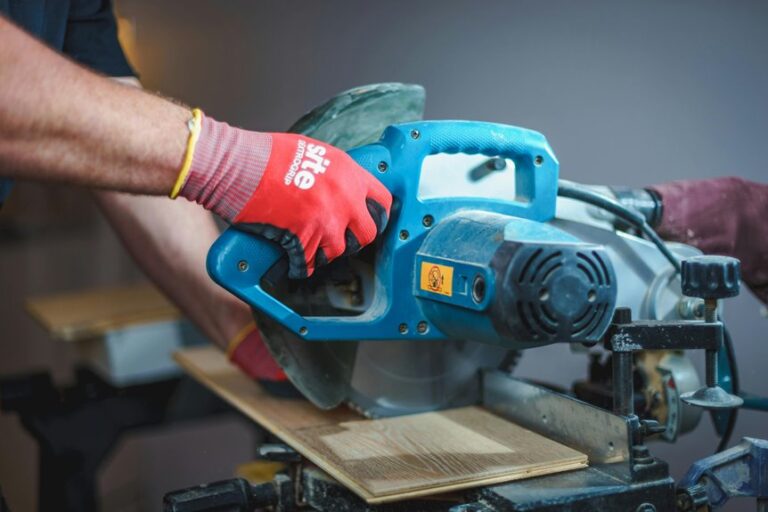
A mitre saw is the tool that turns rough lumber into finished trim, and the wrong one turns a weekend project into a week of frustration. Whether you’re hanging crown molding in an older house or cutting steel studs for a basement build, the five options below cover very different budgets and workloads. Each one earns its place through specific strengths rather than generic specs.
A Side-By-Side Look

Evolution Power Tools R185SMS+ Sliding Miter Saw 7-1/4″

DEWALT 20V MAX* Cordless Miter Saw DCS361M1

BOSCH CM10GD 10 In. Dual-Bevel Glide Miter Saw

Makita LS1040 10″ Compound Miter Saw
Olympia Tools Mitre Box with 14-Inch Backsaw
A Breakdown Of The Leading Choices
Most saws cut wood and nothing else. The Evolution R185SMS+ takes a different route entirely: its blade is designed to handle wood, plastic, and even metal without swapping tools mid-project. That flexibility changes how you plan a job, since one machine covers framing, trim, and light steel or aluminum stock.
The sliding head extends reach on wider boards, while bevel adjustments up to 45 degrees and miter angles out to 50 degrees handle most crown and casing scenarios. A blade ships in the box, so you’re cutting on day one.
Strong Points
- Multi-material cutting means fewer tool purchases across a mixed-material renovation
- The sliding mechanism widens cross-cut capacity beyond what a fixed-head saw manages
- Wide 50-degree miter range covers unusual corner angles older homes throw at you
- Blade included, so the saw is productive straight out of the packaging
Things To Consider
- A 7-1/4″ blade limits board width compared with 10″ or 12″ machines
- Metal cutting generates heat, so blades need periodic inspection to stay sharp
Who Will Love This
Renovators juggling wood, PVC, and occasional metal stock who want one saw instead of three.
Swap It Out When
Dedicated finish carpenters cutting wide hardwood trim will get cleaner results from the BOSCH CM10GD’s larger blade and glide arm.
Trim work rarely happens next to an outlet. The DEWALT DCS361M1 runs on a 20V MAX* battery pack, which means you can carry it upstairs, into a crawlspace, or onto a deck with no extension cord trailing behind. For punch-list days where you make twenty cuts in six different rooms, that freedom adds up fast.
Despite its size, it doesn’t skimp on accuracy features. An integrated cut-line positioning system shows your line without adjustment, and the stainless detent plate carries eleven positive stops for repeatable angles.
What Works In Its Favor
- Battery power delivers roughly 183 cuts of 2×4 pine or about 275 baseboard cuts per charge, enough for a full trim session
- The adjustment-free cut-line indicator speeds layout and reduces miscut waste
- Nested crown capacity of 3-5/8″ and 3-1/2″ vertical base fits typical interior molding profiles
- Eleven positive stops on a stainless plate keep common angles consistent all day
Small Caveats
- The 7-1/4″ blade caps capacity, so wide dimensional lumber needs a bigger machine
- Owners commonly report batteries need topping off before long sessions to avoid mid-job swaps
At A Glance
Made For
Finish carpenters and remodelers moving constantly between rooms or sites where power access is unreliable.
Another Choice May Suit
Shop-bound woodworkers who never leave the bench will prefer the plug-in consistency of the Makita LS1040 below.
Where the DEWALT trades capacity for portability, the Bosch CM10GD goes the other way: precision and reach in a shop-friendly footprint. Its Axial-Glide arm moves on hinges rather than sliding rails, which lets the saw sit noticeably closer to a wall than conventional sliders. In a garage shop where every foot of depth counts, that design choice matters more than any spec sheet number.
The dual-bevel head tilts both directions, so you flip the board less often on compound crown cuts. A 15-amp motor spinning at 4,800 RPM no-load keeps hardwood passes steady.
Practical Pluses
- The hinge-based glide arm reclaims up to 10 inches of front-to-back space versus rail-style sliders
- Dual bevel action handles left and right compound angles without flipping workpieces
- Wider cross-cut range suits 10-inch-class boards that smaller blades can’t span
- Smoother glide motion gives finer feel when easing into delicate trim cuts
Potential Sticking Points
- The premium build carries a higher price than basic compounds in this list
- Hinge joints collect dust, and owners commonly note periodic cleaning keeps the glide smooth
- Corded operation ties you to an outlet, unlike the battery-powered DEWALT above
Right Fit For
Serious hobbyists and professional woodworkers who value accuracy and shop ergonomics over portability.
Reach For A Different Pick When
Budget-conscious first-timers will find everything they need in the simpler, lighter Makita LS1040.
This is the saw that has quietly sat on job-site benches for years, and the reason is simplicity done right. The LS1040 pairs a 15-amp direct-drive motor turning 4,600 RPM with a dual-post pivoting arm, a design with few parts to fail and little to learn. Nothing flashy, just repeatable cuts.
Its miter range runs from 45 degrees left to 52 degrees right with nine positive stops, covering nearly every framing and trim situation. Bevels tilt up to 45 degrees left for compound work.
Real-World Strengths
- Direct-drive motor transfers power efficiently with fewer maintenance points than belt-driven rivals
- 52-degree right miter range exceeds many competitors, useful for odd wall corners
- Nine preset stops make switching between common angles quick and consistent
- Simple mechanical layout tends to hold up under years of job-site handling
Points To Note
- Single-direction bevel means some compound cuts require repositioning the workpiece
- No sliding function, so wide boards exceed its fixed cross-cut capacity
The Numbers That Matter
Who Should Grab It
First-time saw owners and DIYers who want a durable, no-nonsense compound saw for decks, fences, and trim.
Not Your Match When
You need multi-material versatility; the Evolution R185SMS+ at the top of this list cuts metal and plastic alongside wood.
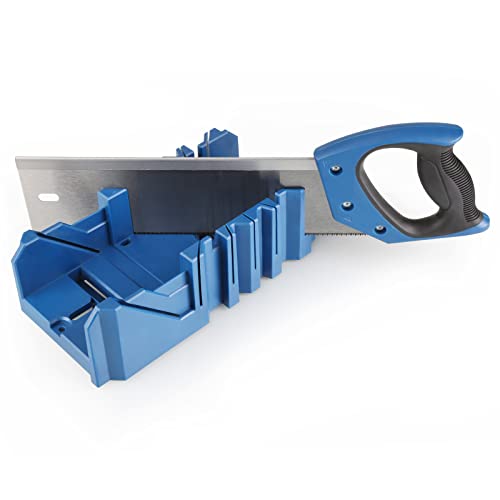
Not every project needs a powered saw. For picture frames, small shelving, and craft-scale trim, this Olympia set pairs a molded guide box with a 14-inch backsaw, and the slots do the angle work for you. You place the board, follow the groove, and get a square or angled cut without touching a single setting.
Three slot types cover the angles most home projects demand, and the whole kit stores on a shelf instead of occupying bench space.
Reasons It Performs
- Pre-cut 90, 45, and 22-1/2 degree slots remove guesswork from angle selection
- The included 14-inch backsaw means the set works complete, no extra purchases needed
- Manual operation makes it quiet and apartment-appropriate, unlike any motorized option here
- Small footprint slips into a drawer or toolbox between projects
Less Ideal Details
- Limited to narrow stock, so decking or thick lumber is out of scope
- Plastic construction wears faster than cast-metal boxes under heavy daily use
Quick Facts
Whose Shelf It Belongs On
Complete beginners, students, and craft hobbyists making small-angle cuts without power tools or workshop space.
Look Elsewhere When
Regular trim installation calls for real capacity, and the Makita LS1040 delivers powered accuracy at a modest step up.
What Matters Most Before Choosing Mitre Saws
Match Capacity To Your Material
Blade size dictates what you can actually cut. A 7-1/4″ model like the Evolution or DEWALT handles trim and 2x stock fine, while 10-inch machines such as the Bosch and Makita span wider boards. Measure the widest piece you’ll realistically cut before committing.
Corded Or Cordless Changes Your Workflow
Cordless saws shine on remote job sites, attics, and multi-room installs where outlets are scarce. Corded models deliver unlimited runtime and often more sustained torque for dense hardwood. Daily commuters between sites lean cordless; dedicated shop users rarely miss the battery.
Bevel And Miter Range Prevent Workarounds
Dual bevel lets you tilt both directions without flipping the workpiece, a genuine time-saver on crown molding runs. Wide miter ranges past 45 degrees matter in older homes whose corners never measure a true 90. Check the detent stops too, since presets speed repetitive angle work considerably.
Don’t Overbuy For Your Projects
A manual mitre box produces clean frame joints for a fraction of the cost and noise of a powered saw. Spending up only pays once your projects regularly involve thick stock, repeated production cuts, or materials beyond softwood.
Key Considerations Across These Picks
Traps First Timers Fall Into
The most common misstep is buying capacity you’ll never use, paying slider prices for trim-only work. Another frequent error: ignoring blade size until the first wide board won’t fit. Check your largest planned stock against the listed capacity before ordering.
Where The Extra Money Goes
Higher-tier models buy smoother mechanisms, dual bevel heads, and sturdier detent plates. Those upgrades translate into faster repeatable cuts over hundreds of uses. Occasional DIYers gain little; anyone cutting trim weekly will feel the difference immediately.
Frequently Asked Questions
Can a mitre saw cut metal?
Some can. The Evolution R185SMS+ is designed specifically for multi-material cutting, handling metal alongside wood and plastic with the appropriate blade.
Is a sliding mitre saw worth the extra cost?
Sliding heads extend cross-cut width significantly. You’ll notice the benefit mainly on wide boards over eight inches; pure trim work rarely needs the slide.
What does “dual bevel” mean?
It means the blade head tilts both left and right. That saves you from flipping the board on compound angle cuts, which improves speed and consistency.
Do I need a stand for my mitre saw?
Not strictly. Long boards are far easier to support with one, but a sturdy workbench with roller supports works well for occasional projects.
How accurate is a manual mitre box compared to a powered saw?
For the angles it offers, a quality box guides a backsaw quite precisely. Powered saws win on speed, repeatability across custom angles, and thicker stock.
Closing Thoughts
Choosing among these five comes down to honest self-assessment about your projects. Craft builders get everything they need from the Olympia box, while the Makita covers most homeowner tasks for years without drama. The DEWALT rewards mobile finish carpentry, the Bosch serves precision-focused shops, and the Evolution handles whatever material lands on its table. Match the tool to the work ahead of you, and any of these will serve you well.