


A loose pile of tools in the corner of the garage slows down every project before it starts. Modular tool boxes fix that by letting you stack, roll, and reconfigure your storage as your collection grows. Whether you’re hauling gear to a job site or just want one trip from the truck to the backyard, the five options below cover rolling workshops, drawer units, and small-parts organizers that click together into a single system.
How The Shortlist Stacks Up
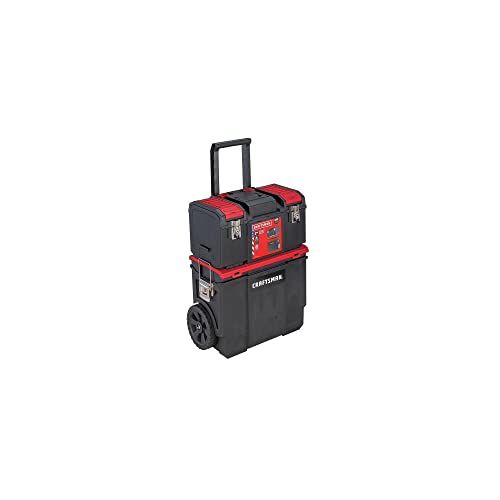
CRAFTSMAN CMST18614 19-in. Rolling Tool Box

DEWALT DWST14830 20 Compartment Pro Organizer

CRAFTSMAN CMST17804 Tool Box With Drawers

CRAFTSMAN VERSASTACK 17-inch Stackable Tool Box

Keter Stack n’ Roll Modular DIY Toolbox
More On The Choices That Made The List
Anyone who has made four trips between the truck and the driveway knows the value of a true mobile workshop. This CRAFTSMAN rolls a large storage bin, an organizer tray, and a top tool box as one connected tower, so a full day’s kit travels in a single pull. The telescoping handle folds flat when you park it, which helps in tight sheds.
The plastic shell keeps weight manageable even loaded, and the lockable design gives some peace of mind when the unit sits in a shared garage. For most homeowners tackling renovations or serious yard projects, it replaces three separate carriers.
A Strong Showing
- Three-tier layout means bulk tools, mid-size gear, and small parts each get their own zone instead of fighting for space.
- Rugged structure handles curb hops and gravel driveways better than thin-walled budget boxes tend to.
- Folding pull handle stores flush, so the unit tucks under workbenches without snagging.
- Lockable latches add a layer of security for tools left in garages or job trailers.
- Wheels spare your back; owners commonly report moving a fully loaded tower across rough concrete with one hand.
Things To Consider
- The footprint is substantial, so apartment dwellers may find it dominates closet space.
- Plastic construction trades some long-term scuff resistance compared with steel-cased alternatives.
Key Specs
Who It Suits Best
Homeowners running full renovation projects who need an entire toolkit movable in one pass.
Where Another Pick Suits Better
Shoppers focused purely on sorting fasteners will get more value from the DEWALT DWST14830 organizer below.
Screws, drill bits, and anchor kits vanish faster than anything else in a shop, and this DEWALT exists to stop that. Twenty compartments, adjustable through removable dividers, let you size each cell around what actually lives there. The clear polycarbonate lid means you spot the right fitting before opening anything.
Side latches let it stack onto other PRO-series organizers, so a growing parts library stays one tidy column rather than a shelf of scattered cases. In our view, that stacking habit is where the real payoff shows up over a year of use.
Useful Strengths
- Removable dividers let you reshape compartments as your inventory changes, no new case required.
- The transparent lid saves constant opening during a project, cutting interruptions noticeably.
- A carry handle makes it easy to bring exactly the right hardware set to a ladder or crawlspace.
- Lid geometry is designed to keep tiny parts from migrating between cells while closed.
Minor Gripes
- Dividers can shift under heavy vibration in transit, so a bumpy truck bed occasionally reshuffles contents.
- Polycarbonate, though tough for its weight, will haze over years of sun exposure if stored near windows.
Made For
Finish carpenters, electricians, and meticulous DIYers whose biggest daily frustration is hunting small parts.
Consider Something Else When
You’re storing bulky cordless tools instead, since the CRAFTSMAN VERSASTACK 17-inch box later in this list is built for exactly that load.
Drawers change how you work. Instead of digging through a lid-opened bin, you slide out exactly the tray you need, which matters most at a cluttered bench where every square inch counts. This VERSASTACK-compatible unit carries two drawers riding on ball-bearing slides, a mechanism that keeps movement smooth even under heavier loads.
It stacks on or beneath other VERSASTACK components, so it slots naturally above or below the suitcase-style box covered next. Removable dividers inside handle the small-parts side of things too.
What Works In Its Favor
- Ball-bearing slides stay reliable with dense loads like socket sets, where plain plastic runners often bind.
- Two-drawer access beats lid-flipping for mid-project grabs at the bench.
- Bi-material handle on top makes lifting the loaded unit off a stack less of a knuckle-buster.
- Removable dividers adapt the interior to wrenches one week, fasteners the next.
- Full VERSASTACK compatibility lets you grow a matched system piece by piece.
Trade Offs
- Drawer tracks collect sawdust in wood shops, and owners commonly report a quick vacuum keeps them gliding well.
- Two drawers limit capacity compared with open-bin designs of similar height.
At A Glance
Right Fit For
Bench-bound hobbyists and mechanics who reach for the same organized trays dozens of times per session.
Not Your Match When
You mostly haul long-handled tools, because the Keter Stack n’ Roll’s deep main compartment swallows those far better.
This is the piece of the VERSASTACK family built around power tools. The 17-inch interior accommodates cordless drills, drivers, and their chargers, plus attachments, all behind a water-sealed closure. That seal is the headline here: rain on a tailgate or damp morning dew on a deck build stops being a threat to expensive batteries.
Like the drawer unit above, it carries a bi-material handle and stacks with any other VERSASTACK component, so the two pair naturally into a two-box kit. One caveat worth weighing: the sealed design means moisture trapped inside has nowhere to escape quickly, so drying wet tools before closing up is smart practice.
What Makes Sense
- A water-sealed case protects cordless platforms worth far more than the box itself.
- 17 inches of depth fits drills, impact drivers, and chargers in one grab-and-go carrier.
- Bi-material handle spreads the load comfortably when the case runs heavy.
- Stacking compatibility turns it into the base or middle of a larger modular setup.
Points To Note
- No drawers or divided compartments, so accessories ride loose unless you add pouches.
- Sealed lids hold humidity; leaving damp tools inside can invite corrosion over a season.
Who Should Grab It
Tradespeople and weekend builders who move cordless tools between vehicles, sites, and weather.
Look Elsewhere When
Your priority is small-parts organization, where the DEWALT DWST14830’s twenty divided cells do the job properly.
Keter builds this one from lightweight resin, and the difference is obvious the first time you carry it upstairs. A soft-grip handle and metal latches that click audibly when seated give it a reassuring, low-fuss feel; you know it’s shut without checking twice. Inside sits a deep compartment for larger items plus a cross-system tray layered on top for the bits and bobs.
Water-resistant construction suits shed and porch storage, where humidity would punish lesser cases. Compared with the CRAFTSMAN rolling tower, it skips wheels but wins decisively on portability by hand.
Well-Handled Touches
- Resin body keeps carrying weight low even with a full load of hand tools.
- Sound-indicating metal latches confirm closure, a small detail that prevents surprise spills.
- Deep lower bay swallows extension cords, levels, and odd-shaped items other boxes refuse.
- Top cross tray separates everyday hardware from the big stuff automatically.
- Water resistance makes garage-corner and outdoor-shelf storage realistic year-round.
Small Caveats
- No integrated wheels, so heavy loads mean carrying rather than rolling.
- Resin surfaces can flex slightly when overloaded past sensible weight, a behavior owners occasionally mention.
Quick Facts
Whose Shelf It Belongs On
Apartment DIYers and garden-shed keepers who value light, weatherproof, grab-and-go storage over maximum capacity.
A Better Fit Elsewhere
For whole-workshop mobility, the CRAFTSMAN CMST18614 rolling tower moves everything at once without lifting a thing.
What Matters Most Before Choosing Modular Tool Boxes
Match The System To Your Workflow
Start with how you actually move tools. Rolling towers suit garage-to-driveway projects, while stackable cases shine when your route involves stairs, trucks, or tight van spaces. Buying into one ecosystem, such as VERSASTACK, pays off later because every additional unit locks together without adapters.
Capacity Versus Footprint
A 19-inch rolling bin holds a renovation’s worth of gear but demands floor space. Measure your storage area honestly before falling for capacity numbers. Apartment users often get more daily value from two compact stacked cases than one oversized chest they resent moving.
Material And Closure Quality
Resin keeps weight down and resists rust, while water-sealed lids protect electronics and batteries. Check latch type too; metal latches with positive feedback last longer and close more confidently than thin plastic clips on budget cases.
Organization Inside The Box
Dividers, drawers, and trays determine whether finding a specific bit takes seconds or minutes. Drawer units cost more but repay the difference at the bench, especially for anyone working on detailed tasks daily.
Key Considerations Across These Picks
Wrong Turns To Avoid
The classic mistake is buying capacity you don’t need, then discovering the filled box never leaves the garage. Another common slip is mixing incompatible stacking systems, which leaves you carrying pieces separately anyway. Confirm latch and rail quality early; flimsy clips are the failure point reported most often.
What Separates Premium From Basic
Higher-priced units typically add ball-bearing slides, sealed lids, and reinforced shells. Those upgrades matter most for daily professional use. Occasional DIYers rarely stress a basic case enough to justify the premium, so spend according to frequency, not aspiration.
Frequently Asked Questions
Are modular tool boxes worth it over a standard toolbox?
They let you expand and reconfigure storage as your tool collection grows instead of replacing a single box repeatedly. For anyone adding tools regularly, the flexibility pays off within a couple of purchases.
Can different brands stack together?
Generally no, since locking rails and footprints are proprietary to each system. Stick with one brand’s ecosystem to keep stacking seamless.
How much weight can these typically handle?
Manufacturers rarely publish exact limits for consumer models. As a practical rule, keep loads manageable enough that handles and latches show no strain when lifted.
Do rolling tool boxes work on stairs?
Not really; wheels help on flat ground only. Stair-heavy routes favor lighter stackable cases carried individually.
What should I store in a small-parts organizer?
Fasteners, drill bits, anchors, fuses, and electrical connectors are the usual residents. Anything small enough to lose belongs in a divided cell.
Bottom Line
Modular storage works best when it matches your real routine, not an imagined one. Rollers suit big garage projects, sealed cases protect cordless investments outdoors, and divided organizers end the small-parts hunt for good. Start with the piece solving today’s biggest frustration, then grow the system from there. Your future self, halfway through a Saturday project, will appreciate the foresight.




