


Hidden moisture is the kind of problem that stays quiet until it’s expensive. A swollen baseboard, a musty smell under carpet, firewood that won’t burn right: all of it traces back to water where you don’t want it. A good moisture meter takes the guesswork out of the equation in seconds, whether you’re checking lumber before a build, scanning drywall after a leak, or stacking cords for winter. Below are five options that cover the main styles, from simple pinless scanners to hybrid tools that do a bit of everything.
Your Options, Compared

Povlen Pinless Wood Moisture Meter for Lumber & Drywall

Calculated Industries 7440 AccuMASTER XT Digital Moisture Meter
Dr.meter Pinless Wood Moisture Meter for Drywall
PREXISO 7-in-1 Digital Wood Moisture Meter

General Tools MMH800 Pin/Pinless Moisture Meter
What Each Pick Brings To The Table
Pinless meters read moisture through high-frequency waves rather than metal probes, which means nothing touches the surface beyond the sensor pad. That single design choice matters most when you’re checking finished furniture, cabinetry, or hardwood floors where two tiny punctures would be permanent damage.
The Povlen leans on that approach with a smart-chip reading engine and a one-button HOLD function, so you can press it against an awkward spot behind a toilet or under a sink, freeze the number, and lift the tool away to look at it. For anyone working around high-end finishes, that workflow is the whole appeal.
Useful Touches
- No pinholes or scratches left behind, so antiques and stained trim stay intact
- HOLD button lets you capture readings in tight spots you can’t see while pressing
- Fast scan speed suits quick sweeps across large drywall areas after a suspected leak
- Simple operation makes sense as a first meter for new homeowners
Small Caveats
- Pinless sensors read a shallow zone below the pad, so very deep pockets of dampness can be missed; a pin model reaches further
- Keep the sensing face clean, since dust or finish residue on the pad skews readings over time
Who It Suits Best
Furniture restorers, floor installers, and homeowners who want leak checks without marking up finished surfaces.
A Better Fit Elsewhere
Shoppers who need to probe inside thick studs or concrete should reach for the Calculated Industries 7440 AccuMASTER XT instead, since its pins penetrate well past the surface layer.
Where the Povlen glides over surfaces, the AccuMASTER XT commits to contact. Its twin pins bite into the material, and because electrical resistance changes with water content, the reading reflects what’s actually inside the board or wall cavity, not just near the skin. Remodelers chasing a roof leak or a burst pipe tend to prefer this style for exactly that reason.
It handles wood, drywall, plaster, brick, concrete, and even stacked firewood, which makes it a genuine multi-material instrument rather than a woodworking-only gadget. The backlit display keeps numbers legible in dim crawlspaces and basements, places where moisture problems usually live anyway.
What Stands Out
- Pin measurement reads inside the material, catching dampness a surface scanner can pass over
- Works across lumber, masonry, plaster, and carpet-covered subfloors after flooding
- Backlit LCD stays readable in dark attics and utility closets
- Handheld size slips into a tool bag without eating much space
Things To Consider
- Pins leave small holes, so skip it on visible finished wood and use a pinless option instead
- Probe tips wear down with heavy use and may need eventual replacement to stay accurate
Quick Facts
Made For
DIY remodelers and contractors who diagnose leaks, flood damage, and damp framing on a regular basis.
Consider Something Else When
Anyone restoring finished furniture will get better results from the Povlen pinless meter, which scans without leaving probe marks.
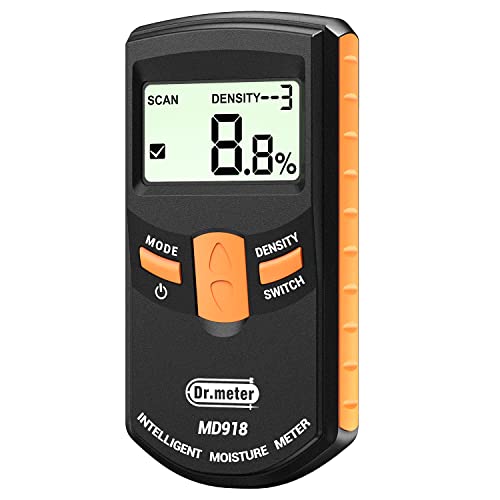
Different species hold water differently, and a meter that treats pine the same as mahogany will mislead you. The Dr.meter addresses that with ten selectable timber grades, letting you match the setting to the board before you trust the number. It also scans non-destructively using electromagnetic waves, so no holes end up in your workpiece.
In practice this is the pick for weekend woodworkers checking stock before glue-up, or renters verifying that a suspicious drywall patch isn’t hiding a slow drip. You give up some of the deeper diagnostics of pricier models, but the core job gets done cleanly.
The Value In It
- Ten wood-grade settings improve accuracy across softwoods and hardwoods alike
- Electromagnetic scanning leaves furniture and paneling untouched
- No drilling means no cleanup, no filler, no visible scars on valuable pieces
Worth Noting
- Surface-wave readings sample only the upper layer, so moisture trapped deep in thick timbers may go undetected
- A handful of owners report needing to recalibrate expectations between wood species, since results vary by grade selection
Right Fit For
Budget-conscious hobbyists, students in woodworking classes, and anyone who wants a capable first meter without extra features they’ll never open.
Not Your Match When
Firewood stackers juggling mixed materials will find the PREXISO 7-in-1 more useful, thanks to its wider calibration range and built-in temperature and humidity readings.
This is the busiest tool on the list, and the spec sheet backs it up. Two stainless pins take direct readings, seven calibration scales cover softwoods, hardwoods, and building materials across a 0% to 57% range, and four measurement modes let you log single points, average several spots, or track maximum and minimum values across a wall. On top of that, it doubles as a thermometer and hygrometer for the room itself.
For firewood season, the combination is hard to argue with: check the cord, then check the humidity of the room it’s drying in. The rubber side grips and hand-friendly shape help during long sessions, though the pin approach does mean accepting small punctures in whatever you test.
What Earns Its Place
- Seven calibration scales cover everything from kiln-dried lumber to concrete
- Multi-point averaging smooths out odd single-spot readings on uneven walls
- Color backlit screen with hold function speeds up readings in dim garages
- Switchable Celsius/Fahrenheit display suits any region
- Rubber grips keep the tool steady through repeated measurements
Points To Note
- Pins leave holes in finished surfaces, so keep it for rough lumber, studs, and firewood
- The feature set adds buttons and menus, which takes a few uses to learn cold
- Auto power-off saves batteries but can cut a session short while you pause mid-scan
Feature Rundown
Who Should Grab It
Homeowners splitting and seasoning their own firewood, plus anyone who wants wall, wood, and climate checks in one pocketable unit.
Swap It Out When
Professional inspectors who need both pin and pinless capability in a single body will find the General Tools MMH800 a stronger fit.
Most people eventually want both sensor types: pins for depth, a pad for delicate surfaces. The MMH800 skips that second purchase by combining them in one housing, alongside ambient temperature and humidity sensors. Compared with the PREXISO, it trades some calibration breadth for dual detection methods, which suits inspection work more than firewood duty.
Its stated ranges run 5% to 50% in wood and roughly 1.5% to 33% in materials like concrete and drywall, with an automatic diagnostic check on startup. Auto power-off after three minutes protects the 9-volt battery, and one ships included, so the tool works out of the box.
Good Reasons To Consider
- Pin and pinless modes in one body cover delicate finishes and deep probing alike
- Built-in temperature and humidity readings add context around the suspect area
- Auto diagnostic check at startup helps confirm the tool is behaving before you trust a reading
- Nine-volt battery comes in the box, ready for first use
Honest Caveats
- Carrying two sensor systems costs more than either single-style meter on this list
- Three-minute auto shutdown can interrupt slower, methodical survey work
- More modes mean a steeper learning curve than the straightforward Dr.meter
The Numbers That Matter
Whose Shelf It Belongs On
Home inspectors, property managers, and committed DIYers who troubleshoot water intrusion often enough to justify a dual-sensor investment.
Where Another Pick Suits Better
Occasional users who just need clean surface scans will save money and complexity with the Dr.meter pinless meter instead.
Choosing Between These Meters Without Regret
Pins Versus Pad First
Decide how you’ll use the tool before anything else. Pin meters measure electrical resistance between two probes pushed into the material, giving a reading from inside the board or wall. Pinless models send electromagnetic waves through the surface and read the zone beneath the pad without leaving marks. Restorers and floor people lean pinless; leak hunters and firewood burners lean pins.
Material Range And Calibration
A meter calibrated only for lumber will misread drywall or concrete. Look for multiple species settings if wood is your focus, or dedicated building-material modes if walls and masonry are. The wider and better matched the calibration scales, the fewer surprises between the number on screen and reality.
Display And Daily Handling
You’ll often read these in basements, attics, and closets with terrible lighting, so a backlit screen earns its place quickly. HOLD functions matter too, since many readings happen in spots where you can’t watch the display while pressing. Weight, grip texture, and button layout decide whether a long survey session feels fine or frustrating.
Power And Long-Term Care
Most units run on standard batteries, and auto power-off preserves them, though it can interrupt slow work. Probe tips on pin meters wear with use, and sensor pads collect dust that skews readings, so plan on occasional cleaning and eventual tip replacement for pin-style tools.
Key Considerations Across These Picks
Traps First Timers Fall Into
The classic mistake is buying a wood-only meter and pointing it at drywall, then trusting the number. Match the calibration mode to the material every time. Another slip: taking a single reading and calling the job done. Moisture migrates, so sweep several spots and compare before drawing conclusions about a wall or floor.
What Separates Premium From Basic
Higher-tier models add dual sensor types, ambient temperature and humidity sensing, and broader calibration libraries. That combination turns a spot-checker into a diagnostic tool. Casual users rarely need it; anyone inspecting properties or chasing recurring leaks usually finds the upgrade pays for itself in avoided callbacks.
Frequently Asked Questions
Do pinless meters really work?
Yes, within limits. They read a zone beneath the sensor pad using electromagnetic waves, which suits flat, accessible surfaces, though deeply trapped moisture can escape them.
Can one meter handle both wood and drywall?
Many can. Models like the PREXISO and General Tools MMH800 include separate calibration scales for building materials, so switch modes before each material change.
How accurate are consumer moisture meters?
Reasonably close when matched to the correct material setting and used properly. Treat readings as comparative indicators across spots rather than laboratory values.
What moisture level is too high in firewood?
Seasoned firewood generally burns best below the low twenties in percentage terms. Readings above that suggest the wood needs more drying time.
Do I need to calibrate my meter?
Consumer models arrive factory-set and need no routine calibration. Keeping pins clean and the sensor pad free of dust maintains accuracy over time.
Bottom Line
Pick by surface, not by spec sheet. Finished furniture and flooring point toward the Povlen or Dr.meter pinless designs; studs, firewood, and post-leak walls favor the AccuMASTER XT or PREXISO pins; and the General Tools MMH800 serves anyone who refuses to choose between the two camps. Match the sensor style to your most common job, and any of these five will tell you what your eyes can’t.




