


Fencing projects punish slow tools. A few hundred linear feet of picket panels means thousands of fasteners, and a heavy hammer turns a weekend job into a multi-day grind. The right nailer changes the math entirely, driving fasteners in fractions of a second so you can keep pace with your layout, your lumber, and your sanity. Power type, nail length range, and magazine style all steer the choice, and the five picks below cover the main paths: a battery-driven brad nailer for detail work, three pneumatic coil nailers built for heavier siding and fence boards, and a pneumatic brad nailer for trim and cap rails.
A Snapshot Of The Selections

DEWALT DCN680B 20V MAX XR 18 GA Cordless Brad Nailer

Maxparts NVH45 15 Degree Roofing Nailer

BOSTITCH BTFP12233 Smart Point 18GA Brad Nailer Kit

Maxparts CN70 Pneumatic Siding Coil Nailer
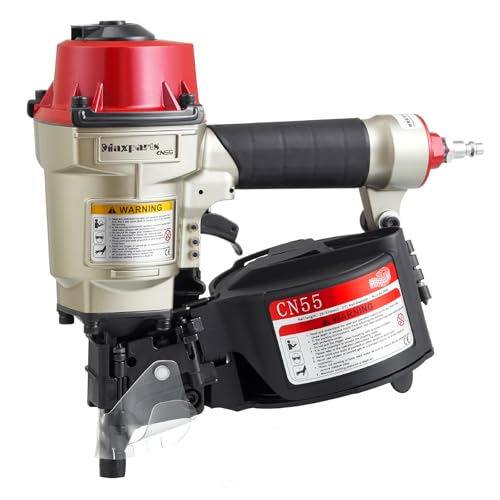
Maxparts CN55 Pneumatic Siding Coil Nailer
Why These Options Stand Out
The DEWALT DCN680B is the one you reach for when dragging a compressor and hose across a yard sounds miserable. Running entirely on a 20V MAX battery, it sidesteps the gas cartridges, the air line, and the noise that comes with pneumatic tools, which matters a lot on small fence jobs where you walk the line repeatedly. It’s an 18-gauge brad nailer, so the fasteners are slim and leave small holes that disappear under paint, perfect for attaching cap rails, trim boards, and the decorative toppers that finish off a fence.
The brushless motor (a motor with no carbon brushes, so it generates less friction and runs cooler) extends runtime and typically outlasts brushed designs, and the micro nose helps you see exactly where each brad lands. For most homeowners, this is the cordless shortcut that turns a Saturday detail job into a calm afternoon.
A Few Strong Suits
- Battery power eliminates the compressor and hose, freeing you to work anywhere on the property.
- Tool-free depth adjustment lets you dial in countersink depth (how far the nail head sits below the wood surface) without hunting for a wrench.
- Brushless motor stretches per-charge runtime and tends to hold up over years of weekend projects.
- Compact nose improves sight lines for placing brads along narrow cap rails and trim pieces.
Things To Consider
- Battery and charger are sold separately, so the tool-only package adds to the real cost if you don’t already own a 20V platform.
- As a brad nailer, it isn’t the right fit for structural fence boards; you’ll still want a coil nailer for the heavy lifting.
Feature Snapshot
Made For
Homeowners finishing a fence with cap rails, toppers, or trim boards who already own or plan to invest in the DEWALT 20V platform.
Skip It When
You need to drive thick fasteners through cedar or pine pickets, in which case the Maxparts CN70 or CN55 coil nailer suits the work better.
The Maxparts NVH45 earns its spot on a fence crew when the project bleeds into shingle or roofing work. Built as a 15-degree coil roofing nailer, it fires full-head coil nails from roughly 7/8 inch to 1-3/4 inch, the range you want for asphalt shingles, felt underlayment, and the occasional fence-top pergola roof. The high-capacity coil magazine holds up to 120 nails at a time, which means fewer reloads when you’re up on a ladder or stretched across a long run of fencing.
A sensitive trigger lets you control placement precisely, useful when working around edges where over-driving can split a board. Owners commonly report that it pairs well with a standard 3/8-inch air fitting on a small pancake or hot-dog compressor. If your build includes any roofing at all, this is a versatile teammate to have on the truck.
Useful Touches
- 120-nail coil magazine reduces reload frequency on long runs.
- Sensitive trigger valve gives finer control near edges and corners.
- Lightweight, balanced body helps reduce arm fatigue during overhead work.
- Nail length range covers most shingle and trim-fastening tasks.
Points To Note
- Requires a compressor and air hose, adding gear to transport and set up.
- Coil nail format is overkill for plain fence picket work where straight strips are easier to source.
Whose Shelf It Belongs On
DIYers tackling combined roofing and fencing projects, or anyone building a covered gate structure who needs one tool for both jobs.
Consider Something Else When
Your project is pure fence boards with no roofing, in which case the Maxparts CN55 or CN70 is a more focused pick.
The BOSTITCH BTFP12233 is the pneumatic alternative for trim and finish work, and it comes as a kit so you have the fittings, nails, and accessories to start working out of the box. Its Smart Point nose is a smaller contact area that sits closer to the actual nail exit, which makes it easier to place brads exactly where you want them in tight spots like lattice edges, fence post caps, and decorative picket tops. If you already own a compressor, this is one of the more affordable ways to add a serious trim nailer to the kit.
For fence work, the realistic role for this tool is the cosmetic layer: cap rails, post sleeves, and any cedar trim that needs a clean brad rather than a chunky screw or nail head. Lightweight and well-balanced, it’s friendly for one-handed positioning on a ladder.
The Helpful Details
- Smart Point nose improves accuracy in narrow or decorative spaces.
- Kit format includes the fittings and starter fasteners needed for day-one use.
- Pneumatic power delivers consistent driving depth across long trim runs.
Trade Offs
- Requires a compressor and hose, so it’s not as grab-and-go as the DEWALT DCN680B.
- As a brad nailer, it can’t handle the structural face boards of a privacy fence.
- Owners commonly recommend oiling the tool before storage to prevent internal corrosion.
Right Fit For
Shoppers who already run a small air compressor and want an affordable trim nailer for finishing touches on fence caps and decorative details.
Look Elsewhere When
You want true cordless freedom without dragging an air line, where the DEWALT DCN680B fits the routine better.
When the fence calls for serious fasteners, the Maxparts CN70 steps up with a 1-3/4 inch to 2-3/4 inch range that sinks through thick cedar, pine, and even pressure-treated boards without a fight. It’s a 15-degree coil siding nailer, so it runs the same coiled fasteners used on house siding, and the depth of drive handles the heavy boards you find on tall privacy fences, dog-earred pickets on thicker stock, and the structural rails that hold everything together.
The 70 to 120 PSI working pressure range plays nicely with most homeowner-grade compressors, and the rapid-fire cycle speed keeps the pace brisk when you’re nailing off long runs. Owners commonly report that adding a few drops of pneumatic tool oil before each session keeps the internal driver running smoothly. For a serious wood fence build, this is the muscle tool of the roundup.
What Stands Out
- Drives 15-degree coil fasteners up to 2-3/4 inches, ideal for thick fence boards.
- Industrial-grade motor components handle demanding, high-cycle work.
- Rapid-fire cycle speed accelerates long runs of picket or panel installation.
- Works comfortably within typical homeowner compressor pressure ranges.
Honest Caveats
- Requires a compressor capable of sustained 70 to 120 PSI output.
- Coil nails cost more per box than straight strip nails used in framing nailers.
- Heavier than brad nailers, so extended overhead work can tire the forearm.
Feature Snapshot
Best Suited To
Homeowners and contractors building tall privacy fences from thick boards who need a tool that drives deep without bogging down.
Reach For A Different Pick When
Your fence uses thinner pickets and standard 1 to 2-1/4 inch fasteners, in which case the lighter Maxparts CN55 is the more efficient match.
The Maxparts CN55 is the everyday workhorse of the coil nailer family, covering 1 inch to 2-1/4 inch fasteners across the most common fence builds. Standard picket profiles, dog-ear pickets on typical 5/8-inch or 3/4-inch stock, and standard 2×4 rails all fall comfortably inside its range. It’s the tool you grab when the project is a straightforward residential fence with off-the-shelf lumber from the home center.
Like the CN70, it works within the 70 to 120 PSI window that small compressors can sustain, and the rapid-fire cycle keeps the rhythm going across long runs. The shank diameter range supports both smooth and ring-shank nails, so you can choose fasteners based on holding power rather than tool limits. For most fence projects, this is the sweet spot of capability and value.
A Strong Showing
- 1 inch to 2-1/4 inch range covers the majority of residential fence applications.
- Rapid-fire operation keeps pace with the layout, not against it.
- Compatible with smooth and ring-shank nails for flexible fastener choice.
- Runs on the same compressor pressure range as the larger CN70.
Points To Keep In Mind
- Limited to 2-1/4 inch max, so it won’t reach through extra-thick cedar or doubled-up boards.
- Still requires a compressor, hose, and pneumatic tool oil for routine care.
Who Should Grab It
Homeowners building a typical residential picket or privacy fence with standard-dimension lumber who want a single tool for the bulk of nailing work.
A Better Fit Elsewhere
Projects demanding fasteners longer than 2-1/4 inches should move up to the Maxparts CN70 for the extra reach.
Picking The Right Nailer For Your Fence Build
Choosing nail guns for fencing comes down to matching the tool to the lumber and the layout, not chasing the most powerful option on the shelf. Fence boards vary widely in thickness, and the wrong fastener length leads to split wood, popped nails, or rails that loosen within a season.
Power type drives the first big decision. Cordless brad nailers like the DEWALT DCN680B trade driving force for portability, which works for trim but not for structural boards. Pneumatic coil nailers like the Maxparts CN55, CN70, and NVH45 deliver consistent driving power at the cost of dragging a compressor. For a property without easy outlet access or a dedicated shop compressor, that hose and tank setup is a real consideration.
Nail length range is the second filter. Standard 1x picket work fits comfortably in the 1 to 2-1/4 inch window of the CN55. Thicker cedar, wider face boards, and double-rail installations push toward the 2-3/4 inch reach of the CN70. Roofing nails on fence-top structures land in the NVH45’s wheelhouse.
Coil versus strip magazines affects reload frequency and fastener cost. Coil nailers hold more fasteners per load and cycle fast, which matters on long runs. Strip-format nailers (not represented in this list) use cheaper fasteners but require more frequent reloading, which slows down a big fence.
Finally, think about the trim and finish layer. Even a heavy-duty fence build needs a separate tool for cap rails, lattice, and decorative picket tops, and that’s where a brad nailer earns its place alongside the coil nailer.
Key Considerations Across These Picks
Where Shoppers Go Wrong
The most common mistake is buying a brad nailer expecting it to handle structural fence boards, then watching 18-gauge fasteners fold under the pressure of cedar or treated pine. Match the tool class to the work: brad nailers for finish, coil nailers for structure.
Another frequent slip is underestimating compressor requirements. A coil nailer rated for 70 to 120 PSI needs a compressor that can hold that pressure under load, not one that cycles constantly and starves the tool of air mid-drive. A small 6-gallon pancake compressor works for short runs, but longer projects benefit from a higher-capacity tank.
Where The Extra Money Goes
Higher-tier nailers typically add a brushless motor, a more refined depth-adjustment system, and longer warranties through bundled protection plans. For weekend DIYers, the standard brushed or entry brushless tools handle typical fence work without complaint.
The upgrade earns its keep when you run high cycle counts, work in cold or wet weather, or depend on the tool for income. Professionals who drive thousands of fasteners a week benefit from the durability of brushless motors and the faster service turnaround of extended protection plans. For a one-time fence build, the standard tier is usually the smarter spend.
Frequently Asked Questions
What gauge nail gun is best for fence pickets?
Most residential fence pickets take 15-degree coil nails in the 1-1/2 inch to 2-1/4 inch range, which matches the Maxparts CN55 and CN70 well. Thinner trim and cap rails use 18-gauge brad nails instead.
Can I use a brad nailer for fence boards?
A brad nailer is the wrong tool for fence boards. Brad nails are too short and too thin to hold structural lumber against wind and seasonal movement, and they will pull through softwood within a season. Reserve brad nailers for cap rails, lattice, and decorative trim only.
Do I need a compressor for a coil nailer?
Yes. Every coil nailer in this roundup is pneumatic and requires a compressor capable of 70 to 120 PSI sustained output, plus a standard 3/8-inch air hose and pneumatic tool oil for routine maintenance.
How long should fence nails be?
Fence nails should penetrate at least 1-1/2 inches into the framing board behind the picket. For 5/8-inch to 3/4-inch pickets, a 2-inch to 2-1/4 inch nail is a common choice. Thicker cedar or doubled-up boards may need 2-1/2 inch to 2-3/4 inch fasteners.
Are cordless nailers strong enough for fencing?
Cordless nailers handle trim and cap rail work well, but most current cordless models don’t match the driving force of pneumatic coil nailers on thick structural boards. Use cordless for the finish layer and pneumatic for the heavy boards.
Bottom Line
For most fence builds, a pneumatic coil nailer like the Maxparts CN55 or CN70 handles the structural boards, while a brad nailer such as the DEWALT DCN680B or the BOSTITCH BTFP12233 takes care of the trim. If the project includes any roofing, the Maxparts NVH45 earns its place as the third tool on the truck. Pick the tool that matches the lumber in front of you, and the fence goes up faster than you expect.




