


Spending a Saturday wrestling with a hammer when you should be enjoying the build is the moment most people start shopping for a real nailer. The right tool turns crown molding, picture frames, and cabinet backs into quick, clean work, and the wrong one leaves you with split trim or a compressor hose tripping you on the stairs. This roundup walks through nine solid options across cordless brad nailers, pneumatic workhorses, and specialty pin and finish nailers so you can match the gun to the project in front of you.
The Lineup, Simplified

DEWBIN 18 Gauge Brad Nails 3/4-inch Galvanized (1000ct)

Ryobi 18V ONE+ 18-Gauge Cordless Airstrike Brad Nailer P321

BATAVIA 2-in-1 Cordless Brad Nailer and Stapler Kit

3PLUS HAPT50SP Pneumatic Punch Nailer / Nail Puller

WORX 20V Cordless 18-Gauge Brad Nailer WX842L
PORTER-CABLE 23-Gauge Pin Nailer PIN138

Bostitch 16-Gauge Clip Head Finishing Pneumatic Nailer
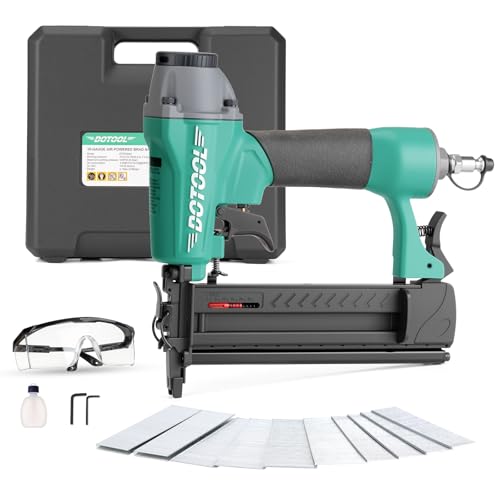
Dotool 18-Gauge 2-in-1 Pneumatic Brad and Staple Gun

DOTOOL 18-Gauge 2-in-1 Pneumatic Brad and Staple Gun
The Strengths Of Each Pick
The DEWBIN 1000-count box of 18-gauge 3/4-inch brads is the kind of consumable every shop burns through faster than expected, especially once trim season starts. The nails are zinc-galvanized, which helps them resist surface staining on painted trim and oak alike. A chisel point and T-head design help them start cleanly in hardwood, MDF, and soft plywood without wandering on the first strike.
Anyone already running a brad nailer from a brand like Ryobi or WORX will recognize the convenience of grabbing a thousand at a time. The cardboard packaging keeps strips aligned so the loader doesn’t fight bent fasteners. Depending on your gun’s magazine, you may want to double-check that your tool accepts generic 18-gauge collated strips before ordering in bulk.
Where It Delivers
- Zinc-galvanized finish helps the nails hold up against humidity in basements and outdoor trim projects.
- Chisel point reduces the chance of the fastener wandering on first contact with hard trim.
- Thousand-count box lowers per-nail cost on long casing and baseboard runs.
- Packaging keeps collated strips straight, which means faster reloads with fewer misfires.
Things To Consider
- Galvanized coating is functional, not decorative, so you may want to fill and paint heads in visible work.
- 3/4-inch length limits you to thinner trim, since deeper structural fastening needs a longer nail.
Built With In Mind
Trim carpenters and remodelers running long casing or baseboard jobs who need steady fastener supply without overpaying per strip.
Skip It When
The Ryobi 18V ONE+ 18-Gauge Cordless Airstrike Brad Nailer (Tool Only) P321 already ships with a starter strip, and most users would rather buy the gun than reorder loose fasteners first.
The Ryobi P321 trades the compressor hose for a battery and an air-ram firing mechanism, which is the upgrade most people don’t realize they want until they’re climbing a ladder with a hose wrapped around their ankle. It runs on the same 18V ONE+ battery platform used across more than a hundred Ryobi tools, so anyone already invested in that ecosystem can drop in a pack and start firing. The 18-gauge capacity handles trim, baseboard, and small cabinet work without bogging down on standard softwoods.
Where the P321 really earns its place is on jobs that move around, like installing wainscoting in a hallway or finishing a closet built into a back bedroom. There’s no air hose to drag and no compressor to drain at the end of the day. You may find that running through dense oak or hickory takes more battery than a pine run, so a spare pack helps on longer jobs.
Useful Highlights
- No compressor or hose needed, which speeds up trim work across multiple rooms.
- ONE+ battery compatibility removes the cost of a separate power platform for existing Ryobi owners.
- 18-gauge brad capacity covers most interior trim and craft projects.
- Tool-only configuration lets shoppers use batteries they already own.
Points To Keep In Mind
- Battery and charger are sold separately, which adds cost for first-time ONE+ users.
- Cordless firing depth can feel slightly less consistent than a top-tier pneumatic on dense hardwoods.
Whose Shelf It Belongs On
Homeowners and remodelers already carrying ONE+ batteries who want trim work untethered from a compressor.
Consider Something Else When
You run a small dedicated shop and already have a compressor, since the Bostitch 16-Gauge Clip Head Finishing Pneumatic Nailer is built for that kind of high-volume trim work.
The BATAVIA kit ships with a 4V rechargeable lithium-ion cell, a thousand brad nails, and a thousand staples, so it lands ready to work right out of the box. The 2-in-1 design means you can switch between upholstery-style staples and 18-gauge brad nails without buying a second tool. That combination makes it especially handy for craft projects, fabric work, and small repairs that would otherwise feel oversized for a full framing nailer.
The bottom-loading magazine keeps reloads quick when you’re running through a stack of picture-frame backs or securing foam to a headboard. The 4V power level won’t drive a brad through thick oak the way the Ryobi P321 can, so for craft, softwood, and light assembly it lands in a comfortable sweet spot. The trade-off is that dense hardwoods and structural trim work fall outside its lane.
A Strong Showing
- Comes with both staples and brad nails included, removing the starter-cost barrier.
- Bottom-loading magazine speeds up reloads during repetitive craft work.
- Cordless 4V design keeps things simple and approachable for first-time tool owners.
- Dual-function capability reduces the number of tools on a hobby bench.
Honest Caveats
- Lower voltage limits how deep the fasteners sink into dense hardwood, so it suits softwood projects best.
- Smaller battery capacity means longer upholstery jobs may require a recharge break.
Right Fit For
DIYers tackling upholstery, craft, and light softwood projects who want a friendly, all-in-one starter kit.
Look Elsewhere When
Your main project is structural trim, since the WORX 20V Cordless 18-Gauge Brad Nailer WX842L drives deeper into hardwood and integrates with a more capable battery platform.
The 3PLUS HAPT50SP is the odd one in this lineup, and that’s the point. It’s a pneumatic punch nailer, which means it drives nails backward out of wood rather than forward in. That makes it the right tool for reclaiming pallet lumber, disassembling shipping crates, or pulling fasteners out of framing during a remodel. The slim elongated nose reaches into tight corners where a pry bar would chew up surrounding material.
Build-wise, the die-cast aluminum body keeps weight down, and the rubber grip cuts fatigue during repetitive teardown work. It accepts nails in the 10 to 20 gauge range, so it covers most common framing and decking fasteners. You’ll need an air compressor to drive it, which means this lands in a workshop setting rather than a quick curbside pallet job.
Reasons It Performs
- Drives nails backward in the 10 to 20 gauge range, so it handles most framing and decking fasteners.
- Slim elongated nose reaches into tight spaces where prying tools would damage the wood.
- Lightweight die-cast aluminum body reduces arm fatigue on long teardown days.
- Rubber grip provides control during high-impact punching work.
Practical Considerations
- Requires an air compressor and hose, which limits portability for on-site pallet recovery.
- Specific to removal work, so it doesn’t double as a fastening tool for new builds.
Made For
Woodworkers reclaiming pallet lumber, contractors pulling fasteners during tearouts, and pallet recyclers processing volume material.
A Better Fit Elsewhere
For installing fresh trim, the PORTER-CABLE 23-Gauge Pin Nailer (PIN138) is the cleaner specialty choice with almost-invisible holes.
The WORX WX842L uses a system called NailForce Air Impact Technology to drive 18-gauge brad nails into hardwoods without an air compressor. That distinction matters for trim projects that happen on upper floors, in finished basements, or anywhere dragging a hose isn’t realistic. It runs on the 20V Power Share platform, which means a single battery covers more than 140 WORX tools across the brand’s lineup.
Realistically, this lands in the middle of the cordless brad-nailer field. It pushes deeper than the BATAVIA 4V kit but doesn’t carry the brand recognition of the Ryobi P321 in the trim carpenter community. For homeowners already invested in WORX outdoor and DIY tools, the swap-in convenience of a shared battery is the real selling point.
Good Reasons To Consider
- Drives brad nails up to 2 inches into hardwood without a compressor or hose.
- Power Share battery works across 140-plus WORX tools, reducing platform fragmentation.
- No hose means faster setup when moving between rooms or jobsites.
- Solid for panel molding, window trim, and small baseboard work.
Trade Offs
- Battery and charger are typically sold separately, which raises the true entry cost.
- Higher voltage means more weight in the hand than the smaller BATAVIA kit.
Who Should Grab It
Homeowners already using WORX 20V tools for lawn and garden equipment who want trim work without buying a new battery platform.
Swap It Out When
You already run Ryobi 18V batteries, since the Ryobi 18V ONE+ 18-Gauge Cordless Airstrike Brad Nailer P321 fits an existing collection more cleanly.
The PORTER-CABLE PIN138 fires 23-gauge headless pins, which is the smallest fastener most woodworking nailers will handle. Those tiny pins leave holes so small they essentially disappear in walnut, maple, and cherry without putty, which is exactly what a cabinetmaker or furniture builder wants when the goal is a clean, finished surface. The 1-3/8-inch length handles most decorative trim, picture frame assembly, and delicate joinery where a heavier brad would split the workpiece.
Pin nailers are typically used alongside a brad nailer rather than in place of one, since the small head means very little holding power compared to an 18-gauge brad. For the kind of detail work where a finished appearance matters, though, this PORTER-CABLE model has earned its long-standing reputation. It does need an air compressor to operate, so plan on a hose alongside it.
The Case For It
- 23-gauge headless pins leave holes that essentially vanish on finished hardwood surfaces.
- 1-3/8-inch reach handles picture frames, decorative trim, and cabinet detail work.
- Pneumatic power delivers consistent depth on production runs.
- Long-standing reputation among cabinetmakers and trim specialists.
Some Limits To Know
- Requires a compressor and hose, which limits where you can use it comfortably.
- Holding power is much lower than 18-gauge brads, so it’s not a substitute for structural trim fastening.
Best Suited To
Cabinetmakers, furniture builders, and finish carpenters who need almost-invisible fastener holes on premium hardwoods.
Another Choice May Suit
For rough trim or baseboard runs, the Bostitch 16-Gauge Clip Head Finishing Pneumatic Nailer drives a heavier fastener with more holding power.
The Bostitch BTFP72163 drives 16-gauge finish nails from 1 inch up to 2-1/2 inches, which puts it in the heavy end of the trim-nailer category. The clip-head collation lets the magazine hold a generous strip, so reloads come fewer and farther between on long casing and baseboard runs. A Smart Point technology nose helps the user place the tip precisely in tight corners, which is where finish work usually happens.
This is a pneumatic tool, so it pairs with a compressor and gets used in a workshop or on jobs where the hose isn’t a hassle. The tool-free jam release is the kind of feature that sounds small until you’ve fought a stuck strip on a deadline. The trade-off is weight and the need for air support, both of which are easy to accept for serious trim volume.
Bright Spots
- 16-gauge capacity with 1 to 2-1/2 inch range covers thick trim, baseboard, and window casing.
- Clip-head collation holds a long strip, reducing reload frequency on big trim jobs.
- Smart Point nose design improves access in tight inside corners.
- Tool-free jam release keeps work moving when fasteners misalign.
Trade-Offs To Consider
- Pneumatic operation requires a compressor, hose, and the setup time that comes with them.
- Heavier than a cordless brad nailer, which adds arm fatigue on overhead work.
Who Will Love This
Finish carpenters and remodelers running long baseboard and casing jobs who want heavy 16-gauge holding power from a pneumatic setup.
Where A Sibling Pick Shines
For a lighter, no-hose experience on single-room jobs, the WORX 20V Cordless 18-Gauge Brad Nailer WX842L trades some fastener weight for portability.
The Dotool 2-in-1 tool covers a useful pair of fastening jobs in a single body. It drives 18-gauge brad nails from 5/8 inch up to 2 inches and also handles 1/4-inch crown staples up to 1-5/8 inches, so it shifts between trim and light assembly without needing a second gun. The 60 to 120 PSI operating range gives it flexibility across most small-shop compressors.
Where this lands is the workshop or garage where you already own a compressor and want a single tool to cover both jobs. The NPT air inlet is standard, so it hooks up to existing hose fittings without an adapter hunt. It’s a basic tool without a lot of refinement, which keeps cost down and makes it a sensible choice for occasional weekend projects.
A Few Highlights
- 2-in-1 design handles both 18-gauge brads and 1/4-inch crown staples in one tool.
- 60 to 120 PSI range matches most small-shop compressor setups.
- Brad length range up to 2 inches covers common trim and light assembly work.
- Standard 1/4-inch NPT inlet fits existing air hose fittings.
Potential Drawbacks
- Air compressor is required and not included, so a separate purchase is part of the real cost.
- Basic construction lacks the refinement of higher-end finish nailers, which may show in long-term durability.
Perfect Match For
Shop owners and hobbyists with a compressor who want one tool that covers both brad and staple fastening on weekend projects.
Reach For A Different Pick When
You need a finish-nailer-grade tool for premium trim, since the Bostitch 16-Gauge Clip Head Finishing Pneumatic Nailer is built for that level of work.
The DOTOOL dual-function gun covers the same two jobs as the newer Dotool listing: 18-gauge brad nails from 5/8 to 2 inches, and 1/4-inch crown staples up to 1-5/8 inches. It’s a sensible shop workhorse for a hobbyist who splits time between trim, craft assembly, and light upholstery. The depth-of-drive adjustment lets you tune fastener depth for different wood densities, which helps prevent blow-throughs on thin plywood.
The honest read is that this fills the same slot as the other Dotool model, so the choice between them often comes down to current availability and how each listing describes the included accessories. Treat it as a flexible, no-frills pneumatic tool for general-purpose garage and shop use, not a specialty finish-nailer replacement.
Strong Points
- Dual brad and staple function covers trim, craft, and light assembly in a single tool.
- Depth-of-drive adjustment helps prevent blow-throughs on thinner plywood panels.
- Wide operating PSI range suits common small-shop compressors.
- Standard NPT air inlet integrates with existing workshop fittings.
Worth Bearing In Mind
- Compressor is required, which means extra equipment and hose management for the user.
- Generic tooling lacks the refined ergonomics of higher-end brands, which may matter on long sessions.
The Right Fit
Garage workshop hobbyists who split their time between trim, upholstery, and small assembly projects and want one versatile pneumatic tool.
Not Your Match When
You want a refined cordless experience for finish trim, since the Ryobi 18V ONE+ 18-Gauge Cordless Airstrike Brad Nailer P321 is purpose-built for that workflow.
What To Weigh Before Choosing a Nailer for Woodworking
Match the Gauge to the Work
Gauge refers to the thickness of the nail the tool fires, and lower numbers mean thicker fasteners. An 18-gauge brad is the everyday workhorse for trim, small baseboards, and craft projects, while a 16-gauge finish nailer like the Bostitch handles thick casing and heavier baseboard. A 23-gauge pin nailer like the PORTER-CABLE PIN138 fires headless fasteners that nearly vanish on visible hardwood. Choosing the right gauge prevents split trim and weak joints, while choosing wrong leaves you refilling with putty or pulling fasteners later.
Decide Between Cordless and Pneumatic
Cordless brad nailers like the Ryobi P321 and WORX WX842L use a battery and an internal air-ram mechanism to fire, which removes the compressor and hose from the equation. Pneumatic nailers like the Bostitch and Dotool models need a compressor, but they fire consistently, run all day, and often cost less upfront. Cordless tools shine on ladder work, multi-room remodels, and any site without power for a compressor. Pneumatic tools win in a dedicated workshop with an air supply already plumbed in.
Look at Magazine Capacity and Reload Speed
Magazine length determines how long you can fire before reloading strips. The Bostitch clip-head 16-gauge holds a long strip, which keeps the tool running on long casing runs. A pin nailer magazine holds fewer fasteners, but pins are also smaller. Bottom-loading designs like the BATAVIA kit speed up the actual swap. Matching the tool’s reload style to your work pace keeps the rhythm going on big jobs.
Consider Battery Platform and Compressor Compatibility
Cordless nailers only make sense if you already own the battery platform they use, since first-time platform entry adds the cost of a battery and charger. Pneumatic nailers need a compressor that can deliver the PSI range the tool requires, which for the Dotool 2-in-1 is 60 to 120 PSI. Checking existing tools and air supply before buying prevents the surprise of needing a second battery kit or a bigger compressor just to use the new tool.
Key Considerations Across These Picks
Common Shopping Slip Ups
Buying a cordless nailer without checking whether the battery is included is the most common miss in this category, since the Ryobi P321 and WORX WX842L both ship as tool-only in some configurations. Another slip is choosing a pin nailer like the PORTER-CABLE PIN138 as your only trim tool, which leaves you with no real holding power for baseboard. Always check gauge, battery inclusion, and compressor requirements before committing.
Where The Extra Money Goes
Higher-tier models like the Bostitch 16-gauge nailer earn their position with longer magazine capacity, refined nosepieces, and tool-free jam clearing, all of which matter on production work. Cordless platforms with broader ecosystems, like Ryobi ONE+ and WORX Power Share, also justify a higher sticker through shared batteries across many tools. The upgrade pays off when you run the tool often enough to feel those refinements, while occasional users do fine with simpler pneumatic options.
Frequently Asked Questions
What gauge nailer is best for general trim work?
An 18-gauge brad nailer is the most versatile choice for general interior trim, baseboards, and craft work, since it balances holding power with minimal splitting. For thicker baseboard or heavier casing, a 16-gauge finish nailer provides stronger holding. For decorative trim where holes must disappear, a 23-gauge pin nailer is the right specialty tool.
Do cordless brad nailers work as well as pneumatic ones?
Modern cordless brad nailers have closed the gap significantly on softwood and trim, though pneumatic tools still edge them out on dense hardwood and high-volume production. For typical homeowner and remodeler use, a cordless tool like the Ryobi P321 or WORX WX842L performs well. Heavy daily use still favors a pneumatic setup with a compressor.
How long should a brad nail be for baseboard?
A 1-1/2 inch to 2 inch 18-gauge brad is the common range for standard baseboard over drywall into the stud. Thicker baseboard or harder wood may push you toward 2-1/2 inch fasteners or up to a 16-gauge nailer. Always test depth on a scrap piece to avoid blow-throughs on thin material.
Can a brad nailer replace a finish nailer?
For most light trim and craft work, a brad nailer handles the job, but a finish nailer fires thicker 15 or 16-gauge nails for heavier trim and baseboard. Many carpenters keep both on the truck for different tasks. A pin nailer complements either for detail work where holes must essentially disappear.
Is a pin nailer worth it for a hobbyist?
For furniture making, decorative trim, and picture frame assembly, a pin nailer like the PORTER-CABLE PIN138 is worth adding to a hobby bench. It holds small pieces in place while glue cures and leaves almost no mark on finished wood. For rough construction and standard trim, a brad nailer is the better everyday tool.




