


A backyard deck takes more punishment than almost any other wood project on your property. Rain, snow, summer heat, and pressure-treated lumber all push fasteners to their limits, and the wrong screws leave you with rust streaks or popped heads within a season. Picking the right exterior fastener means matching coating, head style, and length to how you build, whether you frame a substructure or face the visible boards.
A Closer Look At The Lineup

Wensilon #12 x 2 Black Hex Exterior Lag Screws, 5.5x50mm

Wensilon #12 x 2 Yellow Hex Exterior Lag Screws, 5.5x50mm

Wensilon #10 x 3″ Deck Screws, 137pcs

Wensilon #10 x 3″ Black Deck Screws, 137pcs
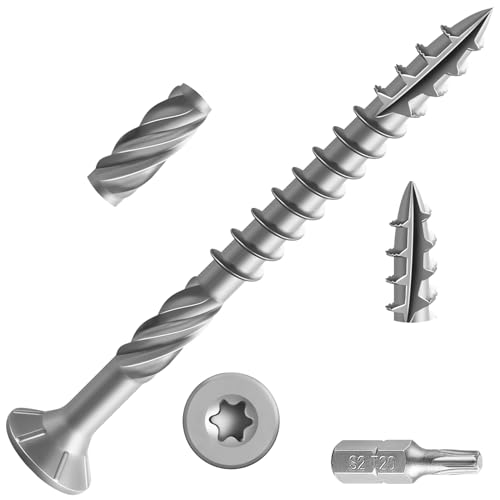
Wensilon #10 x 3″ 304 Stainless Steel Deck Screws, 151pcs
More Details On Our Top Picks
Framing a deck ledger or fastening post bases calls for a fastener that grips hard and resists shear, and this hex-head lag screw delivers on both fronts. The 5.5mm shank sinks into pressure-treated lumber without a pilot hole in most cases, thanks to a notched tip that bites early. The hexagonal drive (a six-sided socket that resists cam-out, the tendency of a bit to slip out under torque) gives you full transfer of force from your drill or impact driver, so you can bury the head flush without chewing up the socket.
For weekend builders tackling ledger boards and rim joists, this screw carries the load where it counts. You may find the black coating scuffs during high-torque installs, but the carbon-steel body and rust-resistant layer underneath keep working long after.
Where It Helps
- Self-tapping tip skips pilot holes in soft and mid-density lumber, shaving time off framing.
- Hex drive surface grips firmly under high torque, reducing stripped sockets mid-job.
- Built-in washer head spreads load across the surface for stronger hold on ledger attachments.
- Rust-resistant coating suits outdoor exposure and pressure-treated wood contact.
Things To Consider
- Only 43 screws per pack, so larger builds may need multiple boxes to stay stocked.
- Hex head sits proud of the surface, which shows on visible trim pieces.
Who It Suits Best
DIYers framing a substructure or attaching a ledger board who need real holding power and don’t mind the visible hex head.
Consider Something Else When
The Wensilon #10 x 3″ Deck Screws are a better match for anyone fastening visible deck boards where a flush, low-profile finish matters more than raw shear strength.
Think of this yellow-coated version as the higher-capacity sibling to the previous black lag screw. The dimensions, thread profile, and hex drive all carry over, but the count jumps to 98 pieces per 2-pound box, which matters once you start mapping joist hangers and beam connections. The yellow finish stands out against wood, so spotting missed fasteners during inspection becomes easier.
For deck frames that need dozens of structural connections, this is the more practical bulk option. Depending on how dense your pressure-treated lumber is, the notched tip may still benefit from a starter pilot on the hardest pieces.
Useful Touches
- 98 screws per box covers typical backyard deck framing without constant restocking.
- Same hex drive and washer head as the black version, so the install feel stays consistent.
- Yellow coating makes fastener placement easy to see during layout and inspection.
- Self-tapping design cuts install time on repetitive framing connections.
- Carbon-steel core with rust-resistant layer holds up in outdoor conditions.
Points To Note
- Larger count means heavier shipping weight, so plan storage space ahead of delivery.
- Color contrast is a downside on finished trim where a subtle fastener matters.
- Coated heads can show wear after heavy impact-driver use, though the protection below stays intact.
Feature Snapshot
Made For
Homeowners and contractors building full deck frames who want one box to cover the bulk of structural fastening.
Reach For A Different Pick When
The Wensilon #10 x 3″ 304 Stainless Steel Deck Screws make more sense for anyone building near saltwater or in climates where carbon steel eventually weathers through.
Once you move from framing to surface boards, the fastener profile changes entirely, and this T25 star-drive screw reflects that shift. A T25 drive uses a six-pointed star tip that grips deeper than Phillips or slotted heads, dramatically reducing cam-out. The 3-inch length sinks through standard 5/4 decking into the joist below, while the bronze-toned epoxy coating blends with most wood tones. The included T25 bit means you can start driving right out of the box.
For most residential deck resurfaces, this screw hits the practical sweet spot between price, corrosion resistance, and clean appearance. You may notice the serrated threads leave a slightly rougher feel as they seat, but that same geometry is what keeps boards from squeaking loose over time.
Benefits That Matter
- Four-layer epoxy coating slows rust in rain, snow, and humid summer air.
- Star drive locks the bit in place, letting you finish each fastener without stripping.
- Serrated threads pull boards tight to joists, reducing the popped-screw callback.
- Flat-head design sits flush for a clean walking surface.
- Included T25 bit removes the guesswork of matching the right driver.
Room For Improvement
- Bronze tone stands out on gray or painted decking where a darker head looks better.
- Carbon steel core means coastal environments can shorten service life compared to stainless options.
Best Suited To
Homeowners resurfacing a standard wood deck in a temperate climate who want a flush, low-maintenance fastener at a sensible count.
Look Elsewhere When
The Wensilon #10 x 3″ Black Deck Screws are a stronger fit for dark composite boards or homeowners who want fastener heads to disappear into the deck color.
Color matching matters more than people expect on a finished deck, and this black-coated T25 screw addresses that need directly. It carries the same dimensions and star-drive geometry as the bronze version above, but the dark finish disappears into composite boards, painted decking, and dark hardwoods. The epoxy coating stack still handles typical outdoor exposure, so you don’t trade appearance for protection.
For anyone building with Trex-style composites, dark stains, or black-toned hardwoods, this is the fastener that lets the deck surface do the talking. Owners commonly report the head color holds up well over a season, though direct UV in hot climates can gradually lighten the finish over years.
A Few Highlights
- Black head blends into composite and dark-stained boards for a cleaner visual line.
- T25 star drive prevents bit slippage and stripped heads during long runs of fastening.
- Rust-resistant epoxy coating handles rain and seasonal moisture.
- 3-inch length matches standard 5/4 decking into nominal joists.
- 137-piece count covers a mid-size resurfacing job without constant refills.
- Heat-treated steel core resists bending when driving through dense boards.
Honest Caveats
- Black color can show dust and debris during install, requiring a quick wipe-down.
- Same carbon-steel base as the bronze version, so saltwater exposure still calls for stainless.
- Coating may show minor scuffing where the bit contacts the head on high-RPM drivers.
Feature Snapshot
Right Fit For
Homeowners installing dark composite decking or black-stained hardwoods who want the fastener head to disappear into the surface.
A Better Fit Elsewhere
The Wensilon #10 x 3″ 304 Stainless Steel Deck Screws serve better for waterfront builds where the upgrade to stainless is the smarter long-term play.
When the deck sits near a coast, a pool, or anywhere that stays damp, the conversation shifts from coating to alloy. This screw swaps the carbon-steel core for 304 stainless steel, a chromium-rich alloy that resists rust at the molecular level rather than relying on a surface layer. You also get 151 pieces per box, the highest count of the three T25 options, which suits larger resurfacing projects.
For waterfront properties or homeowners tired of touching up rusted screw heads, this is the long-game choice. Depending on the density of your boards, the slightly softer stainless may demand a steadier hand to avoid snapping, but for most softwood and composite installs it drives cleanly with the included T25 bit.
Good Reasons To Consider
- 304 stainless body fights corrosion in salt air, pool splash zones, and humid climates.
- No coating to chip, scratch, or wear through, so protection lasts the life of the screw.
- Bronze tone blends with most natural wood and weathered-gray decking.
- Star drive geometry matches the other T25 picks for consistent handling.
- 151-piece count covers larger resurfacing jobs in a single box.
Trade Offs
- Stainless costs more per box than epoxy-coated carbon steel, which adds up on big builds.
- Slightly softer alloy means overdriving can twist the head, so slower trigger discipline helps.
Feature Snapshot
Whose Shelf It Belongs On
Homeowners within a few miles of saltwater or in rainy regions who would rather pay once and skip the rust-streak maintenance cycle.
Swap It Out When
The Wensilon #10 x 3″ Deck Screws in bronze are a better match for inland builds on a tighter budget where epoxy protection handles the climate without issue.
What Matters Most Before Choosing Nails For Deck
Match The Fastener To The Job
Structural framing, the substructure that holds everything up, calls for heavier hex-head lag screws like the #12 x 2″ options, while surface decking, the boards you actually walk on, wants a flush star-drive screw around 3 inches long. Mixing the two roles leads to proud heads on walking surfaces or stripped screws in ledger connections.
Coating Or Alloy Is The Real Decision
Epoxy-coated carbon steel handles most inland climates for years, and the four-layer coating on the Wensilon bronze and black screws pushes that lifespan further. Once you add salt spray, pool splash, or constant wet conditions, however, the conversation shifts to 304 stainless steel, which protects from within rather than from the surface.
Drive Style Affects Daily Install Speed
Hex drives transfer massive torque for structural lag work, while T25 star drives grip deeper and resist cam-out during the hundreds of repetitive screws a resurfacing job demands. Choosing the right drive for the right task keeps your drill bit and your patience intact.
Count And Color Matter More Than You Think
A 43-piece box disappears in a small framing job, and a 98-piece box covers larger ones, so matching count to project scope avoids last-minute store runs. Color matching black or bronze to your deck surface keeps the visual line clean, especially on composite boards where fastener heads stand out against the wood-tone pattern.
Key Considerations Across These Picks
Common Buying Slip Ups
The most common error is reaching for interior screws because they look similar or cost less, only to watch rust streaks bleed across the deck within one season. Exterior-grade fasteners cost more upfront because the coating or alloy adds real manufacturing expense, and that investment is what separates a deck that lasts decades from one that needs refastening in five years. Another trap is undercounting: a 16×20 deck surface with joists at 16-inch centers can easily eat 1,200 screws, so buying one small box leaves you scrambling mid-project.
Where The Extra Money Goes
The jump from epoxy-coated carbon steel to 304 stainless steel adds material cost, because stainless alloys are pricier than coated steel at the raw-material level. You also pay for tighter quality control on thread consistency and tip geometry, since stainless demands cleaner cuts to drive reliably. For inland builds in moderate climates, that upgrade rarely pays back, but for coastal or high-moisture installs, it skips years of rust-related callbacks and replacement.
Frequently Asked Questions
How long should deck screws be for 5/4 decking?
A 3-inch screw is the standard for 5/4 (five-quarter) nominal decking over joists, since it leaves roughly 1 to 1.5 inches of thread biting into the joist below the board. Shorter screws risk not holding under seasonal expansion, while longer screws can punch through the back of standard joists.
Are deck screws the same as construction screws?
They share a family, but deck screws typically feature deeper threads, sharper tips, and corrosion-resistant coatings built for outdoor exposure. Construction screws can be interior-rated or exterior-rated depending on the brand, so always check the coating and application before using them outside.
Can I use deck screws for framing?
For non-structural frame connections, like blocking or bracing, deck screws can work, but ledger boards, beam-to-post connections, and joist hangers call for structural lag screws or approved structural fasteners. Deck screws are designed for shear loading on surface boards, not the uplift and withdrawal forces a structural connection can see.
What is the difference between bronze and black deck screws?
Both use similar epoxy-coated carbon steel cores for corrosion resistance, but the pigment differs. Bronze tones blend with natural wood and warm composite colors, while black disappears into dark composite and stained hardwood surfaces. Choose based on the dominant color of your deck boards.
Do I need stainless steel deck screws inland?
For most inland climates with normal rainfall, epoxy-coated carbon steel holds up well and saves real money on a large project. Stainless becomes worth the upgrade when you live near saltwater, around a pool, or in a region with persistent humidity that quickly degrades coatings.
Closing Remarks
The right fastener for your deck depends on the climate you live in, the board color you choose, and whether the screw sits on a hidden frame or a visible walking surface. Match the screw type to its job, and your deck stays tight and clean for years. Pick the coating or alloy that fits your environment, and rust streaks never become your weekend project.




