


A random orbital polisher looks simple, but pairing it with the right consumables is where most weekend detailers stall. The wrong compound leaves haze, the wrong pad smears product, and the wrong throw on the machine leaves you fighting the tool in tight spots. This lineup pairs a proven 15mm machine with the liquids and pads that match its rhythm, plus a mini polisher built for the spots a full-size tool can’t reach. Whether you chase paint correction on weekends or run a small detailing shop, the right combination matters far more than any single flagship purchase.
The Lineup, Simplified

3M Perfect-It Random Orbital Compound, 34131, 1 Quart

3M Perfect-It Random Orbital Polish, 34134, 1 Quart

Detail King Rupes LHR 75E Mini Random Orbital Polisher

Griot’s Garage 12211 6.5 in Orange Foam Correcting Pads, 6 pk
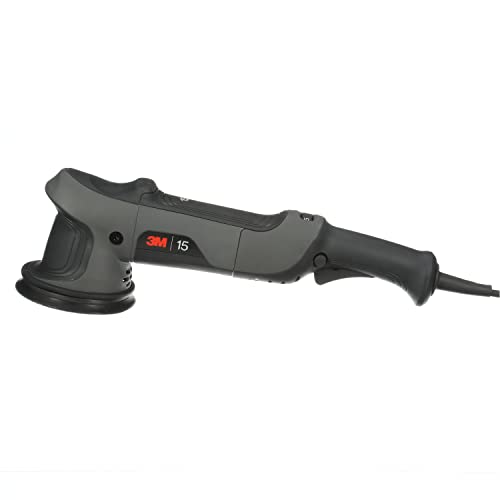
3M Perfect-It Random Orbital Polisher, 34100, 15mm
Why These Options Stand Out
This is the heavy lifter in the 3M Perfect-It system, formulated specifically to chew through 3000-grade and finer sanding scratches on fresh or cured paint. A quart bottle gives you enough working fluid for repeated panel passes during a multi-stage correction, which matters once you’re past the learning curve and knocking out a whole hood in a single sitting.
Pair it with the matching 3M compounding pads and the 15mm 3M polisher from later in this list for the cleanest workflow. It targets automotive paint and clear coat specifically, so the cut stays predictable rather than wandering across softer or harder surfaces.
Well-Handled Touches
- Removes fine sanding marks efficiently, reducing the number of passes needed per panel.
- One-quart volume suits a full weekend detail on a mid-size sedan without mid-job refills.
- Works on both freshly sprayed and fully cured panels, which widens its usefulness in a shop setting.
- Pairs cleanly with 3M’s own compounding pads for consistent abrasive behavior.
Points To Keep In Mind
- Its cutting aggression can leave micro-marring that requires a follow-up polish, which adds a step to your process.
- Bottles can skin over between sessions, so wiping the neck before resealing tends to extend the working life.
Right Fit For
Shops and serious hobbyists chasing real defect removal on daily-driver or project-car paint correction days.
Skip It When
You only need light polishing and want a one-step workflow, in which case the 3M Perfect-It Polish above is a calmer starting point.
Where the 3M compound handles raw cutting, this polish smooths the surface into a finished gloss. Its advanced abrasives and gloss enhancers are tuned for the random orbital action of the 3M 15mm polisher, which means the pad stays in contact long enough to refine haze without burning through fresh paint.
You can hand it to a first-time detailer and a long-time pro on the same day and get similar results. That’s a quiet strength worth naming. Less sling than traditional rotary systems also keeps your towels and shop towels from getting soaked.
Useful Highlights
- Produces a high-gloss finish with minimal swirl, which shortens the wipe-off stage.
- Designed to avoid burn-through on freshly painted panels, giving newer painters a margin of error.
- Reduced sling compared to rotary work means less product waste on the floor and trim.
- Plays nicely with painters, detailers, and weekend users within the same workflow.
Honest Caveats
- Won’t replace the compound step above on panels with deeper defects, so it’s a second bottle rather than a stand-alone.
- Spilled polish on trim can be stubborn to fully remove if it dries, so a quick masking pass around edges pays off.
Whose Shelf It Belongs On
Detailers and enthusiasts running a two-step correction who want a forgiving finishing stage that rewards careful pad work.
Consider Something Else When
You’re chasing isolated scratches on a tight panel, where the Detail King Rupes LHR 75E mini polisher below reaches where a full-size pad can’t.
The Rupes LHR 75E earns its keep in the places a 15mm full-size polisher physically can’t reach. Think mirror caps, door handles, narrow A-pillars, motorcycle tanks, and the curved lips of fenders where a 5- or 6-inch pad would bridge over the actual defect. Its small backing plate lets you lay abrasive exactly where the damage lives.
For spot repairs on a single panel, you can reach for this and skip the bigger machine entirely. It’s also a useful secondary tool for shops that already run a full-size 3M setup, since it covers what the larger throw leaves behind.
Good Reasons To Consider
- Compact form factor reaches door jambs, wheel spokes, and motorcycle bodywork that a full-size polisher can’t access.
- Ideal for spot repair work where a full panel correction would be overkill.
- Comfortable single-hand control during extended detailing sessions on intricate shapes.
- Plugs into the same workflow as the 3M Perfect-It system once you match it to smaller backing plates.
Some Limits To Know
- Covering a whole hood with a 75E is slow going, so it’s a complement to a larger machine, not a replacement.
- Smaller pad size means more frequent pad changes across a full-day detail.
Feature Snapshot
Who Should Grab It
Detailers, motorcycle owners, and hobbyists who need precision work on panels that a 5- or 6-inch pad simply can’t follow.
A Better Fit Elsewhere
Full-panel correction on a daily driver is faster with the 3M 34100 polisher, which is the centerpiece of the system in pick five below.
Every fluid in this lineup only performs as well as the pad it sits on, and Griot’s orange correcting foam is the middle-ground workhorse. The 6.5-inch face pairs naturally with the 3M 15mm polisher from pick five, and the orange cut handles light-to-moderate defects without tipping into heavy compound territory.
Six pads in a pack means you can rotate through a multi-panel detail without constantly cleaning or re-priming the same disc. That’s a quiet productivity gain that shows up over a full weekend session.
Practical Pluses
- Beveled flat face spreads product evenly and wipes off without dragging residue across the panel.
- Multi-pack quantity keeps a fresh pad ready across a long correction day.
- Compatible with Griot’s polishes and most dual-action or random orbital machines in this size class.
- Thermoset foam construction tends to hold up across multiple cleaning cycles before the face degrades.
Where It Is Less Suited
- Orange cutting foam can leave fine haze on soft black paint, so a finishing pass with a softer pad is often the next move.
- Foam pads need thorough cleaning after each panel, and skipping that step tends to shorten pad life quickly.
Core Details
Made For
Weekend detailers working through a full car who want a steady rotation of fresh correcting pads across panels.
Look Elsewhere When
You need maximum cutting power on heavy sanding marks, where the 3M Perfect-It Compound from pick one is the stronger starting point.
The 15mm throw (the side-to-side travel distance of the pad) on the 3M 34100 is the number that defines this tool’s personality. A 15mm orbit gives the pad enough travel to generate real cutting heat without the aggressive holograms that a longer-throw rotary leaves behind. For most cars, that balance is the sweet spot between correction speed and finish quality.
At 120V/60Hz, it drops into a standard North American outlet without rewiring the shop. Pair it with the 3M compound and polish from picks one and two, plus the Griot’s orange pads from pick four, and you have a complete system rather than a single tool looking for friends.
Standout Benefits
- 15mm throw delivers meaningful cutting power for moderate defect removal without rotary-level risk.
- Standard 120V/60Hz operation suits home garages and small shops without special electrical work.
- Anchors a full system of matched 3M pads, compounds, and polishes that all speak the same mechanical language.
- Random orbital action is far more forgiving on fresh paint than a traditional rotary setup.
Potential Drawbacks
- 15mm throw is heavier and more tiring on long sessions than a 12mm or 8mm tool, so grip and pad choice matter.
- Corded design limits reach around a large vehicle unless you bring an extension rated for the load.
Quick Facts
Best Suited To
Home garage detailers and small-shop techs building a complete paint correction setup around one reliable machine.
Reach For A Different Pick When
You mostly work on motorcycles, mirror caps, or tight bodywork, where the Rupes LHR 75E from pick three fits the job more naturally.
Picking the Right Orbital Polisher Setup
What the Polisher Itself Brings
The machine is the part of the kit you’ll hold longest, so the orbit throw matters more than raw wattage. A 15mm throw covers full panels in fewer passes, while shorter throws (around 8 to 12mm) trade speed for finer finish and lighter wrist fatigue. For most weekend detailers tackling daily drivers, a 15mm random orbital hits the practical middle. Power delivery at 120V/60Hz is standard for home outlets, so you can skip the heavy-duty electrical work a rotary sometimes demands.
Why the Pad Carries as Much Weight
Pads are not interchangeable accessories. A cutting pad (the orange foam in this lineup) handles light-to-moderate swirl removal, while softer finishing pads chase final gloss. The pad’s diameter also has to match the polisher’s backing plate, otherwise the pad edge works against you. Running a 6.5-inch pad on a small backing plate or a 3-inch pad on a full-size polisher both produce inconsistent results.
How Liquids Change the Outcome
A compound cuts, a polish refines, and using one in place of the other is the most common beginner mistake. Compounds knock down sanding marks and deeper defects, but they leave their own micro-marring that a follow-up polish removes. Polishes alone work for light swirls, while sealants and waxes sit on top of either step to lock in the finish. The 3M compound and polish in this lineup are designed to run in that order on the same pad-and-machine system.
Matching Setup to Skill Level
First-timers benefit from forgiving combinations: a 15mm polisher, an orange correcting pad, and a polish that finishes cleanly without aggressive follow-up. Experienced detailers often add a 75E mini polisher for spot work, which is why the Rupes sits in this list as a complement rather than a stand-alone. Building a kit in layers, instead of buying the heaviest compound and the longest throw on day one, tends to produce better results with less frustration.
Key Considerations Across These Picks
Where Shoppers Go Wrong
Most first-time buyers fixate on the polisher and overlook the pads and liquids that actually contact the paint. A great machine with the wrong pad or wrong compound produces mediocre results, and shoppers blame the tool. A common slip is also treating a compound as a one-step product and skipping the polish, which leaves haze that shows up the moment the car sits in sunlight. Building the kit as a matched system, fluid plus pad plus machine, removes most of that guesswork.
When Paying More Pays Off
Higher-tier polishers and pads tend to offer longer-throw orbits, denser foam that holds up across more cleaning cycles, and tighter manufacturing tolerances that keep the pad face flat. For a hobbyist running one or two corrections a year, the jump may not register. For a shop running corrections weekly, those differences add up in time saved per panel and pads that don’t need replacing mid-job. The upgrade is worth it once your workload outgrows entry-level gear, and not a moment before.
Frequently Asked Questions
What’s the difference between a random orbital and a rotary polisher? A random orbital polisher moves the pad in an oscillating pattern (an off-center circular motion) that limits heat and hologram risk, while a rotary spins on a fixed axis and cuts faster but demands more skill to avoid burning through paint.
Can beginners use a 15mm orbital polisher safely? Yes, the random orbital action is far more forgiving than a rotary, and pairing it with a moderate cutting pad and a finishing polish keeps the learning curve manageable on a daily driver.
Do I need both a compound and a polish? For deeper defect removal, the compound cuts first and the polish refines the haze. If you’re only chasing light swirls, a single polish step may be enough, but expect a softer result.
How often should polishing pads be replaced? Pads typically last through several cleaning cycles, but once the face loses its flat profile or starts loading with product that won’t wash out, it’s time to swap. Running a glazed pad produces inconsistent cut and can mar the finish.
What size pad works for most cars? A 5- to 6.5-inch pad handles full panels like hoods, doors, and fenders, while smaller 3-inch pads reach tighter curves. A kit with two sizes covers nearly every correction job on a passenger vehicle.
The Takeaway
The right orbital polisher setup is a system, not a single tool. Pair a 15mm random orbital with a moderate cutting pad, a finishing polish, and a mini polisher for the awkward spots, and the work gets dramatically easier. Start with the products that match your skill level, and add capability only when the current setup starts holding you back.




