


Sanding eats through projects faster than almost any other shop task, and the wrong abrasive or wrong tool stalls the whole job. Oscillating belt sanders balance aggressive stock removal with a finish-friendly motion, which is why they show up on benches, jobsites, and garage workstations across woodworking, metalworking, and finishing trades. This shortlist pairs dedicated oscillating machines with the 4×24 and 1/2×18 belt assortments that actually fit them, so you walk away knowing which sander belongs on your bench and which consumables keep it cutting.
The Leading Options At A Glance

POWERTEC 4 x 24 Inch Sanding Belts, 10 PK, 80 Grit
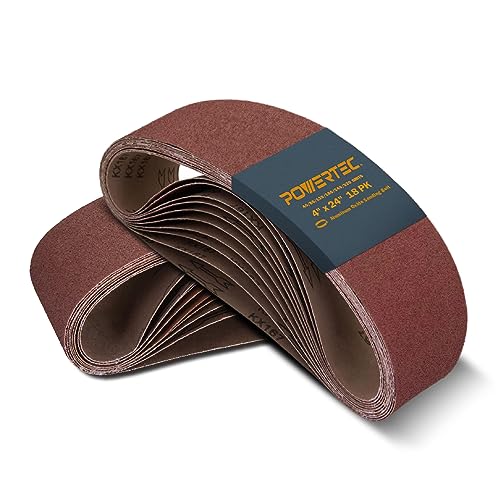
POWERTEC 4 x 24 Inch Sanding Belts, 18 PK, 6 Grits (110009)

POWERTEC 4 x 24 Inch Sanding Belts, 18 PK, 6 Grits (110008)

Metabo HPT SB8V2 3 x 21 Inch Variable Speed Belt Sander

Makita 9903 3″ x 21″ Belt Sander

Woodskil 4.3A Belt Disc Sander Combo, 4×36″ Belt, 6″ Disc

DEWALT 20V MAX XR Cordless Bandfile (DCM200B)

POWERTEC 1/2 x 18 Inch Sanding Belts, 50PK (40182-1)
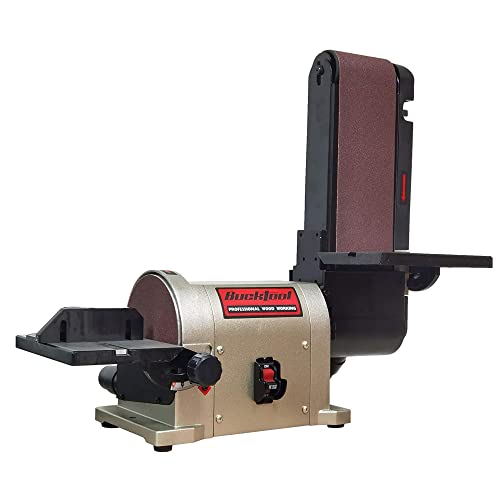
BUCKTOOL Bench Belt Disc Sander, 4×36″ Belt, 6″ Disc, 5A
Inside Each Recommended Option
POWERTEC’s single-grit 4×24 belt pack focuses on 80 grit, which is the workhorse abrasive most shop owners burn through fastest. The aluminum oxide (a tough, friable synthetic grain that fractures to expose fresh cutting edges as it wears) construction and X-weight cloth backing (a heavy, flexible cotton-polyester fabric that resists tearing under load) are aimed at the 4×24 oscillating format rather than narrow file belts, so the fit on common benchtop machines feels confident. For a hobbyist who already owns a few odd grits and needs to top up the one they actually use, this pack is a clean, predictable restock.
The single-grit focus keeps the price honest and the decision simple, which matters when the rest of the workshop already dictates your workflow.
Where It Delivers
- Focused 80-grit quantity for the most-used working abrasive in any shop.
- Aluminum oxide grain suits wood, soft metals, and general stock removal.
- X-weight cloth backing helps the belt survive heavier pressure without snapping.
- Predictable 4×24 fit across common benchtop oscillating machines.
Trade Offs
- Only one grit included, so multi-stage finishing projects need separate packs.
- Aluminum oxide wears faster than ceramic on hard steel, which may matter for metal-only shops.
Who It Suits Best
Shops that already own assorted grits and simply need a steady 80-grit refill for the 4×24 bench sander they run weekly.
Look Elsewhere When
You want a single pack that covers an entire project from coarse shaping to finish, in which case the POWERTEC 4 x 24 Inch Sanding Belts, 18 PK (110009) is the more flexible restock.
This 18-pack stretches across 40, 80, 120, 180, 240, and 320 grit, three belts apiece, which lines up with the way most woodworkers actually move through a project. The 40 grit chews through glue lines and uneven edges, while the 320 leaves a finish ready for stain or sealer. Because the previous POWERTEC pack focused on a single 80-grit refill, this one covers the full ladder so you don’t have to mix and match suppliers mid-build.
The aluminum oxide grain (a durable synthetic abrasive that cuts wood and soft metal without premature breakdown) and resin bond (the adhesive layer that locks grit to the backing, helping the belt survive heat and flex) are designed for repeated contact with hardwood and softwood alike. You may find the 240 and 320 belts disappear quickly on larger projects, since finishing work always chews through belts faster than rough shaping, so plan a reorder if you build a lot of cabinetry.
Key Advantages
- Six-grit ladder from 40 to 320 covers shaping, smoothing, and pre-stain prep in one buy.
- Three belts per grit means you can finish a small project before ordering more.
- Common 4×24 dimensions fit most benchtop oscillating sanders without adapters.
Points To Keep In Mind
- Higher grits wear out first under heavy use, leaving the lower grits overstocked.
- Aluminum oxide is competent on soft metals but is not the longest-lived option for production steel work.
Feature Snapshot
Made For
Woodworkers and hobbyists running a 4×24 bench sander who want one restock order to cover shaping through pre-finish on multiple projects.
Swap It Out When
You mostly do fine finishing on figured hardwoods and want a higher top grit, in which case the POWERTEC 4 x 24 Inch Sanding Belts, 18 PK (110008) climbs to 400 grit.
The 110008 assortment trades a coarser start for a finer finish, stepping from 60 grit all the way up to 400, three belts per grit. That ceiling matters for anyone finishing figured wood, soft alloys, or surfaces that go straight to sealer without a separate hand-sanding pass. Pairing this with the broader 40-to-320 ladder in the previous POWERTEC pack gives a complete shop, but on its own it leans toward refinement rather than heavy stock removal.
The shared 4×24 dimension means the same benchtop machine handles both packs, so shops can keep one sander and switch consumables based on the project. You may find the 60-grit floor too fine for knocking down glue squeeze-out on large glue-ups, so keep a dedicated coarse pack on the side for rough work.
A Favorable Mix
- 400-grit ceiling lets you finish surfaces to a near-polish without switching to hand sanding.
- 60, 80, 120, 150, 240, and 400 grit covers smoothing transitions that other packs skip.
- Same 4×24 footprint as the broader POWERTEC pack for consistent machine fit.
Small Caveats
- No 40-grit option, so aggressive shaping and heavy stock removal still need a separate pack.
- Three belts per grit is light for shops running multiple projects at once.
Right Fit For
Finish-focused woodworkers and detail-oriented hobbyists who care more about surface quality than raw material removal.
Reach For A Different Pick When
You reshape rough lumber often and want a coarser starting belt included, in which case the POWERTEC 4 x 24 Inch Sanding Belts, 18 PK (110009) starts at 40 grit.
The Metabo HPT SB8V2 moves away from benchtop sanders into a handheld 3×21 format, paired with a 9 amp motor that delivers real working torque on hardwood and metal alike. Variable speed (a dial near the handle that lets you match belt speed to the material, slower for finish work and faster for aggressive cuts) lives at the base of the grip rather than buried in a trigger, so adjustments happen without breaking your stance. Compared to the earlier POWERTEC consumable packs, this is the machine side of the equation, designed for portability and longer sessions on bigger workpieces.
Soft grip overmolding along the main handle reduces fatigue during extended shaping, and the 3×21 belt size (a narrower, longer format than 4×24, ideal for reaching into corners and edging boards) trades a bit of material removal for better control on edges and trim. You may find the 9 amp power excessive for small craft projects, but for floor sanding, deck work, or heavy stock removal it earns its keep. Standard 3×21 belt consumables are widely available, so resupply is straightforward.
The Value In It
- 9 amp motor handles hardwood, softwood, and metal surfaces without bogging down.
- Variable speed dial keeps heat and aggression matched to the material.
- Soft grip overmolding reduces hand fatigue on long shaping sessions.
A Few Limitations
- 3×21 format removes less material per pass than wider 4×24 or 4×36 machines.
- Corded design limits reach to outlet and extension cord length.
Key Product Details
Best Suited To
Workshop owners and remodeling pros who need a handheld, variable-speed sander for floors, doors, and trim work over long sessions.
Skip It When
You want a stationary benchtop tool for small parts, in which case the Woodskil 4.3A Belt Disc Sander Combo stays put on the bench and handles smaller work.
The Makita 9903 has been a workshop staple for years, and the 8.8 amp motor delivers strong cutting power at a notably quieter 85 dB (a sound level roughly comparable to heavy city traffic, measured under load). Variable speed between 690 and 1,440 ft/min lets you slow down for heat-sensitive finishes and open up for rapid stock removal, and the auto-tracking belt system keeps the belt centered without manual adjustment. Where the Metabo HPT focuses on grip comfort, the Makita leans into flush-sanding geometry and lower operating noise.
The nose and side of the sander sand flush to a wall, which matters when you’re refinishing built-ins, doors, or stair risers where a standard sander leaves a curved witness mark. You may find the 8.8 amp motor slightly less aggressive than 9 amp competitors on dense hardwood, but the noise reduction and the flush-sanding shape often matter more in a residential shop. Front grip positioning gives a stable, two-handed control feel for detail work on trim.
Positive Points
- Flush sanding along the nose and side cleans up edges that other sanders leave rounded.
- 85 dB operation is meaningfully quieter than most handheld belt sanders.
- Auto-tracking belt system saves you from stopping to recenter the belt mid-pass.
Honest Caveats
- 8.8 amp is slightly less aggressive than 9 amp class competitors on dense hardwood.
- Corded power requires planning for outlet or extension access.
Who Will Love This
Finish carpenters and trim specialists who flush-sand against walls and prefer a quieter, more controlled handheld tool.
Consider Something Else When
You need cordless reach for field work on piping and metal, in which case the DEWALT 20V MAX XR Cordless Bandfile (DCM200B) trades the cord for battery flexibility.
The Woodskil combo pairs a 4×36 belt with a 6-inch disc on a single benchtop platform, aimed at small shops that can’t dedicate floor space to two separate machines. The 3/4 HP motor pulls the belt up to 1732 ft/min and the disc to 3570 rpm, enough for shaping small parts, sharpening tools with a disc attachment, and smoothing edges on smaller carvings. Compared to the handheld Metabo HPT and Makita, this stays on the bench and trades portability for repeatable setups.
The belt platform tilts from 0 to 90 degrees, so you can sand horizontal edges, vertical faces, and anything in between, while the work table adjusts 0 to 45 degrees for angled sanding on the disc side. You may find the 4.3 amp motor less authoritative on full-width hardwood boards, but for hobby-scale parts it’s a reasonable trade for the compact footprint. Owners commonly report that the dust port works best when paired with a shop vac, since the included collection bag fills quickly under sustained use.
Notable Upsides
- Two sanding formats in one benchtop tool, which is real for small shop footprints.
- 0 to 90 degree belt tilt and 0 to 45 degree table angle expand the sanding geometries.
- Compact benchtop design fits a small garage or basement work area.
Less Ideal Details
- 4.3 amp motor is lighter than handheld 8 to 9 amp class sanders on heavy stock.
- Dust collection works best with a shop vac rather than the included bag alone.
Feature Card
Perfect Match For
Home hobbyists and small-shop owners who want both belt and disc sanding in a single compact bench footprint.
A Better Fit Elsewhere
You run a production shop and need direct-drive reliability under daily use, in which case the BUCKTOOL Bench Belt Disc Sander offers a similar combo with a maintenance-free direct-drive motor.
The DEWALT DCM200B abandons the standard belt sander format entirely in favor of a 18-inch bandfile (a narrow, file-shaped belt tool designed to reach into tight spaces, pipes, and contours that a flat belt sander cannot access). Running on the 20V MAX XR battery platform, it hits up to 5,600 ft/min with a 104-degree rotating contact arm, so you can wrap the abrasive around pipe joints, inside corners, and irregular metal shapes. Where the benchtop sanders in this roundup stay parked, this one goes where the work is.
The cordless design matters most on jobsites, plumbing work, and metal fab where running power is awkward. You may find the bare-tool package a tough sell if you don’t already own DEWALT 20V batteries and a charger, since those aren’t included. Owners commonly report that the 1/2×18 belt size (the narrow consumable format shared with pneumatic file sanders) is widely available, and the POWERTEC 1/2×18 50PK is a natural resupply.
Well-Handled Touches
- 104-degree rotating arm lets you reposition without flipping the workpiece around.
- Cordless 20V platform means no compressor, hose, or extension cord on the jobsite.
- Variable speed trigger and dial give you runtime control during long shifts.
Potential Drawbacks
- Bare tool only, so battery and charger add to the total ownership cost.
- Bandfile format is specialized for contours and not a replacement for a flat bench belt sander.
Built With In Mind
Tradespeople, metalworkers, and remodelers who already run DEWALT 20V tools and need to sand pipe, weld seams, and tight contours away from a bench.
Where Another Pick Suits Better
You sand flat boards and want a stationary workhorse, in which case the BUCKTOOL Bench Belt Disc Sander is a more appropriate daily shop tool.
The 1/2×18 belt format is the consumable for pneumatic and cordless file sanders, including the DEWALT DCM200B reviewed earlier. This 50-pack spreads 10 belts each across 40, 80, 120, 180, and 240 grit, which is enough to keep a busy metal shop running for months between orders. The aluminum oxide grain handles mild steel, aluminum, and wood filler work, so it covers the same job mix a bandfile typically sees.
Bulk packaging is the draw here, since 1/2×18 belts are small and easy to lose track of, and a 10-per-grit allotment makes resupply predictable. You may find the absence of finishing grits (320 and up) a real limitation for polishing work, but most bandfile applications stop at 240 anyway. Storage matters: a small bin or drawer keeps the lot organized, since dropping the box means sorting 50 belts back into grit order.
What Helps Most
- 50 belts across 5 grits reduces ordering frequency for active file-sander users.
- 1/2×18 format fits pneumatic and cordless bandfile sanders directly.
- Aluminum oxide grain suits mild steel, aluminum, and surface prep work.
Where It Is Less Suited
- No 320 or finer grit, so mirror-polish work needs a separate consumable source.
- Bulk count is overkill for casual hobbyists who run a file sander occasionally.
Whose Shelf It Belongs On
Active metalworkers, auto body techs, and fabricators who already run a 1/2×18 bandfile and want one bulk order to cover months of work.
Not Your Match When
You sand boards on a 4×24 bench sander, in which case the POWERTEC 4 x 24 Inch Sanding Belts (110009 or 110008) is the right consumable family.
BUCKTOOL’s benchtop combo runs on a direct-drive motor (the motor shaft turns the belt and disc directly with no belts or pulleys in between, eliminating stretch and slip), which removes the belt-tensioning maintenance that older bench sanders demand. The 3/4 HP induction motor (a fully enclosed, fan-cooled motor that runs cooler and quieter than open universal motors) pushes the belt and disc with steady torque, and the 5A draw suggests it’s wired for a standard 15-amp household circuit without dedicated electrical work. Compared to the Woodskil combo, this leans more toward daily shop production than occasional hobby use.
The 4×36 belt and 6-inch disc share the same platform geometry as the Woodskil, so most accessory decisions transfer between the two. You may find the 5A rating a smaller motor than the Woodskil in some configurations, but the direct-drive design reportedly runs more efficiently and stays cooler under sustained use. For shops that turn the sander on daily and want to forget about belt tension, that’s a meaningful trade.
Practical Pluses
- Direct-drive design eliminates belt-tensioning adjustments and reduces slip over time.
- 3/4 HP induction motor is fully enclosed, so it runs cooler and quieter than open motors.
- 5A draw fits standard 15A household circuits without a dedicated line.
Some Limits To Know
- Heavier cast construction makes it harder to relocate than smaller hobby sanders.
- Belt and disc combo still occupies a fixed bench footprint.
Quick Facts
Who Should Grab It
Daily shop users who want a low-maintenance bench sander that stays reliable under repeated daily use without belt adjustments.
Another Choice May Suit
You want a lighter benchtop for occasional hobby work, in which case the Woodskil 4.3A Belt Disc Sander Combo is a friendlier size and price for casual setups.
What To Weigh Before Choosing Your Next Sander
Belt size sets the workflow. 4×24 and 4×36 platforms stay parked on the bench and handle boards, blanks, and small parts with stable work tables. 3×21 handhelds reach edges, corners, and trim that benchtop machines cannot, while 1/2×18 file belts wrap around pipe, weld seams, and irregular contours. Match the size to the dominant work, not the occasional task, since consumable availability follows the format you commit to.
Motor power and speed control separate finishing from shaping. Variable speed dials matter when you switch between hardwood shaping and soft alloy finishing, since running too fast on aluminum loads the belt and burns the workpiece. For 4×24 and smaller benchtop units, expect 3 to 5 amp draw and plan for a standard 15 amp household circuit. Cordless platforms like DEWALT’s 20V MAX trade outlet access for battery cost, which only pays off when the work happens away from a bench.
Consumable grit ladders and grain type drive ownership cost. Aluminum oxide belts handle wood, soft metals, and general stock removal at a reasonable price, while ceramic grains last longer on hard steel but cost more per belt. Buying an assorted grit pack (a multi-grit multipack) covers shaping, smoothing, and pre-finish in one order, which suits shops running multiple projects in parallel.
Belt tracking, dust collection, and maintenance shape daily use. Auto-tracking belt systems on handheld sanders stop the small annoyance of stopping to recenter the belt, while benchtop direct-drive designs remove belt-tensioning entirely. Dust bags fill quickly under sustained sanding, so a shop vac adapter often improves both air quality and visibility. Storage matters for belt assortments: a small drawer or bin keeps 4×24 or 1/2×18 lots organized by grit, since losing the box means sorting dozens of belts back into the right order.
Key Considerations Across These Picks
Common Buying Traps
Assuming a wider belt always sands faster. A 4×36 platform removes more per pass, but it also requires longer pieces to be flipped, supported, and re-clamped. Smaller 3×21 and 1/2×18 formats often finish detail work faster on real projects, even though the spec sheet looks lighter.
Skipping the consumable cost. The sander is a one-time purchase, but belts are a recurring cost that adds up across a project’s lifespan. Buying a bare-tool sander without confirming belt availability and grit assortment options leaves you stalled mid-build waiting for a resupply order.
Where The Extra Money Goes
Variable speed and higher amp motors cost more because they hold speed under load. On dense hardwood or thick steel, a 9 amp handheld keeps cutting where a 4 amp entry-level model bogs down and burns the workpiece. Direct-drive benchtop designs cost more upfront because the motor and shaft assembly are heavier and more precisely machined, which pays back through years of tension-free use. For shops that sand weekly, that extra cost usually returns itself in saved adjustment time.




