


Cement board chews through ordinary blades in minutes, so the right oscillating blade matters whether you’re tiling a bathroom or trimming backerboard around a doorway. Dust flies, the abrasive mineral content wears teeth fast, and a blade that flexes or chips ruins a clean line. You’ll want something with a hard cutting edge, deep gullets for clearing grit, and a shank that actually fits your multitool. The picks below cover general-purpose kits for the occasional bathroom remodel and dedicated diamond-grit options built for harder grinding work on cement and grout.
The Choices Worth Comparing

Tooltrail 30-Piece Titanium Oscillating Blades Kit

Tooltrail 56-Piece Universal Oscillating Blades Kit
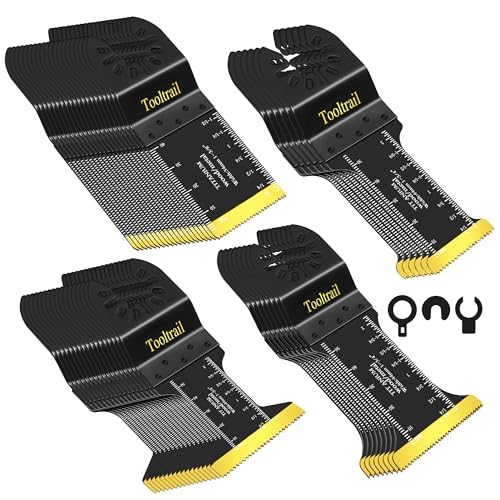
Tooltrail 50-Piece Titanium Oscillating Blades Kit

Tooltrail 89-Piece Universal Titanium Oscillating Blades Kit

Tooltrail 12-Piece Diamond Oscillating Blades for Grout and Cement
Taking A Closer Look At The Options
Tooltrail’s 30-piece kit is the kind of bundle that earns a spot in a garage drawer rather than a one-job purchase. The blade bodies are M42 steel, a high-speed tool steel known for holding an edge under heat, with a titanium coating that aims to push hardness higher than a standard bi-metal blade. That combination tends to matter most when you’re cutting trim nails buried in wood, slicing PVC, or trimming cement board where a softer blade would dull in a few passes.
The assortment covers four blade types in three cut depths, so most tile and trim scenarios get covered without a second trip to the hardware store. You get shorter blades for detail work, standard-depth blades for straight cuts, and a few extra-long blades for reaching into door jambs or behind fixtures. The trade-off is count: at 30 pieces, you may run short on the most-used size before the rest of the kit is gone, depending on how aggressive your cuts get.
Reasons It Performs
- M42 steel core holds up under the heat that builds up during long cement board cuts.
- Titanium coating aims to extend tooth life beyond standard bi-metal options, useful when a project demands repeat plunge cuts.
- Mix of 1.34-inch and 1.73-inch depths gives flexibility for both flush trimming and deeper plunge work.
- Extra-long 1.73-inch blades reach into tight spots like under toe kicks or inside door frames.
- Standard U-shank interface fits most DeWalt, Ryobi, Milwaukee, Rockwell, and Fein multitools without adapters.
Worth Noting
- At 30 pieces, frequent users may burn through the most-used size before the kit is half gone.
- Cutting pure cement board for hours will still wear these blades faster than softer materials like drywall or trim.
Key Product Details
Who It Suits Best
Remodelers and serious DIYers tackling a bathroom or kitchen with mixed materials like cement board, PVC pipe, and nail-embedded trim.
Consider Something Else When
The Tooltrail 89-Piece Titanium Oscillating Blades Kit makes more sense if you want a much deeper spare-parts drawer and don’t want to ration blade use mid-project.
For shoppers who burn through blades faster than they expect, the 56-piece Tooltrail kit trades the M42 steel of the 30-piece for a high-carbon steel body with a titanium-carbide coating. The higher count keeps you cutting instead of pausing to swap brands, and the three blade types cover the most common cut depths in tile, trim, and remodel work.
Most of the kit centers on the 1-3/8-inch size, the everyday workhorse for plunge cuts and flush trimming, with a smaller group of 1-3/4-inch blades for deeper reach. Owners commonly report that the shorter blades wear down first on cement board, so the high count is the real selling point here. Compared to the 30-piece kit above, the steel grade steps down a notch, but the volume more than makes up for it on a long job.
Benefits That Matter
- 56 pieces means you can afford to swap out a dull blade mid-cut without rationing.
- High-carbon steel core is plenty tough for wood, drywall, and PVC trim work around tile installs.
- Titanium-carbide coating helps resist the heat that builds up during aggressive plunge cuts.
- Two blade sizes handle the bulk of trim and remodel tasks without needing extra accessories.
Trade Offs
- Heavily weighted toward the 1-3/8-inch size, so the deep-cut blades may run short on bigger framing jobs.
- Not the best choice for hours of continuous cement board scoring, where the coating can wear faster than M42.
Made For
DIYers running a multi-day tile or remodel project who want enough spare blades on hand to never stop and order more mid-job.
Look Elsewhere When
The Tooltrail 12-Piece Diamond Oscillating Blades for Grout and Cement is a smarter pick for heavy cement board grinding or grout removal where bi-metal blades struggle.
The 50-piece Tooltrail lands in the middle of the lineup, and that’s actually its strength. It uses the same M42 steel body and titanium coating as the 30-piece kit, so you get the same heat resistance and edge retention, but with a more balanced count across the four blade types. Less rationing, less frustration, similar cutting feel.
The kit splits cleanly between 1.34-inch and 1.73-inch blades, with extra-long and XXL sizes added for deeper reach. That spread suits a real remodel: shorter blades for sink cutouts and outlet boxes, longer ones for door jambs and notched joists. You may find the XXL size more useful for flooring underlayment than for tile work, so the count there feels generous.
What Earns Its Place
- Same M42 steel and titanium coating as the 30-piece kit, just in a more balanced assortment.
- Four blade types cover everything from tight corners to deep plunge cuts in a single bundle.
- Generous count of 1.34-inch blades, the size most users reach for first.
Points To Keep In Mind
- Bulk of the count sits in the smaller sizes, so XXL blades can run low on long flooring jobs.
- Storage case is not always included in every shipment, so blade organization falls on you.
Best Suited To
Homeowners tackling a full bathroom or kitchen remodel who want a balanced assortment that won’t run out of the most common size first.
Swap It Out When
The Tooltrail 30-Piece Titanium Oscillating Blades Kit is a leaner, more focused choice for smaller jobs where you don’t need 50 spares in the drawer.
The 89-piece kit is the bulk-buy option, the one to grab when you want to forget about blade inventory for a while. The body uses high-carbon steel with a titanium-carbide plating, heat-treated to resist the warping and chipping that comes from heavy plunge cuts in dense material. With 80 of the 89 pieces in the 1-3/8-inch size, the kit leans heavily into the workhorse cut.
Universal U-shank compatibility covers most major multitool brands, and tool-free swap means you can change a blade without hunting for an Allen key. Owners commonly report that the smaller depth blades are the first to dull on cement board, so the heavy count matters more than variety. If you share tools with family or rotate between projects, the spare-parts cushion pays off.
Advantages To Know
- Highest count on the list, enough to cover multiple projects without reordering.
- Titanium-carbide coating helps the blades hold up under the heat of repeated plunge cuts.
- Tool-free blade changes mean you can swap a dull blade in seconds.
- Heat treatment aims to reduce warping during heavy use on dense material.
Some Limits To Know
- Only 9 blades in the larger 1-3/4-inch size, so deep-reach cuts may still need a separate order.
- Storage and organization is on you, since 89 loose blades don’t stay tidy on their own.
Feature Snapshot
Who Will Love This
Workshop owners and shared-tool households who want one bulk kit to cover years of mixed cutting without placing a second order.
Reach For A Different Pick When
The Tooltrail 50-Piece Titanium Oscillating Blades Kit is a more focused option if you’d rather have a balanced mix of sizes than a deep pile of one size.
This is the only kit on the list that drops bi-metal entirely. The 12-piece set uses diamond-grit edges, the same abrasive technology used on tile saws, embedded along the cutting edge to grind through cement, grout, and fiber-cement siding. The shape mix covers flat profiles, semicircular grout lines, and crescent cuts for corners, so a full regrout or backerboard trim is realistic in one pass.
The 12-piece count is small because diamond blades last much longer than toothed blades on mineral material. Compared to the Tooltrail 30-piece above, the cut quality on cement looks more like scoring glass than sawing wood: less aggressive, more controlled, and far less likely to chip the edge of a tile. For pure cement board scoring, the semicircular and crescent shapes reach where a flat blade can’t, which makes this set genuinely useful beyond grout work.
Noteworthy Benefits
- Diamond-grit edge cuts cement board and grout without the tooth dulling that hits bi-metal blades fast.
- Three shape profiles (flat, semicircular, crescent) cover both flat scoring and inside-corner grout lines.
- Universal fit works with Milwaukee, DeWalt, Bosch, and Ryobi multitools out of the box.
- Longer service life per blade offsets the smaller count, depending on the material.
Practical Considerations
- Much slower cutting than toothed blades on wood or plastic, so it’s a wrong tool for trim work.
- Grinding action produces fine dust, so a mask and good ventilation are non-negotiable.
Core Details
Right Fit For
Tilers and remodelers doing real cement board scoring, grout removal, or fiber-cement trim work where bi-metal blades burn out in minutes.
A Better Fit Elsewhere
The Tooltrail 56-Piece Universal Oscillating Blades Kit is the smarter choice for jobs that mix cement board with wood trim, drywall, and PVC where diamond grinding would be overkill.
Picking The Right Oscillating Blade For Your Project
A blade’s shank, the small mounting interface that locks into the multitool, needs to match your tool before anything else matters. Most modern multitools use a universal U-shank, sometimes called a quick-release or Starlock-adjacent fit, but some Fein models and older Bosch tools use proprietary mounts. Check the shank type on your current blades before ordering, since a wrong fit is the most common reason a “universal” kit doesn’t actually fit.
For cement board specifically, the choice comes down to whether you’re cutting or grinding. Toothed bi-metal blades cut faster and leave a cleaner edge, but the abrasive mineral content of cement board wears teeth down in minutes. Diamond-grit blades grind rather than cut, run slower, and last dramatically longer on mineral surfaces. A remodeler doing a full bathroom might keep one of each on hand: bi-metal for the straight cuts, diamond for scoring and grout work.
Blade depth matters more than most shoppers expect. A 1-3/8-inch blade handles most trim and plunge cuts, but door jambs, toe kicks, and notched framing call for 1-3/4-inch or longer blades. A kit heavy on one size and light on the other will leave you improvising mid-project. Finally, the coating, titanium over M42 steel versus titanium-carbide over high-carbon steel, mostly affects heat resistance and edge life, both worth having on long plunge cuts but not dealbreakers for short jobs.
Common Shopping Slip Ups
The biggest mistake is assuming any “oscillating blade” will cut cement board cleanly. Bi-metal blades cut it, but slowly and with fast wear, while standard wood blades can shatter on the first pass. Match the blade type to the material: bi-metal toothed for mixed trim, diamond-grit for cement scoring and grout.
A second slip is buying the deepest-reach blade and assuming it handles every cut. Extra-long blades flex more, which causes wandering cuts and faster breakage in dense material. For most tile and trim work, a 1-3/8-inch blade actually cuts straighter and lasts longer than a longer alternative.
What The Extra Money Buys
The jump from a basic high-carbon steel blade to a titanium-coated M42 blade is mostly about heat resistance and tooth life. Under heavy use, cheaper blades soften and lose their edge in a single project, while coated M42 blades keep cutting across multiple jobs. For occasional weekend work, the upgrade may not pay back, but for daily remodel use, the time saved on fewer blade swaps adds up fast.
Diamond-grit kits cost more per blade but outlast toothed blades by a wide margin on mineral material. The right time to pay up is when your project is mostly cement board, grout, or fiber-cement siding, where bi-metal blades would burn through a full kit in a single afternoon. For mixed-material work, the upgrade isn’t worth it.
Frequently Asked Questions
Do oscillating blades actually cut cement board? Yes, but bi-metal toothed blades wear quickly on cement board’s abrasive content. Diamond-grit blades handle the same material much longer, though at a slower cut speed.
What’s the difference between bi-metal and titanium-coated blades? Bi-metal blades combine two steel types for flexibility and hardness. Titanium coating adds a harder surface layer that resists heat and wear, extending blade life on tough materials.
Can one kit work on multiple tool brands? Most kits on this list use a universal U-shank that fits DeWalt, Milwaukee, Ryobi, Rockwell, and similar tools. Some Fein and Bosch models use proprietary mounts that need an adapter.
How long should an oscillating blade last on cement board? Toothed bi-metal blades typically survive a few feet of cement board before dulling noticeably. Diamond-grit blades can handle many times that, depending on depth and pressure.
Is a diamond blade worth the higher cost? For pure cement board scoring and grout removal, yes, the longer life offsets the higher per-blade cost. For mixed trim and drywall work, a toothed kit makes more sense.
Closing Remarks
The right oscillating blade for cement board depends on how much of the job is actually cement. For mixed remodels, the Tooltrail 30-Piece or 50-Piece titanium kits offer the best balance of cut speed and edge life. For pure cement scoring or grout work, the 12-piece diamond set earns its place by outlasting anything toothed. Match the kit to the material, and the project moves a lot smoother.




