Tackling trim cuts, grout scraping, and awkward under-sink corners tends to expose every weakness in a mediocre oscillating tool. Cordless models in this category now genuinely rival corded predecessors, and the gap between a pleasant experience and a frustrating one usually comes down to motor type, oscillation angle, and how the grip feels during longer sessions. The five cordless picks below split the difference between daily-driver workhorses and lighter weekend projects, so you can match the tool to the kind of work you actually do.
The Picks In Brief

DEWALT 20V Max XR Oscillating Multi-Tool Bundle

DEWALT 20V MAX XR Oscillating Multi-Tool (DCS356B)

WORX 20V AntiVibe Sonicrafter WX698L.9
WORX 20V Sonicrafter WX696L

WORX 20V AntiVibe Sonicrafter WX698L
The Strengths Of Each Pick
The DEWALT 20V Max XR bundle pairs the brushless DCS356B tool body with a five-piece blade kit, which removes the guesswork from a first purchase. The brushless motor (a design that uses electronic switching instead of carbon brushes, which generally lasts longer and runs more efficiently) delivers strong runtime, and the universal accessory adaptor accepts most aftermarket blades you might already own. For remodelers trimming door jambs, slicing through baseboards, or scraping old caulk, that combination lands in the sweet spot between capability and portability.
Where this bundle earns its keep is in repeat daily use, not occasional tinkering. Contractors logging hours of plunge-cutting into wood or drywall tend to appreciate the 3-speed selector for matching output to material. The catch is the price of admission: you need DEWALT 20V batteries and a charger to run it, which are sold separately.
Bright Spots
- Brushless motor stretches battery life during long cutting sessions on a job site.
- Three-speed selector lets you throttle back for delicate scraping tasks.
- Five included blades cover common wood and trim cuts straight out of the box.
- Universal accessory adaptor plays nicely with non-DEWALT blades you may already own.
- Tool-only bundle price is friendlier than full kit versions with battery included.
Worth Noting
- Battery and charger are not included, so existing DEWALT 20V owners get the best value.
- Heavier than the WORX picks reviewed below, which can wear on overhead work.
Key Specs
Right Fit For
Trim carpenters and remodelers who already run DEWALT 20V batteries and want a brushless tool that survives daily jobsite use.
Look Elsewhere When
Occasional household users without a DEWALT battery platform will find the WORX WX696L a more affordable starting point.
Strip away the bundled blades and you get the same tool body as the previous pick, this time marketed as the bare DCS356B with a focus on extended runtime. The brushless motor and 3-speed selector carry over, plus an LED work light that helps in shadowy cabinet interiors and under-sink work where shadows love to hide. The tool-only framing means you pay for the head, not the extras, which suits anyone who already owns a drawer full of compatible blades.
The honest read: this is the same reliable platform as the bundle above, just with a different stocking configuration. You trade the included five-blade kit for a lower entry cost if you bring your own accessories. For a homeowner with an established DEWALT 20V collection, that is often the better deal.
What Pays Off
- Brushless motor delivers extended runtime versus brushed equivalents, a plus for multi-day projects.
- LED work light illuminates dark corners during cabinet and under-sink cuts.
- 3-speed selector covers everything from aggressive plunge cuts to controlled scraping.
Honest Caveats
- No battery, charger, or carrying case included, which adds to total ownership cost.
- Heavier grip profile may fatigue users during extended overhead sanding tasks.
- Only two wood cutting blades ship in the box, so budget for additional accessories.
Made For
DEWALT 20V platform owners who want a bare tool body to drop into an existing battery ecosystem.
Swap It Out When
First-time shoppers without DEWALT batteries should consider the WORX WX698L.9 instead, since it sidesteps the platform commitment.
The WX698L.9 leans hard into comfort with a 5-degree oscillation angle that the brand claims cuts faster than wider sweeps, paired with a VibraFree system designed to tame hand fatigue. The slim body shape gives your fingers a closer purchase on the work, which matters when you are sanding inside a tight window frame or scoring grout lines in a shower surround. Brushless Motor 2.0 pushes up to 20,000 oscillations per minute, which is plenty for most home renovation tasks.
Compared to the DEWALT pair above, this WORX is lighter and friendlier for users with smaller hands or anyone sensitive to vibration during longer sessions. The narrower oscillation arc favors precision work over bulk material removal, so heavy demolition jobs may benefit from the DEWALT instead.
What Works In Its Favor
- Slim body profile gives better control for detail work in tight spaces.
- VibraFree technology noticeably reduces hand-numbing fatigue during longer sessions.
- Brushless motor with up to 20,000 OPM (oscillations per minute) handles most household materials cleanly.
Points To Keep In Mind
- Narrower 5-degree arc is less aggressive on heavy demolition than wider-sweep competitors.
- Tool-only configuration still requires a separate WORX 20V battery purchase.
Feature Snapshot
Who It Suits Best
DIYers and detail-focused renovators who prize comfort and control over raw material-removal aggression.
Reach For A Different Pick When
The DEWALT DCS356B is a stronger match for contractors prioritizing heavy cutting power and battery platform support.
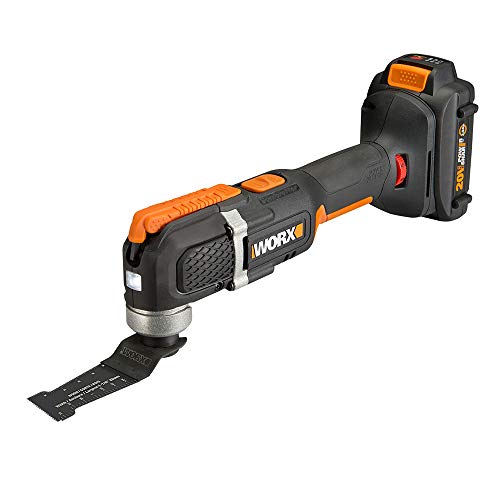
The WX696L is the entry point into WORX’s cordless Sonicrafter line, aimed squarely at homeowners who want a versatile tool without a steep learning curve. Cordless freedom matters most in awkward spaces, like reaching behind a toilet to trim flooring or slicing caulk along a shower edge where a cord would constantly snag. Universal compatibility means most standard oscillating blades drop right in, so you are not locked into one brand’s accessory catalog.
Compared to the higher-tier WX698L.9 above, this model skips the anti-vibration refinements and updated brushless motor. You trade those comforts for a friendlier entry cost, which is a sensible trade for occasional weekend projects.
What It Does Well
- Lower entry cost makes it approachable for first-time oscillating tool owners.
- Universal blade compatibility avoids locking you into one brand’s accessory ecosystem.
- Cordless design eliminates snags and tangles in tight under-sink and behind-toilet scenarios.
Soft Spots
- Lacks the anti-vibration system found on the upgraded WX698L models above.
- Tool-only shipping means battery and charger are separate purchases.
Best Suited To
Homeowners tackling occasional trim, caulk, and grout jobs who want a sensible first oscillating tool.
Consider Something Else When
The WORX WX698L is a smarter pick for users sensitive to hand fatigue or planning longer sanding sessions.
The WX698L is the standard-tier sibling to the WX698L.9 above, sharing the same 5-degree oscillation angle, Brushless Motor 2.0 platform, and 20,000 OPM top speed. The slim-body grip stays the same, which keeps the tool comfortable for overhead sanding and detail scoring. The main difference between the .9 variant and this base model tends to come down to bundle configuration and what ships in the box.
For users who already own WORX 20V batteries from a mower or trimmer, this base WX698L is the cleanest way to add a refined anti-vibration oscillating tool to the collection. It skips the heavier contractor-grade feel of the DEWALT pair reviewed earlier, which keeps the experience friendly around the house.
Good Reasons To Consider
- Brushless Motor 2.0 extends runtime versus earlier brushed Sonicrafter generations.
- 5-degree oscillation angle favors precision over brute material removal.
- Slim grip design reduces strain during extended detail work.
- Compatible with the wider WORX 20V battery ecosystem.
Small Caveats
- Narrow oscillation arc is less suited to heavy demolition work.
- No battery or charger included, so factor those into the total cost.
- Owners commonly report blade changes require a hex key rather than a tool-free swap.
Who Should Grab It
Existing WORX 20V platform owners wanting a refined anti-vibration oscillating tool for detail renovation work.
Skip It When
The DEWALT DCS356B is a better fit for anyone already invested in the DEWALT 20V battery ecosystem.
Choosing an Oscillating Multi-Tool That Actually Fits
Motor Type Sets the Tone
A brushless motor is a quieter, longer-lasting alternative to the older brushed design (which relies on physical carbon contacts that wear down over time). Brushless tools tend to run cooler, sip battery less aggressively, and shrug off daily jobsite abuse better than brushed equivalents. For anyone planning more than a handful of projects a year, brushless is the baseline that pays for itself.
Oscillation Angle Changes the Feel
The oscillation angle, measured in degrees, describes how far the blade head swings side to side on each pass. A wider arc (around 3-4 degrees in some models, with certain brands using 5 degrees) generally cuts faster but vibrates harder. A narrower arc favors control and finish quality. Match the arc to the work: aggressive cuts want wider sweeps, while grout scraping and detail sanding benefit from tighter angles like the 5-degree setup on the WORX WX698L picks.
Accessory Compatibility Saves Headaches
The universal accessory adaptor (a standardized mount that accepts most aftermarket blades) is the unsung hero of any multi-tool purchase. Tools with proprietary mounts lock you into one brand’s blade catalog, which raises long-term costs. Both DEWALT and WORX in this list accept standard accessories, so swapping blades between projects stays simple.
Battery Platform Decisions Echo for Years
Cordless oscillating tools only make sense inside a battery ecosystem. Buying a DEWALT 20V tool means you need DEWALT batteries, and the same applies to WORX 20V. Platform-hopping across brands gets expensive fast, so the smartest move is usually to match the oscillating tool to the batteries you already own.
Common Traps To Sidestep
Where Shoppers Go Wrong
The most common buying slip in this category is grabbing a tool-only model without checking whether you own the right batteries. A bare tool looks like a deal until you add a charger and battery to the cart, and the final total often matches a kit version. The flip side of that mistake is paying for a kit with bundled batteries you do not need. Either way, total cost of ownership is the number that matters, not the headline tool price.
When Paying More Actually Pays Off
The upgrade from brushed to brushless motors and from rigid grips to anti-vibration platforms is the kind of spend that shows up in comfort, not specs. For a contractor logging hours daily, brushless is non-negotiable. For an occasional weekend user, a brushed tool at a friendlier cost is a perfectly defensible choice, and you can always upgrade accessories later. Premium tiers buy runtime, vibration control, and longer motor life, which justifies the spend only when the tool will see real work.
Frequently Asked Questions
How long does the battery last on a cordless oscillating multi-tool?
Runtime varies widely by battery capacity and workload, but most 20V platforms deliver between 20 and 45 minutes of continuous cutting per charge. Heavy plunge cuts drain batteries faster than light scraping, so plan extra cells for long sessions.
Can one oscillating tool handle cutting, sanding, and scraping?
Yes, that is the entire point of the category. Swapping blades turns the same tool body into a plunge cutter, a detail sander, a grout scraper, and a caulk remover, as long as you use the correct accessory for each task.
Are brushless oscillating tools worth the higher cost?
Brushless designs typically last longer and run cooler than brushed equivalents, which matters for frequent users. For occasional projects, a brushed tool still gets the job done at a friendlier entry price.
What is the difference between corded and cordless oscillating multi-tools?
Corded models deliver unlimited runtime and consistent power, while cordless tools trade a bit of sustained output for portability. For work in tight spaces without nearby outlets, cordless wins on convenience. For all-day heavy cutting sessions, corded still has an edge.
Do oscillating multi-tool blades fit all brands?
Most modern oscillating tools use a universal accessory mount, but a few brands ship with proprietary systems. Always check the mount type before buying accessories, especially aftermarket blades, to avoid costly compatibility surprises.
The Takeaway
Cordless oscillating tools have closed the gap with corded workhorses for most household and light-professional jobs. Match the tool to your existing battery platform first, then prioritize motor type and grip comfort over headline numbers. The five picks above cover the realistic spread from weekend homeowner work to jobsite-grade cutting, so the right choice comes down to what you already own and how hard you plan to push the tool.