


Cutting in along a ceiling is the part of painting where wobbly edges show first, and the right brush makes that line crisp without a full day of taping. If you’ve ever leaned back on a ladder with a sloppy 3-inch brush and watched wet paint land on the wall, you already know why the right tool matters. The picks below lean toward angled sash brushes, narrow trim brushes, and one pad-based edger for a different approach. Each one is sized and shaped specifically for that narrow strip where wall meets ceiling, where you want control, not coverage.
A Fast Comparison Of The Options

Bates Trim Paint Brush, 3 pcs

Coltree Flat & Angle Paintbrushes, 5 Pc

Pro Grade 3 Inch Angled Paint Brush, 2 Pack

Wooster Brush Q3211-2 Shortcut Angle Sash, 2-Inch, 3 Pack
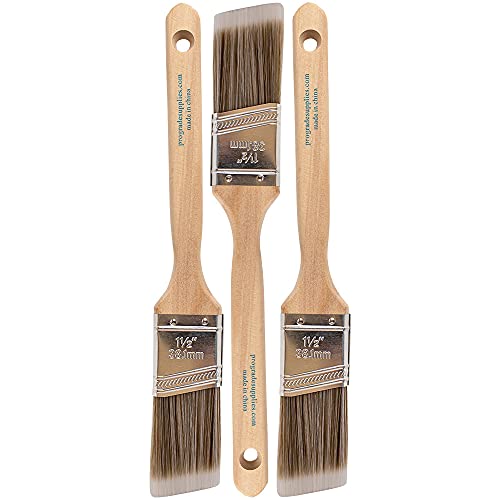
Pro Grade 1.5 Inch Angled Paint Brush, 3 Pc

Purdy 144152725 Pro-Extra Glide, 2-1/2 in.

RSL43 Paint Edge Trimmer with Two Replace Pads

Pro Grade 2 Inch Angle Paint Brush, 12 Pack

GACDR Slant Lining Fitch Trim Brushes, 6 Pack
More Details On Our Top Picks
Tight ceiling corners are where a wide brush turns into a liability, and the Bates trim set solves that with three narrow sizes, 5/8 inch, 3/4 inch, and 1 inch, designed for edging into the seam where wall meets ceiling. Each brush carries fine, soft bristles that hold a controlled amount of paint, so you can lay a clean line without flooding the corner and watching it bleed down the wall.
Compared with the broader Pro Grade 3-inch angled brush covered later, this set is less about speed and more about finesse, ideal for the painter who is more focused on accuracy than coverage. A comfortable grip handle keeps the brush steady during long cut-in sessions, which matters once you’re on the second hour of a ceiling line. For a first-timer tackling a single room, that combination of size variety and control makes a noticeable difference.
Advantages To Know
- Three narrow widths (5/8, 3/4, 1 inch) match tricky corner geometry where a 2.5-inch sash feels clumsy.
- Fine bristles hold a controlled bead of paint, helping you avoid heavy drips on the wall side of the line.
- Comfort-grip handle reduces wrist fatigue on multi-hour ceiling runs.
- Set pricing makes it a low-commitment way to start a small cut-in project.
- Compact size makes it easier to keep a steady hand while perched on a ladder.
Trade Offs
- Smaller bristle area means more dips into the tray on long runs.
- Not the right pick if you also need to fill in broad wall areas quickly.
Key Specs
Who Will Love This
First-time painters working on a single bedroom or bathroom ceiling who want a forgiving, narrow brush.
Look Elsewhere When
Step up to the GACDR Slant Lining Fitch Trim Brushes if you need a steeper angled tip for outlining crown molding and recessed ceiling details.
A whole-room repaint rarely demands only one type of brush, and the Coltree 5-piece set covers both flat and angled shapes in a single buy. You get 1-inch and 2-inch flat brushes plus 1.5-inch, 2-inch, and 2.5-inch angled brushes, so the same set handles the ceiling line and the wall fill-in that follows. That kind of flexibility keeps you from swapping tools mid-project.
The thick synthetic bristles carry more paint per dip, which trims time off long runs along the perimeter of a room. The bristles are soft enough for water-based finishes yet firm enough to push oil-based stains without flopping. Where the narrow Bates set focuses on corner work, this kit is more of a one-stop option for a full-room repaint on a tighter budget.
Practical Pluses
- Mix of flat and angled covers both cutting in and rolling the wall afterward.
- Thick synthetic filament holds more paint, reducing the number of trips back to the tray.
- Soft enough for latex paint while staying firm for oil-based stains.
Minor Gripes
- Five brushes take up more storage space than a single sash brush.
- Some owners report bristle shedding during the first few uses, which can mar a clean line.
- Wider 2.5-inch angle may feel unwieldy in tight above-cabinet or alcove corners.
Made For
Homeowners tackling a full-room repaint who want one kit for both the ceiling edge and the wall field behind it.
Swap It Out When
Switch to the Wooster Brush Q3211-2 Shortcut Angle Sash if you mostly work in tight spots like above door frames and need a stubby handle for better leverage.
Long ceiling lines reward a brush that loads up with paint and lays off a clean edge without constant re-dipping, and the Pro Grade 3-inch angled sash is built for that pace. The 3-inch width covers more of the wall-to-ceiling seam per stroke, so a typical 12-by-12 room takes fewer passes to cut in. A two-pack also means you can rotate a fresh brush in mid-project without stopping to clean.
The thicker synthetic filament blend carries more paint, which speeds up the work but also requires a lighter hand to avoid heavy buildup at the tip. Wooden comfort-grip handles stay reliable during long reaches across a ceiling. Compared with the Bates 3-piece set, this is a more productivity-focused tool, less about corner geometry and more about raw coverage speed.
Everyday Advantages
- 3-inch width means fewer strokes along long, uninterrupted ceiling lines.
- Two-pack keeps a backup ready when one brush wears out mid-job.
- Wooden comfort-grip handle stays balanced during overhead reaches.
- Synthetic filament works across latex, oil, and stain formulas.
Honest Caveats
- Wider head feels bulky in tight corners above cabinets or soffits.
- More paint loaded per stroke means a heavier hand can leave visible tracks on the wall.
Right Fit For
DIYers and homeowners cutting in across a full ceiling in a single session who want speed over finesse.
Skip It When
Reach for the GACDR Slant Lining Fitch Trim Brushes if your project is more about outlining recessed lighting trays and crown molding than broad ceiling runs.
The Wooster Shortcut is a long-standing favorite for painters who work above their heads for hours, mainly because of its stubby handle. The compact 2-inch angled head paired with the short purple Shergrip handle gives you noticeably better control when your hand is right up close to the ceiling, especially in tight spots above door frames or inside closets.
It uses a synthetic filament blend rated for both latex paints and water-based stains, and a brass-plated steel ferrule keeps the bristles from loosening as the brush wears in. A three-pack is convenient if you rotate brushes between rooms or colors. This sits between the slimmer Bates set and the wider Pro Grade 3-inch in width, making it a true all-around angled sash.
Reasons It Performs
- Short handle puts your hand closer to the bristles, improving control near the ceiling.
- Brass-plated steel ferrule resists loosening and rust over time.
- Synthetic filament works across latex, oil, and water-based stain formulas.
- Three-pack means you always have a clean brush ready for color changes.
Some Limits To Know
- Shorter handle may feel cramped if you prefer a longer, traditional brush grip.
- Higher cost per brush than basic trim sets on this list.
Key Specs
Best Suited To
Detail-oriented DIYers cutting in along ceilings in tight or awkward spaces like closets and hallways.
Consider Something Else When
Pick the Pro Grade 2 Inch Angle Paint Brush 12 Pack if you need disposable brushes for a large multi-room project where cleanup time matters more than finesse.
At 1.5 inches, this Pro Grade angled brush lands in the middle of the range and ends up being a versatile size for ceiling cut-ins. It’s narrow enough to steer into a 90-degree corner where wall meets ceiling, yet wide enough to keep up on longer straight runs without feeling painfully slow. The 3-pack means you can keep one dry while another is in use, which speeds up projects that span multiple rooms.
The same thick synthetic filament blend used across the Pro Grade line holds a generous amount of paint and resists streaking, while a thin tip at the bristle ends helps with precise placement. Wooden comfort-grip handles feel familiar to anyone who has painted before. Compared with the 3-inch Pro Grade brush above, this one trades speed for accuracy.
The Case For It
- 1.5-inch width balances corner control with reasonable line speed.
- Three-pack supports color changes or multi-room sessions without mid-job cleaning breaks.
- Thin bristle tip improves precision at the start and end of each stroke.
- Wooden comfort-grip handle keeps the brush stable during overhead reaches.
Worth Noting
- Not the best pick if your priority is finishing a large room in a single pass.
- Some users mention bristles need a quick rinse before first use to remove loose filaments.
Who Should Grab It
Homeowners repainting a single room or two who want a versatile all-around angled brush that handles both corners and longer runs.
A Better Fit Elsewhere
Move to the Purdy 144152725 Pro-Extra Glide if you want a premium single brush with a smoother filament lay-off for visible living-room ceilings.
Purdy has long been a name associated with finish-quality interior painting, and the 144152725 Pro-Extra Glide carries that reputation into ceiling work. The 2.5-inch width sits between the smaller 1.5-inch Pro Grade and the wider 3-inch version, and the brush’s filament blend is designed to lay paint down smoothly with minimal brush marks. For visible living-room and dining-room ceilings, that smoother lay-off tends to show in the final result.
The brand’s reputation also means replacement brushes are widely available, which is helpful if you settle on a tool you like and want to keep using it. The brush is made in the United States, and that domestic build tends to translate to consistent quality control. Where the Pro Grade 2-inch 12-pack is about volume, this single Purdy is about one well-made tool you’ll use for years.
Benefits That Matter
- Filament blend lays paint off smoothly, reducing visible brush marks on flat ceilings.
- 2.5-inch width is a versatile middle size for most residential rooms.
- Built for interior finish work where the cut-in line is in plain sight.
- Purdy replacement brushes are easy to find, so you can rebuild the tool over time.
Points To Keep In Mind
- Higher per-brush cost than multi-pack alternatives on this list.
- Not the right choice if you need a backup or disposable brush for messy stain work.
Key Specs
Whose Shelf It Belongs On
Homeowners repainting a primary living space where the cut-in line will be visible and worth the extra refinement.
Where Another Pick Suits Better
Switch to the BANCOO RSL43 Paint Edge Trimmer if ladder fatigue is the bigger concern and you want a pad-based tool that doesn’t require a brush grip at all.
The BANCOO RSL43 isn’t a brush at all, it’s a pad-based edge painter, and that distinction is exactly why it earns a spot here. Guide wheels roll along the ceiling while the pad lays down a parallel line of paint, removing the need for a steady hand on the brush. For a long, uninterrupted ceiling line in a hallway or living room, that mechanical guidance can save real fatigue.
The handle rotates to multiple angles, which helps when you hit an inside corner or transition from ceiling to wall. Two replacement pads come in the box, and the design of the guide wheel has reportedly been improved to keep it from falling off mid-use. Compared with any of the angled sash brushes on this list, this trades the painter’s hand control for a tool that does the steering for you.
What Pays Off
- Guide wheels keep the line straight without the steady hand required for a freehand cut-in.
- Rotating handle adjusts for corners and ceiling-to-wall transitions.
- Two replacement pads included extend the tool’s usable life.
- Pad-based design reduces wrist strain during long ceiling runs.
Practical Considerations
- Pad layout produces a slightly different finish than a bristle brush, so test on a scrap surface first.
- Not ideal for tight inside corners where the guide wheels can’t roll cleanly along two surfaces.
- Replacement pad supply is more limited than standard brush replacements.
Perfect Match For
Homeowners with a long, straight ceiling run who find brush-based cut-ins tiring on the wrist and shoulder.
Reach For A Different Pick When
Pick the Pro Grade 3 Inch Angled Paint Brush 2 Pack if you want the traditional brush feel and don’t mind keeping a steady hand along the line.
When the project spans a whole house, a single 2-inch angled brush becomes disposable after a few rooms, and a 12-pack keeps you moving. The 2-inch width is the workhorse size for ceiling cut-ins, narrow enough for corners yet wide enough to push through long runs. Having a fresh brush for each room also means you don’t have to stop and deep-clean in the middle of a project.
The same thick synthetic filament blend used across the Pro Grade line holds more paint per dip and resists streaking, while a thinner tip at the bristle ends keeps the start and stop of each stroke clean. Wooden comfort-grip handles stay familiar across the whole pack. The honest read is that the per-brush cost is low, but the trade-off is that quality control can vary from brush to brush in such a large pack.
Points In Its Favor
- 12 brushes let you rotate a fresh one for each room or color without mid-project cleaning.
- 2-inch width is the versatile sweet spot for most ceiling cut-in work.
- Synthetic filament works across latex, oil, and stain formulas.
- Low per-brush cost compared with buying premium brushes individually.
Soft Spots
- Quality consistency across a 12-pack can vary, so inspect bristles before each use.
- Bulk packaging takes up more storage space in a small apartment closet.
Key Specs
Built With In Mind
Homeowners repainting multiple rooms or a full floor who want a steady supply of reliable workhorse brushes.
Not Your Match When
Choose the Bates Trim Paint Brush 3 pcs if you only have a single small room and don’t want the bulk pack sitting in storage afterward.
Fitch brushes are a category most casual painters never pick up, and the GACDR 6-pack is a friendly way to try them. The slanted bristle profile creates a naturally sharp tip, which makes the brush excellent for outlining ceiling edges, recessed lighting trays, and crown molding where a 2-inch sash would feel too blunt. The micro-tipped synthetic bristles hold their shape and lay down a controlled bead of paint.
The set ships with two of each size: 0.5, 0.75, and 1 inch, so you can keep a backup ready or work across colors without stopping to wash. The angled bristle geometry takes a few strokes to get used to, but the learning curve is short. Compared with the broader Pro Grade and Bates brushes, this is more of a specialty outlining tool than a general-purpose ceiling brush.
Why It Works Well
- Slanted bristle profile naturally creates a sharp line at the ceiling edge.
- Three narrow sizes (0.5, 0.75, 1 inch) cover corners and detail work a wider brush can’t reach.
- Two of each size means you can rotate brushes between colors or rooms.
- Micro-tipped synthetic bristles hold their shape and resist flopping when loaded.
Less Ideal Details
- Tiny bristle area means very frequent dipping on longer runs.
- Slanted geometry takes a few practice strokes to feel natural in the hand.
Key Specs
Right Fit For
Detail-focused painters outlining ceiling coffers, crown molding, and recessed lighting trays where a wider sash would over-paint.
Another Choice May Suit
Pick the Wooster Brush Q3211-2 Shortcut Angle Sash for most of the ceiling line and save the GACDR set for the detailing that follows.
Factors To Consider When Choosing Paint Brushes for Cutting in Ceiling
Width and Angle Geometry
The width of an angled sash brush controls the trade-off between corner control and coverage speed. Narrow brushes in the 0.5 to 1.5 inch range let you steer into tight 90-degree ceiling corners without dragging paint onto the wall, while wider 2.5 to 3 inch brushes cover long uninterrupted runs faster. Most rooms benefit from having at least two widths on hand, one narrow brush for corners and a wider one for the straight sections between them. The angle of the bristles is what makes an “angled sash” brush cut in cleanly, since the slanted bristle edge lets you push paint into the seam with the tips while keeping the heel of the brush off the ceiling surface.
Bristle Material and Paint Compatibility
Synthetic filament brushes have largely replaced natural bristles in latex paint work because they hold their shape when wet and resist swelling. For ceiling cutting in, a firm but soft synthetic gives you control without leaving bristle marks. If you plan to use the same brush for oil-based stain or shellac, confirm the brush is rated for it, since some economy synthetics are designed for water-based products only. The Purdy Pro-Extra Glide and the Wooster Q3211-2 both use synthetic blends rated across paint types, which is worth noting if your project involves more than one finish.
Handle Length and Grip Comfort
A short handle, like the one on the Wooster Shortcut, brings your hand close to the wall and ceiling, which improves fine motor control. A longer handle keeps your hand farther from the surface, which can be useful for reaching across a wide ceiling without a ladder. Comfort-grip materials, whether rubber overmold or shaped wood, matter once you’ve been holding the brush overhead for 30 minutes. If ladder work is in your future, holding a brush at shoulder height for hours will quickly reveal whether the grip suits your hand.
Key Considerations Across These Picks
Common Shopping Slip Ups
The most frequent mistake is buying a brush that’s too wide for the ceiling line, since a 3-inch flat brush feels productive but bleeds paint onto the wall on every stroke. Another slip is choosing natural-bristle brushes for water-based ceiling paint, which causes the bristles to swell and lose their crisp tip. Assuming any “angled sash” brush works for corners also tends to backfire, because some angled brushes have a steep slant that doesn’t fit a 90-degree ceiling seam. Match the brush width to the geometry of the seam, and you’ll save yourself hours of touch-up.
What The Higher Tier Buys
Stepping up to a premium brush like the Purdy Pro-Extra Glide gets you a denser filament pack and a ferrule that holds its shape through dozens of cleanings. The visible result is a smoother lay-off with fewer brush marks on the ceiling line, which matters in rooms where the ceiling is in plain sight. The upgrade is most worth it on high-visibility ceilings in living rooms, dining rooms, and entryways. For utility rooms, closets, and rental turnovers, a value pack like the Pro Grade 12-pack delivers the same cut-in line at a fraction of the cost.
Frequently Asked Questions
What size paint brush is best for cutting in a ceiling?
A 2 to 2.5 inch angled sash brush is the most common ceiling cut-in size, with a narrower 1 to 1.5 inch brush kept nearby for corners and detail work. The angled bristle geometry lets you press the tips into the seam while keeping the heel off the ceiling surface.
Are angled or straight brushes better for cutting in ceilings?
Angled brushes are better for ceiling cut-ins because the slanted bristle edge naturally follows the seam between wall and ceiling. A straight (flat) brush works for cutting in along baseboards and other horizontal edges, but the angle gives you more control in the 90-degree corner where wall meets ceiling.
Can I use the same brush for cutting in and rolling the wall?
Theoretically yes, but switching between cutting in and rolling the wall tends to wear out a sash brush faster and can load it with lint from the roller cover. Most painters keep a dedicated angled brush for cutting in and use a separate roller for the wall field behind it.
How do I keep paint off the ceiling when cutting in walls?
Load the brush lightly and press the angled tip into the seam so only the bristle tips contact the ceiling. Pull the brush along the line in slow, controlled strokes rather than pressing it flat, and wipe excess paint off the brush edge on the rim of the tray before each pass.
How long should a quality cut-in brush last?
With proper cleaning after each use, a quality angled sash brush should last through several full-room projects before the bristles start to lose their shape. Lower-cost multi-pack brushes are often treated as semi-disposable and replaced after one or two projects, which is a reasonable approach for one-time DIY repaints.
Bottom Line
A clean ceiling line comes down to matching brush width and bristle shape to the seam you’re painting, not to spending more. Narrow angled brushes handle corners, wider ones cover long runs, and a pad edger like the RSL43 offers a third path for anyone whose wrist tires before the work is done. Pick the size that matches the room, and the rest of the cut-in tends to fall into place.




