


Painting kitchen cabinets rewards patience and the right tool, not brute force. Tight corners, raised panel edges, and the long runs between stiles all punish soft, floppy brushes that leave a fuzz of bristles behind. You want a brush that holds its shape, lays down thin, even coats, and gives you clean lines along the door edges without constant taping. The five options below cover the setups most homeowners actually face, from a one-room refresh to a full kitchen overhaul.
How The Shortlist Stacks Up

Wooster Q3211-2 Shortcut Angle Sash Brush 2-Inch Pack of 6

Wooster Q3211-2 Shortcut Angle Sash Paintbrush 2-Inch White
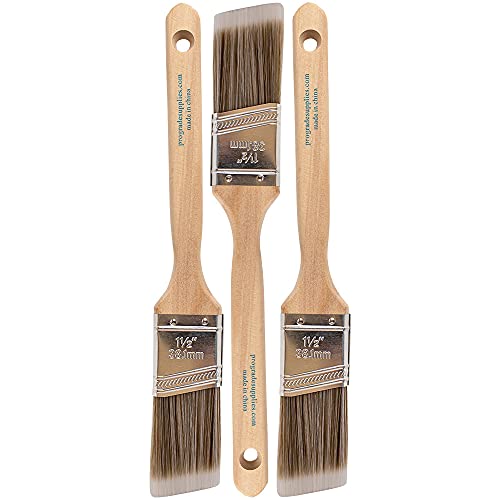
Pro Grade 1.5-Inch Angled Paint Brushes 3-Piece Set
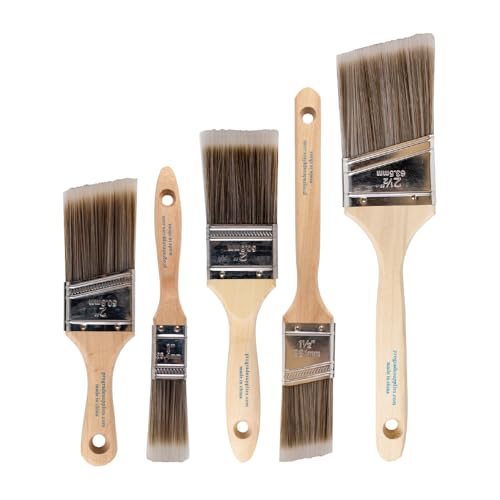
Pro Grade 5-Piece Paint Brush Set for Walls, Trim & Stain

Pro Grade 2-Piece Flat & Angled Paint Brush Set
The Details Behind The Selections
Kitchen cabinet doors are essentially a stack of narrow rectangles separated by stiles and rails, and a full-size 2.5-inch brush gets in its own way on those tight runs. The Wooster Shortcut solves that with a stubby handle around 2.25 inches long, so your grip sits close to the bristles and your hand does the steering rather than the brush’s length dictating the path. The angled sash profile is shaped specifically for cutting in along edges, which matters more on cabinet doors than on open walls.
You get six brushes in the pack, so one door can be in progress while another is drying, and a tired brush can be swapped mid-stroke without breaking your flow. The brass-plated steel ferrule holds the bristles tight, which is the kind of detail that shows up after a few sessions rather than on day one. Synthetic filaments handle latex, acrylic, and water-based stains, covering the main finishes a DIYer is likely to brush on.
What Stands Out
- Stubby handle keeps your grip close to the bristles for accurate control on narrow stiles and rails
- Angled sash shape is purpose-built for cutting in along cabinet door edges without bleeding onto adjacent panels
- Six brushes in the pack means a clean swap is always within reach, helpful when one bristle starts to misbehave mid-coat
- Synthetic filament blend works across latex, acrylic, and water-based stains, so one brush handles most cabinet finishes
- Brass-plated steel ferrule resists loosening, which extends usable life across multiple painting sessions
Points To Keep In Mind
- The short handle can feel cramped on larger surfaces like the sides of a tall pantry cabinet, where a longer brush gives better reach
- Like most quality synthetic brushes, the filaments do best with proper cleaning after each use; letting latex dry in the bristles shortens life noticeably
Whose Shelf It Belongs On
Homeowners repainting a full set of cabinet doors who want one brush type dedicated to the job and value precision over speed.
Swap It Out When
The Pro Grade 5-Piece Set suits you better when cabinet doors are only part of a larger project that also includes walls and ceiling trim.
This is the same Shortcut platform as the six-pack above, just a single brush, which is a useful frame when a friend lends you a Wooster and you wonder if the six-pack is worth the jump. The white nylon and gold polyester filament blend is built to ride smoothly with water-based paints, which is the most common cabinet finish these days. The bristles hold their tapered edge well, so the angle stays crisp across a door face rather than rounding off after twenty minutes.
For most people tackling a small cabinet touch-up or a single upper door, one brush is plenty and easier to store. The flexible purple handle is genuinely comfortable, especially during the long cutting-in sessions cabinet doors demand. Brass-plated steel ferrule construction mirrors the multi-pack, so you’re not giving up build quality for the lower count.
Reasons It Performs
- Single-brush format suits quick touch-ups and small cabinet repairs without buying more than you need
- White nylon and gold polyester filament blend is tuned for water-based paints, the dominant cabinet finish in most homes
- Flexible purple handle reduces hand fatigue during extended cutting-in sessions on door frames
Worth Noting
- One brush limits you when a bristle flags mid-project, since you have no fresh backup at hand
- The single-brush format costs more per unit than the six-pack, which adds up for a whole-kitchen refinish
Made For
Homeowners fixing a single damaged cabinet door, painting one vanity, or trying the Shortcut shape before committing to a multi-pack.
Look Elsewhere When
The Pro Grade 1.5-Inch Angled 3-Piece Set serves you better when your project centers on smaller detail work, like glass-panel doors with narrow mullions.
Where the Wooster Shortcut is a 2-inch workhorse, this Pro Grade set drops to 1.5 inches, and that half-inch matters more than it sounds on glass-panel cabinet doors, louvered bifolds, and the narrow muntins between cabinet glass. The thinner tip at the bristle ends is the part that catches paint where you actually want it, and it makes a real difference when you’re trying to avoid bridging the corner where two profiles meet.
Three brushes in the set give you a rotation while one is being cleaned, which keeps a wet edge moving on the door. The thick synthetic filament blend holds more paint than a basic brush, so you spend less time dipping and more time laying down an even coat. Wooden comfort grip handles sit naturally in the hand during the long, careful strokes cabinet trim work demands.
Positive Points
- 1.5-inch width slips into glass-panel mullions and louvered slats where wider brushes would smear
- Tapered bristle tips improve precision along the meeting lines of two cabinet profiles
- Three-brush set keeps a clean tool ready while another is drying or being wiped
Trade Offs
- Smaller brush face means more strokes to cover a flat cabinet door panel, extending project time
- Wood handles need a dry storage spot between uses, since prolonged dampness can swell the grip
Best Suited To
Cabinets with glass inserts, beadboard panels, or any project where the smallest readable detail matters more than coverage speed.
Consider Something Else When
The Pro Grade 2-Piece Flat & Angled Set makes more sense when your doors are mostly flat slab styles and you need a 3-inch flat for the broad faces.
Most kitchen cabinet projects grow. You start with the doors, then the frames, then the crown molding, then the walls, and suddenly you need four brush sizes you didn’t budget for. This Pro Grade set bundles 1-inch flat, 1.5-inch angle, 2-inch flat, 2-inch angle stubby, and 2.5-inch angle, which covers nearly every brush call a kitchen throws at you in one purchase. The 2-inch angle stubby is a close cousin of the Wooster Shortcut and works the same way on door edges.
For a whole-kitchen refresh where the cabinets are part of a larger room repaint, the 2.5-inch angle handles wall corners, the flat brushes cover door panels faster than an angle sash, and the stubby tackles the cabinet faces. Owners commonly find this set replaces the need to buy individual brushes as the project expands, which simplifies the shopping list.
A Few Strong Suits
- Five sizes cover cabinet doors, frames, walls, and trim in a single purchase, simplifying the project shopping list
- Includes a 2-inch angle stubby similar to the Wooster Shortcut profile for tight cabinet edge work
- Mix of flat and angle profiles lets you match the brush shape to the surface, rather than forcing one tool to do both
Less Ideal Details
- Brushes that stay damp between uses benefit from a comb or rinse routine, since five tools in rotation is easy to neglect
- You may end up with sizes you rarely reach for, which makes storage planning worth thinking about before the project starts
Feature Snapshot
Right Fit For
Homeowners repainting an entire kitchen, including cabinets, walls, and trim, who want a single set to cover every brush task.
A Better Fit Elsewhere
The Wooster Q3211-2 Six-Pack is the smarter call when cabinet doors are the only project and you don’t need any of the wall or trim sizes.
Flat slab cabinet doors, the kind with a smooth uninterrupted face and no raised panels, reward a wider flat brush. This Pro Grade set pairs a 3-inch flat with a 2.5-inch angle, which is a smart combination: the flat lays down a broad, even coat across a door panel in fewer passes, while the angle handles the perimeter and the hinge-side edges where the cabinet meets the wall.
The angle brush in this set is built for cutting in along walls and trim, which makes the pair useful if your cabinet project also involves the surrounding room. Synthetic filaments are designed to wash out cleanly and keep their shape across sessions, so the set pulls double duty for a follow-up project down the line. For slab doors in particular, this duo often finishes the job faster than reaching for an angle sash on every pass.
What Helps Most
- 3-inch flat brush speeds up coverage on smooth slab cabinet doors with no raised detail
- 2.5-inch angle brush handles the perimeter and hinge-side edges where a flat would over-shoot
- Pair format costs less than a five-piece set while still covering the two main brush roles
Potential Compromises
- Wider brushes can feel unwieldy on shaker or inset doors with tight, narrow panels
- Only one flat and one angle brush means a wet brush needs cleaning or waiting before the rotation continues
Who Should Grab It
DIYers with flat slab cabinet doors who want a faster path through the broad faces without buying a five-piece kit.
Not Your Match When
The Pro Grade 1.5-Inch Angled 3-Piece Set works better for raised-panel or glass-front doors, where a smaller brush earns its keep on every stroke.
Picking A Brush That Actually Fits Your Cabinets
Cabinet work lives or dies on the brush profile, not the brand sticker. An angle sash, which is a brush with bristles cut at a slanted edge, is the workhorse for cutting in along door edges and into corners. A flat brush lays down broad strokes on smooth panel faces without the drag that angled bristles create. Stubby handles bring your hand close to the bristles for control, while longer handles give reach across tall pantry sides or full wall runs.
Filament choice matters more than most people expect. Synthetic blends, typically nylon and polyester mixes, hold their shape with water-based paints and clean out easily under a faucet. Natural bristles can absorb water and lose their edge in latex formulas, so for most modern cabinet finishes the synthetic route is the safer pick. The ferrule, the metal band that clamps the bristles to the handle, is the part that fails first on cheap brushes, so a brass-plated or stainless steel ferrule extends usable life.
Match the brush width to the surface. A 1.5-inch angle works on louvered and glass-panel doors where a 2-inch is too wide. A 2.5- to 3-inch flat covers a slab door panel efficiently. A stubby 2-inch angle is the sweet spot for most shaker-style door edges. Buying a single brush for one job is fine for a touch-up, but a whole kitchen benefits from two to three sizes in rotation.
Storage and cleaning deserve a quick mention. Latex paint hardens fast inside a ferrule, so rinse brushes the moment you take a break longer than a few minutes. Hang brushes or stand them bristle-side up to dry so water drains away from the glue that holds the bristles in. A brush comb is a small tool that pulls dried paint out of the heel, and it adds months to a brush’s working life.
Key Considerations Across These Picks
Common Shopping Slip Ups
The most frequent misstep is reaching for the cheapest brush in the aisle, then blaming the paint when the finish looks streaky. Bristle loss and uneven layoff are almost always a brush problem, not a paint problem. A second trap is buying one brush for a whole kitchen, since cabinet doors and walls call for different profiles. Skip the temptation to grab a 3-inch flat and call it done, because door edges and corners need an angle sash to stay clean.
Where The Extra Money Goes
Stepping up to a multi-pack or a recognized brand like Wooster usually buys tighter bristles, a more secure ferrule, and a handle that doesn’t fight your hand during a long session. For a single touch-up, a basic brush is fine, but for a full cabinet repaint, the upgrade pays off in fewer brush strokes, cleaner edges, and brushes you can wash and reuse on the next project. Higher tier also tends to mean flagged filaments, where each bristle tip is split into finer points that hold more paint and lay it down smoother.




