


A small scuff near the doorframe, a nail hole patch that never quite disappeared, the spot behind the couch that got bumped one too many times. Wall touch-ups rarely need a full roller or a full afternoon. The right brush gives you control, a clean edge against the trim, and a finish that blends with what’s already on the wall. You want something that picks up enough paint, holds its shape, and doesn’t shed bristles into the patch.
The five sets below cover the most common touch-up scenarios: single brushes for one-off spots, multi-packs for a full weekend of small repairs, and kits with the angle and flat shapes you actually reach for. Each is built around angle sash heads, which matter for cutting into corners, plus the ferrule and handle quality that separates a brush you’ll reuse from one that ends up in the trash after the first rinse.
A Side-By-Side Look

Wooster Q3211-2 Shortcut Angle Sash Brush 2-Inch, Pack of 6

Wooster Q3211-2 Shortcut Angle Sash Brush 2-Inch, White
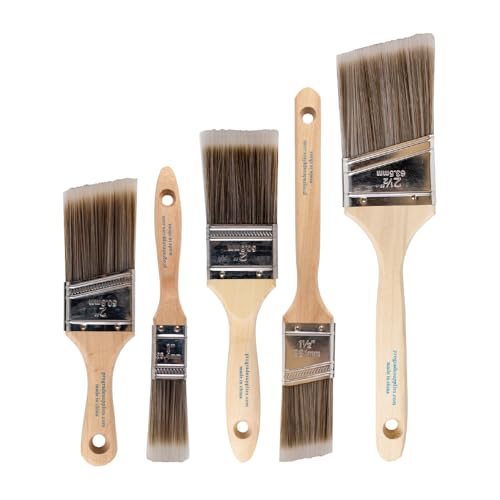
Pro Grade Paint Brush Set for Walls, Trim & Stain 5-Piece

Pro Grade Angle Paint Brushes for Trim & Walls 6 Pc

Pro Grade Flat & Angled Paint Brush Set, Walls & Trim 2 Pc
The Details Behind The Selections
The Shortcut is a stubby angle sash brush built for the kind of work most touch-ups actually demand: corners, edges along baseboards, and narrow strips where a full-sized brush feels clumsy. The 2-inch head and short handle make it easier to press the bristles right up against the ceiling line or into the inside corner where two walls meet. For homeowners who keep a brush on hand for the next door-slam, it’s a sensible grab.
You also get six of them, so worn tips stop being a problem. A bristle that starts to fan out or curl gets replaced without a trip to the store, and a fresh brush always lays down a cleaner edge than a tired one. The synthetic blend holds latex and acrylic paints without swelling the way natural bristles can, and the brass-plated steel ferrule keeps the bristles locked in place through repeat wash cycles.
What Earns Its Place
- Stubby 2-inch head gets right up against ceiling lines, inside corners, and trim edges where roller edges leave marks.
- Synthetic filament blend works with latex, acrylic, and water-based stains, so one brush handles most wall paints.
- Six-pack format means a fresh brush stays ready for the next scuff, nail hole, or patch job.
- Brass-plated steel ferrule resists rust and keeps bristles from loosening mid-stroke.
- Angled sash profile lays a clean cut-in line along baseboards, which is where most touch-ups are noticeable.
Things To Consider
- Short handle style takes a session or two to adjust to if you’re used to full-length brushes.
- Owners commonly note that the 2-inch head is too narrow for blending into a large patched area, so expect to dab rather than sweep.
- Six brushes sitting in a kit may be more than a one-bedroom apartment needs.
Who It Suits Best
Homeowners with a long list of small dings, scuffs, and patch spots who want a reliable angle brush in arm’s reach at all times.
Look Elsewhere When
For broad patches and a single brush on a budget, the Pro Grade Flat & Angled 2-Piece is a more focused fit.
Functionally, this is the same Shortcut angle sash brush as the 6-pack above, but sold as a single unit. The white nylon and gold polyester blend gives it a slightly different bristle mix, and the purple handle makes it easy to spot in a crowded tool drawer. For a one-room touch-up or a single rental property, the single brush keeps you from stocking more than you need.
The retail packaging is also designed to hang on a peg hook and shows the proper grip on the front, a small detail that helps if you’re just learning brush technique. At 1/2-inch thickness, the bristle bed holds a moderate load of paint, which is enough for cutting in a few feet of trim without constant re-dipping.
Strengths Worth Knowing
- Compact 2-inch head with angled profile that reaches into inside corners other brushes leave behind.
- White nylon and gold polyester blend lays down smooth coverage with latex and acrylic wall paints.
- Short Shergrip handle reduces wrist fatigue during overhead touch-ups near ceilings and door frames.
- Brass-plated steel ferrule holds the bristles through repeated wash and reuse cycles.
Worth Noting
- Single-brush format means no spare when bristles finally wear out or get dropped in the paint tray.
- Retail peg-hook packaging is fine for a store display, less useful once you open it at home.
- For larger patches, the 1/2-inch filament thickness feels modest against the 3-inch flat you’d want for blending.
Made For
Anyone tackling a few specific touch-ups who would rather pay for one quality brush than a bundle they won’t use.
Where Another Pick Suits Better
If you’d rather have spares on hand for a property with multiple rooms, the Wooster 6-pack from Pick 1 spreads the cost across replacements.
When a touch-up turns into repainting a whole accent wall, a single brush stops being enough. The 5-piece Pro Grade kit covers the sizes that show up in real projects: a 1-inch flat for tight spots, a 1.5-inch angle, a 2-inch flat, a 2-inch angle stubby, and a 2.5-inch angle. That’s the spread a beginner can use across a full room without buying extras.
The set is positioned for homeowners who want a professional range without the professional price tag, and the angle sash brushes do the work that matters for clean edges against trim. Compared to the Wooster Shortcut, you trade the stubby handle for more variety, which helps when some patches need a 1-inch touch and others need a 2.5-inch sweep.
Bright Spots
- Five sizes cover small nail holes, baseboard runs, and broader wall patches in one purchase.
- Mix of flat and angled sash heads handles both trim and broad wall blending.
- Useful for cabinets, doors, and furniture, so the same set stretches beyond just wall touch-ups.
- Range of widths gives beginners a sense of which size feels right for which job.
Points To Keep In Mind
- Synthetic filament can lose shape faster than premium brushes if stored damp or left to soak.
- Five brushes means more cleanup after a session, and more chances to leave one to dry out and ruin the tip.
Best Suited To
First-time painters and DIYers who want one kit that handles a weekend of touch-ups across walls, trim, and furniture.
Reach For A Different Pick When
For a single quick scuff repair, the Pro Grade 2-Piece set in Pick 5 is less to manage.
Where the 5-piece kit mixed flat and angled shapes, this 6-piece set is all angle sash. The lineup includes two 1.5-inch, two 2-inch, one 2.5-inch, and one 3-inch. Doubling up on the smaller sizes is a quiet flex: you get a backup right when the first one starts to fray, and you can keep one wet while the other dries between sessions.
The thick synthetic filament blend is the spec worth knowing. A denser bristle bed holds more paint per dip, which means fewer trips back to the can and fewer visible stroke lines where the brush ran dry. For longer cut-in runs along crown molding or a stairwell, that load capacity shows up in the finish. The wooden comfort grip is the other spec to mention: a cushioned handle reduces hand cramping on a long afternoon of edge work.
Where It Helps
- Six angle sash brushes cover the four most-used cut-in widths, with spares for the two most common sizes.
- Thick synthetic filament blend holds more paint, reducing streaks on long cut-in runs.
- Wooden comfort grip handle keeps hand fatigue down on bigger projects.
- Range tops out at 3 inches, useful for cutting in along stair stringers and tall baseboards.
Honest Caveats
- All-angle lineup means no dedicated flat brush for filling in a wide patch quickly.
- Six brushes in a session means more cleanup and more places to leave one bristle-down in a tray.
- 3-inch brush feels oversized for typical nail-hole touch-ups, where a 1.5-inch would do.
Who Should Grab It
Homeowners with a long list of trim touch-ups across multiple rooms, or anyone cutting in crown molding for the first time.
Swap It Out When
For corner-only touch-ups in a tight space, the Wooster Shortcut from Pick 1 is shorter and easier to control.
Sometimes a kit is more than you need. The 2-piece Pro Grade set gives you a 3-inch flat and a 2.5-inch angle sash, which covers most of the work a touch-up actually requires. The flat lays paint into a small patched area faster than any sash brush, while the angled head handles the edges and corners.
That pairing matches the workflow most homeowners develop on their second or third paint job. You stop reaching for the wrong brush and start grabbing one of two. The brushes are built to wash and reuse, which is the main reason the set makes sense as a starter rather than a one-time purchase. Compared to the bigger Pro Grade kits, you’re giving up size variety for a smaller, more manageable pair.
The Good Stuff
- Two-brush pairing covers the most common touch-up needs without stocking extras.
- 3-inch flat fills a patched area in fewer strokes than a 2-inch sash.
- 2.5-inch angle sash cuts a clean line where the flat can’t reach.
- Designed to be washed and reused, so the cost spreads over multiple jobs.
Points To Note
- No smaller 1- or 1.5-inch brush for very tight nail holes or narrow trim details.
- Synthetic bristle blend can feel stiffer out of the package before a few coats of paint break it in.
Whose Shelf It Belongs On
Anyone who has outgrown the disposable chip brush stage and wants two reliable brushes for repeated small repairs.
A Better Fit Elsewhere
For a property with many small holes and recurring touch-ups, the Wooster Shortcut 6-pack from Pick 1 gives you a fresh brush ready to go.
What To Weigh Before Choosing Paint Brushes For Wall Touch Up
Bristle Material And Shape
Synthetic filament blends are the practical default for wall paint. They work with latex and acrylic formulas, hold their shape through washing, and don’t swell the way natural hog bristles do. Within synthetics, look at the bristle bed thickness: thicker beds hold more paint and lay down longer strokes without drying out, which matters for cutting in along baseboards.
Head Size And Angle
A 2-inch angle sash is the all-rounder for most touch-ups, narrow enough for corners and trim edges, wide enough to cover a small patch. Bigger 2.5- or 3-inch heads work better for filling a patched area, while 1-inch flats handle nail holes. Pick sets that include a flat and an angle so the bristle shape matches the job shape.
Handle Length And Grip
Stubby handles give you control in tight spaces like behind a toilet or inside a closet. Longer handles suit full-room projects and overhead work near ceilings. A soft or comfort grip matters more than it seems on a long afternoon of cut-in work, where hand cramping kills your edge quality.
Durability And Reuse
The ferrule, which is the metal band that anchors the bristles to the handle, is the part that fails first on cheap brushes. Brass-plated steel holds up through repeated washing better than tin. If a brush is built to wash and reuse, the per-job cost drops quickly across a year of touch-ups.
Key Considerations Across These Picks
Where Shoppers Go Wrong
The most common slip-up is buying the cheapest disposable chip brush and expecting a clean edge. Chip brushes shed bristles, lose their shape after one dip, and leave a fuzzy line you’ll see every time the light hits the wall. The next mistake is grabbing a 3-inch flat for everything. A wide flat can’t cut a clean line against trim, so you end up with paint on the baseboard that has to be wiped off.
A third trap is overloading the brush. A bristle bed packed with paint drags, sags, and leaves visible lines on the wall. Dip the brush, tap off the excess, then make the stroke. The brush should glide, not push.
When Paying More Pays Off
The gap between a budget brush and a mid-tier brush usually shows up in the ferrule and the bristle bed. A better ferrule keeps bristles from loosening mid-stroke, and a denser filament blend holds more paint without dripping. For a single touch-up, a basic brush gets the job done. For a year of recurring scuffs, nail holes, and patch work, the upgrade is real: a quality brush keeps its edge, washes clean, and lays a finish that matches the original wall. That last part is what you’re paying for, the patch disappears instead of standing out.
Frequently Asked Questions
What size brush works best for wall touch-ups?
A 2-inch angle sash handles most small repairs, including nail holes, scuffs, and short trim runs. For larger patched areas, a 3-inch flat covers ground faster without leaving lap marks where strokes overlap.
Can the same brush be used for latex and acrylic paint?
Synthetic filament blends are formulated to work with both. The bristle bed doesn’t swell with water-based formulas, and a quick rinse between uses keeps the two paints from contaminating each other in the can.
How do you keep a brush from shedding bristles?
Wet the brush before the first dip, work the bristles gently with your fingers, and pull out any loose ones by hand. A quality brush with a tight ferrule sheds very little once the loose factory bristles are removed up front.
How should paint brushes be cleaned and stored?
Rinse in warm water for latex paint, then work a small amount of mild soap through the bristles until the water runs clear. Reshape the head, hang the brush bristle-down or lay it flat, and let it dry fully before storing. Never leave a brush standing bristle-up in a jar.
Is a brush better than a roller for small wall repairs?
For patches smaller than a few inches, a brush gives you more control and a cleaner blend into the surrounding wall. A roller works for broader areas, but on small touch-ups the edges of the roller nap often leave a visible texture change that a brush avoids.
Final Verdict
The right brush turns a touch-up from a visible patch into an invisible fix. The Wooster Shortcut 6-pack earns the top spot for sheer versatility and the value of having spares on hand. The Pro Grade 2-piece is the smart starting point if you’re not sure how much painting is in your future. Match the brush to the size of the repair, keep it clean between jobs, and the wall looks like nothing ever happened.




