Stripping old paint rarely goes as planned. The wrong tool gouges trim, burns through softwood, or leaves you on a ladder for hours on a project that should have taken a weekend. Whether you’re rescuing a weathered deck, cleaning up a 1970s paneled wall, or restoring a vintage metal chair, the right scraper or stripping disc changes everything.
This lineup covers hand scrapers, carbide blades, and angle-grinder strip discs across nine solid options. Each pick below is matched to a specific use case, from light interior touch-up to heavy deck refinishing.
A Fast Comparison Of The Options

KEZERS 13-In-1 Painter’s Tool 3″ Stainless Steel Putty Knife Scraper

TPmax 4-1/2″ x 7/8″ Strip Disc 5-Pack for Angle Grinder

Holdly Premium 2.5-Inch Carbide Paint Scraper Tool

Diamabrush Wood Deck Removal Tool 4-1/2 in. (One Pack)
Diamabrush Wood Deck Removal Tool 4-1/2 in.

SHALL 8-In-1 Paint Scraper with Comfort Handle

ROTERSTEIN 10-Pack Strip Discs 4″ for Angle Grinder

Mixiflor 21-Piece 2″ Quick-Change Strip Discs for Drill

XW Razor Blade Paint Scraper Set with 20 Extra Blades
A Deeper Look At The Lineup
For the kind of homeowner who only wants one tool in the bag, the KEZERS 13-in-1 scraper pulls serious weight. The polished stainless steel blade doesn’t flex under pressure, which means cleaner lines along window frames and baseboards when you’re chasing cracked caulk or flaking latex.
The 3-inch working edge hits a nice middle ground for trim work, while the integrated hammer end drives in nail heads you uncover mid-strip. It’s a sensible starting point before reaching for the angle grinder.
What Works In Its Favor
- Stainless steel construction resists rust in humid bathrooms and kitchens
- 13 functions collapse into one compact hand tool, reducing clutter
- Stiff blade gives consistent scraping pressure on flat wall areas
- Hammer end doubles as a nail set for trim repair during the same job
- Works as a roller cleaner, screwdriver, and bottle opener for utility beyond paint
Points To Note
- Hand tools slow you down on large deck or fence projects
- The flat 3-inch edge can leave faint lines on softwood if angled too steep
Key Specs
Who It Suits Best
Weekend DIYers tackling interior paint, wallpaper, and caulk cleanup on trim and drywall.
Where Another Pick Suits Better
For deck-sized outdoor work, the Diamabrush Wood Deck Removal Tool 4-1/2 in. covers ground far faster.
Strip discs are nylon-web abrasive wheels (a mesh of tough fibers embedded with grit) that strip coatings without stripping the metal underneath. The TPmax 4-1/2-inch disc fits most standard angle grinders, including compact 4.5-inch models that you find in half the home workshops in America.
It pulls rust, oxidation, weld spatter, and old paint off steel and iron without gouging the base material, which makes it a strong pick for restoring patio chairs, garden gates, or steel entry doors. The 7/8-inch arbor (the central hole that mounts the disc to the grinder spindle) matches common 4.5-inch grinders, though adapters are easy to find for the rare exceptions.
Features That Help
- 4.5-inch diameter works on tight metal details like chair spindles and railings
- Nylon web construction is gentler than wire wheels on thin metal
- Five-disc pack covers most single-piece furniture or fence-section projects
Trade Offs
- Discs wear down faster on heavy mill scale and thick industrial coatings
- Generates noticeable dust and debris, so eye and lung protection matter
Best Suited To
Homeowners restoring wrought iron furniture, fence panels, or metal railings with a 4.5-inch angle grinder on hand.
Consider Something Else When
Anyone with a 4-inch grinder should look at the ROTERSTEIN 10-Pack Strip Discs, which match the smaller size with a deeper 5/8-inch arbor.
When paint has built up over decades into a thick, almost geological layer, regular steel scrapers fold under the pressure. The Holdly scraper uses a tungsten carbide blade, a material roughly four times harder than tool steel, which keeps its edge through the kind of jobs that dull other tools in minutes.
The 2.5-inch blade pairs with a two-handed grip design, where a secondary ball handle lets you push from both hands at once. The non-slip texture on the primary handle helps when you’re applying real force to lift failing epoxy, polyurea, or industrial enamel.
The Upside
- Carbide blade holds sharpness through heavy, multi-layer coating removal
- Two-handed design cuts wrist fatigue during long scraping sessions
- Corrosion-resistant blade suits marine and outdoor environments
Small Caveats
- Carbide edges are brittle; a sideways twist on a hidden nail can chip the corner
- Smaller 2.5-inch blade means more passes across large flat wall areas
- Larger overall footprint may feel bulky for tight interior corners
Quick Facts
Whose Shelf It Belongs On
Restoration specialists and serious DIYers fighting thick industrial coatings on boats, heavy equipment, or older commercial spaces.
Skip It When
For lighter latex and caulk cleanup, the SHALL 8-In-1 Paint Scraper handles the same work without the extra bulk.
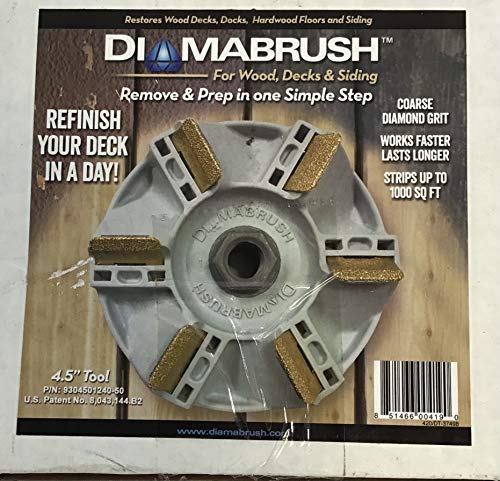
Decks are paint removal’s hardest case: soft, porous wood that gets chewed up by aggressive sanding or scraped raw by steel blades. The Diamabrush wood deck tool is built specifically to handle textured coatings, weathered stain, and old paint in a single pass.
It mounts to a 4.5-inch angle grinder and works best when paired with a dust shroud for cleaner cleanup. For most homeowners, it’s the difference between a two-weekend deck project and one that drags across a month.
A Favorable Mix
- Designed to remove and prep in one pass on deck boards
- 4.5-inch diameter matches the most common angle grinder size in home shops
- Works on textured coatings that defeat standard sanding discs
- Compatible with a dust shroud accessory for cleaner outdoor operation
Less-Strong Areas
- Single-pack means a full deck may need multiple units
- Performance depends heavily on grinder torque and consistent pressure
Feature Snapshot
Built With In Mind
Homeowners refinishing a backyard deck with a 4.5-inch angle grinder who want to skip the rental sander route.
A Better Fit Elsewhere
For interior trim or drywall, the KEZERS 13-In-1 Painter’s Tool gives more hand-control finesse than any power disc.
The sibling to the previous Diamabrush deck tool, this version targets users who already own a rotary floor machine or want more flexibility in their tool lineup. Same 4-1/2-inch diameter, same deck-focused design, just framed for a different audience.
For contractors or serious woodworkers, the dual compatibility with both rotary floor sanders and angle grinders means one accessory covers multiple machines on the truck. The made-in-USA build is a meaningful plus for those who care about sourcing.
Well-Handled Touches
- Works with both angle grinders and rotary flooring machines
- United States manufacturing under tighter QC standards
- Same deck-grade abrasive system as the consumer-oriented Diamabrush
Worth Bearing In Mind
- Rotary floor machines add real cost if you don’t already own one
At A Glance
Right Fit For
Contractors and floor refinishers with rotary machines who want a deck-capable accessory in their kit.
Not Your Match When
Homeowners without a floor machine should pick the Diamabrush Wood Deck Removal Tool (One Pack) instead, which targets angle grinder use directly.
Scraping paint by hand works, but hours of it will blister any palm. The SHALL 8-in-1 scraper addresses that with a soft bi-material handle (a two-layer grip combining hard plastic for structure with softer rubber for cushioning) wrapped around a stainless steel blade.
Beyond the comfort upgrade, it functions as a putty knife, caulk and wallpaper scraper, utility cutter, roller cleaner, and 1/4-inch and 3/8-inch nut wrench. The hammer end rounds out the package for the same trim-repair situations the KEZERS covers.
Reasons It Performs
- Bi-material handle reduces hand fatigue on long scraping sessions
- Stainless steel construction holds up to wet scraping on exterior surfaces
- Multi-tool design covers drywall, caulk, wallpaper, and roller cleanup in one
- Hammer end handles trim nails without a second tool
Practical Considerations
- Eight functions mean each individual task gets less specialized attention
Made For
DIYers tackling a whole-house interior repaint who want one comfortable hand tool for trim, walls, and prep cleanup.
Reach For A Different Pick When
Anyone restoring thick industrial coatings should step up to the Holdly Premium 2.5-Inch Carbide Paint Scraper, which offers far more bite.
Strip discs wear out, and buying them one at a time gets expensive. The ROTERSTEIN 10-pack lands at the 4-inch size with a 5/8-inch arbor, suiting the smaller angle grinders that are easier on the wrist during overhead work.
The open nylon web design (loosely woven fibers with gaps between them) lets heat and debris escape during use, which extends disc life on heavy jobs. Compatibility note: these don’t fit the Wagner Paint Eater or drill chucks, so verify your grinder’s arbor before checkout.
Notable Upsides
- Ten-disc bulk pack suits multi-piece or multi-stage projects
- 4-inch size and lighter weight reduce arm strain on ladder or overhead work
- Silicon carbide abrasive handles paint, rust, welds, and oxidation on multiple surfaces
Worth Noting
- Not compatible with Wagner Paint Eater or standard drill chucks
- Smaller 4-inch surface means more passes across wide metal panels
Feature Rundown
Who Should Grab It
Shed, fence, and outdoor metal-furniture restorers with a 4-inch angle grinder who want a value-tier disc supply.
Where A Sibling Pick Shines
For drill-based detail stripping, the Mixiflor 21-Piece Quick Change Discs pair with a standard drill and reach tighter spots.
Not everyone owns an angle grinder, and buying one for a single paint job rarely makes sense. The Mixiflor 21-piece set runs on a standard drill or die grinder (a high-speed rotary tool, smaller than an angle grinder, used for detail grinding and shaping) and uses a quick-change system that swaps discs in seconds.
The purple nylon web abrasive is engineered to maintain grit adhesion longer than entry-level discs, which matters when you’re working through 20+ surfaces in one project. Each disc is 2 inches across and 0.6 inches thick, with a quick-change backing pad included.
Real Benefits
- Quick-change mechanism cuts downtime between disc swaps
- Works with the drill most homeowners already own
- 21 discs plus a backing pad cover extended multi-piece projects
- Smaller 2-inch disc reaches into corners and curves other discs can’t
Points To Keep In Mind
- Drill-based speed control is less consistent than a purpose-built angle grinder
- Smaller disc area means longer project times on large flat panels
Who Will Love This
Detail-oriented restorers reviving metal hardware, vintage tools, or intricate metalwork with a drill in the toolbox.
Swap It Out When
For larger flat metal sections, the TPmax 4-1/2″ Strip Disc 5-Pack covers ground faster on a standard 4.5-inch grinder.
For glass, tile, and detail surfaces where a wider blade would scratch, razor scrapers are the right answer. The XW set comes with two scraper handles and 20 replacement blades, addressing the constant complaint about razor scrapers: you always run out of blades mid-job.
The aluminum alloy holder keeps weight down during long detail sessions, while the quick-change wheel button swaps a dull blade for a fresh one in seconds. Owners commonly report that the narrow profile gets into window tracks, tile grout lines, and stove-top paint spills that wider tools miss.
Noteworthy Benefits
- 20 spare blades cover multiple projects without a re-order
- Aluminum body stays light for overhead or extended detail work
- Quick-change wheel button reduces downtime on dulled blades
- Narrow razor edge cleans window glass and tile without scratching
Some Limits To Know
- Razor edges are sharp; proper storage matters around kids and pets
- Not suited for thick coating layers where carbide or powered tools work better
Perfect Match For
Homeowners doing finish-detail scraping on glass, tile, and smooth surfaces, or anyone who burns through razor blades quickly.
Look Elsewhere When
For thick, soft coatings like old latex on drywall, the SHALL 8-In-1 Paint Scraper covers broad wall areas more efficiently.
Matching The Right Tool To The Surface Ahead
Paint removal tools split into two broad families: hand scrapers and powered stripping discs. Hand scrapers cover detail work on trim, drywall, and small patches, and they cost almost nothing beyond the initial purchase. Powered strip discs mount to angle grinders, drills, or floor machines and handle larger square footage in a fraction of the time.
The material of the substrate (the underlying surface you’re stripping down to) matters as much as the coating. Softwood decks demand a deck-specific disc like the Diamabrush because regular sanding discs dig in. Hardwood, metal, and masonry tolerate more aggressive abrasives. Carbide blades make sense for thick industrial coatings that defeat steel scrapers in minutes.
If the project sits on a ladder or overhead, lighter tools win. The 4-inch ROTERSTEIN disc and the Mixiflor drill set both reduce arm strain compared to wider, heavier options. For floor-level deck work, weight becomes an asset, helping the abrasive stay in contact with the wood.
Key Considerations Across These Picks
Common Buying Slip Ups
The most common mistake is matching a metal-rated disc to a wood deck. Strip discs designed for steel and iron chew into soft deck boards and leave gouges that cost extra sanding to fix. Always match the abrasive to the substrate, not just the coating being removed. The second slip is overlooking arbor size; a 7/8-inch disc on a grinder with a 5/8-inch spindle is a return trip waiting to happen.
When Paying More Pays Off
The premium tier earns its keep in two places: carbide blades for thick industrial coatings, and dust-controlled deck tools for big outdoor projects. A cheap steel scraper dulls after one bathroom of old latex, while a carbide edge goes through several. Similarly, a deck tool paired with a dust shroud saves hours of cleanup that an entry-level disc leaves behind. For occasional small jobs, mid-tier is plenty. The upgrade is worth it for frequency and coating difficulty.
Frequently Asked Questions
What is the fastest way to remove paint from a wood deck?
A deck-specific removal disc like the Diamabrush paired with a 4.5-inch angle grinder is widely considered the fastest method. It strips textured coatings and weathered stain in a single pass and pairs with a dust shroud to keep the mess manageable.
Can paint strip discs damage the underlying surface?
Yes, if the disc is too aggressive for the substrate. Wire wheels and coarse sanding discs can gouge softwood, and over-eager grinding on thin metal can warp panels. Nylon-web strip discs are designed to remove coating while leaving the base material intact, which is why they dominate the metal and deck categories.
Do I need an angle grinder for paint removal?
Not necessarily. Hand scrapers handle small interior jobs on drywall and trim just fine. Angle grinders earn their keep on large flat surfaces, decks, and metal furniture. Drill-compatible discs like the Mixiflor set bridge the gap for people who want powered help without buying a grinder.
How long do paint strip discs typically last?
Lifespan depends on the coating, the pressure applied, and the substrate. On thick latex over drywall, a disc can last through several pieces of trim. On heavy rust or industrial enamel over steel, expect to burn through a disc in a much shorter span. Buying multi-packs like the ROTERSTEIN 10-pack avoids mid-project replacement runs.
Are carbide paint scrapers worth the higher cost?
For thick, stubborn coatings, yes. Carbide stays sharp far longer than steel, which matters on jobs where a steel scraper would need resharpening or replacement. For typical interior latex and caulk, a stainless steel multi-tool scraper is more than enough.
The Takeaway
The right paint removal tool depends entirely on the surface in front of you. Hand scrapers like the KEZERS and SHALL cover interior detail and trim, carbide blades like the Holdly handle the rough stuff, and strip discs across the Diamabrush, TPmax, ROTERSTEIN, and Mixiflor lines cover any surface that fits an angle grinder or drill. Razor scrapers like the XW set finish the job where glass and tile meet paint. Match the tool to the coating and substrate, and the project moves along faster than you expect.