Doors punish sloppy tools. A standard 9-inch roller is built for walls, so the moment you push it into a panel recess or along a hinge edge, it shimmies, leaves lap marks, and drags paint where it shouldn’t go. What you actually need is a compact 2-inch or 4-inch roller that matches the door’s geometry, paired with a tray and a brush for the edges a roller can’t reach.
The five kits below cover that range, from a budget-friendly pail-and-brush combo for touch-ups to foam-and-microfiber sets designed for cabinet and door projects. Each one fits a specific workflow, so the goal here is matching the tool to the job, not chasing the biggest box.
A Quick View Of The Lineup

Handy Paint Pail Kit with Disposable Liners

ROLLINGDOG 4 Inch Paint Roller Kit
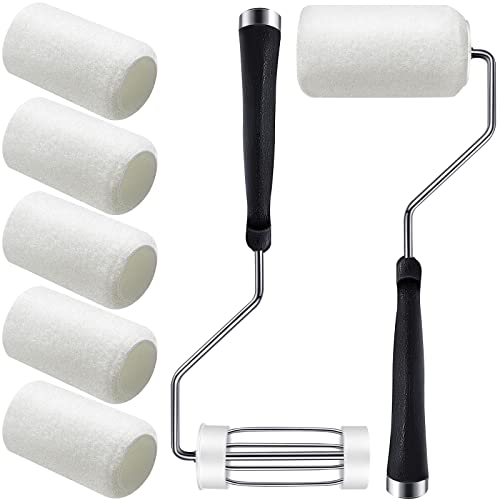
Tessco 2 Pack 4 Inch Paint Roller Kit

LemonRoad 18-Piece Paint Brush and Roller Set (2 Inch)
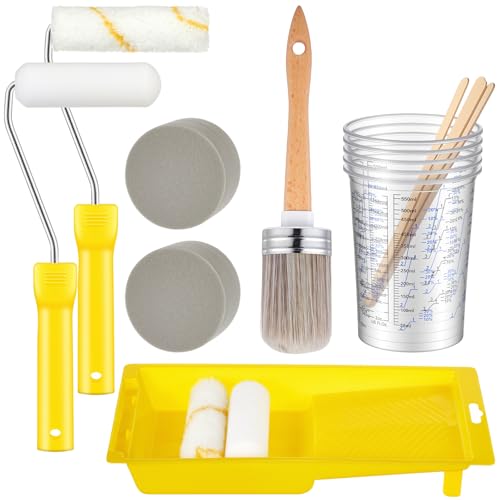
LemonRoad 18-Piece Paint Brush and Roller Set (4 Inch)
Inside Each Recommended Option
The Handy Paint Pail Kit isn’t a roller kit in the traditional sense, and that’s actually the point. Doors live and die by their cut-in lines along hinges, knobs, and panel edges, where a 4-inch roller would smear wet paint. This kit hands you a small pail, a Softgrip brush, twelve color-coded disposable liners, and a magnetic brush holder, so the real value is keeping wet work tidy during touch-ups.
It’s the right pick for quick scuff repairs on a single door, or for a homeowner who wants one tool that travels from baseboard to door frame to window trim. The magnetic holder keeps the brush from drying out between dips, which matters when you’re working in two-hour stretches rather than sprinting through a full room.
Practical Advantages
- Disposable liners mean no scraping dried latex out of the pail at midnight.
- Magnetic brush holder slows drying between coats on a long project.
- Pail size fits a single door panel without sloshing, even when carried upstairs.
- Softgrip handle keeps the brush steady during slow, deliberate trim work.
- Color-coded liners help separate primers from topcoats in a multi-step job.
Points To Keep In Mind
- No roller or cover included, so this kit pairs with one of the roller sets below for full coverage.
- Liners are single-use, and on large multi-door projects the replacement cost adds up.
Who It Suits Best
Homeowners patching one or two interior doors who already have a roller and just need clean trim work.
Look Elsewhere When
The ROLLINGDOG 4 Inch Paint Roller Kit is a better match when you also need sanding pads and a tray for the full repaint.
ROLLINGDOG leans hard into the refinishing workflow. Inside the box you get two high-density 4-inch foam roller covers, a frame, a 4-inch tray with three disposable liners, a 2-inch flat brush, masking tape, a drop cloth, and sanding pads in 120, 220, and 320 grit. That’s an entire door day in one purchase, with the sanding grits alone justifying the kit for anyone prepping raw wood or old varnish.
The 4-inch width is a deliberate choice for cabinet doors and panel work. It rolls into recessed areas that a 9-inch wall roller simply cannot reach, and the foam cover lays down enamel and water-based finishes without leaving lint. You may find the foam covers wear out faster than woven fabric ones when used on textured surfaces, but for smooth door skins they’re a strong match.
Advantages To Know
- Three sanding grits cover everything from paint stripping to final scuff before topcoat.
- High-density foam leaves a smooth, lint-free finish on enamel and alkyd paints.
- Disposable tray liners shorten cleanup at the end of a long day.
- Drop cloth and tape included, so no extra supply run before starting.
Honest Caveats
- Foam covers can degrade quickly with solvent-heavy coatings and may shed if overworked.
- Only two roller covers, so multi-door projects need replacements on hand.
- The included 2-inch brush is serviceable rather than exceptional for fine detail work.
Feature Snapshot
Made For
DIYers refinishing cabinet doors or interior doors who want sanding, rolling, and trim tools in a single box.
Consider Something Else When
The LemonRoad 4-inch Combo Brush Set offers more roller covers and microfiber options for longer multi-door runs.
The Tessco kit understands that a door is really three surfaces: the flat panel, the surrounding frame, and the narrow stiles between them. You get two self-lock 4-inch roller frames and six covers, so the second frame stays loaded while the first one dries, and the soft-grip handle reduces fatigue when you’re rolling out a full interior door in long, even strokes.
The self-locking frame is the underrated feature here. Standard frames unscrew mid-roll when you push too hard into a panel recess, and the cover slips off into the paint. A self-lock design holds the cover in place during the angled passes that door panels demand. For homeowners who are painting several doors in one weekend, the extra covers mean no mid-project supply run.
Positive Takeaways
- Self-locking frame prevents cover slippage during angled, pressure-heavy passes.
- Six covers handle two to three full doors before replacements are needed.
- Soft-grip handle reduces wrist strain during extended rolling sessions.
- 4-inch width works on door frames, window sills, and narrow trim alike.
Trade Offs
- No tray, brush, or sanding supplies, so it pairs with another kit for prep and edges.
- Cover density is general-purpose rather than specialized for foam-smooth finishes.
Best Suited To
Homeowners repainting multiple interior doors in a single weekend who value cover capacity over bundled extras.
Reach For A Different Pick When
The Handy Paint Pail Kit covers the trim and cut-in work this kit leaves out, and they complement each other well.
This 2-inch LemonRoad set skips the wide roller entirely and goes where most door projects actually live: tight corners, narrow rails, and detailed panel work. The kit bundles a 9.53-inch round brush, two round sponge applicators, four high-density foam mini rollers, two roller frames, a tray liner measuring roughly 7.9 by 4.7 inches, four 20-ounce mixing cups, and four mixing sticks.
You may find the round brush odd at first, but it’s purpose-built for corners where a flat brush leaves a ragged edge. The high-density foam mini rollers hold enough paint to lay down even coats on cabinet door profiles without the dripping that plagues cheaper foam. The four mixing cups mean primer, paint, and clear coat can each have their own vessel, which keeps cross-contamination out of a multi-step door finish.
What Earns Its Place
- Round brush handles corners and panel recesses that flat brushes struggle to reach cleanly.
- Four mixing cups keep primer, base, and topcoat separate in a multi-step finish.
- Foam mini rollers are sized for narrow stiles, not flat wall fields.
- 18-piece count covers an entire door refinishing without extra purchases.
Worth Bearing In Mind
- 2-inch rollers cover small areas slowly on full-size flush doors, so plan extra time.
- Round brush takes practice; flat-brush-only painters may need a session to adapt.
- Sponge applicators wear out faster than rollers and may need mid-project swaps.
Perfect Match For
Detail-oriented DIYers painting cabinet doors, louvered doors, or any profile-heavy surface where a wide roller is wrong.
Where A Sibling Pick Shines
The LemonRoad 4-inch Combo Brush Set covers the same scope but trades the round brush for microfiber rollers, faster on flat door skins.
The 4-inch Combo version of the LemonRoad set trades the round brush for a 4-inch paint tray and adds microfiber rollers alongside the foam ones, which makes it the most flexible kit in this lineup. You get one 9.53-inch round brush (kept for corners), two round sponge applicators, two microfiber rollers, two high-density foam mini rollers, two roller frames, four mixing cups, and four mixing sticks.
Microfiber covers hold more paint than foam, which means fewer reloads on a flush interior door, and they release paint evenly on semi-gloss and satin finishes. Foam covers handle the smoother enamel work where lint would show. Having both in one box means switching from door skin to door frame to trim without buying a second kit. For mixed projects, like a hallway of doors plus the surrounding casing, that versatility pays off.
Real Benefits
- Microfiber covers speed up coverage on large flat door panels.
- Foam covers available for enamel finishes where lint matters.
- 4-inch width handles doors, frames, and shallow trim in a single pass.
- Two roller frames let you swap between cover types without scraping in between.
Where It Is Less Suited
- More parts to store and track between projects, since 18 pieces add up fast.
- Mixing cups and sticks may go unused on simple single-color jobs.
Spec Overview
Whose Shelf It Belongs On
Homeowners managing a mix of cabinet doors, interior doors, and trim who want one kit that flexes between finishes.
Swap It Out When
The ROLLINGDOG 4 Inch Paint Roller Kit is leaner and includes sanding pads, which matter more on raw wood refinishing.
What To Look For In Paint Rollers For Doors
A door is a small, detail-rich surface, so the roller choice matters more than the brand. A 9-inch wall roller is the wrong tool; it’s too wide for a standard 32-to-36-inch door panel, and it can’t reach into recessed moldings without leaving thick edges. Compact 2-inch and 4-inch rollers fit the geometry of a door, and they pair with a brush for the hinge side and knob area where rollers drag.
Cover material is the next decision. Foam lays down a smooth, lint-free finish on enamel and gloss paints, making it the right pick for cabinet doors and any surface where brush strokes would show. Microfiber holds more paint and covers faster, so it works better on flat interior doors in satin or eggshell finishes. Woven nap covers handle texture but are usually too aggressive for door work.
Frame design is easy to overlook. A self-locking frame grips the cover during angled passes, which is what door panels require. Standard threaded frames can unscrew mid-stroke and dump the cover into the wet paint, a frustrating failure mode on a project you want to finish in a weekend.
The kit shape matters as much as the roller. Bundled kits with sanding pads, masking tape, and disposable tray liners save a trip to the hardware store. Standalone roller-and-frame sets assume you already own the rest. Matching the kit to the project scope, one door versus a hallway, prevents both overbuying and mid-project supply runs.
Key Considerations Across These Picks
Mistakes Worth Dodging
The most common slip-up is buying a 9-inch wall roller because it’s familiar, then fighting it on every door panel and recessed molding. Match the width to the surface. Another trap is grabbing the cheapest foam covers, which shed fibers into enamel and leave a fuzzy finish that costs hours to sand out. Foam density matters more than foam price.
Skipping surface prep is the third pitfall. A new roller on dirty or glossy old paint will peel within months. Light scuff sanding, ideally with 220-grit, gives the new coat something to grip. Kits like the ROLLINGDOG that bundle sanding pads exist because that step is non-negotiable on doors that have been in service for a decade or more.
When Paying More Pays Off
Higher-tier kits in this category usually add two things: more roller covers, and better frame hardware. A kit with six covers versus two means a multi-door project doesn’t stall halfway through. A self-locking frame versus a threaded one means fewer mid-stroke cover slips and less rework. You may find the upgrade worthwhile on any project beyond a single door, where downtime and supply runs cost more than the price difference between kits.
Frequently Asked Questions
What size roller works best for standard interior doors?
A 4-inch roller is the practical sweet spot. It covers a flat panel fast, fits into recessed moldings on paneled doors, and rolls close to hinges without smearing. A 2-inch roller is even more precise but slower on large flat areas, so it pairs better with cabinet doors than full-size interior doors.
Can I use a foam roller on enamel or alkyd paint?
Yes, and foam is often the right call for those finishes. High-density foam lays down a smooth, lint-free coat on gloss and semi-gloss enamels, which is what most doors use. Low-density foam tends to leave bubbles and air pockets, so density matters more than the foam label itself.
How do I avoid lap marks on a door?
Work in long, continuous strokes while the paint is still wet, and reload the roller before the coat starts to flash off. On a standard door, that usually means rolling top to bottom in one pass per section, then smoothing horizontally before moving on. Cutting in the edges with a brush first lets you roll right up to the trim without rushing.
Should I sand a door before repainting it?
Yes, even if the old paint looks intact. A light scuff with 220-grit sandpaper gives the new coat mechanical tooth to grip, which prevents peeling at the edges. Skipping sanding on a glossy door is the most common reason new paint peels within a few months of application.
Do I need a special brush for door hinges and knobs?
A 2-inch angled brush handles most cut-in work around hinges, knobs, and the door edge. A round brush, like the one in the LemonRoad 2-inch set, works better in tight panel corners. The key is keeping the brush damp and the edge crisp, so a quality brush matters more than the shape alone.
Wrap Up
The right roller for a door project depends on the door itself, the finish you want, and how many doors you’re tackling. Foam covers suit smooth enamel work, microfiber speeds up flat panels, and 4-inch frames hit the geometry without smearing. Match the kit to the scope, prep the surface, and the finish holds up for years.