


Satin paint hides imperfections less than flat and reflects more than eggshell, so the roller cover you choose shapes the entire final look. A cover that sheds lint or lays down too much texture will telegraph every flaw under raking light. The picks below cover the core scenarios you actually face: full-room walls, tight trim and cabinets, detail work behind fixtures, and high-volume projects where one cover won’t survive the day.
The Leading Options At A Glance

Amazon Basics Microfiber Paint Roller Covers, 9″ x 3/8″, 12-Pack

Mister Rui 2 Inch Foam Paint Roller Kit, 9 Pack

Mister Rui Foam Paint Roller, 4 inch, 8 Pack

Wooster Brush RR723-9 Pro/Doo-Z Roller Cover 3/8-Inch Nap, 9-Inch

Mister Rui Mini Paint Roller Kit, 13 Piece

Rhibak Paint Roller Kit with Extension Pole, 27 Piece Set

ROLLINGDOG Paint Roller Kit with Extension Pole

4 Inch Microfiber Paint Roller Covers, 24 Pack
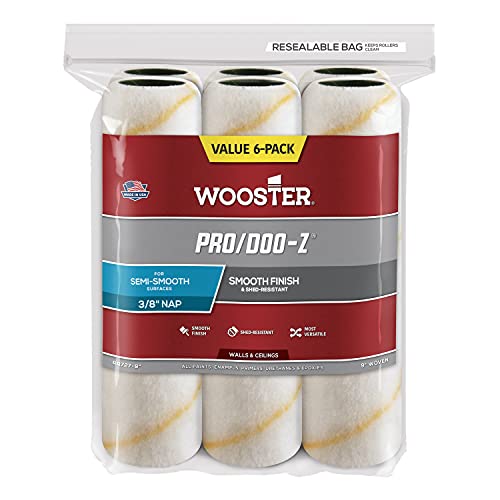
Wooster Brush RR727-9 Pro/Doo-Z Nap Rollers, 3/8-Inch, 6-Pack
A Breakdown Of The Leading Choices
Painting a full bedroom or two of satin walls is the job these covers were made for. The 9-inch width matches a standard frame, and the 3/8-inch nap (the length of the fuzzy fibers, which controls how much paint the cover holds and how much texture it leaves) lands right in the sweet spot for lightly textured drywall. Twelve covers means you can swap halfway through a room instead of pushing a tired, lint-flecked cover across a freshly painted wall.
The microfiber blend releases paint evenly, so you spend less time going back over streaks the previous cover would have left. Compared with the Wooster woven picks further down the list, this is a noticeably softer cover, which trades a touch of durability for a friendlier feel on new drywall.
The Good Stuff
- Twelve covers give you room to swap partway through a project
- 3/8-inch nap lays down satin without heavy stipple (the slight orange-peel texture rollers leave)
- Microfiber sheds less than cheaper knit covers, keeping the wall cleaner
- Washable and reusable for several projects before retiring
- Works with latex and oil-based paints, plus stains
Worth Noting
- Twelve covers is more than a one-room job needs, so storage matters
- Microfiber holds moisture, so dry thoroughly between sessions to prevent mildew
Who It Suits Best
Homeowners repainting multiple rooms in satin who want a dependable bulk pack without paying contractor-tier pricing.
Where Another Pick Suits Better
Trim, cabinets, and tight corners are easier with the Mister Rui 2 Inch Foam Paint Roller Kit, which is sized for detail work rather than open walls.
Foam covers behave differently from microfiber: the closed-cell surface (a smooth, non-porous face that doesn’t soak up paint the way a fuzzy cover does) lays down a near-spray finish, which is exactly what you want on cabinets, doors, and narrow trim where a 9-inch cover is too wide to control. The 2-inch size slips behind hinges, into corners, and along window mullions (the vertical bars between glass panes) without flooding adjacent surfaces.
For satin on small, flat panels, this kit is the right scale. Where the Amazon Basics 12-pack covers broad walls, this one is built for the fiddly bits a wide roller can’t reach.
The Practical Payoff
- High-density foam resists deformation so the cover keeps its shape across a project
- Compatible with water- and oil-based paints, stains, and varnishes
- Mini frame and small tray included, so you have everything to start
- Foam leaves almost no lint on the wet film (the wet layer of paint just rolled on)
Trade Offs
- Foam is not as durable as woven covers, so each one has a limited working life
- Solvent-heavy coatings can swell foam; stick to finishes the kit is rated for
Made For
Anyone refinishing cabinets, built-ins, or detailed trim where a 9-inch cover would be too clumsy to control.
Consider Something Else When
You are rolling broad walls: the Amazon Basics Microfiber Paint Roller Covers cover large drywall expanses in a fraction of the time.
The 4-inch foam size fills a gap the 2-inch kit can’t. Doors, cabinet faces, and dresser sides are wide enough that a tiny cover means too many passes, but too narrow for a 9-inch wall roller. Foam here also keeps the surface slick, which helps satin go on without the texture you would get from a woven 4-inch cover.
Eight covers plus a frame and tray make this a self-contained kit for a weekend cabinet or furniture refresh. Versus the larger 2-inch kit, this trades tight-corner access for faster coverage on panels.
The Case For It
- High-density foam stays smooth and resists matting (the flattening of fibers that ruins a cover’s finish)
- Works with oil- and water-based paints, including primers and stains
- Foam leaves an exceptionally smooth satin film on flat panels
- Includes a frame and a small tray, so no extra purchases are needed
A Few Limitations
- Foam covers tear if you press too hard on raised-panel doors
- The included tray is small, so reloads are frequent on big door runs
Best Suited To
Homeowners repainting kitchen cabinet doors, flat-panel furniture, or closet doors where satin needs to look sprayed-on but a brush is too slow.
Skip It When
Walls are the main canvas: the Amazon Basics Microfiber Paint Roller Covers cover 9-inch drywall much faster and at a lower cost per square foot.
Woven covers are a different material class from microfiber. The fibers are interlocked rather than fuzzy, which gives the cover more snap on the wall and leaves a tighter, more even stipple. Satin in particular benefits: the cover lays down enough paint to level out, but the woven surface doesn’t over-texture it the way a deep-nap microfiber can.
This is a 3-pack, so the per-cover cost is higher than the Amazon Basics bulk pack, but the cover is built to last across multiple projects. Pick #1 is the budget workhorse; this is the upgrade for projects where finish quality matters more than cover count.
Everyday Advantages
- Shed-resistant fabric keeps lint out of the wet film
- High-density white woven blend holds a lot of paint without dripping
- Compatible with enamels, primers, urethanes, and epoxies, not just latex
- 3/8-inch nap is right for semi-smooth drywall under satin
Points To Note
- Sold as a 3-pack, which costs more upfront than the 12-pack from Amazon Basics
Quick Facts
Perfect Match For
Painters and serious DIYers who repaint regularly and want a cover that holds up project after project without losing its shape.
Look Elsewhere When
You need a one-time bulk pack for a single big project; the Amazon Basics 12-pack offers more covers for a similar total spend.
This kit is for first-timers and apartment dwellers who don’t already own a frame, tray, brush, or drop cloth. Thirteen pieces covers the basics: a 4-inch frame, six microfiber covers, three tray liners, a 1.5-inch angled brush for cutting in (painting the edges and corners a roller can’t reach), and a drop cloth. For a single accent wall or a small bathroom, it is more than enough.
The microfiber covers here are rated for semi-rough to rough surfaces, so satin on standard drywall is well within their comfort zone. Compared with the Amazon Basics bulk pack, this trades wall coverage for a complete starter setup.
A Few Strong Suits
- Everything you need for a small satin job in one box
- Microfiber covers lay down satin smoothly on drywall and patching
- Angled brush handles the cut-in work a roller can’t reach
- Tray liners cut cleanup to a peel-and-toss
Honest Caveats
- Only six covers, so a large room means mid-project washing
- Drop cloth is small, so furniture has to move well away from the work area
- The 4-inch frame is too small for whole-wall speed
Right Fit For
New homeowners and first-time DIYers painting a powder room, accent wall, or small bedroom who want a complete starter set without buying each piece separately.
A Better Fit Elsewhere
A whole-house repaint demands bigger covers; the Amazon Basics Microfiber Paint Roller Covers cover 9-inch walls far more efficiently.
When the project is a foyer ceiling or a stairwell wall, ladder work eats more time than the actual painting. This 27-piece set includes a 2-to-4-foot extension pole, both 4-inch and 9-inch frames, twelve covers across both sizes, and a scraper for surface prep. For one weekend, you have nearly everything to roll the whole vertical surface without climbing down every few feet.
Versus the Mister Rui 13-piece kit, this trades beginner simplicity for full-room scale and a pole. The covers work with latex and oil-based finishes, so the same kit handles walls, ceilings, and trim without switching gear.
Real Benefits
- Extension pole cuts ladder time on ceilings and tall walls
- Both 4-inch and 9-inch covers mean trim and walls share one kit
- Compatible with latex and oil-based paints and stains
- Twelve covers across two sizes give plenty of fresh refills for a long session
Things To Consider
- 27 pieces is more than a single-room project needs
- Extension pole adds weight, so wrist fatigue is a factor on long rolling passes
- Storage space matters with this many components
Feature Snapshot
Who Should Grab It
DIYers tackling a full-room repaint with a ceiling or tall wall section who want one kit instead of piecing tools together.
Another Choice May Suit
Cabinet and furniture refreshes are better served by the Mister Rui Foam Paint Roller 4-inch kit, which is sized for panel work rather than vertical surfaces.
Polyester covers are the lint-free answer for satin. Unlike microfiber, polyester fibers don’t break off into the wet film, which matters on smooth drywall where even a single fiber shows under raking light. The 1/2-inch nap here is a touch deeper than the Wooster 3/8-inch, so it carries more paint per pass and handles slightly textured walls without starving the surface.
The kit pairs the covers with both a 9-inch and a 4-inch frame plus a connecting extension pole. Compared with the Amazon Basics bulk pack, this is a smaller total but the covers are built to be washed and reused across many sessions.
Useful Touches
- Shedless polyester keeps fibers out of the satin film
- Washable and reusable for ongoing projects
- 9-inch and 4-inch frames share a single extension pole
- Carries enough paint for slightly textured walls without constant reloading
Points To Keep In Mind
- 1/2-inch nap is deeper than satin on perfectly smooth walls ideally wants
- Smaller pack size than the Amazon Basics 12-pack, so reordering comes sooner on big jobs
Who Will Love This
Homeowners repainting slightly textured drywall in satin who want a washable cover that won’t pepper the wall with lint.
Swap It Out When
Perfectly smooth drywall calls for a tighter 3/8-inch nap, which the Wooster Brush RR723-9 Pro/Doo-Z Roller Cover handles more cleanly.
Twenty-four covers in a single box is sized for projects that span more than one session, or for small-format work where each cover earns a limited lifespan. A 4-inch microfiber on a cabinet door is good for two or three doors before fibers start matting, so a multi-day kitchen repaint will burn through covers quickly. This pack keeps the workflow going without reordering mid-project.
Only covers and a frame ship in the box, so this is a refill play, not a starter kit. Versus the Amazon Basics 12-pack, this trades wall width for cabinet-friendly count.
Where It Delivers
- Twenty-four covers handle multi-day cabinet or furniture runs
- High-density microfiber lays down satin smoothly on flat panels
- Frame included, so you can swap covers without buying extra hardware
- Bulk count lowers the per-cover cost on big projects
Worth Bearing In Mind
- No tray or tray liner in the box, so factor that into your setup
- Microfiber holds moisture, so used covers need to dry fully before bagging
Whose Shelf It Belongs On
Anyone refinishing an entire kitchen’s worth of cabinet doors, or a small furniture business running repeated satin finishes.
Reach For A Different Pick When
You are rolling walls rather than panels: the Amazon Basics Microfiber Paint Roller Covers 9-inch pack is sized for open drywall expanses.
The 6-pack version of the Pro/Doo-Z line is the larger-volume cousin of pick #4. The fabric is the same shed-resistant, high-density white woven blend with the golden pinstripe, so the cover behavior on the wall matches: a tight, even stipple that flatters satin without the orange peel a deep-nap cover can leave behind. Six covers means you can work through a long weekend without washing mid-project.
For large satin finish projects, this is the most economical woven option in the lineup. Compared with the Amazon Basics microfiber pack, the cover costs more per piece but lasts far longer across sessions.
Well-Handled Touches
- Six covers handle multi-room repaints without mid-project laundry
- Woven fabric holds more paint and reduces spatter compared to knit covers
- Rated for flat, eggshell, satin, semi-gloss, gloss, enamels, primers, urethanes, and epoxies
- Stays resilient across multiple uses without matting
Where It Is Less Suited
- Upfront cost is higher than microfiber bulk packs for a single project
The Details
Right Fit For
Homeowners repainting a whole floor in satin who want a pro-grade woven cover and enough refills to finish without washing in between rooms.
Skip It When
You only have one room to paint: pick #4’s 3-pack is enough, and the Amazon Basics 12-pack is the more affordable path for a single-room job.
What Matters Most When Picking A Roller For Satin
Nap Length Sets The Finish
The nap (the fiber length on a roller cover) is the single biggest decision. A 3/8-inch nap lays down satin cleanly on smooth or lightly textured drywall, which is the most common interior surface. A 1/2-inch nap carries more paint and helps on slightly textured walls, but leaves a heavier stipple that satin will highlight under angled light. Foam covers have effectively no nap, which is why they lay down the smoothest film on cabinets and doors.
Material Affects Lint And Lifespan
Microfiber covers are soft and affordable, and they release paint evenly, but they can shed small fibers into the wet film and they wear out faster. Woven covers like the Wooster Pro/Doo-Z line are firmer, last across many projects, and shed far less. Foam is a third path: nearly lint-free, very smooth, but it tears more easily and isn’t suited to every coating. For a satin finish where stray fibers are visible, woven or shed-resistant polyester is the safer call.
Size Matches The Surface
A 9-inch cover is the right size for open walls. A 4-inch foam cover is the sweet spot for cabinet doors and furniture panels. A 2-inch foam cover belongs in tight corners, behind fixtures, and on narrow trim. Most household projects touch all three scales, which is why the kits in this list mix and match frame and cover sizes.
Compatibility With Satin Coatings
Satin is typically a latex or acrylic formula, and most modern covers handle it well. Oil-based enamels and primers need a cover rated for those coatings, which is where woven picks earn their keep. Foam covers work with both water- and oil-based finishes, but the foam itself degrades faster in solvent-heavy products, so check the rating before you commit.
Key Considerations Across These Picks
Common Shopping Slip Ups
A frequent mistake is matching a deep nap cover to a smooth wall. The cover looks fine in the tray, but on the wall it pushes too much paint and leaves heavy texture that satin shows mercilessly. The other common slip is choosing a foam cover for a large wall: foam is perfect for cabinets but it tears and absorbs paint unpredictably on a 9-inch wall pass. Pick the cover shape to the surface, not to the price.
Where The Extra Money Goes
Higher-tier woven covers cost more per piece because the fabric is denser, sheds less, and holds its shape across many uses instead of one or two. For a one-room project, that premium is hard to justify. For a whole-house repaint or a returning DIYer, the cover pays for itself in fewer reorders and a more consistent finish across sessions. Microfiber bulk packs are the budget path, woven multi-packs are the upgrade path, and foam is the specialty path for panels and trim.
Frequently Asked Questions
What nap roller is best for satin paint?
A 3/8-inch nap is the most common choice for satin on smooth or lightly textured drywall. It carries enough paint to level out while keeping stipple minimal, which is what satin needs to look even.
Can you use a foam roller for satin paint?
Yes, foam rollers work with satin on smooth panels like cabinet doors and furniture. The closed-cell surface leaves a near-spray finish that flatters satin, though foam is not the right choice for open walls.
How do I avoid roller marks on satin?
Use a shed-resistant cover, keep a wet edge (a continuously wet border between your just-rolled area and the next pass, so the two sections blend before either can dry), and avoid re-rolling a section that has already started to set. Satin shows lap marks (visible lines where a dried pass meets a fresh one) more than flat paint, so work in small sections and finish each before moving on.
Are microfiber rollers good for satin?
Microfiber works for satin, especially on lightly textured drywall. The fibers release paint evenly, though lower-quality microfiber can shed into the wet film, so a washable, higher-density cover is the safer pick.
How many roller covers do I need per room?
A typical bedroom or living room uses one to two covers when you swap partway through. A kitchen cabinet run can use four to six covers in a weekend, which is why the 24-pack is sized for that scale.
Closing Remarks
Satin rewards a steady hand and a clean cover more than almost any other paint finish. The right roller for your project is the one that matches your surface, your nap depth, and your tolerance for shedding. Browse the picks above with your room size and surface texture in mind, and you’ll land on a cover that lays down satin the way you actually want it to look.




