


Trimming out a room is where most weekend paint jobs quietly fall apart. A standard 9-inch cover is too wide, a brush is too slow, and suddenly the edges look fuzzy against the ceiling. The right mini roller, paired with a foam cover or a microfiber sleeve, puts you back in control, and the lineup below pulls together the kits, covers, and specialty edge tools that handle that exact problem.
A Closer Look At The Lineup

Mister Rui 2 Inch Foam Paint Roller Kit 9 Pack
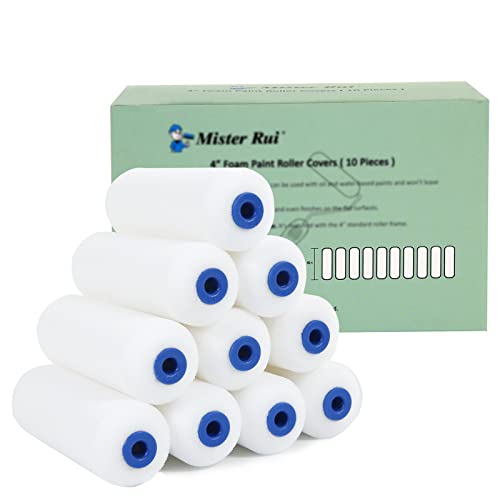
Mister Rui Mini Foam Paint Roller 10 Pack 4 Inch

Mister Rui 4 Inch Foam Roller 8 Pack with Tray

Mister Rui Mini Paint Roller Kit 13 Piece

Rhibak 4 Inch Foam Roller and Brush Kit

BANCOO RSL43 Paint Edge Trimmer with Pads

Rhibak 27 Piece Roller Kit with Extension Pole

ValueMax 14-Piece 4 Inch Paint Roller Kit

CoatPro Twools 4 Inch Microfiber Covers 24 Pack
A Deeper Look At The Lineup
Tight window mullions, skinny door casings, and the narrow rail between wall and ceiling are exactly where a wide roller becomes more liability than tool. The Mister Rui 2-inch kit answers that problem head-on, putting a small cover, a 2-inch frame, and a matching tray with liner into one bundle. The foam density reads high enough to keep its shape under load, which matters when you press a small cover into a corner without it ballooning out.
It suits both water-based and oil-based finishes, so switching from a latex wall color to an alkyd trim enamel mid-project stays simple. For most homeowners tackling a single room of trim, the included cover count should be plenty, and swapping a worn sleeve takes seconds.
Everyday Perks
- 2-inch width slips behind radiator pipes and along the lip of baseboards where bigger covers bump the wall.
- High-density foam resists matting, so the cover keeps its round profile across repeated passes.
- Compatible with latex and oil formulas, which removes the need to swap tools between primer and enamel.
- Matching tray and liner cut setup time and make cleanup a one-step liner peel-and-toss.
Worth Noting
- Cover stock runs out fast on whole-house trim jobs, so a refill pack becomes a near-mandatory add-on.
- Foam shows lap marks if you re-roll a partially dried edge, so you need steady, single-pass rhythm.
Who It Suits Best
Homeowners cutting in around windows, doors, and built-ins on a single accent wall or one room of trim.
Swap It Out When
The Rhibak 4 Inch Foam Roller and Brush Kit makes more sense for a full-room job where 4-inch coverage speeds the second coat.
Stepping up to a 4-inch cover gives you meaningful speed on flat door casings and baseboard runs while still fitting into the tight geometry of most trim. The Mister Rui 10-pack of mini foam sleeves pushes the per-cover cost down to the point where tossing a tired cover mid-project feels reasonable, not wasteful. The foam leaves a smooth, lint-free surface on flat stock, which is the whole point when you are rolling over sanded primer.
Used as a refill stock against the frame and tray from the kit above, this is the kind of stash that keeps a long weekend moving. You can clean and reuse a few of them for stain work, or use each cover once and move on without a guilty math problem.
Good Reasons To Consider
- Ten covers let you swap often, which keeps each pass clean on glossy enamels.
- 4-inch width cuts door-casing rolling time roughly in half compared to the 2-inch kit.
- Reusable when rinsed quickly, helpful for stain and varnish work where foam covers hold up well.
Trade Offs
- Frame and tray are not included, so this assumes you already own or are buying a compatible handle.
- Foam texture is not ideal on heavily textured walls, where a microfiber sleeve picks up more paint and covers faster.
Key Specs
Made For
DIYers stocking a refill pile before a multi-room repaint, especially anyone rolling baseboards and door casings in one stretch.
Consider Something Else When
The ValueMax 14-Piece 4 Inch Paint Roller Kit is a smarter buy if you still need the frame and tray to round out the setup.
First-time trim painters usually over-buy brushes and under-buy roller hardware, which is the gap this 8-pack closes. Mister Rui bundles five 4-inch foam sleeves, a frame, a tray, and a tray liner, so the only thing missing from a Saturday morning is the paint itself. The 4-inch width handles a flat-panel cabinet door cleanly and keeps the nap consistent on primed MDF trim.
Where the 2-inch kit above excels at corners, this 4-inch setup excels at the long, flat stretches that eat the most time. Foam is also forgiving for first-timers because it shows far fewer visible strokes than microfiber on smooth trim.
Points In Its Favor
- Includes the frame, tray, and liner, removing the second-cart scramble for first-time painters.
- Foam construction produces a smooth, almost sprayed look on flat cabinet doors.
- Compatible with oil or water-based formulas, so it works for primer, paint, and stain in the same session.
Soft Spots
- Only five covers ship in the box, which is light for a project bigger than a single accent wall.
- Foam can leave a slight orange-peel texture on high-gloss enamels if overloaded.
Right Fit For
Newcomers painting one room of trim or a small set of cabinet doors, with no prior roller hardware on hand.
A Better Fit Elsewhere
The ValueMax 14-Piece 4 Inch Paint Roller Kit is the better match once you want both foam and microfiber covers in a single box.
Rolling trim is one task, but cutting in around switch plates, light fixtures, and tight corners is the other half of the same job. The Mister Rui 13-piece kit pairs a 4-inch microfiber cover set with a 1.5-inch angled brush, a red paint tray, multiple tray liners, and a drop cloth. The microfiber covers grip more paint than foam, which speeds up semi-rough trim stock and old woodwork that the smoother sleeves tend to skate over.
It leans toward the slightly rougher surfaces you find on older homes, where flat trim has visible grain and benefits from the longer nap. The angled brush in the bundle is the quiet hero for the cut-in work the roller cannot reach.
What It Does Well
- Microfiber covers hold more paint, reducing the dip frequency on porous older trim.
- The angled brush addresses the spots a 4-inch cover cannot reach without taping.
- Three tray liners and a drop cloth extend useful life across multiple painting sessions.
Room For Improvement
- No foam covers, so smooth glossy trim projects will need a separate foam sleeve.
- Microfiber sheds lightly on first use, so a quick rinse and dry before the first coat prevents fuzz in the finish.
Feature Snapshot
Best Suited To
Homeowners repainting older trim with visible grain, or anyone balancing rolling with a fair amount of cut-in work.
Look Elsewhere When
The Rhibak 4 Inch Foam Roller and Brush Kit fits better when most of the project is smooth, modern MDF or factory-finished trim.
The Rhibak kit tilts toward the brush-heavy side of trim work without abandoning the roller. Five 4-inch foam covers, a frame, a tray, two liners, and a set of angled brushes from 1 inch up to 2.5 inches sit in the box, along with a scraper and sanding block. That spread of brush sizes matters when you are switching between wide baseboard edges, narrow door stops, and the inside corners of a window frame.
Compared to the Mister Rui 13-piece, this kit trades microfiber for foam and adds more brush options. It is the better match for smooth, modern trim where foam leaves a cleaner final pass than a napped sleeve.
What Works In Its Favor
- Four angled brush sizes cover the small gaps a 4-inch roller cannot physically fit into.
- Scraper and sanding block in the box handle the prep work that usually delays a trim repaint.
- Two tray liners keep a second color ready to roll without washing out between coats.
Points To Keep In Mind
- Foam is not the best pick on heavily textured or older rough-sawn trim.
- Brushes are basic, so a dedicated cut-in brush may still be a useful upgrade for long baseboard runs.
Spec Overview
Who Should Grab It
DIYers repainting an entire room of smooth trim who want a single box that handles prep, rolling, and cut-in work.
Reach For A Different Pick When
The Mister Rui Mini Paint Roller Kit 13 Piece fits better on older homes where microfiber grips rough trim more reliably than foam.
Cutting a straight line where the wall meets a popcorn ceiling is one of the more humbling parts of interior painting, and tape is only a partial fix. The BANCOO RSL43 is a guided pad-style edger with small wheels that ride along the ceiling, baseboard, or molding, keeping the paint pad a fixed distance from the edge. Two replacement pads ship with the tool, and the swivel handle pivots so you can attack corners from a comfortable angle.
It does not replace the roller for filling in the field of the wall. Instead, it slots in just before the roller, sealing the line that the roller would otherwise smear into the ceiling. For tall rooms and long baseboard runs, the tool removes a real chunk of ladder time.
Where It Excels
- Guide wheels roll along the edge, producing a clean line without tape on smooth ceilings and baseboards.
- Swivel handle pivots to fit inside corners that a fixed-handle pad cannot reach.
- Two refill pads extend the working life before you need to source replacements.
Less Ideal Details
- Not a substitute for a roller on the wall field, so it is a complement, not a replacement.
- Guide wheels can leave a faint track on heavy texture, so it works best on smooth or lightly orange-peeled surfaces.
Whose Shelf It Belongs On
Anyone tired of taping ceilings, especially in rooms with long unbroken baseboard or crown molding runs.
Where A Sibling Pick Shines
The Rhibak 27 Piece Roller Kit with Extension Pole is the better fit if you mainly need height reach for high walls rather than edge precision.
Most mini roller kits assume your feet are on the floor, but tall foyers, stairwells, and vaulted ceilings force you to reach. The Rhibak 27-piece set solves that with a 2 to 4-foot extension pole, paired with both 4-inch and 9-inch frames and a generous cover count. The kit works with latex and oil-based formulas, so it transitions from wall primer to trim enamel without a tool swap.
It is overkill for a single room, but in a house with significant trim overhead, the pole cuts the ladder shuffling that eats most of a weekend. Compared to the BANCOO edge tool above, this kit handles the broad wall field, not just the line work.
Bright Spots
- Extension pole keeps you off the ladder for most ceiling and upper-wall work.
- 4-inch and 9-inch covers in one box, so the same kit handles trim and wall field.
- Works across latex, oil-based paints, and stains without changing covers.
Where It Is Less Suited
- Larger footprint makes it a poor fit for a quick single-room touch-up where a mini kit is easier to store.
- Pole adds weight, which can fatigue longer sessions for occasional painters.
Feature Rundown
Built With In Mind
Homeowners tackling two-story foyers, stairwells, or large open-plan rooms with significant trim height.
Skip It When
The BANCOO RSL43 Paint Edge Trimmer is the smarter buy if your main frustration is the ceiling-to-wall line, not the wall field itself.
The argument for a mixed-cover kit is simple: foam and microfiber solve different problems, and a single project often needs both. The ValueMax 14-piece ships with six foam and six microfiber 4-inch covers, plus the frame and a tray. Switching covers mid-project is the difference between a smooth glossy finish on cabinet doors and fast coverage on a rougher baseboard.
It threads the needle between the foam-only Mister Rui 8-pack earlier in the list and the microfiber-heavy Mister Rui 13-piece. For homeowners unsure which surface type dominates the project, the mix removes the guesswork.
The Helpful Details
- Foam and microfiber in the same kit, useful when the project spans cabinet doors and baseboards.
- 14 pieces keep you supplied across primer, paint, and a final coat without reordering.
- Foam density is high enough to avoid matting under normal rolling pressure.
Practical Considerations
- No angled brush in the box, so cut-in work requires a separate brush purchase.
- Tray is functional but basic, and worth lining if you switch between dark and light colors.
Perfect Match For
Homeowners repainting a mix of cabinetry and trim and unsure which cover material will dominate the project.
Not Your Match When
The Rhibak 4 Inch Foam Roller and Brush Kit makes more sense if cut-in brushes are part of the must-have list.
Long trim projects punish you when covers wear out halfway through, and a fresh cover for every door casing keeps the nap consistent from start to finish. The CoatPro Twools 24-pack of 4-inch microfiber sleeves is built for exactly that workflow, with a frame included so it stands on its own. The microfiber pickup is generous enough to handle semi-rough trim without soaking the nap.
It is a refill-first kit, so it makes the most sense for someone who already knows they prefer microfiber and just needs the volume. Pair it with any standard 4-inch frame you already own, or use the one in the box.
The Value In It
- 24 covers cover a whole-house trim project without a mid-job reorder.
- Microfiber holds more paint than foam, which lowers the number of dips per pass.
- Frame in the box means the pack is functional even if no other roller hardware is on hand.
Small Caveats
- Microfiber covers leave a slight texture on ultra-smooth gloss trim, so foam is still preferable for high-sheen finishes.
- New covers may shed briefly during the first use, so a quick rinse and dry prevents fuzz in the wet paint.
Who Will Love This
DIYers planning a long, trim-heavy repaint who want a single bulk purchase that lasts the whole project.
Where Another Pick Suits Better
The ValueMax 14-Piece 4 Inch Paint Roller Kit is the right call if you would rather mix foam and microfiber covers instead of stocking one type in bulk.
What Matters Most Before Choosing Paint Rollers for Trim
Roller Width Sets the Workflow
A 2-inch cover reaches where wider sleeves cannot, but the trade-off is more passes per linear foot of trim. A 4-inch cover hits the sweet spot for most door casings and baseboard runs, while 6-inch and 9-inch sleeves speed up wall fields but quickly become clumsy on narrow trim. For most rooms, a kit that includes a 4-inch frame plus a couple of foam and microfiber covers handles the typical trim workload.
Cover Material Changes the Finish
Foam leaves a smooth, almost sprayed texture that suits glossy trim, but it mats under heavy pressure and shows lap marks on reworked edges. Microfiber holds more paint, grips semi-rough surfaces, and forgives longer rolling sessions, though it can leave a faint stipple on high-gloss enamel. Matching the cover to the surface texture is the single biggest decision after width.
Frame, Tray, and Refill Stock Add Up
A kit only saves money when it includes the frame, tray, and at least a few refill covers, because buying those separately often doubles the per-project cost. Bulk cover packs make sense for whole-house repaints but overshoot the budget for a single accent wall. Build the kit around the size of the job, not the size of the box.
Edge Tools Earn Their Keep on Long Lines
Tape and a steady hand work for short runs, but a guided pad edger pays for itself on long baseboard or ceiling lines. The tool slots in next to the roller, sealing the edge before the main cover has a chance to smear into the adjacent surface.
Key Considerations Across These Picks
Common Slip-Ups Worth Dodging
Buying a 9-inch cover for trim work is the most common error, since wide sleeves bump into the wall and leave a wavy edge on the ceiling. Foam covers are sometimes treated as universal, but they struggle on rough or older woodwork where a microfiber sleeve grips and lays off more reliably. Skipping a tray liner is another small misstep that adds cleanup time without saving any meaningful cost.
What The Higher Tier Buys
Bigger kits earn their keep through redundancy: extra covers, a sturdy frame, and a usable tray that lasts across multiple projects. A guided edge tool adds a real step up in line quality, and an extension pole unlocks ceiling work without a ladder. The upgrade mostly buys convenience and finish consistency rather than a fundamentally different roller, so it is worth weighing against how often you paint.




