


Your first time holding a spray gun should feel like progress, not punishment. The wrong setup leaves you with orange-peel texture, drips on the floor, and a sore trigger finger before you finish the second wall. The right setup shortens a weekend of brushwork into an afternoon, and that changes whether you take on the next job at all.
These five systems cover the range a beginner actually runs into: garage furniture refreshes, fence and deck staining, and a full-room repaint when motivation finally strikes. Each handles a different ceiling of ambition, so match the tool to the project you see yourself doing this month, not someday.
The Leading Options At A Glance
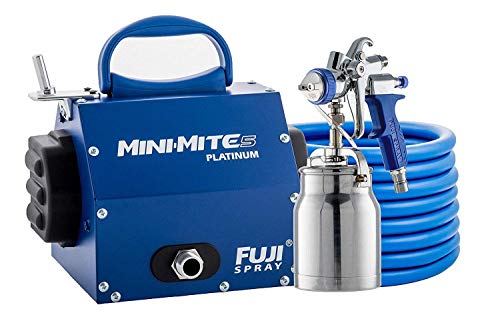
Fuji Spray 2905-T70 Mini-Mite 5 Platinum HVLP

Fuji Spray 2202 Semi-PRO 2 HVLP

Wagner Control Pro 130 HEA Sprayer

Wagner Control Spray QX2 HVLP Stain

Wagner FLEXiO 570 HVLP Sprayer
More Details On Our Top Picks
The Mini-Mite 5 Platinum anchors the high end of the Fuji lineup, pairing a 5-stage turbine with the T-70 spray gun and a 1-quart bottom-feed cup. HVLP (high volume, low pressure) moves a large volume of air at low pressure, which atomizes finish into a soft, controlled spray, the kind cabinetmakers and furniture refinishers reach for. For a beginner, the system feels overbuilt at first, then quietly earns its keep the moment you push thicker varnishes or run a long hose to a garage project.
You get genuine pro-grade atomization without the compressor, which is a real selling point for a home shop. The included 1.3 mm air cap suits general fine finishing, so you can start on trim, doors, and small furniture before stepping into larger work. The metal turbine case with a built-in gun holder is a small touch that makes mid-project pauses less clumsy.
Bright Spots
- 5-stage turbine delivers strong, steady airflow for thicker coatings and longer sessions without pressure drop.
- T-70 gun with non-bleed design and adjustable fan control helps you dial in pattern width as you learn.
- 1-quart bottom-feed cup suits both fine finishing and small-to-medium furniture projects in one setup.
- HVLP atomization keeps overspray contained, which matters in a garage or basement shop with limited ventilation.
Trade Offs
- Higher upfront cost than the other picks here, and the turbine is loud enough to want hearing protection during long runs.
- The 25 ft hose is workable, but moving the turbine between rooms can feel cumbersome for quick touch-ups.
- Full setup and cleaning takes longer than handheld HVLP, so very small jobs may feel like overkill.
Who It Suits Best
First-time finishers who want furniture-grade results on cabinets, doors, and trim, and who plan to keep using the system across multiple projects.
Where Another Pick Suits Better
For pure outdoor staining on a fence or deck, the Wagner Control Spray QX2 is a lighter, more direct fit than a 5-stage turbine system.
Step down from the Mini-Mite 5 and you land at the Semi-PRO 2, a 2-stage turbine system built for someone making a serious first move into spray finishing. The 25 ft hose reaches across a two-car garage, and the integrated air control valve lets you trim pressure at the gun to match the material. For a beginner moving past a handheld sprayer, the 2202 reads like a tool, not a toy, while staying manageable on price and weight.
You get the same Fuji T-series gun family as the pricier Mini-Mite, so parts and accessories carry over. The 1.3 mm air cap set is pre-installed for general fine finishing, which is the right starting point for stains, lacquers, and trim enamels. Where the Mini-Mite 5 pushes furniture shops, the Semi-PRO 2 fits the weekend refinisher who wants room to grow.
Points In Its Favor
- 2-stage turbine is quieter and lighter than the 5-stage, easier to live with in a home shop.
- Non-bleed spray gun with adjustable fan control gives you genuine control over pattern width.
- 25 ft hose with built-in air control reduces overspray and bounce-back on trim work.
- Metal turbine case and onboard gun holder keep the workspace tidy mid-project.
- Genuine upgrade path: same gun platform as higher-end Fuji systems, so accessories carry forward.
Worth Noting
- 2-stage airflow runs out of headroom faster than the Mini-Mite 5 on heavy-bodied latex or thick polyurethanes.
- Cleanup takes a few minutes longer than a handheld, since you flush both the gun and the cup thoroughly between color changes.
Key Specs
Right Fit For
First-time HVLP shoppers with a garage, basement, or small shop who want a real finishing system without jumping straight to pro pricing.
Look Elsewhere When
For large exterior surfaces, the Wagner Control Pro 130 covers walls and siding far faster than any HVLP turbine.
The Control Pro 130 is an airless sprayer, meaning it pushes paint through a tiny tip at very high pressure rather than atomizing it with low-pressure air. The HEA (High Efficiency Airless) generation softens that traditionally aggressive spray into something a beginner can actually tame. For a homeowner staring down a full exterior repaint or a long deck, the productivity gap over a brush is hard to overstate.
Where HVLP systems shine on small detail work, the Control Pro 130 is built for coverage. It handles unthinned paints and stains straight from the can, which removes a common beginner friction point: guessing whether your material is thin enough. The trade-off is more masking and prep, since airless still throws more fine mist into the air than HVLP.
Where It Delivers
- Sprays unthinned paint, so you skip the trial-and-error thinning step that trips up first-timers.
- HEA technology reduces overspray versus older airless designs, helping in tight yards and covered porches.
- Setup is genuinely fast: prime, dial, and spray, with no separate compressor to drag around.
- Handles medium to large interior and exterior jobs without burning out, the core reason to choose airless over HVLP for whole-house work.
Points To Keep In Mind
- Tip clogging is the most commonly reported headache, especially with cheaper paints carrying small debris.
- Cleanup takes longer than HVLP, since the intake tube, gun, and tip all need thorough flushing between colors.
- More masking time than handheld HVLP, because the spray pattern reaches further than you expect on the first pass.
Whose Shelf It Belongs On
Homeowners with a full exterior, a long deck, or a multi-room interior repaint who want speed over the gentle learning curve of HVLP.
Skip It When
For small furniture or single-room touch-ups, the Fuji Spray 2202 Semi-PRO 2 wastes less material and overspray.
The QX2 narrows HVLP down to a handheld, deck-friendly tool aimed squarely at outdoor staining. Three spray patterns (horizontal, vertical, and a narrow round for detail) cover the actual shapes a fence, lattice panel, or pergola throws at you. For a first-time user with one deck and a free Saturday, the QX2 is a friendlier entry point than wrestling a turbine system out of the garage.
The unit is designed to move faster than a brush on porous wood, and it shows on long runs of decking boards and fence pickets. Setup is the kind of thing you can explain in two minutes: pour, pick a pattern, pull the trigger. Where the Fuji Mini-Mite 5 is a long-term shop investment, the QX2 reads as a focused weekend tool that does one thing well.
What It Does Well
- Three spray patterns match the most common stain directions on real outdoor projects.
- Handheld form factor means no hose, no turbine placement headaches, and easy storage.
- Faster than brushing on long runs of deck boards and fence rails, which is where stain jobs actually live.
- HVLP delivery keeps most of the overspray on the wood, which helps on breezy days under a covered porch.
Practical Considerations
- The cup is small relative to a large deck, so expect to refill several times on a full staining day.
- Thicker latex stains may require thinning, which adds a step versus the Control Pro 130’s unthinned capability.
- Not the right tool for interior walls or fine furniture work, where Fuji’s HVLP guns really earn their place.
Made For
First-time stainers with a deck, fence, or outdoor furniture project who want a handheld tool rather than a full shop setup.
Consider Something Else When
For interior rooms and furniture, the Fuji Spray 2202 Semi-PRO 2 gives finer atomization than a handheld stain sprayer.
The FLEXiO 570 is a handheld HVLP that splits the difference between a dedicated stain tool and a wall sprayer. The iSpray nozzle broadens the pattern enough to push paint across interior walls and ceilings, while a separate detail nozzle handles furniture and trim with finer atomization. For a homeowner with a list of mismatched projects (a stair railing, a guest room, a small fence section) the FLEXiO 570’s flexibility is the point.
The unit sprays most unthinned paints, which removes the question of whether your material is the right viscosity. Adjustable flow and air controls sit right at the trigger, so you can tune the spray as you move from a textured ceiling to a smooth door without swapping equipment. The trade-off is a slightly larger handheld footprint than a single-purpose tool.
The Helpful Details
- iSpray nozzle widens the pattern for fast coverage on walls, ceilings, and broad siding.
- Detail nozzle covers the smaller projects that a wide-pattern sprayer would overshoot.
- Sprays unthinned paints, so you spend less time fussing with viscosity and more time painting.
- Removable parts simplify cleanup compared to fixed-hose systems, which matters between colors.
Where It Is Less Suited
- Not as fast on a full exterior repaint as the Control Pro 130, which is purpose-built for that workload.
- The handheld weight adds up over a long ceiling session, where a turbine-on-the-floor system saves your arm.
- Cup capacity is modest, so larger projects mean frequent refills rather than continuous flow.
Feature Snapshot
Best Suited To
Homeowners juggling a mix of indoor and outdoor projects who want one tool rather than a dedicated sprayer for each task.
Another Choice May Suit
For stain-only outdoor work, the Wagner Control Spray QX2 is lighter and purpose-built for that single job.
What Matters Most Before Choosing Paint Sprayers For Beginners
Match the sprayer to the project, not the brand
HVLP and airless feel similar in the hand, but they punish you for mismatches. HVLP wins on fine work, cabinets, furniture, and small detail areas, because the low-pressure atomization lays down a controlled, brushless finish. Airless wins on coverage, full exteriors, fences, and long interior walls, because high-pressure output moves material faster than any handheld can keep up. The honest read is that your project list, not the brand name, should drive the choice.
Plan for prep, because spraying magnifies shortcuts
Sprayers trade brush marks for prep work. Dust, loose paint, and overspray on trim become the marks you remember, and masking a room properly takes longer than the first coat. Beginners often underestimate the drop cloths, tape, and ventilation needed. For interior projects, sealing off the work area with plastic sheeting is not optional, and for exteriors, moving cars and covering landscaping saves a weekend of cleanup.
Think about material viscosity, not just the sprayer
Thick latex paints, thin stains, and shellac behave very differently through a nozzle. HVLP systems often need thinning for heavier coatings, while airless and modern handheld HVLPs like the FLEXiO 570 spray unthinned material. If your project list leans toward thick interior paint, prioritize unthinned capability. If it leans toward fine finishes and stains, prioritize atomization quality and pattern control.
Budget for the learning curve
A first project with a new sprayer typically costs extra in material, masking, and a little trial-and-error. Factor that in when comparing price tags, since the cheapest system that fights you on every pass often costs more in wasted paint than a slightly more capable one. The middle of this list, anchored by the Fuji Semi-PRO 2 and Wagner FLEXiO 570, is where many first-timers find the most comfortable balance of capability and forgiveness.
Key Considerations Across These Picks
Mistakes Worth Dodging
Choosing airless for a furniture project is the most common beginner error, and it shows up in orange-peel texture and wasted finish. The reverse mistake, buying a handheld HVLP for a whole-house repaint, leaves you refilling cups every few minutes. Match the tool’s design to the surface area, and you’ll spend your time painting, not troubleshooting. Another quiet trap is skipping tip and nozzle checks before each session, since a partially clogged tip is the difference between a smooth fan pattern and a spitting mess.
When Paying More Pays Off
The jump from a handheld HVLP to a turbine system like the Fuji Mini-Mite 5 or Semi-PRO 2 pays you back in atomization quality and long-term comfort. You get steadier pressure, a real spray gun with adjustable fan control, and a hose that keeps the turbine at floor level. For someone planning more than a single weekend project, that upgrade path is the difference between a tool you store and a tool you keep reaching for.
Frequently Asked Questions
What type of paint sprayer is best for a true beginner?
Handheld HVLP models like the Wagner FLEXiO 570 are the most forgiving entry point, because they combine a handheld form factor with the ability to spray unthinned paint. They cover small and mid-size projects without the noise and setup of a full turbine system.
Do I need to thin paint before using these sprayers?
It depends on the system. The Wagner Control Pro 130 and FLEXiO 570 spray most unthinned paints straight from the can. Traditional HVLP setups, like the Fuji Mini-Mite 5 and Semi-PRO 2, often need thinning for thicker latex coatings, especially on fine finishing work.
Can a beginner use an airless paint sprayer safely indoors?
Yes, with extra prep. Airless sprayers throw more fine mist into the air than HVLP, so sealing off the room with plastic sheeting, wearing proper eye protection, and ensuring good ventilation are essential. The Control Pro 130’s HEA design helps reduce overspray compared to older airless units.
How long does it take to clean a paint sprayer after use?
Most handheld HVLP sprayers clean in five to ten minutes by flushing the nozzle and cup with the appropriate solvent. Turbine-based HVLP and airless systems take longer, typically 15 to 25 minutes, because you also flush the intake tube, gun, and tip thoroughly.
Should I buy a separate sprayer for stain and paint?
Not necessarily. Models like the Wagner FLEXiO 570 handle both paint and stain by switching nozzles. For high-volume stain work, a dedicated stain sprayer like the Control Spray QX2 is lighter and faster on long runs, but a multi-use tool covers occasional stain projects well.
The Takeaway
Your first sprayer should match the project you can see yourself finishing this season, not the one you might tackle someday. Start with the right tool for the job at hand, learn its quirks on a small surface, and let the upgrade question answer itself after that first successful coat.




