


Doors and trim punish the lazy painter. Edges, corners, and panel profiles collect drips, lap marks, and bristle drag, so a roller or angled brush often leaves a finish that looks like an afternoon of swearing. A purpose-built sprayer trades that tedium for atomized paint that lays down smooth, even coats in a fraction of the time, even on detailed moldings. The trick is matching the sprayer to the scale of your project, since trim work rewards precision while whole-house interiors reward volume. This roundup focuses on five options that handle the narrow, detailed work doors and trim demand, with a few extras for larger jobs when you need them.
A Quick View Of The Lineup
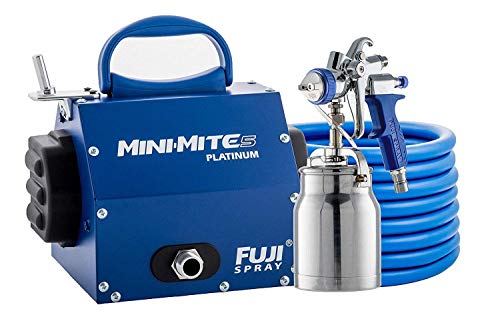
Fuji Mini-Mite 5 Platinum HVLP System

Graco 221411 RAC IV Reversible Spray Tip

Wagner Control Pro 130 HEA Sprayer

Wagner Control Spray QX2 HVLP Stain Sprayer

Wagner FLEXiO 570 HVLP Sprayer
Inside Each Recommended Option
The Fuji Mini-Mite 5 Platinum is built around a powerful 5-stage turbine, which is the heart of any HVLP, or high-volume low-pressure, system. Where the smaller 3-stage or 4-stage turbines start to bog down on thicker coatings, the 5-stage keeps the atomization consistent on latex paints, enamels, and shellacs that show up on doors and trim. The included T-70 spray gun with a 1-quart cup pairs well with the standard #3 air cap, a 1.3 mm setup aimed at general fine-finish work.
For trim carpenters and homeowners refinishing a whole interior of doors, casing, and baseboards, that extra power means fewer passes to build coverage and a noticeably smoother flow. The trade-off is footprint: the turbine sits in a case, the gun tethers to it with a hose, and you have a dedicated workstation rather than a grab-and-go handheld. For most DIY trim projects, you may find the scale feels like more than you need.
A Strong Showing
- 5-stage turbine handles thicker coatings without starving the spray pattern
- T-70 gun with 1.3 mm cap delivers the fine finish trim work demands
- Proven platform with widespread aftermarket support and replacement parts
- Reliable atomization for latex, enamel, and shellac on detailed profiles
- Scales up from a single door to a full interior without swapping equipment
Points To Keep In Mind
- Turbine and hose setup is bulkier than handheld HVLP units for quick jobs
- Premium pricing compared to DIY-grade sprayers
- Requires more prep space since the turbine lives on the floor or bench
Who It Suits Best
Serious DIYers and pros refinishing multiple doors and runs of trim who want a finish that holds up to close inspection.
A Better Fit Elsewhere
For a one-room weekend paint job, the Wagner Control Pro 130 HEA Sprayer trades some fine-finish finesse for a simpler, faster setup.
The Graco 221411 is not a full sprayer. It is a replacement tip, specifically a 411 RAC IV (Reverse-A-Clean) nozzle for Graco airless spray guns, that targets narrower 8-10 inch spray patterns. If you already own an airless rig and the wide tips are throwing more paint than your doors and trim can handle, this swap changes the equation. The 0.011 inch orifice is sized for thinner materials like semi-transparent stains, water sealers, and polyurethanes rather than thick latex.
For shoppers refining an existing airless setup, the Reverse-A-Clean feature is the real story. A 180-degree twist flips the tip into reverse and clears clogs without disassembly, which matters when you are halfway through a door and the last thing you want is to stop and probe a blocked nozzle. The tip installs on compatible spray guns without tools, and owners commonly report that the smaller pattern tightens overspray on casing, panel profiles, and narrow rails. The honest read is that this only makes sense if you already own the gun it attaches to.
What Makes Sense
- 8-10 inch fan width suits doors, casing, and smaller trim sections
- Reverse-A-Clean clears clogs in seconds without disassembly
- Tool-free swap on compatible Graco airless guns
- Pairs naturally with stains, sealers, and thinner coatings
Less Ideal Details
- Not a standalone sprayer; requires a compatible Graco airless gun
- 0.011 inch orifice is too tight for thick latex trim paints
- No fluid control, just a tip change for the existing rig
Right Fit For
Shoppers who already run a Graco airless rig and want a dedicated tip for trim and staining work without buying a second machine.
Skip It When
First-time sprayer shoppers should pick up the Wagner Control Spray QX2 HVLP Stain Sprayer instead and get a complete handheld unit out of the box.
Wagner’s Control Pro 130 HEA is the middle child of the airless world, and that is exactly why it fits trim work. HEA, or High Efficiency Airless, technology uses lower pressure at the tip to cut overspray, which is the usual headache when you point a sprayer at detailed casing and pray the atomized mist does not fog the ceiling. The setup is meant to feel unintimidating: quick connect parts, a control handle, and the ability to spray unthinned paints and stains right from the can.
Where the Fuji Mini-Mite 5 Platinum focuses on a single finish, this Control Pro 130 HEA stretches across medium interior jobs and full exterior projects. Doors, trim, decks, and fence pickets all sit in its wheelhouse, and the lower overspray makes masking simpler in a finished room. For homeowners balancing a door-and-trim refresh with maybe a hallway or two, the versatility is the draw. The honest read is that it is heavier and louder than a handheld HVLP, and you will feel the difference on a long day of trim work.
What It Does Well
- HEA tip technology reduces overspray, so masking around trim takes less time
- Handles unthinned latex and stains straight from the container
- Scales from a single door to a full interior repaint
- Steady flow control helps maintain an even finish on long runs of casing
Practical Considerations
- Heavier and louder than handheld HVLP options for quick trim touch-ups
- Airless systems require thorough cleaning to prevent cured paint in the pump
Key Product Details
Best Suited To
Homeowners repainting a full room of doors and trim who want one tool that can also handle an occasional exterior project.
Reach For A Different Pick When
Shoppers who only need a sprayer for a few doors and some stain work will find the Wagner Control Spray QX2 HVLP Stain Sprayer lighter and more approachable.
The Control Spray QX2 is Wagner’s pitch to first-time sprayer owners who want handheld simplicity rather than a full airless rig. HVLP, or high-volume low-pressure, moves a large volume of air at low pressure to atomize coatings, which keeps overspray contained and finishes smooth on cabinets, doors, fences, and lattice. The QX2 ships with three spray patterns, so you can dial a narrow fan for door rails and a wider one for flat trim without swapping tips.
For a homeowner with a couple of interior doors to refinish, a stained railing, and maybe a small pergola project waiting in the yard, the QX2 covers the basics without a learning curve. Owners commonly report that setup and cleanup are fast enough to keep the tool in regular rotation rather than buried in a closet. The trade-off shows up when you push past small projects; the smaller motor and cup size slow you down on whole-room repaints.
A Few Highlights
- Three pattern settings cover narrow rails, panels, and flat trim in one tool
- Handheld design stores easily on a shelf or in a closet
- HVLP atomization is gentler on interior spaces with limited ventilation
- Quick setup makes it approachable for first-time sprayer users
Honest Caveats
- Cup-fed design means more frequent refills on larger projects
- Best suited to stains and thinner coatings, with limits on heavy latex
Whose Shelf It Belongs On
Newcomers to spraying who want a forgiving, lightweight tool for small trim and staining projects around the house.
Not Your Match When
For whole-house interior work, the Wagner Control Pro 130 HEA Sprayer delivers the speed and capacity a cup-fed HVLP cannot match.
The FLEXiO 570 splits the difference between the small QX2 and a full airless rig. The sprayer detaches from the base, so you can carry just the gun to a door taken off its hinges or down a hall to a stair landing, and then re-dock it for longer runs. Wagner’s iSpray nozzle is built to handle unthinned paints, which is the everyday test for trim work where nobody wants to spend an afternoon thinning latex by eye.
For a homeowner splitting time between interior doors, accent walls, ceilings, and the occasional deck stain, the FLEXiO 570 keeps the tool count low. Compared to the QX2, you get more power and broader paint compatibility without losing the handheld feel. The honest read is that, for most DIYers, the FLEXiO 570 lives in a middle ground: more capable than entry-level HVLP, but without the sustained output of a dedicated airless system like the Control Pro 130 HEA Sprayer.
The Helpful Details
- Detachable gun adds reach when spraying doors laid flat on sawhorses
- iSpray nozzle handles unthinned paints and stains
- Adjustable flow and pattern controls suit trim, walls, and outdoor projects
- Removable parts simplify cleanup compared to fixed-cup designs
Some Limits To Know
- Slower than a full airless rig on whole-room interior repaints
- Bulkier than the QX2 when working in tight closet interiors
Perfect Match For
DIYers juggling interior paint, trim refreshes, and outdoor staining who want one versatile tool instead of two or three.
Where Another Pick Suits Better
Shoppers chasing the smoothest possible cabinet-grade finish should consider the Fuji Mini-Mite 5 Platinum HVLP System for its 5-stage turbine power.
What To Weigh Before Choosing A Sprayer For Trim
The right tool depends less on the trim itself and more on what surrounds it. Doors and casings, baseboards, and crown molding all share narrow profiles and crisp edges, so a sprayer that fans paint too wide wastes material on adjacent walls and ceilings. Pattern width, tip size, and atomization method each shape how the finish lands.
H3: Airless Versus HVLP For Trim Airless sprayers push paint through a small tip at high pressure, which moves volume fast and handles unthinned latex without complaint. The trade-off is overspray, since the atomized mist drifts further than most DIYers expect. HVLP, or high-volume low-pressure, uses a high volume of air at low pressure to atomize paint, which keeps the spray pattern tighter and the mist closer to the workpiece. For a finished room where masking every surface is a chore, HVLP pays off. For a gutted space or exterior work, airless wins on speed.
H3: Pattern Width And Tip Size Spray tips are described by a three-digit number. The first digit multiplied by two gives the fan width in inches, so a 411 tip fans roughly 8 to 10 inches. The last two digits give the orifice in thousandths of an inch, so 0.011 inches. Trim rewards narrow fans and smaller orifices, because the pattern stays where you aim it. Whole walls reward wider fans and larger orifices, because the goal is coverage per pass rather than precision.
H3: Power Source And Portability Turbine-based HVLP systems like the Fuji Mini-Mite 5 Platinum need a hose and a stationary base, which trades workspace for power. Handheld HVLP units like the Wagner FLEXiO 570 and QX2 go anywhere but cap out on heavy latex. Airless rigs split the middle: wheeled carts, electric motors, and enough output for doors, trim, and an entire room in a single session.
H3: Cleanup And Maintenance Realities Every sprayer on this list demands a cleaning cycle after each use, and the time required varies. Airless pumps are the most finicky, since cured latex in the line means a teardown. HVLP turbines and handheld guns are simpler, with removable parts that rinse under a faucet. For shop towels and disposal, budget time the same way you budget masking: half an hour at the end of a session keeps the next session frustration-free.
Key Considerations Across These Picks
Where Shoppers Go Wrong
The most common mistake is matching the sprayer to the wrong coating. Latex trim paint behaves nothing like a wiping stain, and a 0.011 inch tip that handles stain cleanly will choke on thick latex. The reverse is also true, since a tip that pushes heavy enamel will fog a thin sealer all over the room. Before picking a sprayer, identify the coatings you plan to use and confirm the model is rated for them. The second slip is underestimating masking, because even a low-overspray HVLP puts a fine mist on anything nearby. Drop cloths, painter’s tape, and plastic sheeting are not optional.
The Upgrade Payoff
Stepping into a higher tier buys three things: more consistent atomization, broader coating compatibility, and faster cleanup. A 5-stage turbine like the one in the Fuji Mini-Mite 5 Platinum keeps the spray pattern stable on materials that would starve a smaller motor, which translates into fewer passes and a smoother final coat. For weekend projects, the upgrade rarely justifies itself. For a whole interior, repeated exterior staining, or anyone running trim work as part of a small business, the time saved on each project adds up faster than the price gap suggests.
Frequently Asked Questions
What tip size works best for doors and trim?
For most latex trim paints, a tip in the 0.013 to 0.015 inch range paired with a narrow 4 to 6 inch fan width gives a controllable pattern. For stains and sealers, a smaller 0.011 inch orifice paired with an 8 to 10 inch fan covers doors and casing efficiently.
Can I spray latex paint without thinning it?
Many modern airless and HVLP sprayers handle unthinned latex straight from the can, especially models rated for it. Handheld HVLP units with smaller motors may still require thinning for heavy latex, so check the manufacturer’s coating chart before you start.
How much overspray should I expect indoors?
HVLP sprayers produce noticeably less overspray than airless rigs, since lower pressure keeps the atomized droplets close to the workpiece. Even so, expect a light mist within a few feet of the spray zone, so masking walls, floors, and adjacent surfaces is part of the job.
Do I need to remove doors from their hinges to spray them?
Removing doors and laying them flat on sawhorses gives the most even finish, since you can spray panels, rails, and edges without runs. Hanging doors can be sprayed in place with careful masking, but vertical surfaces are more prone to drips on detailed profiles.
How long does cleanup take for a handheld HVLP sprayer?
Most handheld HVLP units break down to a few removable parts that rinse under a faucet in 10 to 15 minutes. Airless rigs take longer because the pump, hose, and gun all need to be flushed until the rinse water runs clear.
The Takeaway
Trim work rewards tools that respect the detail, and the best sprayer is the one that matches your coating, your space, and the scale of the project. Handheld HVLP units cover small jobs with minimal fuss, while airless rigs and high-stage turbines earn their keep on whole interiors. Pick the system that fits the work in front of you, mask carefully, and the finish will speak for itself.




