


A reliable soldering iron quietly decides whether your PCB repair succeeds or turns into a scorched mess. The right tool gives you controlled heat, a comfortable grip, and the kind of tip variety that handles everything from surface-mount resistors to thicker through-hole joints. You spend more time fixing and less time fighting cold joints. The list below rounds up nine solid options worth your attention this year, covering pen-style irons, full stations, and helpful accessories for finer board work.
The Shortlist At A Glance

KEPIOG 100W LCD Digital Soldering Iron Kit
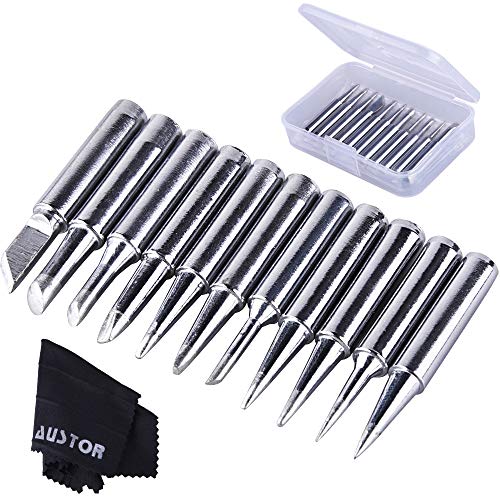
AUSTOR 11 Pcs Soldering Iron Tips Kit 900M-T

Crtsweker 100W Digital Soldering Station Kit

TXINLEI 60W Adjustable Temperature Soldering Kit

WEP 926LED V3 130W Soldering Station

Weller WLIR3012A 30W Soldering Iron

Q-MING 120W LED Digital Soldering Iron Kit

Kaisiking Helping Hands Soldering Station

Q-MING 100W LED Digital Solder Gun Kit
The Picks, Examined More Closely
The KEPIOG kit arrives ready to open and start using, which removes the usual first-night scramble of sourcing a stand, solder, and a pump separately. The 100W pen has an LCD readout for the tip temperature, so dialing in for a lead-free joint versus a quick tinning pass becomes a matter of watching numbers rather than guessing. Helping hands with a magnifier sit beside the iron, meaning both hands stay free while you feed solder onto a stubborn SOIC pad.
Five tip shapes, a desoldering pump, wick, paste, and a 50g spool of 0.8mm solder round out the box. Compared to the bare-bones TXINLEI 60W that follows, this one trades a smaller accessory count for higher wattage and a digital display. For most newcomers setting up a first bench, the difference shows up within the first hour of work.
The Helpful Details
- Digital LCD readout removes the “is it hot yet” guesswork
- Helping hands and magnifier free up both hands for steady soldering
- 100W power recovers temperature quickly on multi-pin joints
- Five included tips cover basic through-hole and small SMD shapes
- All consumables (solder, paste, wick) ship in the box
Points To Note
- Tip longevity on cheaper pen-style irons tends to shorten with heavy daily use
- The included sponge is small, so a separate brass wool cleaner is a common upgrade
Made For
First-time builders and hobbyists who want one box that handles the first few months of PCB work without extra shopping trips.
Look Elsewhere When
You already own a station and only need to refresh tip inventory, in which case the AUSTOR 11-piece tip set makes more sense.
This AUSTOR set is not an iron, and that is the whole point. It is a tip assortment for the popular 900M-T standard, the same fitting used on many budget and mid-range stations, so it slots directly into existing equipment. If you already own an iron like the KEPIOG 100W or a WEP station and feel limited by a single conical tip, this kit broadens your reach in one order.
Eleven tip styles cover the everyday PCB needs: fine conical points for small surface-mount work, a small chisel for drag soldering, and wider chisel variants for through-hole pads. The included cleaning cloth helps keep oxidation off the shank between uses, which extends tip life. Where the previous pick is a complete beginner setup, this one assumes you already have the iron in your drawer.
A Favorable Mix
- Eleven shapes cover fine, medium, and drag-soldering tasks
- 6.5mm outer / 4.2mm inner diameter fits most 900M-T-compatible stations
- Cleaning cloth included for wiping tips between joints
- Costs less than buying individual replacement tips over time
Trade Offs
- Coatings on bundled tip sets can vary, so tinning right out of the box is a common recommendation
- No iron included, so it only makes sense for existing station owners
Best Suited To
Hobbyists who already run a 900M-T-compatible iron and want a wider range of tip geometries for varied boards.
Consider Something Else When
You do not yet own an iron, in which case the Q-MING 100W LED Digital Solder Gun Kit delivers tips and the heating element together.
The Crtsweker station shifts the conversation from “pen iron” to “real bench tool.” The base unit houses the temperature controls, a digital display, and the power regulation that keeps tip temperature steady as you work. A separate iron handle connects via a cable, and two helping hands with magnifiers sit beside the workspace, so the board is held at a comfortable angle while you work.
Where the KEPIOG 100W pen has you staring at the iron body to read temperature, this one puts the display on the base where your eyes already are. Compared to the WEP 926LED V3 reviewed later, the Crtsweker lands as a slightly different take on the same idea, with a 356°F to 896°F range and an auto sleep function that cools the tip during idle moments.
The Good Stuff
- Wide 356°F to 896°F range handles lead-free and leaded solder profiles
- Auto sleep extends tip life during work breaks
- °C/°F toggle avoids mental math for users who learned one system
- Two helping hands hold the board while both hands solder
Some Limits To Know
- Larger footprint than a pen iron, so a dedicated bench spot helps
- Tip inventory beyond what’s included is an extra purchase
Quick Facts
Who It Suits Best
Anyone running multi-hour PCB repair sessions where stable tip temperature matters more than portability.
Where Another Pick Suits Better
Folks who mainly do quick field repairs on the road should look at the Q-MING 120W LED Digital Soldering Iron Kit, which skips the base station.
The TXINLEI kit is the low-fuss option in this lineup. A 60W adjustable pen, five tips, and a stand come in the box, and that is essentially the whole story. For someone who only pulls the iron out of a drawer once a month to replace a capacitor or fix a frayed wire, the simpler kit often does the job without the cost or counter space of a full station.
The 200°C to 450°C adjustment range covers standard electronics work, and the screw-thread tip design keeps the iron head from working loose during use. Where the Crtsweker station offers base-mounted temperature control, this one keeps everything on the iron itself. In a small apartment workshop, that is a fair trade for the lighter price tag.
Benefits That Matter
- Compact 60W pen fits in a drawer between uses
- Five tip shapes handle common through-hole and small SMD work
- Screw-thread tip mount reduces wobble over time
- Adjustable 200°C to 450°C covers most leaded solder needs
Honest Caveats
- 60W recovers more slowly than 100W+ irons on ground-plane joints
- No digital display, so temperature setting is approximate
- Stand is functional but small for larger boards
Right Fit For
Occasional household electronics fixes and hobbyists who only need a basic tool for light repairs.
Not Your Match When
You intend to solder larger ground planes or run long sessions, where the WEP 926LED V3 station handles the workload more comfortably.
The WEP 926LED V3 is the kind of station that gets set up once and then left in place. The 130W rating gives it extra thermal headroom for joints on multilayer boards, where a 60W pen would lose temperature fast. The iron holder is built directly into the station body, which keeps the bench footprint small and removes the loose stand that tends to migrate around a workbench.
Sleep mode cools the tip automatically during pauses, and the C/F conversion helps users who learned temperature one way or the other. The kit includes solder wire, five tips, tweezers, a solder sucker, and a tip cleaner, covering the immediate needs of a new station owner. Compared to the Crtsweker 100W station, this one leans harder on power and a more compact layout.
A Strong Showing
- 130W power handles multilayer and ground-plane joints without temperature sag
- Integrated iron holder reduces bench clutter
- Sleep mode and tip cleaner help tip longevity between sessions
- Full accessory bundle means unbox-and-solder in one afternoon
Where It May Fall Short
- Heavier and less portable than pen-style alternatives
- Spare tips beyond the included five are a separate buy
Built With In Mind
Regular hobby and small-batch repair work where the station lives in one spot and gets used weekly.
Swap It Out When
You mostly do small under-magnifier work, in which case the Weller WLIR3012A 30W iron with the LED halo ring is purpose-built for the task.
The Weller WLIR3012A is a different animal from the rest of the list. Where the KEPIOG 100W or WEP 130W lean on power for larger joints, this 30W iron is built for fine, controlled work under a magnifier. The LED halo ring throws light onto the joint from the tip’s perspective, which means shadows from your hand or the iron body stop hiding the pad you are trying to hit.
The molded pencil grip keeps the iron balanced in the hand during long drag-soldering runs. Easy tip changes matter when switching between a 0.4mm conical for SMD resistors and a small chisel for header pins. Compared to the AUSTOR tip set covered earlier, the Weller’s own tip ecosystem is a separate standard, so plan tip purchases accordingly.
What Pays Off
- 360-degree LED halo ring lights the joint without shadowing
- Pencil-style molded grip reduces fatigue on long runs
- Easy tip swap speeds up workflow between joint types
- Integrated safety rest keeps the bench tidy
Practical Considerations
- 30W has limited thermal headroom for large connectors or ground planes
- Weller tips are a proprietary standard, limiting cross-brand shopping
Feature Snapshot
Whose Shelf It Belongs On
Anyone doing detail work under a magnifier, where joint visibility and a steady pencil grip matter more than raw wattage.
Another Choice May Suit
For larger board work, the KEPIOG 100W LCD Digital Soldering Iron Kit has the power the Weller lacks.
The Q-MING 120W brings serious thermal headroom to a pen-style form factor. The ceramic heating core is rated to reach working temperature in roughly 15 seconds, so the wait between plugging in and tinning the first joint is short. For makers moving between thick through-hole work and small SMD pads, that fast recovery matters when you do not want the tip cooling mid-run.
Smart temperature control covers 356°F to 932°F, which gives enough range for lead-free solders that need higher working temperatures. Compared to the sister Q-MING 100W kit covered last, this one simply adds more wattage and a slightly higher top temperature. The auto sleep function cools the tip during pauses, which most users find extends the life of the tip plating.
What Stands Out
- 120W ceramic core hits working temperature fast
- 356°F to 932°F range supports lead-free solder profiles
- Temperature calibration keeps the displayed value honest over time
- Auto sleep reduces tip oxidation during pauses
Things To Consider
- Higher wattage means more heat at idle, so the included stand matters
- Ceramic cores can be sensitive to drops, so careful handling is a common recommendation
Feature Card
Who Should Grab It
Makers working on heavier joints or lead-free solder who want pen-style portability without giving up thermal headroom.
A Better Fit Elsewhere
For purely fine SMD work, the Weller WLIR3012A 30W iron with the LED halo is the more focused tool.
The Kaisiking is not an iron, and again that is intentional. It is a third-hand station with a magnifying lens and alligator-clip arms designed to hold a PCB at a workable angle while your actual hands control the iron and feed solder. The arms are secured with screws that tighten against the joint, so once set up the unit holds position reliably.
Where the helping hands in the KEPIOG 100W kit handle occasional use, this dedicated unit is built for hours at the bench. The magnifier and arms share a heavy base, so the whole station stays planted even when the board is tugged on slightly. Compared to the Weller WLIR3012A covered earlier, this one focuses on board holding rather than iron performance.
Where It Delivers
- Magnifying glass brings small SMD pads into clear view
- Alligator arms hold the board at flexible angles for two-handed work
- Heavy base resists tipping when the board is pulled or rotated
- Screw-secured joints stay locked during long sessions
What To Weigh
- No heating element included, so it pairs with another iron on this list
- Magnifier focal length is fixed, so users with specific working distances should check specs first
Perfect Match For
Fine SMD and tiny joint work where both hands need to stay on the iron and the solder feed.
Reach For A Different Pick When
You need a complete soldering solution in one box, where the WEP 926LED V3 station bundles iron and accessories together.
The Q-MING 100W rounds out the list as a workhorse pen-style kit. The 100W ceramic core hits working temperature quickly, and the LED display on the body shows the current tip setting so you are not adjusting blind. For makers who already own a station and want a portable backup, or for newcomers stepping up from a 60W iron, this lands as a sensible middle option.
Wick braid, a stand, solder wire, a sponge, and flux paste come in the box, which is a more complete kit than the TXINLEI 60W covered earlier. The pen-style form factor means it slips into a drawer between uses, and at 100W it covers most of what an active hobbyist runs into. Compared to the larger Q-MING 120W, the trade-off is slightly slower heat-up in exchange for a more accessible price point.
Practical Pluses
- 100W ceramic core balances fast heat-up and pen-style portability
- LED display on the body shows real-time tip temperature
- Wick braid and flux paste included for desoldering and prep work
- Pencil-style grip suits long drag-soldering sessions
Worth Noting
- Pen-style means no base station, so temperature stability depends on the internal controller
- Replacement tip availability varies, so check cross-compatibility before buying extras
Feature Card
Who Will Love This
Hobbyists who want a portable pen-style iron with enough power and bundled accessories to skip the extra shopping trip.
Skip It When
You need a station with separate base controls, in which case the Crtsweker 100W Digital Soldering Station Kit is the better shelf neighbor.
What Matters Most Before Choosing PCB Soldering Irons
Wattage and Thermal Recovery
Wattage, measured in watts (W), tells you how fast the iron can replace heat lost to the joint. A 30W iron handles small SMD pads fine but loses temperature on a ground plane. A 100W+ iron maintains heat through larger joints, which matters on multilayer boards. The honest read is that wattage above 60W is rarely wasted on PCB work, and recovery is the real-world benefit you feel.
Temperature Control and Display
Adjustable temperature is essential because different solders melt at different points. Leaded solder flows around 360°F, while lead-free often needs 700°F or higher. A digital display removes the guesswork of a simple dial, and calibration features keep the displayed value honest as the tip ages. The first time you see the difference, you stop trusting unmarked dials.
Tip Compatibility and Variety
Tip shape controls how heat transfers to the joint. A fine conical works for tiny SMD resistors, while a small chisel drags solder along a row of pins. The 900M-T standard covered in the AUSTOR set is common across many stations, but proprietary standards like Weller’s limit cross-brand shopping. Pick an iron whose tip ecosystem is well supported.
Ergonomics and Bench Footprint
Pen-style irons fit in a drawer; stations live on a bench. The Weller WLIR3012A prioritizes a pencil grip and LED halo for visibility, while the WEP 926LED V3 prioritizes a compact base with an integrated holder. Match the form factor to your workspace and how long your sessions tend to run, because hand fatigue shows up faster than most beginners expect.
Key Considerations Across These Picks
Pitfalls Shoppers Hit
A common trap is buying a high-wattage iron without checking tip availability, then discovering the proprietary tips cost more than the iron itself. Another is underestimating how often a small magnifier and helping hands make the difference on fine SMD work, so skipping those to save a few dollars usually backfires. Cheap pen irons also tend to ship with thin stands that tip easily, so a heavier third-party stand is often the first upgrade.
Where The Extra Money Goes
Spending more on a station typically buys closed-loop temperature control, where a sensor inside the tip keeps the heat at the set value rather than letting it sag. Higher-tier models also add sleep modes, faster ceramic heaters, and better build quality in the iron handle. For a hobbyist doing a few joints a month, the basics are enough. For a maker doing weekly repair work, those upgrades pay off in tip longevity and consistent joints.
Frequently Asked Questions
What wattage do I need for PCB soldering?
For most PCB work, 60W to 100W covers the common range of through-hole and SMD joints. Going higher, like the 120W Q-MING or 130W WEP, helps on multilayer boards with ground planes that pull heat away from the joint fast.
Is a soldering station worth it over a pen iron?
A station with a separate base provides more stable temperature control, which matters during long sessions. A pen iron like the KEPIOG 100W or Q-MING 100W is more portable and cheaper, and works well for shorter or occasional use.
What does the 900M-T tip standard mean?
900M-T refers to a common shank diameter and length used on many soldering irons, so tips marked 900M-T (like the AUSTOR set) are cross-compatible with a range of stations. Always check the inner and outer diameter before buying third-party tips.
Can I use one iron for both leaded and lead-free solder?
Most adjustable irons on this list, including the Crtsweker 100W and Q-MING 120W, support both. Lead-free solder typically needs a higher working temperature, so make sure the iron’s top range meets the solder manufacturer’s recommendation.
How often should I replace the tip?
With reasonable care and cleaning, a quality tip can last many months of regular use. Tips wear faster when run at maximum temperature for long stretches or cleaned with abrasive materials, so brass wool and moderate temperatures extend life.
Closing Remarks
The right PCB soldering iron comes down to matching wattage, temperature control, and tip ecosystem to the boards you actually repair. A pen-style kit like the Q-MING 100W serves portable or backup needs, while a station like the WEP 926LED V3 earns its place on a permanent bench. Fine SMD work pairs well with a precision tool like the Weller WLIR3012A, and accessories like the Kaisiking helping hands round out a setup that grows with your skills. Pick the iron that matches your real workload, and the rest of the bench tends to fall into place.




