


Cutting PEX tubing cleanly is one of those small jobs that quietly decides whether a plumbing project feels professional or a little ragged. The right cutter gives you a square, burr-free edge that seats properly in a fitting, while the wrong one leaves you with crushed pipe and wasted fittings. This lineup covers manual ratcheting cutters, an aluminum-bodied set, and a powered shear blade for crews who already run the M12 platform. Whether you handle a bathroom repipe every month or just need to swap a faucet line, the tool below should match how you actually work.
The Lineup, Simplified

IWISS iCrimp PEX Pipe Cutter (1/8″-1″)
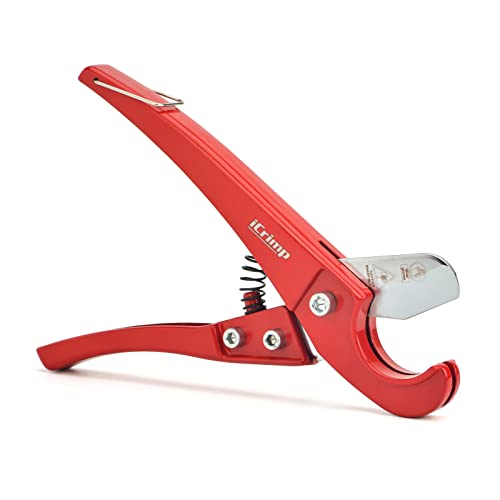
IWISS Compact PEX Tubing Cutter (1/8″-1″)

EFIELD 3/8″-1″ PEX and Plastic Pipe Cutter

Bates PEX Pipe Cutter Set with PTFE Tapes
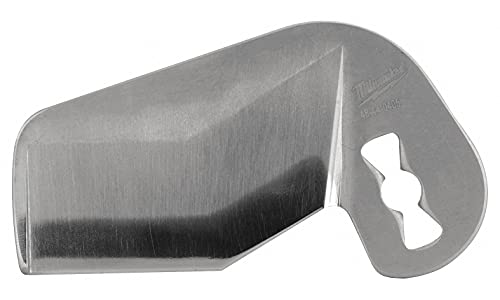
Milwaukee 48-44-0405 M12 Plastic Pipe Shear Blade
A Breakdown Of The Leading Choices
The IWISS iCrimp is the kind of cutter most homeowners end up reaching for without thinking. Its ratcheting jaw opens wide enough to take anything from a slender 1/8-inch line up through full 1-inch PEX, which covers the two sizes you’ll touch most in domestic plumbing: 1/2-inch and 3/4-inch.
The spring-loaded handle resets itself after each squeeze, so a string of cuts under a sink or in a mechanical room moves along at a comfortable pace. For most weekend repipes and fixture swaps, the clean, square edge it produces is exactly what a push-fit or crimp fitting wants to see.
What Makes Sense
- Covers 1/8″ through 1″ PEX, so one tool handles supply lines, manifolds, and most branch runs.
- Spring-loaded handle reduces hand fatigue during long cut sessions, useful in whole-house repipes.
- Compact body tucks into a small tool pouch or kitchen drawer between jobs.
- Generally lands at a low enough price for a first-time DIY kit without feeling flimsy.
- Pairs well with common push-fit and crimp ring systems used in residential water lines.
Worth Noting
- Marketed for PEX only; cutting PVC or copper risks chewing the blade and shortening its life.
- Available in a 2-pack, which may be more cutters than a single homeowner actually needs.
Who It Suits Best
Homeowners handling one-off repairs, fixture swaps, or small additions who want a single tool that covers the sizes they’ll actually encounter.
Where Another Pick Suits Better
The EFIELD 3/8″-1″ PEX and Plastic Pipe Cutter is a better match for anyone who wants a locking handle for safer shop storage.
Where the previous IWISS cutter is a generalist, this one is built to disappear into a bag. It weighs around 0.15 kg, the body is stainless steel, and the footprint is small enough to ride in a back pocket for quick service calls.
That trim profile still handles up to 1-inch PEX, so a service tech can run a full house repipe without swapping tools. The ratchet action tends to land squarely on the tube, and owners report clean cuts with no burr when the blade is fresh.
Where It Helps
- Stainless steel construction adds corrosion resistance in damp crawl spaces and basements.
- Ultra-light 0.15 kg body reduces fatigue on long days and keeps the tool belt from sagging.
- Compact shape slips into a back pocket or small pouch where a bulkier cutter wouldn’t fit.
- Same 1/8″ to 1″ range as the larger IWISS, so it doesn’t give up capability for size.
Trade Offs
- Smaller handle means two-handed use is the norm on larger 3/4″ and 1″ pipe.
- Stainless finish can get slick with wet hands, so a glove grip is sometimes helpful.
Feature Snapshot
Made For
Service plumbers and remodelers who need a small, corrosion-resistant cutter that disappears into a pouch between calls.
Look Elsewhere When
The IWISS iCrimp PEX Pipe Cutter makes more sense for homeowners who prefer a slightly larger, easier-to-grip handle.
The EFIELD cutter leans toward the workshop crowd. Its contoured blade is shaped to leave a clean, burr-free edge, and a sliding lock keeps the jaws closed when the tool lands in a drawer full of wrenches and channel locks.
Rated for PEX A, B, and C pipe from 1/8″ through 1″, it covers the same range as the IWISS cutters above while adding that lock for safer storage. The instruction sheet is clear about what not to cut, including metal pipe, cable, and PVC, which helps the blade stay sharp longer.
The Good Stuff
- Locking handle keeps the jaws safely closed in a busy tool drawer or shop bin.
- Contoured blade shape is designed to leave a clean cut without raised burrs at the pipe end.
- Handles the common PEX types (A, B, and C) used in residential water distribution.
- Sold in single-pack and 2-pack options, so a solo homeowner or a small crew can size the order.
Points To Note
- Listed capacity starts at 3/8″ for the most common pack, so very small 1/8″ and 1/4″ lines may need a different tool.
- Using it on metal pipe or cable, as some owners admit to trying, will damage the blade geometry.
Right Fit For
Garage tinkerers and small-shop plumbers who want a lockable cutter that stays organized in a crowded toolbox.
Consider Something Else When
The IWISS Compact PEX Tubing Cutter is a smarter grab for service work where a 0.15 kg body matters more than a locking handle.
Bates takes a different angle with this kit. Instead of selling a single cutter, you get a primary pipe cutter rated up to 1-1/4″, a smaller tube cutter for 1/8″ to 7/8″ work, and three rolls of PTFE seal tape for threaded connections.
The aluminum alloy body keeps weight down while still feeling solid in the hand, and the ergonomic grip is shaped for one-handed operation. Compared to the single IWISS above, this set is really aimed at the person running a full plumbing project from start to finish.
Useful Touches
- Aluminum alloy steel body is light yet rigid, which helps reduce arm fatigue overhead.
- Two cutters in the box cover 1/8″ up to 1-1/4″, broader than the 1″ limit of most single cutters.
- PTFE tape included, so the kit travels to the job with thread-seal material already on hand.
- Ergonomic handle design is built for one-handed cuts, useful when the other hand is holding a fitting.
Small Caveats
- More pieces to keep track of, so the smaller tube cutter can wander off in a busy bag.
- Aluminum body, while light, can show scuffs and oxidation faster than a coated steel alternative.
Quick Facts
Who Should Grab It
DIYers planning a full bathroom or kitchen repipe who want cutting and sealing basics in one package.
A Better Fit Elsewhere
The IWISS iCrimp PEX Pipe Cutter is a leaner pick for anyone who just needs a single, simple cutting tool.
The Milwaukee M12 plastic pipe shear blade is a spare part, not a standalone tool, but it earns a spot on this list for anyone already running the M12 cordless platform. This blade is a replacement for the 2470-21 shear, and it’s compact enough at roughly 4″ x 2.5″ to swap out in the field.
If your truck or shop already has the M12 shear body, keeping a fresh blade on hand prevents downtime when a blade dulls mid-job. For everyone else, this is essentially a non-starter since it doesn’t function without that compatible tool body.
The Upside
- Genuine Milwaukee replacement part, so the fit matches the M12 shear body without modification.
- Compact 4″ x 2.5″ footprint drops into a drawer or small parts bin for easy spares storage.
- Quick blade swap reduces downtime when a dulled blade would otherwise sideline the whole tool.
Honest Caveats
- Not a standalone cutter; requires the compatible Milwaukee M12 shear body to function at all.
- Owners sometimes report a steep price for what is essentially a sharpened metal blade.
Best Suited To
Contractors already committed to the Milwaukee M12 cordless system who need a backup blade for the plastic pipe shear.
Reach For A Different Pick When
The IWISS iCrimp PEX Pipe Cutter is the right call for anyone who needs an actual working tool, not a replacement blade.
What To Weigh Before Choosing Pex Cutters
Cutting Range and Pipe Compatibility
The first thing to check is the size range. Most residential PEX lines run 1/2″ and 3/4″, so a cutter rated 1/8″ to 1″ covers nearly every supply, branch, and manifold job. Larger radiant loops can push past 1″, which is where the Bates set earns its 1-1/4″ capacity. Match the cutter’s stated range to the sizes already in the wall.
Blade Geometry and Cut Quality
A clean, square cut is what lets a crimp ring seat properly or a push-fit grab without leaking. Look for terms like ratcheting jaw, contoured blade, or no-burr in the listing. None of these guarantee a perfect cut, but they signal that the tool was designed around PEX rather than adapted from a general-purpose cutter.
Ergonomics and Repetition
Plumbing work means a lot of identical motions. Spring-loaded handles reduce hand strain, and contoured grips keep the tool from slipping when your hands are wet. For overhead work in a joist bay, lighter aluminum bodies tend to win. For crawl spaces, a smaller stainless tool is easier to maneuver.
Extras That Matter
Storage locks matter in a busy shop. Replacement blades matter for any powered system. Bundled PTFE tape matters when you want one box to cover a small project from cut to seal. None of these are required, but they tend to tip a near-tie toward the more complete kit.
Key Considerations Across These Picks
Where Shoppers Go Wrong
The most common mistake is reaching for a PEX cutter to trim PVC or copper “just this once.” PEX blades are shaped for soft plastic and will dull quickly on harder materials, which then produces ragged PEX cuts for the rest of the tool’s life. Read the exclusions in the listing before the first squeeze.
Where The Extra Money Goes
A higher tier like the Bates set or a powered shear blade buys broader capacity, lighter materials, or motor-driven speed. The premium is worth it for full-house repipes or daily service work, where the time savings and broader range pay back quickly. For a single faucet swap, a basic ratcheting cutter is plenty.
Frequently Asked Questions
Can a PEX cutter handle PVC or copper pipe?
No. PEX cutters are designed for soft cross-linked polyethylene and will dull or chip on harder materials like PVC, CPVC, or copper. Using them on those materials shortens blade life and produces poor cuts.
How do I keep a PEX cutter cutting cleanly?
Wipe the blade with a dry cloth after each session and avoid cutting anything outside the listed pipe types. A light application of lubricant on the pivot occasionally keeps the ratchet action smooth.
What size PEX cutter do I need for a typical home?
A cutter rated 1/8″ to 1″ covers nearly all residential supply and branch lines. If you run 1-1/4″ trunk lines for radiant or manifold systems, step up to a model that includes that size in its range.
Is a ratcheting cutter better than a scissor-style cutter?
Ratcheting cutters tend to require less hand strength and produce more consistent results on larger pipe. Scissor-style cutters are lighter and faster on small diameter lines but tire the hand faster on bigger work.
How long does a PEX cutter blade typically last?
For a homeowner using the tool a few times a year, a quality blade can last many years. Daily trade use will shorten that timeline, which is when replaceable blade systems start to make sense.
Final Verdict
Pick the IWISS iCrimp for a simple, broad-range cutter that handles most home jobs. Grab the IWISS compact stainless model when the tool needs to ride in a small bag. The EFIELD and Bates picks are stronger fits for shop and project work, while the Milwaukee blade is a smart spare for crews already running the M12 shear. Match the tool to the scale of your project, and the cuts will take care of themselves.




