


Pulling fresh water lines through a tight crawlspace, snaking a run around a stubborn corner joist, or finally retiring that decades-old copper that’s been weeping at the joints, you reach a point where the pipe itself becomes the project. PEX, a flexible cross-linked polyethylene tubing, has reshaped residential plumbing because it bends where rigid pipe fights you, tolerates a freeze better than copper, and slips into place with crimp or cinch rings instead of a torch.
The tricky part is sorting the coils. You want PEX-B for most home water lines, the right diameter for your branch runs, and enough length to avoid a mid-project shortage. Some coils carry an oxygen barrier layer for radiant floor heat, others are designed strictly for potable water. The picks below cover everyday repairs, full-home repipes, long radiant loops, and the fittings that hold everything together.
Your Options, Compared

ValueMax PEX Cutter 1/8″-1″ Capacity

SharkBite 1/2″ x 50 ft Blue PEX-B (U860B50)

Likeem 1/2″ PEX-B 200 ft (Red+Blue)
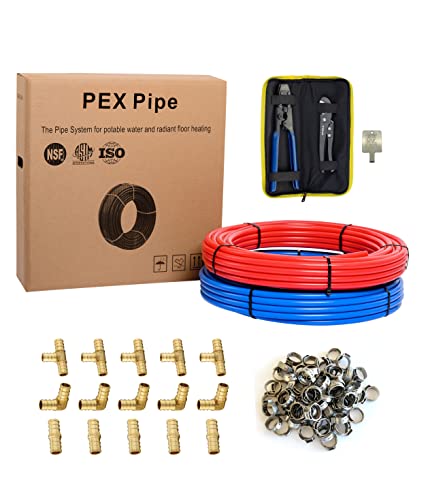
EFIELD 1/2″ PEX-B 200 ft Complete Kit

Happybuy 1/2″ PEX Oxygen Barrier 1000 ft

SharkBite 1/2″ x 100 ft Blue PEX-B (U860B100)

WYSIWYKA 120pc 1/2″ Stainless Cinch Rings

Happybuy 3/4″ PEX-B Non-Barrier 300 ft
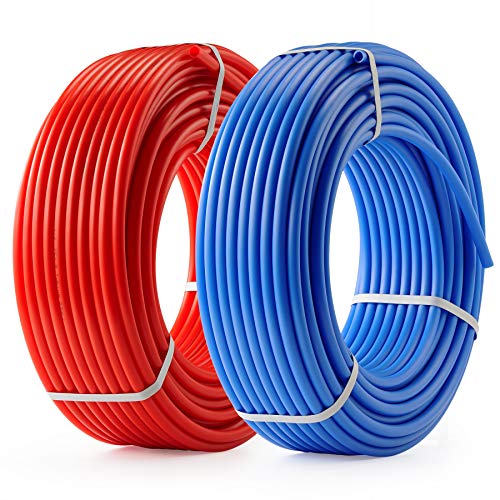
ZELCAN 1/2″ PEX-B 600 ft (Red+Blue)
Taking A Closer Look At The Options
A PEX project lives or dies on the cut. A ragged, angled slice leaves a fitting that won’t seat, and you end up fishing the bad piece out of a stud bay at midnight. The ValueMax cutter skips that headache by ratcheting a sharp steel blade around the tube in steady half-turns, leaving a clean, square edge that accepts a crimp ring without complaint.
It handles 1/8″ to 1″ outside diameter, which covers every common PEX, copper, and thin-walled pipe you’ll meet in a house. A thumb-lock on the handle keeps the blade stowed in a tool bag, and the ratcheting head reaches into joist pockets where a hacksaw would be a wrestling match.
What Earns Its Place
- Cuts 1/8″ through 1″ tubing, covering residential PEX, copper, and PVC transitions.
- Ratcheting action needs only one hand free, which helps in overhead or crawlspace runs.
- Lock buckle on the handle keeps the blade safely closed in a crowded tool belt.
- Steel blade with smooth coating resists rust in damp basements and crawlspaces.
- Light enough to toss in a pocket between cuts, ideal for multi-room plumbing days.
Things To Consider
- The coated blade is sharp but small, so it isn’t a substitute for a full tube cutter on thick copper.
- Replacement blades aren’t part of the package, though the steel body holds up well with reasonable care.
Who It Suits Best
Homeowners tackling a one-off PEX repair or a small bathroom repipe who need a single tool that won’t let a sloppy cut ruin a fitting.
Where Another Pick Suits Better
For a long PEX-only repipe where you’ll also need tubing, fittings, and a cinch tool, the EFIELD 1/2″ PEX-B 200 ft Complete Kit bundles the cutter’s job with everything else.
SharkBite’s blue PEX-B coil is the kind of pipe that quietly anchors a plumbing shelf. You grab a 50-foot roll when a single fixture needs new supply lines, a washing machine valve gets relocated, or an ice-maker line finally dies. The 1/2″ diameter is the standard branch size for most faucets and toilets, and the flexibility lets the tube slip behind a wall without forcing an extra elbow joint.
Made in the USA and rated for hot and cold potable water, it pairs with SharkBite’s push-to-connect fittings, traditional crimp rings, or cinch clamps. That compatibility matters when you’re matching what’s already in the wall, because a mixing system is where DIY jobs go sideways.
Why It Works Well
- 50-foot length is enough for a full bath rough-in without leaving a half-used coil on the shelf.
- Works with SharkBite push fittings, crimp rings, and cinch clamps, so it adapts to your existing system.
- PEX-B tolerates freezing slightly better than rigid pipe, which helps in unheated garage or basement walls.
- Bends around corners, reducing the fittings and joints that are the usual leak sources.
Worth Noting
- A single 50-foot coil won’t cover a whole-home repipe; for that you’d need the 100-foot SharkBite or a multi-pack.
- Not rated for outdoor UV exposure, so it should stay behind drywall or inside conduit.
Made For
Homeowners handling a single-room remodel or fixture replacement who want a trusted brand name and a manageable coil weight.
Consider Something Else When
If you need a longer uninterrupted run for a basement bath, the SharkBite 1/2″ x 100 ft Blue PEX-B coil doubles the length in one piece.
The Likeem pair splits a 200-foot supply into one red coil and one blue coil, which is more useful than it sounds. Color coding keeps hot and cold lines straight during a repipe, and most inspectors expect it on any job where the pipes might be opened again. The 1/2″ diameter and EVOH oxygen-barrier layer suit both potable water and small radiant loops.
Compatibility runs across copper crimp, cinch clamp, and push-fit systems, so you don’t have to chase one specific fitting brand. The wall thickness reads 0.7 mm in the spec sheet, on par with mainstream PEX-B, and the cross-linked structure resists the kind of cracking that shows up around poorly supported joints.
The Practical Payoff
- Two-color coil pair keeps hot and cold lines identified without a marker.
- EVOH oxygen barrier suits closed-loop radiant applications as well as domestic water.
- Pairs with copper crimp, cinch, and push-fit fittings, so you can match what’s already in the wall.
- Total 200 feet covers a small home or a single-floor repipe without mid-project runs back to the store.
Trade Offs
- The non-oxygen-barrier variant is better for strictly potable water, and this model leans radiant, so check your local code if it’s a drinking-water-only run.
- Coils ship tightly wound, so let them relax in the sun for a few minutes before uncoiling to fight memory curl.
Right Fit For
DIYers planning a budget whole-home repipe who want the red/blue convention already built into the rolls.
Skip It When
You need fittings, clamps, and a crimp tool in one shipment, in which case the EFIELD 1/2″ PEX-B 200 ft Complete Kit arrives ready to plumb.
The EFIELD bundle treats PEX as a system, not just a roll. You get two 100-foot PEX-B coils in red and blue, a small stash of lead-free brass crimp fittings (couplings, elbows, and tees), 15 PEX cinch clamps, a cinch tool, and a steel pipe cutter, all in one box. For a first-timer, that’s the difference between a project and a parts-store scavenger hunt.
The included fittings and tool are enough to handle several fixture branches and a couple of transitions, after which you’ll probably need to buy more. Still, the kit is the cleanest on-ramp for someone who has never held a cinch tool before and wants a working plumbing run by the end of a weekend.
Positive Takeaways
- Everything needed for a small PEX project ships in a single box, which simplifies planning.
- Lead-free brass fittings meet potable water standards in most jurisdictions.
- Red and blue color coding matches standard plumbing convention out of the package.
- Steel pipe cutter gives you clean cuts from the very first joint, not a starter frayed edge.
Room For Improvement
- The included cinch clamp and fitting counts cover only a starter layout, so larger projects need additional supplies.
- The cinch tool is functional but light, and serious daily use may push you toward a heavier pro-grade tool later.
Best Suited To
First-time PEX installers who want one purchase that covers tubing, fittings, clamps, and a cutter without separate shopping trips.
Look Elsewhere When
You already own a crimp tool and just need bulk tubing, in which case the Likeem 1/2″ PEX-B 200 ft pair gives you more pipe for the same budget.
When the project is a whole basement of radiant floor tubing, a 50-foot coil becomes a joke. The Happybuy 1000-foot roll keeps a single continuous run alive across large loops, which matters because every joint in a radiant system is one more potential air pocket. The 1/2″ nominal diameter and oxygen-barrier construction are tuned specifically for closed-loop heat.
Crack- and leak-resistant PEX-B material handles the freeze-thaw cycle of an unheated mechanical room, and the 0.625″ outside diameter fits the standard manifolds and staple guns used in radiant layouts. In most installations, you may find that one big coil is far easier to feed than juggling three smaller ones.
Standout Benefits
- 1000-foot length minimizes joints across a full basement or multi-zone radiant layout.
- Oxygen barrier layer keeps dissolved oxygen from corroding ferrous boiler components in closed loops.
- 0.475″ inner diameter supports steady flow rates across long runs.
- PEX-B construction tolerates the temperature swings of radiant heat and seasonal cold.
Points To Keep In Mind
- The roll is heavy and needs a tubing uncoiler or at least a spare pair of hands to manage cleanly.
- Oxygen-barrier PEX is specialized for radiant; using it only for domestic water is fine but wastes the barrier’s purpose.
Perfect Match For
Homeowners and contractors building a full basement radiant floor system who need long unbroken loops and oxygen protection.
Another Choice May Suit
For potable water lines, the SharkBite 1/2″ x 100 ft Blue PEX-B coil is a more practical length without the radiant-specific barrier layer.
Think of this as the bigger sibling of the 50-foot SharkBite coil. One hundred feet covers a full bathroom group, a kitchen repipe, or a basement wet bar without forcing a coupling mid-run. The flexibility of PEX-B means the coil snakes through studs and joists with only a few bend supports, which is why so many pros default to it for residential branches.
It’s freeze-tolerant, meaning the pipe expands slightly when ice forms and contracts as it thaws, which is a quieter failure mode than copper splitting. Compatibility spans SharkBite push fittings, copper crimp, and stainless cinch clamps, so it drops into nearly any modern system.
Strengths Worth Knowing
- 100-foot length is the sweet spot for one-bath or kitchen repipes without a mid-run coupling.
- Freeze-tolerant behavior reduces burst risk in unheated exterior walls, depending on your climate.
- Made in the USA, which simplifies sourcing documentation for some inspectors and contractors.
- Works with SharkBite push fittings for repairs that don’t need a full crimp tool.
Honest Caveats
- Single-color blue is for cold lines; you’ll want a red coil (sold separately) if your code requires color-coded hot lines.
- Not UV-rated, so exterior or sun-exposed runs need protection.
Who Will Love This
Homeowners and remodelers running a single-room potable water repipe who want one continuous length and a recognized brand behind it.
Reach For A Different Pick When
Your project is radiant floor heating, in which case the Happybuy 1/2″ PEX Oxygen Barrier 1000 ft roll is built for the longer, barrier-protected run.
The actual seal on a PEX joint is the ring, not the pipe, so skimping here is a false economy. The WYSIWYKA pack ships 120 single-ear cinch rings made from 304 stainless steel, which is the same alloy used in most residential plumbing hardware. Each ring wraps a 360° seal around the fitting barb once a cinch tool compresses the ear.
Anti-corrosion and anti-oxidation properties mean the rings hold up in damp walls, crawlspaces, and unconditioned basements. The thickened profile resists the over-cinch failures that happen when a beginner squeezes a lighter ring past its limit, and a plastic storage box keeps the count visible mid-project.
A Few Strong Suits
- 120 pieces handle a whole-home or multi-room repipe without running out at the worst moment.
- 304 stainless steel resists rust and oxidation inside damp wall cavities.
- 360° sealing surface distributes pressure evenly around the fitting barb.
- Storage box keeps the count visible and the rings organized by job site.
Some Limits To Know
- You need a separate 1/2″ cinch tool, since the rings are useless without the right crimper.
- Single-ear design requires the tool to engage from one side, which can feel tight against a stud in shallow bays.
Built With In Mind
Plumbers and serious DIYers running multiple PEX branches who want a deep stock of corrosion-resistant rings in one purchase.
Not Your Match When
If you’d rather skip the cinch tool entirely, the SharkBite 1/2″ x 50 ft Blue PEX-B pairs with push-to-connect fittings that need no rings at all.
Most household branch lines run 1/2″ PEX, but the mains that feed them are typically 3/4″, and that’s where this Happybuy coil earns its spot. The non-oxygen-barrier construction suits open-loop potable systems and standard hot/cold water distribution where dissolved oxygen isn’t a corrosion concern.
At 300 feet, the coil supports a whole-house trunk or a long open-loop radiant layout without forcing couplings into the main flow path. PEX-B’s crack- and leak-resistant structure handles the temperature swings of unconditioned spaces, and the 3/4″ inside diameter keeps pressure drops reasonable across long stretches.
A Favorable Mix
- 3/4″ diameter matches residential main-line sizing, reducing pressure drop on long runs.
- 300-foot length handles a whole-house trunk with room to spare.
- Non-barrier construction is appropriate for open-loop potable systems and standard water service.
- PEX-B tolerates hot and cold extremes common in unheated mechanical rooms.
Factors To Consider
- Not suitable for closed-loop radiant systems where ferrous components need oxygen-barrier protection.
- Larger diameter requires bigger fittings and a 3/4″ cinch or crimp tool, sold separately.
Whose Shelf It Belongs On
Homeowners running a 3/4″ main distribution line or an open-loop radiant system who want one long coil to minimize fittings.
A Better Fit Elsewhere
For a closed-loop radiant system, the Happybuy 1/2″ PEX Oxygen Barrier 1000 ft roll is purpose-built for the application.
The ZELCAN pair covers a lot of ground. Two 300-foot coils, one red and one blue, total 600 feet of PEX-B tubing rated from -40°F up past 200°F. Pressure ratings land at 160 psi at 70°F and 80 psi at 200°F, which is the kind of headroom that matters in unconditioned attics, garage workshops, and RV water systems.
A 5″ bend radius means the tube turns tight corners without kinking, so a single line can reach a fixture without extra couplings. The non-oxygen-barrier design is intended for potable water and non-ferrous loops, and the tubing pairs with standard crimp, cinch, and push-fit systems across the residential plumbing world.
Advantages To Know
- Two 300-foot coils give 600 total feet, suitable for whole-home or multi-zone projects.
- Temperature rating from -40°F to over 200°F suits cold-climate and high-heat applications.
- 160 psi pressure rating at 70°F leaves headroom for typical residential water pressure.
- 5″ bend radius helps navigate studs and joists with fewer couplings.
Worth Bearing In Mind
- Not rated for outdoor UV exposure, so direct sunlight or above-grade exterior runs need protection.
- Two 300-foot coils are heavy to manage without a tubing uncoiler, especially on a ladder or scaffold.
Perfect Match For
Homeowners planning a whole-home repipe or an RV/camper water system in a cold climate who want both red and blue coils with wide temperature tolerance.
Where A Sibling Pick Shines
For a one-room repair where 600 feet is overkill, the SharkBite 1/2″ x 50 ft Blue PEX-B coil is far easier to handle and store.
What Matters Most Before Choosing PEX Tubings
Diameter and Application Match
The first decision is which diameter you actually need. 1/2″ PEX handles most branch lines to faucets, toilets, and individual fixtures. 3/4″ PEX is the standard main-line size that feeds a manifold or a bank of branches. Picking the wrong size creates either poor pressure at the fixture or a wasteful overspend on larger fittings and tools. Radiant floor systems usually run 1/2″ loops, while main distribution lines prefer 3/4″ for lower pressure drop.
Material Grade and Oxygen Barrier
PEX-B is the most common cross-linked formulation for residential water lines because it balances flexibility, chlorine resistance, and cost. The oxygen-barrier variant adds an EVOH (ethylene vinyl alcohol) layer that blocks oxygen diffusion, which protects cast-iron components in closed-loop radiant systems from internal corrosion. For a strictly domestic water repipe, non-barrier PEX is fine; for a radiant loop tied to a boiler, barrier PEX is the safer call.
Compatibility With Fittings and Tools
PEX tubing is only as good as the rings and fittings that join it. Crimp, cinch, and push-to-connect systems all work, but each needs its own tool or matching component. Confirm the tube you buy is rated for the connection method you already own. Mixing a non-barrier tube with a closed-loop system isn’t dangerous, but it shortens the life of ferrous boiler parts over time.
Key Considerations Across These Picks
Pitfalls Shoppers Hit
The most common mistake is buying a non-oxygen-barrier coil for a closed-loop radiant system, then watching the cast-iron boiler components corrode over years. The opposite happens when someone grabs an oxygen-barrier tube for a simple domestic water run, paying for a feature they don’t need. Color-coding is another small trap: red for hot, blue for cold is the convention, and mixing them up at the manifold creates years of confusing repairs. In most jurisdictions, a permit is required for new plumbing work beyond a like-for-like fixture swap, so check local code before a full repipe.
Where The Extra Money Goes
Higher-tier PEX earns its price through thicker walls, tighter bend-radius tolerance, and brand-name traceability that some inspectors require. Premium coils also tend to coil more uniformly, which reduces the kinking that wastes the first few feet of a new roll. A recognized brand name, like SharkBite, adds peace of mind for a homeowner who never wants to see that wall opened again. For a single-room repair, the premium is hard to justify; for a whole-home repipe, the extra cost per foot is small against the labor of doing it twice.
Frequently Asked Questions
What diameter of PEX should I use for a bathroom rough-in?
Most residential branch lines use 1/2″ PEX, with a 3/4″ main feeding the manifold. Using 1/2″ throughout the bathroom keeps fittings, tools, and flow rates consistent with standard fixtures.
Can I use the same PEX for hot and cold water lines?
Yes, PEX-B is rated for both hot and cold potable water. The red and blue color coding is a convention to identify lines at a glance, not a functional difference in the tubing itself.
Is oxygen-barrier PEX required for a closed-loop radiant system?
An oxygen barrier is strongly recommended for any closed loop tied to ferrous components, because it prevents dissolved oxygen from corroding the boiler and pumps over time. Open-loop systems and standard domestic water don’t need it.
Can I install PEX outdoors or in direct sunlight?
Standard PEX degrades under UV exposure, so it should stay behind drywall, inside conduit, or otherwise shielded from sunlight. For outdoor runs, use a UV-rated sleeve or conduit rated for the application.
Do I need a special tool to cut PEX?
A dedicated PEX cutter, like the ValueMax ratcheting cutter, gives the cleanest, square cuts that crimp rings can seal properly. Hacksaws and other general-purpose blades leave burrs that often cause fitting failures.
Final Verdict
The right PEX coil depends on the size of the job in front of you. A single fixture fix only needs a 50- or 100-foot SharkBite coil, while a full repipe benefits from a red/blue pair like the ZELCAN 600-footer or the Likeem 200-foot value roll. Radiant work calls for oxygen-barrier PEX in long lengths, like the Happybuy 1000-foot roll, and every project still ends with the same unglamorous step: a clean cut and a properly crimped ring. Pick the coil that matches your scope, the fittings your system already expects, and you can keep the tools out for the next repair, not the next redo.




