


A good pinless moisture meter is one of those tools you don’t think about until a project goes wrong. Warped floorboards, cracked tabletops, and stubborn stains on freshly milled lumber all trace back to the same culprit: hidden moisture deep in the wood. The picks below read moisture without leaving pinholes, so your finished surfaces stay clean and your measurements stay honest.
A Fast Comparison Of The Options

Wagner Meters Orion 930 Pinless Wood Moisture Meter

Wagner Meters Orion 910 Pinless Wood Moisture Meter Kit

Wagner Meters Orion 950 Pinless Wood Moisture Meter
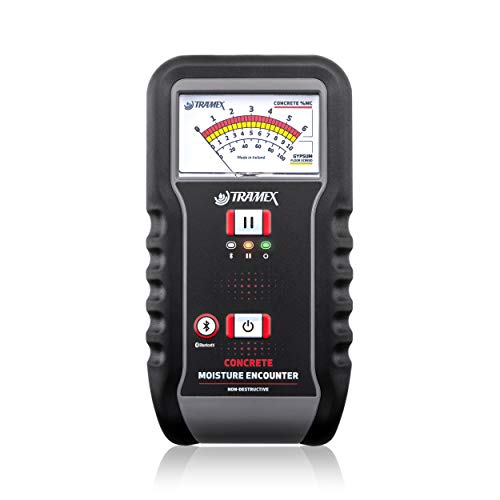
Tramex Concrete Moisture Encounter CME5
Wagner Meters Orion 910 Pinless Wood Moisture Meter Kit (NIST)
Why These Options Stand Out
Pinless meters work by sending a small electromagnetic signal into the wood from a flat sensor pad on the back, then reading how the signal is affected by moisture inside the board. The Wagner Meters Orion 930 uses that approach to scan two depths at once, 1/4 inch and 3/4 inch, so you can spot the difference between a dry surface and a damp core. For a cabinetmaker sanding a glued-up panel, that distinction is everything: a quick press tells you whether the glue line is cured enough to finish.
IntelliSense technology, Wagner’s term for automatic species and temperature compensation, adjusts the reading based on the wood type you select, which matters more than most people expect. Compared with the Orion 910 kit below, the 930 adds shallow-depth scanning for thinner stock, but skips the deeper single-depth focus.
Practical Advantages
- Dual-depth scanning at 1/4″ and 3/4″ reveals surface-versus-core differences in one press
- Non-marring sensor pad protects finished or face-grade lumber from pinholes
- On-site calibration check keeps readings honest when ambient humidity shifts
- Species-specific settings boost accuracy across softwoods, hardwoods, and engineered boards
- Compact handheld form fits in an apron pocket for quick floor or job-site checks
Things To Consider
- Surface contact still needs a flat area, so cupped or rough-sawn stock can produce erratic numbers
- Carrying case and accessories may be basic depending on bundle
Feature Snapshot
Right Fit For
Fine woodworkers, flooring installers, and remodelers who need both surface and core readings on finished or near-finished stock.
Skip It When
You work mostly with thick slabs or rough timbers over an inch deep, where the Orion 910’s deeper single-depth focus reads more cleanly.
The Orion 910 is the depth-focused sibling of the 930 above. Instead of splitting its attention between two depths, it commits to a single 3/4-inch deep read, which is where most of the moisture problems in dimensional lumber actually live. For a furniture builder jointing 8/4 walnut or a contractor checking subfloor framing, that deeper look tends to surface issues a shallow scan simply misses.
You get the same IntelliSense compensation and on-site calibration as the 930, just in a streamlined package. Where the 930 aims at finished surfaces and thinner stock, the 910 leans into rough carpentry, timber framing, and slabs.
The Good Stuff
- Single deep 3/4″ scan targets the moisture that actually drives defects like cupping and checking
- Non-invasive sensor leaves face-grade surfaces clean for finishing
- Species and temperature compensation handled automatically once a setting is chosen
- On-site calibrator helps confirm the meter is still honest after months in the truck
Worth Noting
- No shallow-depth mode, so a quick surface check on thin veneer is harder to interpret
- Requires a flat back surface; bowed or twisted boards give less reliable readings
- Bundle contents vary, so confirm what ships before ordering
Who Will Love This
Serious woodworkers and timber framers handling stock thicker than an inch who want a clean deep reading without dragging out a pin meter.
Look Elsewhere When
You need both shallow and deep readings in the same pass, in which case the Wagner Meters Orion 930 handles that workflow more efficiently.
The Orion 950 is the data head of the lineup. It keeps the same dual-depth scanning as the 930, then layers in Bluetooth connectivity, automatic EMC (equilibrium moisture content) calculation, and readouts for GPP, GPK, and dew point. EMC is the moisture level wood naturally settles to in its environment, so tracking it tells you whether a floor or a stack of lumber is actually in balance with the room, not just dry on the surface.
For restoration contractors drying out a water-damaged building or HVAC pros verifying a building envelope, those extra numbers cut out a pocket calculator and a notebook. It’s overkill for a weekend hobby, but a strong fit for working pros who document every job.
What It Does Well
- Bluetooth streaming moves readings to a phone or tablet for cleaner recordkeeping
- Automatic EMC tracking shows whether wood has truly stabilized in its environment
- Dual-depth scanning at 1/4″ and 3/4″ still covers both surface and core in one press
- Dew point and grains-per-pound readouts support drying and HVAC decisions
Trade Offs
- More expensive than the 910 and 930, so the data features need to earn their keep in your workflow
- Bluetooth setup adds a learning step the simpler Orion models skip entirely
- Battery drain is worth watching on long jobs since the radio and screen both pull power
Feature Rundown
Made For
Restoration contractors, building inspectors, and flooring pros who need traceable, documentable moisture data across many jobs.
Reach For A Different Pick When
You only need a quick reading on a few boards each week, in which case the Wagner Meters Orion 910 is simpler and easier to live with.
The Tramex CME5 earns its spot here as a deliberate boundary-pusher. It’s not a wood meter, it’s a non-destructive concrete and slab meter built around ASTM F2659, the standard the flooring industry uses before laying sensitive finishes over a slab. For installers putting wood, vinyl, or tile over concrete, the moisture question shifts from the wood itself to the substrate underneath it.
It offers dual-depth comparison: shallow penetration up to 0.4 inch and deep penetration up to 1.25 inch, so you can see whether the surface is dry while the core is still bleeding moisture upward. That distinction determines whether the job proceeds or waits another week.
Strengths Worth Knowing
- ASTM F2659-aligned testing gives installers a documented number to put on a job report
- Dual depth comparison flags surface-dry but core-wet slabs that fool basic meters
- Analog-style needle readout is easy to read under job-site lighting and dust
- Non-destructive scanning avoids drilling or coring finished or curing slabs
Honest Caveats
- Built for concrete and screed, not wood, so it has no place in a pure lumber workflow
- Specialty pricing and a niche audience make it a tough sell outside flooring installation
Best Suited To
Floor covering installers and commercial flooring contractors who need a reliable, standards-aligned reading before committing a sensitive finish to a slab.
A Better Fit Elsewhere
Cabinetmakers and hobbyists should stay with the Wagner Meters Orion 910, which is calibrated specifically for wood species and everyday shop work.
Functionally, this is the same 910 platform covered in the second pick: a deep-reading pinless scan at 3/4 inch, IntelliSense compensation, and the same on-site calibration idea. The difference is documentation. This kit ships with a NIST-traceable calibrator, meaning the included reference standard can be traced back to a recognized national measurement institute, so the numbers it produces come with a paperwork trail.
For quality assurance labs, lumber inspectors, and shops that bid on commercial millwork, that paperwork is the whole point. For casual weekend builders, the standard kit generally does the job without the extra traceability step.
Bright Spots
- NIST-traceable calibration reference supports audit and inspection requirements
- Deep 3/4″ non-marring scan handles thick stock and finished boards
- Automatic species and temperature compensation reduce setup time
- Documented accuracy matters on commercial jobs where the meter reading can become part of the record
Small Caveats
- Traceable kit commands a higher price than the standard 910 bundle
- Documentation adds paperwork that hobbyists rarely need
Quick Facts
Whose Shelf It Belongs On
Quality-focused shops, commercial millwork contractors, and inspectors who need documented, traceable moisture readings for client sign-off.
Swap It Out When
You’re working on personal projects with no audit requirement, in which case the standard Wagner Meters Orion 910 kit covers the same core function at a friendlier cost.
What To Weigh Before Picking A Pinless Wood Moisture Meter
Reading depth is the first fork in the road. Shallow scans around 1/4 inch tell you about the surface, which matters for finished floors and thin veneer, while deeper 3/4 inch scans expose the moisture that drives cupping in thicker boards. Dual-depth meters cover both, but cost more and add a layer of interpretation.
Species compensation matters more than the spec sheets let on. Softwoods, hardwoods, and engineered boards all respond differently to the same moisture level, so a meter that adjusts automatically saves the constant chart lookup. Temperature swings in an unheated shop also throw off raw readings, so built-in compensation is worth real money.
Finally, think about documentation. A simple handheld reading works for a hobbyist, but commercial jobs and restoration work increasingly demand logs, EMC tracking, or NIST-traceable calibration. Picking the documentation level you actually need avoids overspending on features you’ll never open.
Key Considerations Across These Picks
Pitfalls Shoppers Hit
The most common stumble is buying a pinless meter for rough-sawn, twisted, or cupped stock. The sensor needs flat contact, so warped boards give scattered readings that look like meter errors when the real problem is the test surface. Hand-planing a small flat spot, or moving to a straighter section of board, often solves more than upgrading the meter.
Another trap is ignoring the difference between wood moisture and concrete moisture. Tools like the Tramex CME5 on this list are calibrated for slabs, not lumber, and the wrong tool in the wrong context can give numbers that look plausible but mean the wrong thing.
Where The Extra Money Goes
Stepping from a basic pinless meter to a model like the Orion 950 usually pays for three things: Bluetooth data logging, automatic EMC tracking, and richer readouts like dew point and GPP. For installers, restoration contractors, and flooring pros, those features cut clipboard time and turn each reading into a recordable line item.
A NIST-traceable kit, like the 910 variant in the fifth slot, pays for documentation rather than new measurements. The actual scanning is identical to the standard 910, but the included calibrator is traceable to a national reference. That difference rarely matters on a personal build, but it often decides who wins a commercial bid.
Frequently Asked Questions
How accurate are pinless moisture meters for wood?
Modern pinless meters with species and temperature compensation typically deliver readings accurate to within roughly 1 percent of a calibrated pin meter in the same conditions, with the trade-off that you need flat, consistent contact for that accuracy to hold.
Can a pinless meter read through finished surfaces?
Yes, most pinless meters read through lacquer, shellac, paint, and similar film finishes without issue, though very thick epoxy or metallic coatings can interfere with the sensor and throw readings off.
What moisture percentage is safe for interior woodwork?
Most interior woodwork performs best in the 6 to 8 percent range once it has stabilized in a finished, climate-controlled space, though exact targets depend on the species and the EMC of the surrounding room.
Do I still need a pin meter if I have a pinless one?
For most woodworking, a pinless meter covers the job, but pin meters excel at pinpointing moisture gradients inside a board and at testing very thin stock where a pinless sensor’s field is too large to isolate.
How often should I calibrate a pinless moisture meter?
Running the on-site calibrator check once a month on a working meter, and any time the meter takes a hard drop, is a sensible habit that keeps long-term readings honest.
Closing Remarks
The right pinless moisture meter comes down to the stock you handle, the depth that matters, and the paperwork your work demands. Woodworkers focused on fine furniture gravitate toward the Orion 930, while slab and timber folks will appreciate the deeper 910. Pros who need Bluetooth and EMC reach for the 950, and anyone documenting commercial work should look closely at the NIST-traceable kit. The Tramex CME5 stays a specialty pick for slab work, but a smart one to keep in the truck if floors are part of the job. Match the meter to the workflow, and the moisture question stops being a guess.




