


Long sewer laterals, municipal drain lines, and deep building stacks all share the same problem. You cannot see what is happening 200 meters down the line, and guessing wastes time. Pipe inspection cameras solve that by sliding a waterproof camera head and lighting rig through the pipe while the operator watches from the surface. For runs that long, you need serious cable length, a locator transmitter to find the head underground, and a self-leveling head so the picture stays upright as the cable twists through bends. The picks below cover articulating borescopes for short engine work through to dedicated sewer rigs with 70-meter push rods and 512Hz locators built for the 200-meter range.
The Main Contenders

LumenScope 2-Way Articulating Borescope, 0.24in Probe Endoscope
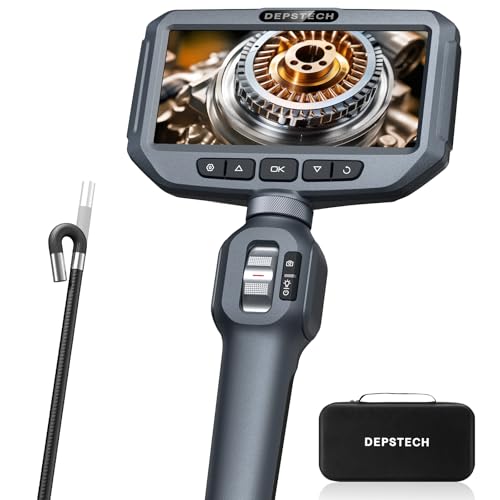
DEPSTECH 5″ Articulating Borescope, 1080P Inspection Camera 5FT

Sanyipace Sewer Camera 230FT/70M with Locator, 10.1″ Screen, 512Hz

Sanyipace Drain Camera with Locator, 165FT/50M, 512Hz, 5X Zoom, 4500mAh

Sanyipace Sewer Camera Self-leveling with Locator, 100FT/30M, 9″ Screen, 23mm
A Closer Look At Each Pick
The LumenScope 2-Way Articulating Borescope trades raw length for a slim, maneuverable probe that slips into places no sewer camera can reach. At 0.24 inches, the camera head fits inside spark plug holes, valve bodies, and behind dashboard panels where a wider drain head would simply refuse to enter. Articulation (the ability to bend the tip up to 210 degrees) means you can steer the lens around corners inside an engine bay without yanking the cable back and forth.
For anyone chasing a rattle inside an intake manifold or a misfire caused by a stuck valve, this is the kind of tool that turns a teardown into a five-minute peek. Compared to the DEPSTECH borescope that follows, the LumenScope uses a similarly thin probe but pairs it with a 5.3-foot flexible cable that is more than enough for engine bays and short appliance runs. You do not get a self-leveling head, so the picture rotates as the cable twists, but the articulating tip more than compensates for tight, awkward angles where plumbing cameras simply will not fit.
What Earns Its Place
- 0.24-inch probe diameter fits spark plug bores and tight engine cavities
- 210-degree two-way articulation steers around obstacles in real time
- LED illumination on the tip lights up dark cavities without a separate light source
- 5.3-foot flexible cable suits under-dash and under-hood work
Trade Offs To Consider
- Cable is far too short for any sewer or drain line work
- No self-leveling, so the image rotates as the cable twists through curves
Made For
Mechanics and DIY car owners who need to peer into engine bays, behind trim panels, or inside appliances where a plumbing camera is too bulky.
A Better Fit Elsewhere
For anything longer than a few feet, the Sanyipace Sewer Camera 230FT/70M with Locator is the more capable tool.
The DEPSTECH 5-inch Articulating Borescope adds a 1080P camera head and a 5-foot cable to the articulating-probe formula. The 5-inch display sits on the control unit, big enough to see fine details like a cracked solder joint or a frayed wire without squinting at a phone screen. The probe locks at any angle you choose, so once you find the position that frames the problem, you can let go of the controls and still get a steady shot.
In a home workshop, the DEPSTECH borescope is the pick for HVAC inspections, dryer vent checks, and behind-wall inspections where the cable does not need to travel far. It shares the LumenScope’s articulating flexibility but trades the ultra-thin 0.24-inch head for a slightly chunkier probe, which can read as a downgrade in the tightest spots yet feels more durable in routine shop work. Owners of older homes chasing a mystery draft or pest entry point will find the 5-foot reach plenty for peeking through access holes.
Useful Highlights
- 5-inch display makes detail work easier than phone-only scopes
- Articulating tip locks at any angle for hands-free viewing
- 1080P resolution captures fine detail on small components
Worth Noting
- 5-foot cable is short for any plumbing or drain work
- Probe diameter is larger than the LumenScope, limiting access in very tight engine cavities
- Display and control unit add bulk over handheld-only scopes
Best Suited To
Home inspectors, HVAC technicians, and serious DIYers who want a built-in screen and steady locked-angle viewing in a workshop setting.
Where Another Pick Shines
For deep drain lines, the Sanyipace Drain Camera with Locator, 165FT/50M offers the 512Hz locator that the DEPSTECH lacks.
The Sanyipace 230FT/70M Sewer Camera is the rig built for the kind of work the borescopes above cannot touch. A 70-meter fiberglass push rod feeds a self-leveling camera head through municipal laterals, building stacks, and long agricultural drainage runs, while the 10.1-inch color screen shows the live feed with enough clarity to spot hairline cracks and root intrusions. Twelve LEDs around the camera head keep the picture bright even in flooded sections of pipe.
The built-in 512Hz transmitter pairs with the included locator wand, so once you spot a problem you can trace the head from the surface without guessing. In a busy plumbing van or municipal crew truck, this is the kind of setup that turns a “we think the break is somewhere around here” into a pinpoint dig. Compared to the smaller Sanyipace 30-meter rig further down this list, the 230FT version trades portability for raw reach, and the larger 10.1-inch display beats the 9-inch panel of the smaller sibling in direct sunlight. You may find the reel-style case a bit heavy for one-person carry, so plan for a second set of hands on long pushes.
Strengths Worth Knowing
- 70-meter push rod covers deep laterals and long building stacks
- Self-leveling head keeps the picture upright through twists
- 512Hz locator traces the head underground without digging blind
- 10.1-inch display readable in bright outdoor light
- 12-LED ring lights flooded pipe sections clearly
Practical Considerations
- Reel case is bulky and heavy for solo transport to job sites
- Larger footprint than handheld units, needs van or truck space
Quick Facts
Perfect Match For
Municipal crews, plumbing contractors, and property managers running inspections on long sewer laterals, deep building stacks, or agricultural drainage lines.
Skip It When
The Sanyipace Drain Camera 165FT/50M is the more manageable choice for residential-only work where 50 meters is plenty.
The Sanyipace 165FT/50M Drain Camera hits the sweet spot for most professional plumbing and home inspection work. A 50-meter push rod handles the typical residential lateral from house to street main, and the self-leveling head keeps the picture oriented correctly even after the cable snakes through multiple 90-degree bends. The 5X digital zoom lets you push in on small defects like a hairline crack or a joint offset without moving the head.
What sets this model apart is the 4500mAh battery, which runs the camera, light ring, and display without needing a wall outlet or inverter on site. In a basement with no power or a remote pump station, that matters. The 512Hz locator has two modes, a Far Mode reaching roughly 5 meters and a Near Mode within about 1 meter, so you can scan a wide area then narrow in for an exact spot. Compared to the 100FT Sanyipace at the bottom of this list, the 50-meter version reaches the kind of distance municipal work demands, and the zoom is a real upgrade over the 5X-less entry-level option. For 200-meter runs, the 230FT unit up the page is the right tool.
What Stands Out
- 50-meter push rod covers typical house-to-street laterals
- 5X digital zoom reveals fine cracks and joint offsets
- 4500mAh battery runs the full kit off-grid
- Locator offers Far and Near modes for two-stage pinpointing
Honest Caveats
- 50 meters is short of the 200-meter municipal range
- Heavier than handheld borescopes, needs a stable base for viewing
Who Should Grab It
Independent plumbing contractors and home inspectors who handle residential and light commercial lines where 50 meters covers most jobs.
Consider Something Else When
For 200-meter municipal runs, the Sanyipace Sewer Camera 230FT/70M with Locator reaches the full range.
The Sanyipace 100FT/30M Sewer Camera is the entry point into real pipe-inspection work. A 30-meter push rod is enough for most residential sewer laterals, gutter downspout runs, and small commercial drain lines, while the 23mm self-leveling camera head keeps the image upright as the cable twists. The 9-inch screen is smaller than the 10.1-inch panel on the 70-meter unit, but the whole rig is lighter and easier to carry onto a single job.
For a first-time buyer stepping up from a basic borescope, this is where the 512Hz locator becomes truly useful. Once you spot a problem on the screen, the locator wand traces the head from the surface so you know exactly where to dig. Compared to the LumenScope and DEPSTECH borescopes at the top of this list, the 100FT Sanyipace trades short-range flexibility for serious push-rod length and a locator system the borescopes simply do not have. Reach is the honest limit here, and for 200-meter runs, the 70-meter Sanyipace above is the upgrade you need.
What Makes Sense
- 30-meter push rod covers typical residential and small commercial lines
- Self-leveling head keeps image upright through pipe bends
- 23mm camera head balances access with light output
- 9-inch display is a step up from phone-only scopes
Points To Note
- 30 meters falls well short of the 200-meter municipal range
- 9-inch display is harder to read in direct sunlight than the 10.1-inch sibling
Right Fit For
Residential plumbers, property managers, and serious DIYers handling typical house-to-street runs and small drain lines.
Swap It Out When
For 200-meter municipal or deep-stack work, the Sanyipace Sewer Camera 230FT/70M with Locator is the more capable rig.
What To Weigh Before Choosing Pipe Inspection Cameras For 200 Meters Long Pipes
Cable Length Versus Portability
Cable length is the single biggest decision driver. Borescopes in the 5-foot range handle engine bays and appliance cavities, sewer cameras in the 30-meter range cover typical residential laterals, and 50- to 70-meter rigs reach the 200-meter municipal range. The honest trade-off is weight and case size. A 70-meter push rod lives in a reel case that takes up space in a van and usually needs two hands to position, while a 5-foot borescope tucks into a toolbox. Match the cable to your longest realistic run, then check that the case size still fits your transport.
Self-Leveling And Articulating Heads
A self-leveling head uses a weighted gimbal inside the camera to keep the image upright regardless of how the cable twists. That matters on long pipe runs where the cable rotates through multiple bends. An articulating head bends on command to steer the tip around obstacles in short, tight spaces. Borescopes use articulating heads because the operator steers them by hand. Sewer cameras use self-leveling heads because the operator feeds cable from a reel and cannot steer the tip in real time.
Locator Transmitter And Frequency
A 512Hz locator transmitter (a small signal emitter inside the camera head that talks to a handheld wand above ground) lets you trace the camera head from the surface once you spot a problem on the screen. Far Mode scans a wide area, Near Mode pinpoints within about a meter. For any job that requires digging to fix the defect, a locator turns a guess into a targeted excavation. Borescopes and basic sewer cameras skip the locator to save cost, so confirm the feature is present if you need it.
Display Size, Battery, And Recording
Display size affects how clearly you see fine details. 5-inch screens suit workshop use, 9-inch and 10.1-inch panels read better outdoors. Battery capacity matters on sites without power, and a built-in DVR with a speaker lets you record the inspection for the customer report. Waterproofing on the camera head and LED count for lighting flooded pipe sections round out the practical ownership considerations.
Key Considerations Across These Picks
Pitfalls Shoppers Hit
Many shoppers focus on cable length alone and overlook the locator transmitter. On a 200-meter run, the camera head can be anywhere underground, and without a 512Hz locator you will be guessing where to dig. Another common mistake is choosing a borescope when the job is a sewer line. Borescopes have short, thin cables built for engine bays, not drain runs, and the head is usually not waterproof to IP standards needed for flooded pipes. Match the camera category to the actual pipe category before anything else.
Where The Extra Money Goes
The higher-tier Sanyipace rigs add a 512Hz locator, a self-leveling head, a 4500mAh battery, and a larger display. Each feature reduces friction on real job sites. The locator removes guesswork, the self-leveling head removes the need to mentally rotate the image as the cable twists, the bigger battery removes the inverter hunt, and the larger display removes the eye strain of squinting at a small panel in bright sun. For occasional home use, the entry-level 30-meter rig is enough. For regular professional work, those upgrades pay for themselves in saved time per job.
Frequently Asked Questions
How deep can a pipe inspection camera reach?
The 70-meter Sanyipace rig in this list reaches about 230 feet, covering the 200-meter range with headroom. Shorter 30- and 50-meter units handle typical residential and light commercial work but fall short of municipal-depth runs.
What is a 512Hz locator used for?
A 512Hz locator is a transmitter inside the camera head that sends a signal to a handheld wand above ground. The wand traces the head’s position so you know exactly where to dig once you find a defect on the screen.
Do I need a self-leveling camera head?
A self-leveling head keeps the image upright as the cable twists through pipe bends. On long runs with multiple turns, it saves the operator from mentally rotating the image and reduces missed defects.
Are borescope cameras waterproof?
Most borescopes are rated for brief immersion, not full sewer-line duty. Dedicated sewer cameras carry waterproof ratings suited to flooded pipes. Pick the category that matches the environment you work in.
Can I record the inspection for the customer?
Several Sanyipace sewer cameras in this list include a built-in DVR with a speaker. The recorded video becomes part of the inspection report you hand to the property owner or municipal client.
Bottom Line
Your best match comes down to the actual length of pipe you need to inspect. For 200-meter municipal or deep-stack runs, the Sanyipace 230FT/70M with Locator is the right tool, with the 165FT/50M as a manageable step down for residential-only work. For engine bays and short behind-panel inspections, the LumenScope and DEPSTECH borescopes cover ground no sewer camera can. Pick the category that matches the pipe, then choose the length that matches the run.




