


Trenchless locators changed the way contractors and utility crews work. Instead of digging blind and hoping for the best, you trace a buried line with a receiver and a transmitter, then expose only the section that needs attention. That shift saves time, prevents costly utility strikes, and keeps projects on schedule. Whether you run a small plumbing business, manage municipal inspections, or just need to find a buried sprinkler line before a patio project, the right locator setup makes the work calmer and more predictable.
A Quick View Of The Lineup

RIDGID 21893 SeekTech SR-20 Utility Pipeline Locator Receiver

RIDGID SR-20 Locator with ST-305 Transmitter Kit

RIDGID 21898 SeekTech ST-305 Line Transmitter
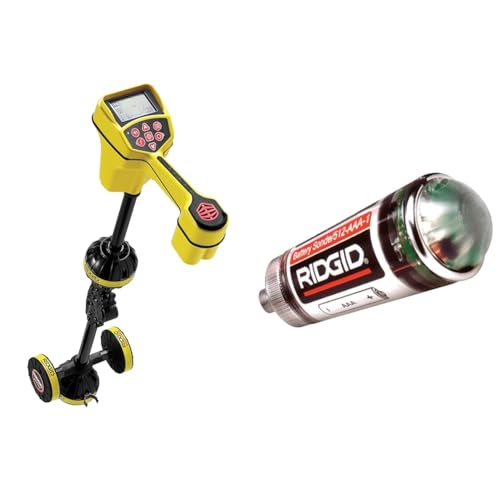
RIDGID SR-20 Receiver with 512 Hz Sonde Transmitter

RIDGID 21903 SeekTech ST-510 10-Watt Line Transmitter
A Breakdown Of The Leading Choices
The SeekTech SR-20 is the receiver most contractors reach for when the ground is full of unknowns. Its omni-directional antenna array, which is a cluster of sensors that picks up signal from every angle at once, means you do not have to keep the unit perfectly aligned to follow a buried line. The folding mast design shrinks the package for truck storage, and the large LCD gives a graphical read of the target line along with guidance arrows that help you spot distortion early.
For utility crews tracing water mains, telecom ducts, or private lateral lines, the SR-20 covers a broad frequency range from 10 Hz to 35 kHz, so you can match the receiver to whatever transmitter a site throws at you. Owners commonly find the screen readable in bright sun, and the rugged housing holds up to daily truck-bed abuse. The catch is the price tag, which is steep for someone who only traces a sprinkler valve twice a year.
Everyday Advantages
- Omni-directional antenna array lets you approach from any angle without losing the signal
- Frequency coverage from 10 Hz to 35 kHz supports nearly every utility tracing scenario
- Graphic LCD with proximity and signal strength readouts speeds up difficult locates
- Folding mast design drops the unit into a compact form for vehicle storage
Worth Noting
- Receiver only, so you still need a compatible transmitter for active tracing
- Higher learning curve than basic wand-style locators
Feature Snapshot
Whose Truck It Belongs On
Utility locators, municipal inspectors, and plumbing contractors who run multiple trace jobs per week and need a receiver that adapts to varied frequencies and site conditions.
Skip It When
The RIDGID ST-305 standalone transmitter setup suits you better if you already own a capable receiver and just need to energize a line for the first time.
This bundle pairs the SR-20 receiver covered above with the ST-305 transmitter, which is the box that actively energizes a buried metallic line so the receiver can detect it. For crews buying their first full locator setup, the combination removes the guesswork of matching frequencies between two separate units. Everything shows up in one shipment and works together out of the box.
The ST-305 pushes up to 5 watts of power, which is enough for most residential and small commercial traces. The SR-20 receiver component still delivers the same folding mast and broad frequency coverage that made it a standalone favorite. Depending on your soil conditions and trace length, you may find 5 watts limiting on deeper runs, where the heavier ST-510 listed later tends to perform better.
Real-World Strengths
- Receiver and transmitter tuned to work together from day one
- 5-watt output handles most residential and light commercial traces
- Three connection methods on the transmitter cover direct, induction, and clamp setups
Trade Offs
- Heavier and bulkier to transport than a receiver-only kit
- Power level can feel modest on long sewer lateral runs
Best Suited To
New contractors or facility maintenance teams who want a complete, matched locator kit without piecing components together from different suppliers.
A Better Fit Elsewhere
Reach for the RIDGID ST-510 transmitter instead if your typical traces stretch across long distances or push past five watts of demand.
The ST-305 is a transmitter-only unit, designed to plug into the line you want to trace and broadcast a signal that any compatible receiver can pick up. With four selectable frequencies and three connection methods, it gives you the flexibility to energize a line directly, induce a signal through a clamp, or use surface induction when no access point exists. The compact housing fits into a small service truck drawer.
For crews who already own a capable receiver, adding the ST-305 is a logical upgrade instead of buying a whole new bundle. Owners commonly appreciate the simple interface and the ability to run two frequencies at once for a more precise trace. You may find the 5-watt ceiling restrictive on very deep utilities, where the ST-510 covered later offers more headroom.
A Strong Showing
- Four selectable frequencies cover most active tracing scenarios
- Simultaneous dual-frequency transmission for layered utilities
- Three connection methods for sites with and without access points
Small Caveats
- No receiver included, so you need a matching unit to actually trace
Feature Snapshot
Right Fit For
Locating professionals who already own a SeekTech receiver and need a flexible, mid-power transmitter to expand their active tracing capability.
Reach For A Different Pick When
The RIDGID ST-510 suits you better when you regularly trace deep mains or long laterals and need the extra signal strength.
This bundle matches the SR-20 receiver with a 512 Hz remote transmitter, also called a sonde, which is a small battery-powered beacon that you push into a non-metallic pipe on a fish tape or drain cable. Once inside the line, the sonde broadcasts a 512 Hz signal that the receiver tracks from above, letting you follow plastic, clay, or concrete pipe runs that a standard conductive trace cannot energize. For sewer laterals and HVAC condensate lines, the technique is invaluable.
Compared to the ST-305 bundle covered earlier, this kit trades general-purpose line energizing for a focused drain-tracing setup. The compact remote transmitter is small enough to fit through most cleanouts and stays powered by a standard NaviTrack battery. Depending on the diameter and depth of the pipe you are mapping, you may need a higher-output sonde for very long runs.
A Few Strong Suits
- Tracks non-metallic pipes that conductive tracing cannot reach
- 512 Hz frequency is the industry standard for drain and sewer work
- Compact sonde fits through standard residential cleanouts
Honest Caveats
- Requires pushing the sonde into the pipe on a rod or drain cable
- Less useful for tracing energized metallic utilities like power or telecom
Key Product Details
Who Will Love This
Drain cleaning specialists, plumbers, and sewer inspection crews who trace plastic or clay laterals that cannot carry a conductive signal.
Where Another Pick Suits Better
The RIDGID SR-20 with ST-305 transmitter bundle is a better fit for utility locators who mostly trace metallic lines and rarely need a sonde.
The ST-510 steps the power up to 10 watts, doubling the ST-305’s ceiling for traces that demand more signal strength. The compact chassis still carries a carry handle and an extendable strap for sweeping, plus a ground spike and two 25-foot coiled leads with heavy-duty clamps, which is everything you need for a direct connection right out of the box. Three connection methods cover direct, induction clamp, and surface induction use cases.
For crews tracing long water mains, deep sewer laterals, or utilities under reinforced concrete, the extra wattage makes a real difference in signal clarity at depth. Compared to the ST-305 covered earlier, this unit is heavier and pulls more battery, but it pushes through interference that would frustrate a 5-watt setup. You may find the size cumbersome for tight residential yards where portability matters more than range.
Bright Spots
- 10-watt output reaches deeper and longer utilities
- Includes ground spike, clamps, and 25-foot leads in the kit
- Three connection methods for varied site conditions
Points To Note
- Bulkier than the 5-watt ST-305 for everyday carry
- Higher battery draw during long tracing sessions
Made For
Utility contractors and municipal crews who regularly trace deep mains, long laterals, or congested underground corridors and need the extra power headroom.
Consider Something Else When
The RIDGID ST-305 transmitter is a better fit for occasional residential traces where 5 watts is enough and a lighter kit matters more.
What To Weigh Before Choosing A Pipe Locator
Active versus passive tracing comes up first. Passive mode picks up signals that already exist on a line, like the 60 Hz hum on a live power cable, and works without a transmitter. Active tracing uses a transmitter to push a known frequency onto a metallic line, which gives cleaner results and lets you follow non-energized utilities. For most professional work, active tracing is the more reliable path, and that means budgeting for both a receiver and a transmitter.
Frequency selection matters more than beginners expect. Different utilities respond better to different frequencies: low frequencies travel farther on long mains, while higher frequencies jump between utilities more easily in congested ground. A receiver that covers a wide range, like the 10 Hz to 35 kHz window on the SR-20, gives you the most flexibility across varied job sites.
Power output drives how deep and how far a signal holds up. A 5-watt transmitter handles most residential and small commercial work comfortably. Deep sewer laterals, long water mains, and reinforced concrete crossings usually benefit from 10 watts of headroom. If you mostly work on shallow yard lines, a 5-watt unit keeps weight and battery use lower.
Sonde capability fills the gap for non-metallic pipe. Plastic, clay, and concrete lines cannot carry a conductive signal, so a battery-powered sonde pushed into the pipe on a rod is the standard workaround. A 512 Hz sonde is the most common frequency for residential and light commercial drain work.
Key Considerations Across These Picks
Pitfalls Shoppers Hit
Buying a receiver without confirming transmitter compatibility is a frequent stumble. Not every receiver pairs with every transmitter, and mismatched frequency ranges can leave you with gear that technically works but never produces a clean trace. Matching brands and confirming the frequency overlap before checkout saves the headache.
Another common slip is underestimating the value of a folding mast or compact body. Field crews carry a lot of gear, and a receiver that does not collapse or stow cleanly will spend more time on the truck floor than in use. Storage and transport matter more than spec sheets suggest.
Where The Extra Money Goes
Higher-tier models earn their premium through signal processing, antenna quality, and frequency range. A receiver that filters distortion intelligently lets you trace in noisy ground near parallel utilities, which is a daily reality for urban locators. Cheaper units may technically find a line, but interpreting the signal becomes guesswork.
Power output, build quality, and included accessories also explain the gap. A 10-watt transmitter with a ground spike, clamps, and 25-foot leads arrives ready for direct connection, while a bare-bones kit may require separate accessory purchases to perform the same work.
Frequently Asked Questions
What is the difference between a receiver and a transmitter?
A receiver detects signals on a buried line and shows you where it runs. A transmitter energizes a metallic line with a known frequency so the receiver can track it. For active tracing, you need both.
Can pipe locators find plastic lines?
Standard active tracing cannot energize plastic pipe because the material does not conduct electricity. A battery-powered sonde pushed into the line is the standard solution for tracing non-metallic pipes.
How deep can a typical pipe locator reach?
Depth depends on the transmitter power, soil conditions, and the receiver’s sensitivity. Most residential setups reach several feet, while higher-wattage professional transmitters can push deeper in favorable ground.
Do I need a sonde for every job?
Only when you trace non-metallic pipe. For metallic utilities like copper water lines, steel gas lines, or telecom cables, direct connection or induction tracing works without a sonde.
How important is frequency range?
Very important. A wider frequency range lets you match the receiver to whatever a site throws at you, from low-frequency long-range traces to higher frequencies that separate utilities in congested ground.
Bottom Line
The right locator depends on the lines you trace most often. For mixed utility work, the SR-20 receiver and ST-305 transmitter bundle covers the widest range of scenarios. Deep-main specialists benefit from the ST-510’s extra wattage, while drain and sewer crews get the most value from a sonde-equipped setup. Match the kit to your typical job site, and the rest of the decision tends to fall into place.




