


Anyone who has wrestled with a warped board or a cupped edge knows the frustration of trying to get lumber truly flat and square. A solid planer jointer combo, whether that’s a dedicated benchtop jointer paired with a handheld planer or a matched setup with the right replacement blades on hand, makes the difference between a project that fights back and one that goes together cleanly. The list below mixes standalone hand planers, benchtop jointers, and the replacement knives that keep both running sharp, so you can build a workflow that actually fits your shop and your skill level.
A Snapshot Of The Selections

Makita KP0800K 3-1/4″ Planer with Tool Case

BOSCH PL2632K 3-1/4″ Electric Hand Planer Kit

CRAFTSMAN 10-Amp Benchtop Jointer (CMEW020)
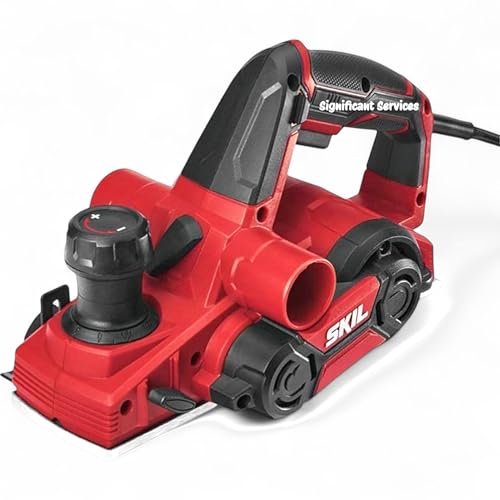
SKIL 6.5-Amp 3-1/4″ Corded Planer

Freud C350 HSS Planer and Jointer Knives 6″
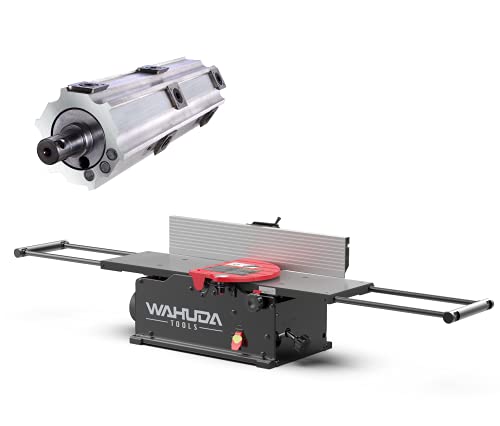
Wahuda Tools 8″ Benchtop Spiral-Cutterhead Jointer

FOXBC 6-1/8″ Jointer Planer Knives (Set of 3)

POWERTEC 6-1/8″ Jointer Blades (Set of 3)
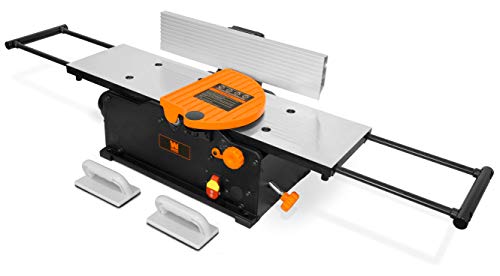
WEN JT833H 10-Amp 8″ Spiral Benchtop Jointer
A Breakdown Of The Leading Choices
The Makita KP0800K earns its spot at the top of the list for a reason that becomes obvious the moment you make your first pass. The 6.5 amp motor spins a two-blade cutter head at 17,000 RPM, and the smoother-than-average finish on stock like oak and poplar feels like the kind of refinement you usually only see on bigger stationary machines.
For weekend woodworkers trimming doors, planing glued-up panels, or shaving down reclaimed boards before glue-up, the 3-1/4″ width and 3/32″ depth-per-pass numbers translate into a tool that handles typical furniture work without bogging down. It ships in a hard tool case, which makes it easier to store and carry to a job site or a shared workspace.
What It Does Well
- 6.5 amp motor delivers enough torque for hard maple and dense reclaimed lumber
- 17,000 RPM cutter head leaves a finish clean enough to skip heavy sanding
- Spring-loaded stand lifts the base off your workbench, protecting both blades and finished surfaces
- Two-blade design and easy blade-setting system simplify swaps during a long project
- Hard tool case included for transport and storage
Points To Keep In Mind
- Two-blade head produces a slightly shallower cut pattern than three-blade alternatives
- Hand planers can leave snipe (a slight dip at the start or end of a board) without careful support on entry and exit
Right Fit For
Weekend woodworkers who want a refined, low-effort hand planer for furniture and trim work without stepping up to a stationary thickness planer.
Consider Something Else When
You need to flatten cupped or twisted boards across their full face, where the CRAFTSMAN benchtop jointer handles stock prep more efficiently.
Bosch built the PL2632K around a very specific kind of accuracy, and the design choices that make it interesting are right in the shoes. The aluminum front and rear shoes are precision-machined together, so they sit at exactly the same height relative to the cutter head. That kind of fit translates into planed surfaces that are flat end to end, not bowed in the middle like you sometimes see with cheaper tools.
Where the Makita leans on a faster cutter head, the Bosch uses a 6.5 amp motor at 16,500 RPM and adds an ambidextrous lock-off release button that prevents accidental startups from either side of the tool. There’s also a lock-on button for extended planing passes on door edges or long boards, plus a machined groove in the shoe for chamfering.
The Case For It
- Precision-machined aluminum shoes keep cuts flat from front to back
- Ambidextrous lock-off button works for both right- and left-handed users
- Lock-on button reduces finger fatigue on longer passes
- Built-in chamfer groove simplifies edge work on tabletops and shelves
Worth Noting
- 16,500 RPM is slightly slower than the Makita, which can show up on dense figured wood
- Spring-loaded stand is convenient, but the tool can mark soft workpiece surfaces without a backer board underneath
Feature Snapshot
Whose Shelf It Belongs On
Furniture builders and trim carpenters who prioritize flat, accurate planing passes and want controls that suit either hand.
Where Another Pick Suits Better
You mostly flatten rough-sawn lumber, where the WEN JT833H spiral benchtop jointer covers the same prep work on a larger scale.
Move from hand planing to a stationary setup and the conversation changes. The CRAFTSMAN CMEW020 is a 10-amp benchtop jointer built around a variable-speed motor that lets you match cutter head speed to the wood on the table. Soft pine, dense maple, and figured cherry all cut better at different rates, and being able to dial that in without swapping tools is a real advantage in a small shop.
The two-knife cutter head uses a jackscrew leveling arrangement to make knife changes straightforward, and a built-in cutter head lock keeps the head from rotating while you tighten things down. With 12,000 to 22,000 cuts per minute on tap, the tool handles the kind of edging and flattening work that hand planers simply can’t match in one pass.
The Value In It
- Variable speed range (6,000-11,000 RPM) adapts to soft and hard woods
- Two-knife cutter head with jackscrew leveling simplifies knife swaps
- Built-in cutter head lock holds the head steady during adjustments
- Up to 22,000 cuts per minute for fast stock removal
Trade Offs
- Benchtop jointers like this one have a limited width of cut, so very wide boards require multiple passes
- 10-amp draw means you should run it on a dedicated 15-amp circuit to avoid tripping breakers
- Cast or composite tables need periodic flattening to stay true, especially after heavy use
Made For
Small-shop woodworkers who want to move from rough lumber to square, flat stock in one tool rather than fighting the same fight with a hand planer.
Swap It Out When
Your work is mostly edge planing on narrow stock, where the Makita KP0800K hand planer handles the job without taking up bench space.
The SKIL 6.5-Amp corded planer (model PL201201) lands in a sweet spot for DIYers who want real planing performance without paying for shop-grade features. The dual chip exhaust ports stand out as a design detail that actually changes how the tool feels in use. You can route chips left or right depending on your setup, which keeps the cut line visible and your workbench clear.
Compared to the Makita and Bosch hand planers above, the SKIL uses a similar 6.5-amp motor class but focuses on practical touches like the reversible dust port. For DIYers reclaiming old lumber, trimming sticking doors, or shaving down tight joinery, the 3-1/4″ cutting width covers the most common planing tasks.
Strong Points
- Dual chip exhaust keeps the cut line and work area visible
- 6.5-amp motor handles typical planing tasks in soft and medium hardwoods
- Reversible dust port adapts to different workshop layouts
- Lower price point makes it accessible for first-time planer shoppers
Room For Improvement
- Blade changes are less tool-free than on the Makita KP0800K
- Body is a bit front-heavy for overhead or vertical planing work
Best Suited To
DIYers and hobbyists reclaiming old lumber or trimming up project pieces who want dependable planing without a steep learning curve.
Look Elsewhere When
You cut a lot of figured or burl wood where tear-out becomes an issue, since the spiral cutterhead on the WEN JT833H handles that material more cleanly.
Replacement knives don’t usually get attention in tool roundups, but a dull blade ruins the cut quality of even the best planer or jointer, and Freud’s C350 set is one of the most respected options for 6″ planer/jointer setups. The set includes three high speed steel (HSS) blades pre-ground to a sharp edge, which is a meaningful time-saver over blades that arrive dull and need dressing before use.
HSS holds an edge longer than standard tool steel, especially when you’re running dense or abrasive woods. For shops that already own a 6″ planer or jointer and want a reliable replacement set without sending blades out for sharpening, this is the kind of upgrade that quietly improves every project that follows.
Points In Its Favor
- Pre-ground edges mean they’re ready to install and cut right out of the box
- High speed steel holds an edge longer than standard tool steel on dense or figured wood
- 6″ length fits a wide range of common 6″ planer and jointer models
- Set of three covers a full cutter head replacement at once
Practical Considerations
- Confirm your planer or jointer uses 6″ x 5/8″ x 1/8″ knives before ordering, since dimensional fit matters more than brand compatibility
- Even HSS blades eventually need sharpening, so plan a sharpening or replacement schedule if you run a high-volume shop
Quick Facts
Who It Suits Best
Woodworkers with a 6″ planer or jointer who want a premium replacement blade set without dealing with out-of-the-box dull edges.
Not Your Match When
You own a 6-1/8″ jointer like the Ridgid JP0610, where the FOXBC or POWERTEC sets below fit those models directly.
The Wahuda 8″ benchtop jointer takes a different approach than the CRAFTSMAN straight-knife design above, and the difference shows up the moment you feed figured or burl wood across the cutter head. A spiral cutterhead uses rows of small, four-sided carbide inserts arranged in a helix pattern rather than long straight blades, and that geometry shears wood fibers rather than chopping them.
The result is a noticeably quieter cut, far less tear-out on tricky grain, and the ability to rotate each insert four times before replacement instead of sharpening or swapping a full blade. For a 10-amp benchtop tool, the cast iron tables with pull-out extensions also help support longer workpieces during flattening passes.
Practical Advantages
- Spiral cutterhead with 4-sided carbide inserts shears wood for cleaner, quieter cuts
- Each insert rotates four times before needing replacement, lowering long-term blade cost
- Cast iron tables stay flat over time and resist warping from shop humidity
- Pull-out table extensions support longer boards during edge jointing
Honest Caveats
- Heavier than aluminum-bodied jointers, so it’s less convenient to move around the shop
- Replacement carbide inserts cost more than resharpening straight HSS knives
- Corded 10-amp draw still requires a properly rated outlet for safe operation
Who Should Grab It
Pros and serious hobbyists who flatten figured hardwoods often and want quieter, cleaner cuts than a straight-knife jointer delivers.
Skip It When
You only edge-joint softwoods for basic projects, where the CRAFTSMAN CMEW020 handles the same work for less.
The FOXBC 6-1/8″ knife set is one of those accessories that solves a real problem for a specific audience. Replacement jointer knives often fit only one or two machine models, but this set covers a long list of popular jointers, including Ridgid JP0610, Delta 37-190 and 37-195, Craftsman 21705 and 922995, Jet JJ-6CS, and Powermatic models in the 54A series.
For shops that work on used equipment or rotate through machines, having a single replacement set on the shelf that fits most of the common 6-1/8″ jointers simplifies maintenance. The set of three covers a full cutter head swap, so you can replace all knives at once and keep the cut balanced.
Why It Works Well
- Broad compatibility across Ridgid, Delta, Craftsman, Jet, and Powermatic jointers
- Set of three covers a complete cutter head replacement
- Standard 6-1/8″ x 11/16″ dimensions match widely used jointer heads
- Useful for shops that maintain multiple older jointers
Some Limits To Know
- Always double-check your specific model number against the compatibility list before ordering
- Steel grade is standard rather than premium HSS, so edge life may be shorter on dense or figured woods
Perfect Match For
Woodworkers who own older Ridgid, Delta, or Jet jointers and want one replacement set that covers most of the common 6-1/8″ machines.
Reach For A Different Pick When
You own a 6″ planer or jointer, where the Freud C350 set above is the better-fitting upgrade.
POWERTEC’s 6-1/8″ replacement set targets a similar audience to the FOXBC knives above, but with a slightly different compatibility list. These blades are designed to fit the Ridgid JP06000, JP06101, and JP0610, plus the Craftsman 21705 and 922995 jointers, with the same OEM-style mounting hole pattern.
The blade profile is shaped to reduce tear-out, which matters on figured grain and cross-grain cuts. For anyone who already has a Ridgid or Craftsman 6-1/8″ jointer sitting on the bench, having a fresh set of three knives on hand means less downtime waiting on sharpening services.
What Earns Its Place
- Direct fit for Ridgid JP06000, JP06101, JP0610, and Craftsman 21705/922995
- Single-edge profile designed to reduce tear-out on cross-grain cuts
- Pre-drilled mounting holes simplify installation and alignment
- Set of three matches a full cutter head for balanced replacement
Less-Strong Areas
- Compatibility is narrower than the FOXBC set, so shops with mixed-brand equipment may need both sets on hand
- Edge retention on highly figured or abrasive exotic woods can vary, depending on volume
Built With In Mind
Ridgid JP0610 and Craftsman 21705 owners who want a direct-fit replacement set without sorting through cross-brand compatibility charts.
Another Choice May Suit
You run a mixed shop with Delta, Jet, and Powermatic jointers in rotation, where the FOXBC set covers more machines in a single order.
WEN’s JT833H brings spiral-cutterhead technology into a price range that opens it up to a much wider audience. Instead of two or three straight knives, the cutter head carries 16 staggered HSS blades arranged in a helix, so each blade takes a small shearing cut rather than a wide chopping cut. The finish is smoother, the noise is lower, and the cut quality on figured wood is closer to what you’d expect from a much more expensive machine.
The 10-amp motor spins the head up to 12,000 RPM, and the extendable infeed and outfeed tables give you the support needed for longer boards during flattening passes. For a small shop that’s outgrown a hand planer but doesn’t need a full stationary jointer, the JT833H lands in a useful middle ground.
Notable Gains
- 16 staggered HSS blades produce a tear-out-resistant finish on figured grain
- 10-amp motor delivers enough torque for typical jointing and flattening work
- Extendable tables support longer workpieces for accurate edge jointing
- Quieter operation than straight-knife jointers in the same amp class
Where It May Fall Short
- Benchtop footprint still requires dedicated bench space, so it’s not for very tight shop corners
- HSS blades eventually need replacement, so budget for spares if you run high volume
Feature Card
Who Will Love This
Small-shop woodworkers handling longer boards who want spiral-cutterhead quality without the price tag of a full industrial jointer.
A Better Fit Elsewhere
You mostly work on narrow or short stock, where the Makita KP0800K hand planer covers the same prep work at a lower cost.
Choosing Planer Jointer Combos That Actually Fit Your Shop
Match The Tool To The Workflow You Already Have
Before picking any tool from this list, think about how you actually prep lumber. If you mostly trim doors, shave down glued-up panels, or fine-tune edges, a hand planer like the Makita KP0800K or BOSCH PL2632K covers the work in a fraction of the bench space. Run a lot of rough-sawn lumber that needs flattening across its full face? A benchtop jointer, whether the CRAFTSMAN CMEW020 with its variable-speed motor or the WEN JT833H with its spiral cutterhead, becomes the center of the workflow. The “right” combo is the one that matches the volume and type of stock coming through your shop, not the one with the longest feature list.
Read The Specs That Actually Affect Cut Quality
Three numbers tend to matter more than the rest. Motor amperage tells you how much torque the tool has on dense or figured wood. RPM at the cutter head affects how clean the finish is on a face pass, and a higher count of small blades (16 staggered HSS on the WEN, or 4-sided carbide inserts on the Wahuda) generally reduces tear-out compared to a two-blade head. For replacement knives, dimensions matter more than brand: confirm length, width, and thickness against your machine’s cutter head before ordering a set like the Freud C350 or FOXBC 6-1/8″ blades.
Plan For Power, Dust, And Shop Space
Benchtop jointers in this list pull 10 amps, so plan to run them on a dedicated 15-amp circuit. Hand planers are friendlier to share with other tools, but still benefit from a dust port hooked to a shop vac. Finally, consider the bench footprint. The WEN and Wahuda jointers both have extendable tables that support longer boards, but they also take up more shop real estate than a hand planer that lives in a case on a shelf. Match the tool’s footprint to the space you actually have, not the space you wish you had.
Things To Watch Before You Order
Mistakes Worth Dodging
A common slip-up is buying a tool based on a feature list without checking cutter head compatibility with your existing equipment. Replacement blades look interchangeable until you measure and discover a 1/16″ difference in length. Another trap is underestimating the difference between a two-blade hand planer finish and a multi-blade spiral cutterhead finish, especially on figured wood. Try to see the cut quality in person, or at least confirm the blade count and arrangement before assuming a cheaper tool will match a premium one.
What The Higher Tier Buys
The jump from a basic two-blade hand planer to a spiral-cutterhead jointer buys you quieter operation, cleaner cuts on tricky grain, and longer intervals between blade changes. The Wahuda and WEN jointers both use multi-blade designs that pay off on figured hardwoods, where a straight-knife tool would leave tear-out that needs sanding out. For shops running high volume or working with expensive figured lumber, the upgrade pays back the price difference in saved sanding time and fewer ruined boards.
Frequently Asked Questions
What Is The Difference Between A Planer And A Jointer?
A jointer flattens one face of a board and creates a square edge against a flat reference surface, while a thickness planer (a different tool from a hand planer) brings the opposite face parallel to a set thickness. For most home shops, a benchtop jointer paired with a hand planer covers the core workflow without taking up a full stationary setup.
Can A Hand Planer Replace A Jointer?
For trimming doors, edging glued-up panels, and shaving down minor inconsistencies, a hand planer like the Makita KP0800K handles the work well. Flattening a wide, twisted, or severely cupped board across its full face is much faster on a benchtop jointer, and the result is more consistent than wrestling the same board with a hand tool.
How Often Should I Replace Jointer Or Planer Knives?
Replace knives when you notice tear-out returning on cuts that previously came out clean, or when the tool starts leaving fuzzy marks on hardwood. A shop running daily volume on dense woods may swap knives every few months, while a hobby shop might go a year or more on a quality HSS set.
Are Spiral Cutterheads Worth The Extra Cost?
For figured or figured-prone woods, a spiral cutterhead with multiple small blades (HSS or carbide) produces a noticeably cleaner cut with less tear-out than a two- or three-blade straight head. The trade-off is higher upfront cost and more expensive replacement blades per piece, even though each blade lasts longer per edge.
Do Benchtop Jointers Need A Special Circuit?
A 10-amp benchtop jointer should be plugged into a 15-amp circuit, ideally one that isn’t sharing the load with other heavy tools. Running it on an extension cord or a shared circuit can cause voltage drop, motor strain, or tripped breakers during heavy cuts.
Closing Thoughts
The best planer jointer combo setup is the one that matches the stock you actually work with and the shop space you have to give it. Match the tool to the workflow, confirm dimensions before buying replacement blades, and don’t overspend on capacity you won’t use. A thoughtful setup today will save a lot of sanding tomorrow.




