


A planer thicknesser earns its place in a shop by turning rough lumber into square, predictable stock. If you mill reclaimed wood, build furniture, or dimension your own boards from a sawmill haul, the right machine saves hours and a lot of sanding. This list covers benchtop and small-shop models with enough capacity for serious hobbyists and a few options for light professional work.
A Side-By-Side Look

Grizzly Industrial G0891 15″ Helical-Head Planer

Grizzly Industrial G0890 15″ Fixed-Table Planer
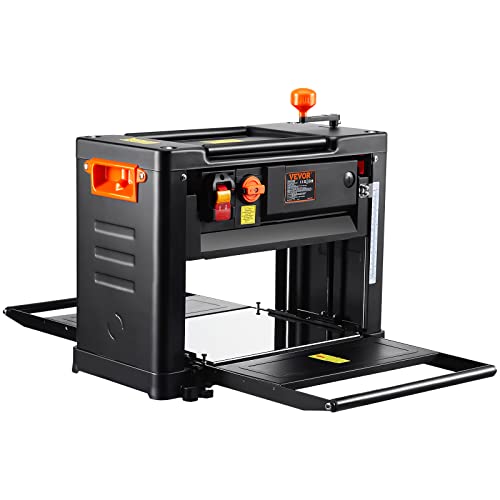
VEVOR Power Benchtop Planer 13″ Three-Blade

VEVOR 13″ Two-Blade Thickness Planer
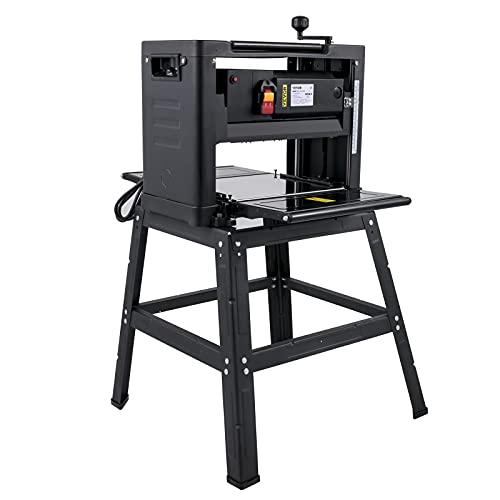
VEVOR 13″ Benchtop Planer 2000W
The Strengths Of Each Pick
The G0891 sits in that comfortable zone between benchtop toy and full industrial machine, which is exactly where most serious home woodworkers land. Its 3 HP motor is wired for 230V single-phase, so you’ll need the proper outlet in your shop, but the payoff is the kind of torque that powers through wide oak and figured hardwood without bogging. The cast-iron extension wings stretch total table length to 49 inches, giving long boards stable support through the cut.
A helical cutterhead uses rows of small square inserts rather than long straight knives, which means quieter cuts and far less tearout on figured grain. The 15-inch maximum width and 6-inch thickness capacity handle most furniture-scale lumber with room to spare. For a small cabinet shop or a hobbyist who pushes a lot of hardwood, this feels like the right size.
The Value In It
- 15-inch capacity swallows wide slabs and glue-up blanks without pre-ripping.
- Helical insert cutterhead leaves a cleaner surface on figured wood like curly maple.
- 3 HP motor handles dense hardwood at deeper passes without stalling.
- Cast-iron wings reduce snipe (a small dip at the start and end of each board) by keeping stock flat through the cut.
- Long-term value is strong because individual inserts are cheaper to replace than full knife sets.
Trade Offs
- Requires a dedicated 230V circuit, which may mean hiring an electrician if your shop isn’t wired for it.
- Heavier than a benchtop unit, so you’ll want a rolling base or a permanent spot for it.
- Dust collection is mandatory, since the helical head throws a steady stream of fine chips.
Key Product Details
Built With In Mind
Serious hobbyists and one-person cabinet shops running hardwood on a regular basis will get the most out of this planer.
Reach For A Different Pick When
The VEVOR 13″ Three-Blade suits a hobbyist working out of a standard 120V garage outlet who doesn’t need 15-inch width.
The G0890 trades the helical head of its sibling for a more traditional knife-based cutterhead, but adds real industrial-grade rigidity. Four heavy-duty support columns hold the cutterhead assembly steady, which is the kind of detail you feel on long runs when less rigid machines start to chatter. An oil-bathed two-speed gearbox lets you slow the feed for dense wood or speed it up for soft material, a real advantage on a mixed production schedule.
Fixed-table design is intentional: the table stays put while the head moves up and down, which keeps the geometry consistent pass after pass. Anti-kickback fingers grab the board on the outfeed side, preventing the violent kickback that can happen when a board binds in the cut. For someone running dozens of board feet a day, that safety feature alone is worth the upgrade.
Why It Works Well
- Four-column head support keeps cuts consistent over long production runs.
- Two-speed gearbox adapts feed rate to wood density without changing cutters.
- Anti-kickback fingers protect you when feeding rough or twisted stock.
- Fixed-table geometry simplifies setup and improves repeatability between sessions.
- Cast-iron construction dampens vibration for smoother finishes on softwood.
Honest Caveats
- Knife changes require realignment, which adds maintenance time versus an insert cutterhead.
- Like the G0891, it needs 230V power and a permanent home in the shop.
Whose Shelf It Belongs On
Small professional shops running daily production will appreciate the rigidity and the two-speed feed control.
Not Your Match When
The Grizzly Industrial G0891 15″ Helical-Head Planer is a better fit if you want the quieter cut and easier knife swaps of a helical head.
VEVOR’s three-blade benchtop planer punches above its weight class for the hobbyist crowd. The three-knife cutter head spins at high speed, producing a smoother finish than typical two-blade units in this size range. The widened 13-inch worktable planes boards up to 6 inches thick, and the pull-out extension tables add up to 35 inches of total support length, enough to handle most furniture stock without a separate roller stand.
Two feed speeds let you back off the rate when working dense figured wood. The cast-iron bed and steel plate base keep the geometry stable, which is the kind of detail that separates a useful tool from a frustrating one. For a weekend woodworker building tables and cabinets in a one-car garage, this hits a sweet spot of capability and footprint.
Standout Benefits
- Three-blade cutter delivers a noticeably smoother finish than two-blade rivals.
- Two feed speeds help match the cut to the wood, reducing tearout on tricky grain.
- 35 inches of total table support handles long boards without extra stands.
- Cast-iron bed dampens vibration, which improves cut quality and tool life.
Things To Consider
- At 13 inches wide, it’s narrower than the Grizzly 15-inch options, so wide panels need multiple passes.
- Dust port fits standard shop vac hoses, but you’ll want real extraction running to keep chips off the cutter.
Feature Snapshot
Right Fit For
Garage-based hobbyists building furniture and cabinets will find this a versatile, friendly workhorse.
Consider Something Else When
The VEVOR 13″ Two-Blade is the right call if you mainly plane softwood and want to spend less.
This two-blade VEVOR planer is the budget-friendly entry point for someone who just needs to dimension lumber without paying for production-shop features. The 15-amp 2000W motor has enough grunt for softwood and most hardwoods at modest depth per pass. The 13-inch worktable widens to accommodate larger boards, and a 12-inch extended infeed table adds support for longer stock on the entry side.
The two-knife cutter is the conventional approach, easier to understand and maintain than a helical head. VEVOR markets this as a low-noise design, which is a real plus for a shop in a shared space or a basement. For someone building picture frames, basic shelving, or small shop projects, this delivers the core planing function without unnecessary extras.
The Case For It
- Lower cost of entry into 13-inch benchtop planing.
- 2000W motor handles typical hobby-shop workload without strain.
- Quieter operation than most benchtop planers in this class.
Worth Noting
- Two-blade head leaves a rougher surface than the three-blade VEVOR, so expect more sanding on hardwood.
- Lighter construction means you may see more snipe on long boards without infeed/outfeed support.
- Knife alignment takes patience on first setup, and you’ll repeat it after each sharpening.
Best Suited To
First-time planer owners and weekend builders working mostly in pine, poplar, and similar woods.
Look Elsewhere When
The VEVOR Power Benchtop Planer 13″ Three-Blade is a smarter upgrade if you frequently plane figured hardwood and want a smoother finish.
The foldable version of VEVOR’s benchtop planer solves a real problem: not every shop has space to leave a machine set up permanently. The included iron stand folds down for storage, which makes this a strong fit for shared spaces, basements, or even a one-car garage that doubles as a parking spot. The 15-amp 2000W motor spins the cutter at 8000 rpm, and a 6 m/min feed rate moves stock through quickly enough for hobbyist production.
Two double-sided cutter blades handle the actual work, and the integrated dust exhaust port hooks up to a shop vac or dust collector. For someone renting a workshop or working out of a tight space, the foldable stand is the detail that tips this from a good planer to a practical one. It’s a thoughtful design choice for the kind of woodworker who sets up and breaks down regularly.
What Earns Its Place
- Foldable iron stand saves floor space when the planer isn’t in use.
- 8000 rpm cutter speed produces clean cuts on common hardwoods and softwoods.
- Integrated dust exhaust port connects to standard shop vac hoses.
Soft Spots
- Two-blade cutter needs more sanding on figured hardwood compared to the three-blade VEVOR.
- Foldable stand is sturdy but adds a step to setup compared to a permanent benchtop mount.
- Dust port is small, so connecting a 4-inch hose requires a reducer fitting.
Perfect Match For
Woodworkers with limited shop space who need to fold the planer away between sessions.
Where Another Pick Suits Better
The Grizzly Industrial G0890 15″ Fixed-Table Planer suits a permanent small shop running higher volume.
What Matters Most Before Choosing a Planer Thicknesser
Capacity and Stock Size
Maximum width and thickness dictate what you can run. The Grizzly 15-inch machines accept wider glue-ups and slab stock, while 13-inch benchtop models cover typical furniture lumber. Match the capacity to the largest board you actually process, not the largest you might someday imagine.
Cutterhead Style
A helical cutterhead uses small indexable inserts and runs quieter with less tearout, ideal for figured hardwood. Traditional straight-knife heads cost less to manufacture and resharpen, but produce more noise and slightly rougher surfaces. Consider what woods you plane most often.
Power and Circuit Requirements
Benchtop planers usually run on standard 120V outlets. Larger 15-inch machines often need 230V single-phase, which may require an electrician. Verify your shop wiring before committing to a higher-end unit.
Stand and Footprint
Foldable stands suit tight or shared shops, while fixed bases suit permanent installations. Add infeed and outfeed roller stands for long boards, since unsupported stock often produces snipe, the small dip at the start and end of each board.
Key Considerations Across These Picks
Where Shoppers Go Wrong
The most common slip-up is buying a planer that’s too narrow for the projects you actually build. Measure your widest typical board, add two inches for infeed and outfeed clearance, and shop to that number. Another trap is skipping dust collection, since fine planer chips clog bearings and motors fast. A shop vac or proper dust extractor keeps the machine alive for years.
Where The Extra Money Goes
The jump from a two-blade benchtop unit to a three-blade or helical-head machine pays for cleaner cuts, quieter operation, and faster knife changes. On the industrial end, a 3 HP motor, four-column rigidity, and a two-speed gearbox buy you the ability to run dense hardwood all day without thermal throttling. That upgrade is worth it for daily production, less so for weekend hobby use.
Frequently Asked Questions
What’s the difference between a planer and a thicknesser?
A planer makes one face of a board flat and parallel to a reference surface, while a thicknesser (or thickness planer) planes the opposite face to a set thickness. The term “planer thicknesser” in common use refers to machines that plane boards to a specific thickness.
Can a 13-inch planer handle wide boards?
Not in a single pass. You’d plane one section, then slide the board over to catch the unwed portion. For boards wider than 13 inches, a 15-inch planer saves time and produces a more uniform finish.
How important is dust collection?
Very. Fine chips accumulate inside the cutter head and motor housing, causing heat buildup and premature wear. Running a shop vac or dust collector connected to the exhaust port extends machine life noticeably.
Do I need a 230V outlet for a 15-inch planer?
Most 15-inch industrial planers run on 230V single-phase. If your shop lacks that circuit, a benchtop 13-inch model on 120V is the simpler path. An electrician can add a 230V outlet if you want the bigger machine.
How often do I need to change the blades?
It depends on wood volume and species. Softwood users may run months between changes, while daily hardwood users sharpen or replace blades every few weeks. Helical inserts flip rather than sharpen, which is faster day-to-day.
Final Verdict
A solid planer thicknesser changes how you approach woodworking, turning rough lumber into square, predictable stock. Match the machine to your shop’s power, your shop’s space, and the largest stock you actually plane. Browse the picks above, weigh the trade-offs, and the right machine for your bench will become clear once those three constraints are honest.




