


A plasma cutter turns a garage or small shop into a real fabrication space. The right unit lets you slice through sheet metal, slice up scrap for art projects, or modify a vehicle without paying a machine shop for simple cuts. Most home users want something that plugs into a standard outlet, runs cool enough for weekend projects, and doesn’t demand a welding certificate to operate.
Voltage, amperage, and duty cycle (the percentage of a 10-minute window the machine can run before needing to cool down) matter far more than flashy marketing. The picks below balance those factors for DIYers, hobby fabricators, and anyone tired of wrestling an oxy-acetylene torch on thin steel. One non-cutting tool also made the list, because straight cuts and clean edges still depend on the basics.
A Fast Comparison Of The Options

YESWELDER CUT-50DS 50A Plasma Cutter, 110/220V
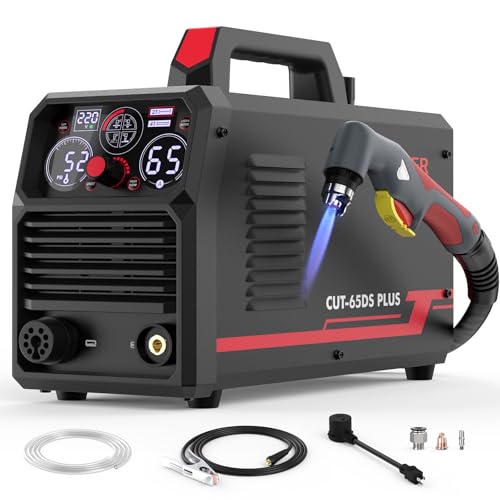
YESWELDER CUT-65DS PLUS Plasma Cutter, 4-in-1

Jackson Safety 24″ Magnetic Burning Guide

YESWELDER CUT-55DS PRO 55A Plasma Cutter, IPT40

PRIMEWELD CUT60 60A Pilot Arc Plasma Cutter
The Strengths Of Each Pick
The YESWELDER CUT-50DS earns its place as a first plasma cutter for most home shops because it runs on either 110V or 220V power (a dual-voltage design that lets it plug into a standard household outlet or a heavier dryer-style circuit). IGBT inverter technology (a modern power-conversion design that keeps the unit lighter and more efficient than older transformer-based cutters) keeps the chassis compact enough to sit on a rolling cart, which matters when your garage floor space is already claimed by a vehicle.
Where the CUT-50DS really earns its keep is mid-range work: cutting 1/4-inch steel on 110V or pushing to 1/2-inch clean cuts on 220V (clean cut means the edge comes off smooth with minimal slag, the melted metal residue that hardens along a cut line). For most weekend fabricators, that range covers automotive patch panels, trailer repairs, and decorative metal art without needing a separate heavy-duty unit.
A Strong Showing
- Dual-voltage design fits a standard 110V household outlet, no special wiring needed for lighter work
- Reaches a 1/2-inch clean cut on 220V, enough for trailer frames, thicker plate, and small fabrication jobs
- Compressed-air operation works with common shop compressors you likely already own
- IGBT inverter keeps the unit portable, useful if your shop doubles as a parking space
- Slices through stainless, mild steel, copper, and aluminum without swapping consumables
Honest Caveats
- Maximum thickness drops noticeably on 110V circuits, so plan heavy cuts around a 220V outlet
- You’ll need a compressor with sufficient airflow, often a 6-8 CFM (cubic feet per minute) unit, to keep the arc stable on longer cuts
- Torch consumables wear out faster with frequent use and need regular replacement for clean cuts
Right Fit For
DIYers cutting automotive sheet metal, trailer parts, and home-fabrication projects in a standard 110V or 220V garage outlet.
Swap It Out When
You need four cutting modes in one unit, in which case the YESWELDER CUT-65DS PLUS covers more ground for a slightly higher cost.
Where the CUT-50DS is a focused cutter, the YESWELDER CUT-65DS PLUS stretches into four modes: plate cutting, grid cutting, gouging, and marking. Grid cutting keeps the arc stable across perforated or expanded metal (sheet metal that has been slit and stretched into a diamond pattern, the kind you see in walkway grates), and gouging lets you carve out bad welds or rust pits without switching to an angle grinder.
The non-HF pilot arc start (HF stands for high-frequency, a starting method that uses a small electric spark to jump-start the arc, and which can interfere with nearby electronics) is a quiet win for home shops stuffed with computers, CNC controllers, and garage-door openers. The non-touch pilot arc also means less electrode wear because the arc initiates without a physical touch of the tip to the workpiece.
Practical Advantages
- Four-in-one design replaces a separate gouging tool for weld removal and rust cleanup
- Non-HF start avoids electromagnetic interference with nearby electronics and CNC machines
- Grid cutting mode keeps the arc steady on expanded metal and perforated sheet
- Marking mode lays down clean guide lines for layout work before you commit to a cut
Points To Keep In Mind
- The expanded feature set means a steeper learning curve for first-time plasma users
- Higher amperage output demands a robust compressor and stable 220V supply for full performance
- Cost climbs over single-purpose cutters like the CUT-50DS
Feature Snapshot
Best Suited To
Shop-focused fabricators and home repair enthusiasts who need cutting, gouging, and marking from a single machine.
A Better Fit Elsewhere
You only cut thin sheet metal on weekends, where the simpler YESWELDER CUT-50DS covers the job at a friendlier entry cost.
The Jackson Safety Magnetic Burning Guide is a different kind of pick, but it solves a real problem for anyone running a plasma cutter at home. Freehand cuts wander, especially on longer straight runs, and the rework eats consumables and patience. This 24-inch magnetic straightedge clamps to the workpiece and gives your torch a hard rail to ride against.
Three cast-in magnets deliver a 30-pound pull each, enough to hold the guide firmly on vertical and horizontal steel without slipping mid-cut. The raised blade keeps the torch tip from dragging across the work, which is the kind of detail that separates usable tools from frustrating ones.
Advantages To Know
- Three 30-pound magnets hold position on flat, vertical, and overhead steel
- Raised 24-inch blade gives a clear reference edge for clean, straight torch travel
- Cast construction tolerates heat and spatter, so the tool survives close cuts without warping
- Works as a straightedge for layout lines, doubling its use beyond cutting alone
Worth Noting
- Magnets only work on ferrous metals (iron-containing steel and iron), so aluminum and copper pieces won’t hold the guide
- The 24-inch length helps with long cuts but adds bulk to a small toolbox
- Does not cut anything on its own, you still need a torch and a power source
Whose Shelf It Belongs On
Anyone cutting long straight lines in steel who wants cleaner results than freehand work delivers.
Reach For A Different Pick When
You need actual cutting power, in which case the PRIMEWELD CUT60 handles the torch work this guide supports.
The YESWELDER CUT-55DS PRO sits between the entry-level CUT-50DS and the multi-mode CUT-65DS PLUS, and that middle ground is exactly what many home users actually want. The non-HF blow-back start (a mechanical starting method that uses a spring-loaded piston inside the torch to initiate the arc without high-frequency electricity) makes for cleaner, smoother arc initiation. You get a more confident first contact with the workpiece, no surprise sparks, no buzz from nearby speakers or garage-door openers.
The included IPT40 torch is a real-world workhorse style torch that many fabricators already stock consumables for, which means cheaper replacement tips down the road. For a home shop running a few hours per weekend, the 55-amp output gives more headroom than 50 amps without jumping to a full 60-amp commercial unit.
Notable Gains
- Non-HF blow-back start keeps the work area electronics-friendly, no random resets on nearby devices
- IPT40 torch compatibility lowers consumable costs and simplifies replacement
- 55-amp output handles thicker plate than entry-level 50A cutters in the same size class
- Dual-voltage design fits a standard 110V outlet for lighter jobs and 220V for heavier cuts
Trade-Offs To Consider
- Higher amperage means more heat, so duty cycle matters on long cuts, give the unit rest time
- Compressed-air requirement is non-negotiable, dry and clean air prevents tip burnout
Quick Technical Notes
Who Should Grab It
Home fabricators who want a step up from basic 50A cutters without paying for full multi-mode capability.
Consider Something Else When
You need the four cutting modes for shop versatility, where the YESWELDER CUT-65DS PLUS is the better match.
The PRIMEWELD CUT60 is the heavyweight in this lineup, and it suits the home user who has graduated past occasional cuts into regular fabrication work. The 60-amp output handles thicker plate than the 50A and 55A options above, and the PT60 torch is a popular professional-grade platform. Owners commonly report that the consumable ecosystem is mature, which keeps ongoing costs predictable.
The non-touch pilot arc, where the torch starts the cut without physically contacting the metal, is genuinely useful for cutting rusty, painted, or expanded metal where dragging a tip across the surface would destroy consumables. A 3-year warranty adds confidence for anyone worried about a heavier investment.
Strong Points
- 60A output powers through thicker steel plate that smaller units struggle with
- Non-touch pilot arc cuts painted, rusted, and expanded metal without destroying the tip
- PT60 torch uses a Euro-style central connection with widely available consumables
- Continuous pilot arc keeps the cutter ready during layout work without restarts
Points To Note
- Full 60A performance really needs a stable 220V circuit, a 110V household outlet will limit output
- Higher output means more heat, so duty cycle becomes important during longer cutting sessions
- Larger chassis takes up more floor space than entry-level 50A cutters
Key Product Details
Made For
Home fabricators cutting thicker steel, working with painted or rusty metal, and running longer sessions that need higher amperage.
Skip It When
Your work stays in the 1/4-inch-and-under range on standard 110V outlets, where the YESWELDER CUT-50DS handles the job at a friendlier entry cost.
What To Weigh Before Choosing A Plasma Cutter For Home Use
Voltage compatibility is the first filter. A 110V-only outlet covers most thin sheet metal and short cuts, but anything over 1/4-inch thick benefits from 220V power. Check the breaker (the safety switch in your electrical panel that controls a circuit) on the outlet you plan to use, a 50A continuous load on a 15A household circuit will trip every time.
Amperage output translates directly to cut capacity. A 50A machine handles most home projects, while 55A to 60A units give headroom for thicker plate and longer sessions. Duty cycle (the percentage of a 10-minute window a cutter can run before it needs to cool down) matters more than people expect. A 60% duty cycle at full output means 6 minutes cutting, 4 minutes cooling, a real consideration for back-to-back cuts.
Compressed air supply is non-negotiable. Plasma cutters need clean, dry air at adequate flow, often 4 to 8 CFM depending on the unit. A moisture trap (a small filter that removes water from the air line) on your compressor prevents tip burnout and keeps cut quality consistent.
Consumable availability affects long-term cost. Common torch platforms like the IPT40 and PT60 use widely available tips and electrodes, while proprietary torches may lock you into specific parts. Starting method is worth noting: HF (high-frequency) starts are common but can interfere with electronics, while non-HF pilot arc starts run cleaner in a home shop full of computers and smart devices.
Key Considerations Across These Picks
Mistakes Worth Dodging
Buying more amperage than your wiring supports is the most common home-shop misstep. A 60A cutter on a 110V 15A breaker (the kind every garage already has) won’t deliver its rated output, and you’ll be left wondering why cuts look rough. Match the machine to your circuit, not the other way around.
Skipping the air dryer is a close second. Moisture in the air line ruins consumables fast and leaves black gunk on cut edges. A basic inline filter is cheap insurance, and most home compressors run wet enough to cause problems without one.
Where The Extra Money Goes
Higher-tier plasma cutters buy you two things: thicker cut capacity and longer duty cycles. A 60A machine running at 60% duty cycle cuts all day without thermal cutouts (automatic shutdowns triggered when the machine overheats). Entry-level 50A units are fine for weekend projects, but frequent fabricators feel the difference fast.
Pilot arc and non-HF starts also command a premium. They extend consumable life and reduce electromagnetic interference in a busy shop. For occasional use, HF starts still work fine, but a non-HF pilot arc earns its keep the moment you start cutting painted, rusted, or expanded metal.
Frequently Asked Questions
What thickness can a home plasma cutter handle?
Most 50A to 60A home units cleanly cut up to 1/2-inch steel on 220V power. On a standard 110V household outlet, that drops to about 1/4-inch, which covers automotive sheet metal, ductwork, and most hobby projects.
Do I need a special outlet for a plasma cutter?
Dual-voltage machines like the picks above work on a standard 110V household outlet for lighter work. For full output, you need a 220V receptacle, often a dryer-style outlet, on a dedicated breaker (a circuit used by only one appliance, so heavy loads don’t trip shared circuits).
How loud is a plasma cutter?
The cutter itself is relatively quiet, mostly an internal fan. The real noise comes from the air compressor running nearby. A typical home shop compressor runs in the 70 to 80 dB range, about the volume of a vacuum cleaner.
What air pressure do plasma cutters need?
Most home plasma cutters run on 60 to 80 PSI (pounds per square inch, a standard measure of air pressure) with adequate CFM airflow. Check your specific unit’s manual, and always use a moisture filter on the air line.
Can a plasma cutter cut aluminum?
Yes, plasma cutters handle aluminum, copper, stainless, and mild steel. Cuts on aluminum and copper may be slightly less clean than on steel because those metals conduct heat away faster, slowing the cut.
Bottom Line
The right plasma cutter for home use matches the work you actually do, the power you have available, and the consumables you can afford to replace. Start with your outlet and your typical plate thickness, then let the other features fall into place. The picks above cover the common ground from weekend hobby cuts to regular home fabrication, and a magnetic guide like the Jackson Safety 24-inch helps every one of them cut straighter. Pick the unit that fits your real workload, and the rest tends to take care of itself.




