


Hanging a shelf, a TV, or a heavy mirror on plaster walls means a normal screw alone rarely cuts it. Plaster and older hollow walls crumble, crack, or slowly pull out under load, leaving you with sagging frames and patched holes. The right anchor changes that equation: it grips the wall from behind, distributes weight across a wider surface, and stays put for the long haul. This roundup covers nine options across self-drilling zinc anchors, molly bolts, toggle kits, and reusable nylon designs, with honest notes on where each one actually shines.
A Side-By-Side Look

AKKTOL Molly Bolts for Drywall & Plaster Walls (36 PCS)

FOREVTL Molly Bolts for Drywall & Plaster Walls (32PCS)

Bemaka Toggle Bolts Drywall Anchors Kit (100 Pcs)

JoblikeBrez Molly Bolts for Drywall Plaster Walls (34 PCS)

Hillman Borefast Drywall Screw Anchors (75 Pieces)

Hillman Wall Anchors DuoPower (18 Pack)

FixMaster Self Drilling Drywall Anchors Zinc (25 Pack)

FixMaster Self-Drilling Drywall Anchors Metal (50 Pack)
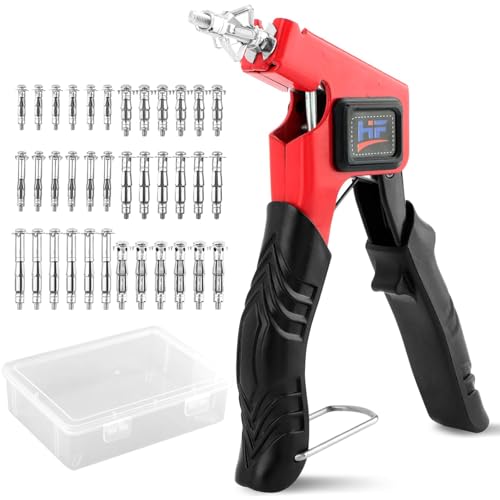
TLPCRKI Molly Bolts for Drywall Plaster Walls (36PCS)
A Closer Look At Each Pick
The AKKTOL kit earns its top spot for one simple reason: six sizes in a single box, each rated to hold up to 65 pounds on plaster or drywall ranging from roughly 0.12″ to 1.28″ thick. The included setting tool matters more than it sounds, because manually crimping molly bolts by hand is the part that sends most first-timers back to the hardware store. With the tool, you drill, insert, back the screw out a quarter turn, and squeeze until the anchor’s expansion arms flare behind the wall.
Real-world use here covers the long list of items that pull molly bolts out of their league: towel bars, smoke detectors, curtain rods, mid-size shelves, framed art over the couch. For a rental where patching later matters, the internal-thread design lets you unscrew and reposition without the anchor spinning loose. The included storage box keeps everything from rattling around in a junk drawer, which sounds trivial until you’ve dumped a 36-piece kit across a hallway at midnight.
Everyday Perks
- Six sizes handle a wide spread of fixture weights, so one kit covers most rooms.
- Setting tool removes the awkward hand-crimping step that trips up beginners.
- Up to 65 lb rating per anchor, suitable for towel bars, mirrors, and small shelves.
- Storage box keeps sizes organized and easy to find mid-project.
Worth Noting
- Plaster walls over 1.28″ thick fall outside the supported range.
- You still need a correctly sized drill bit on hand, which is not included.
Right Fit For
Homeowners tackling a mix of mounting jobs across multiple rooms who want one kit that covers most weight ranges without buying separate sizes.
Skip It When
A whole-house project on standard drywall points you toward the FixMaster 50-pack for a lower per-anchor cost.
The FOREVTL set stretches the supported wall thickness up to 1.52″, which puts it ahead of most molly kits if you live in an older home with chunky plaster-and-lath construction. Eight sizes run from M4 x 32mm through M6 x 65mm, with both the anchors and the setting tool built from heat-treated carbon steel with a zinc-plated finish for corrosion resistance. The metal-only construction is the practical reason this set earns a “heavy duty” label rather than just a name.
Day-to-day, the broader size range means you’re covered for a small smoke detector and a chunky floating shelf in the same session without swapping kits. The longer M6 bolts are particularly useful when the wall cavity runs deeper than standard drywall, which happens often in pre-war plaster. Keep in mind the setting tool takes some grip strength on the larger sizes, so it helps to have a second pair of hands nearby for the bigger anchors.
Bright Spots
- Eight sizes reach up to 1.52″ wall thickness, a wider range than most molly sets.
- Heat-treated carbon steel tool resists flexing under load.
- Zinc plating on anchors helps prevent corrosion in humid rooms.
- Longer M6 sizes handle deeper plaster-and-lath cavities.
Trade Offs
- Setting the larger M6 anchors by hand requires more squeeze force than smaller kits.
- 32-piece count fills up faster than the 36-piece alternatives when the M4 sizes run out first.
Who It Suits Best
Owners of older homes with thick plaster walls who need the extra length options that standard molly kits skip over.
Not Your Match When
You’re working on a fresh drywall project, where the AKKTOL 36-piece kit is the more rounded choice.
Toggle bolts work on a different principle than molly bolts. Instead of crimping an expansion sleeve behind the wall, you fold spring-loaded wings, push them through a pre-drilled hole, and the wings pop open inside the cavity. The Bemaka kit ships 25 sets across three sizes (1/8″, 3/16″, and 1/4″) with matching nuts, washers, and a drill bit, all stored in a reusable case. That single-box completeness is rare in this category.
The trade-off with toggles is installation: you need a hole large enough to fold the wings, and once they’re through, the bolt is in. Repositioning is harder than with a molly bolt’s internal threads. For heavier items like floating shelves loaded with books, large mirrors, or TV mounting brackets on hollow walls, the wider load distribution behind the wall makes toggles the stronger mechanical choice. Owners commonly report that the 1/4″ size handles jobs where lighter molly designs feel marginal.
A Few Strong Suits
- 25 full sets with nuts, washers, and a drill bit means no extra hardware runs.
- Wing design distributes load across a wider area behind the wall.
- Three sizes cover small fixtures through heavier mounted items.
- Reusable storage case keeps the project sorted.
Points To Note
- Required hole size is larger than a molly bolt, so patching later is more involved.
- Repositioning after install is harder than threaded expansion anchors.
Made For
People mounting heavier items like TVs, loaded shelves, or large mirrors on hollow walls who prioritize load capacity over easy removal.
Look Elsewhere When
You plan to rearrange the hanging often, where the JoblikeBrez molly kit’s reusable threads fit better.
JoblikeBrez keeps the format tight: three sizes, 34 anchors, and a setting tool. The headline feature is the internal thread design, which lets you unscrew and reinstall the bolt multiple times without the anchor losing its grip on the wall. For renters or anyone who changes layouts seasonally, that reusability is the real value here, and it’s the practical difference between this kit and a basic one-use expansion sleeve.
Capacity is rated up to 55 pounds, which is lower than the AKKTOL or FOREVTL kits but still enough for most mid-weight fixtures. The three-size format skips the smallest M4 sizes in favor of a stronger middle range, so it’s less of a “do everything” kit and more of a “do most of what matters” kit. On a plaster wall, you may find the smaller of the three sizes is the one you reach for first, and the included tool handles that size with less hand strain than the larger options.
What Stands Out
- Internal threads stay anchored even after multiple screw removals.
- Three-size range covers the most common mounting weights.
- Setting tool is sized for comfortable hand use on smaller bolts.
- Reusable design suits rental properties and shifting layouts.
Honest Caveats
- 55 lb ceiling is below the AKKTOL and FOREVTL kits’ ratings.
- Three sizes mean you’ll be without the smallest anchors for tiny jobs.
Best Suited To
Renters and serial rearrangers who value the ability to unscrew and reposition without the anchor spinning loose in the wall.
Another Choice May Suit
Anyone needing a higher load rating should reach for the AKKTOL 36-piece kit instead.
The Hillman Borefast design takes a different route: the anchor and screw arrive as a single piece, and the tip is sharp enough to self-drill through drywall, plaster, wood, and thin metal without a pilot hole. You drive it in with a standard drill or driver, then back the screw out to mount your fixture. For quick light-duty jobs like a small picture, a thermostat, or a cable raceway, that speed is the whole point.
Hillman has been a recognizable name in fasteners for a long time, and the 75-piece count spreads the cost low enough for big batch jobs. Reusability is a real benefit, since the anchor stays in the wall but the screw can come out for repainting or repositioning. The catch shows up on heavy loads, where a self-drilling anchor’s thread engagement is shallower than a molly bolt’s expansion. For a frame that needs to stay put for years, this is fine. For something that pulls outward, look up the line.
A Favorable Mix
- Self-drilling tip eliminates the pilot-hole step on drywall and plaster.
- 75-piece count suits big batch projects like a gallery wall.
- Removable and reusable, so the anchor stays put during fixture swaps.
- Works across drywall, wood, metal, and masonry (with a pre-drilled hole).
Some Limits To Know
- Shallow thread engagement makes these weaker than molly bolts for heavy loads.
- Tip can wander on hard plaster if you start off-angle.
Who Should Grab It
DIYers running a long list of small or mid-weight hangings, where the no-pilot-hole speed adds up across dozens of anchors.
Reach For A Different Pick When
You’re hanging a loaded shelf or a TV bracket, where the Bemaka toggle kit’s load capacity fits the job better.
The DuoPower design uses two different nylon materials in one anchor, and the trick is that each material reacts differently depending on what the wall is made of. In hollow drywall, the anchor compresses and grips the back of the wall. In solid plaster, concrete, or brick, the body expands to fill the drilled hole. That dual behavior is the practical reason this 18-pack earns its place on a list alongside metal molly and toggle designs.
It accepts screws from #6 through #10, and the package includes matching Phillips pan-head screws so there’s no guessing at the hardware store. A 1/4″ drill bit is the standard prep, which is a common size most DIYers already own. For rooms with mixed wall types (think a kitchen with tile backsplash running into painted drywall), this anchor’s adaptability removes the need to swap systems mid-project. You may find the 18-piece count limiting on a whole-house job, but for one or two rooms it’s a tidy fit.
What Makes Sense
- Single anchor works in hollow and solid walls, no kit swapping required.
- Included screws match the anchor sizing out of the box.
- Dual-material nylon design adapts grip to the base material.
- Standard 1/4″ drill bit is the only tool needed beyond a drill.
Things To Consider
- 18-piece count is low for a whole-house project.
- Plastic construction carries less load than steel molly or toggle designs.
Who Will Love This
Anyone working across mixed wall surfaces in one project, like a kitchen or bathroom that runs from tile to plaster to drywall.
Where A Sibling Pick Shines
For larger batches on standard drywall, the FixMaster 50-pack delivers more anchors at a lower per-piece cost.
The FixMaster 25-pack is the smaller sibling of the 50-pack further down this list, and it follows the same self-drilling zinc format. Each kit includes 25 zinc anchors and 25 #8 x 1-1/4″ high-strength carbon steel screws, packed in a hard plastic case that keeps everything organized. The metal-body construction is the meaningful difference from nylon designs, since zinc grips threads more reliably over years of temperature swings.
Rated to hold up to 75 pounds per anchor, this set lands between the lighter Hillman Borefast and the heavier Bemaka toggle range. For a smaller project like a single room’s worth of art and mirrors, the 25-piece count is easier to justify than the 50-pack. You may find the self-drilling tip walks slightly on a hard plaster surface if you start at an angle, so a slow, straight start helps the anchor bite cleanly. No pilot hole is required, which is the core convenience.
Why It Works Well
- No pilot hole required, the anchor drills itself into drywall and plaster.
- 75 lb holding strength is competitive with mid-tier toggle designs.
- Hard plastic case keeps anchors and screws paired together.
- Zinc body holds threads better than nylon over time.
Things To Weigh
- 25-piece count is short for whole-house hangings.
- Self-drilling tip can wander on hard plaster without a careful start.
The Right Fit
Shoppers with one or two rooms of mid-weight hangings who want metal-anchor strength without buying the larger 50-pack.
Swap It Out When
A larger project calls for the FixMaster 50-pack, which cuts the per-anchor cost noticeably.
The 50-pack doubles the count of the FixMaster kit at #7, with the same zinc anchor, same #8 x 1-1/4″ carbon steel screws, and the same hard plastic case. The 75-pound per-anchor rating holds, and the self-drilling tip eliminates the pilot-hole step on drywall and plasterboard. For whole-house projects, this is the kit that lands the lowest per anchor.
In day-to-day use, the larger count is the difference between finishing a gallery wall in one session and running out mid-project. The same caveat applies as with the 25-pack: starting the self-drilling tip at a slight angle can cause it to walk, especially on harder plaster. A slow, straight start solves that in seconds. Owners commonly report that the metal-body design holds up well in humid bathrooms and kitchens, where nylon anchors can occasionally deform over time.
Notable Gains
- 50 anchors and 50 screws support a full multi-room project.
- Self-drilling format removes the pre-drilling step entirely.
- Zinc body handles humidity better than nylon in bathrooms and kitchens.
- Hard case stays organized between sessions.
Where It May Fall Short
- Higher upfront cost than smaller packs, even at a lower per-anchor price.
- Self-drilling tip needs a careful straight start to avoid walking on plaster.
Built With In Mind
Homeowners running whole-house projects, gallery walls, or batch hangings who want a strong metal anchor without the pilot-hole step.
Consider Something Else When
You only need a few anchors, since the 25-pack version covers smaller projects with less storage bulk.
The TLPCRKI kit mirrors the AKKTOL format closely: 36 anchors, six sizes, a setting tool, and the same 0.12″ to 1.28″ wall thickness range. The surface finish is smooth and burr-free, which helps when sliding anchors into a freshly drilled hole. For a smaller DIY job that doesn’t need the highest name-brand recognition, this kit covers the same workflow at a tighter price.
The size spread here is the practical detail, running from M4 x 32mm up to M6 x 52mm, which covers the common mounting range from small fixtures to mid-size shelves. You may find the included setting tool feels a little less refined than the AKKTOL equivalent, but it performs the same core function. For one-room projects, a first-time plaster wall job, or a backup kit for occasional use, the lower cost is the real draw.
The Value In It
- 36-piece count with six sizes covers a wide mounting range.
- Smooth, burr-free finish helps anchors slide into drilled holes cleanly.
- Setting tool is included in the box.
- Lower price point suits smaller one-time projects.
Some Limits To Know
- Setting tool feels less refined than the AKKTOL equivalent.
- Wall thickness cap is 1.28″, the same ceiling but no upside over the AKKTOL kit.
Whose Shelf It Belongs On
Shoppers on a tighter budget running a one-room or one-time plaster wall project who want molly bolt performance without paying for the brand premium.
A Better Fit Elsewhere
For a smoother setting tool and a more established brand, the AKKTOL 36-piece kit is the upgrade pick.
What Matters Most Before Choosing Plaster Wall Anchors
Match the Anchor Type to the Wall and the Load
A molly bolt uses a metal sleeve that compresses behind the wall when you tighten a screw, fanning out into “expansion arms” that grip the back of the wall surface. Toggle bolts use spring-loaded wings that fold through a hole and pop open inside the wall cavity. Self-drilling zinc anchors cut their own hole and rely on thread friction. Each design handles weight differently, and the wall thickness drives which length you need.
Look at Load Rating and Wall Thickness Together
Most household fixtures fall under 50 pounds, but loaded bookshelves and TV brackets push higher. A 65 lb rating per anchor covers towel bars, mirrors, and small shelves comfortably. Wall thickness matters as much as load, since an anchor that needs 0.5″ of cavity won’t seat properly in a 0.25″ hollow wall. Measure first when the wall is older plaster, where the cavity depth varies.
Consider Installation Tools and Project Scale
Setting tools are sold with most molly bolt kits and save a lot of hand strain. Self-drilling anchors skip the drill step entirely, which speeds up a gallery wall. Toggles need a hole sized to the wing, so a matched drill bit is part of the project. For batch projects, a 50-pack is more economical per anchor, while a 25- or 36-piece kit fits one-room work without leftover inventory.
Material and Corrosion Resistance
Zinc-plated steel handles humid bathrooms and kitchens without issue over years. Uncoated carbon steel can rust, especially in basements. Nylon anchors work fine in dry interior walls but can deform under sustained load in warm environments. Pick metal for heavier or longer-term mounts, nylon for adaptability across mixed wall types.
Key Considerations Across These Picks
Common Shopping Slip Ups
A regular mistake is matching the anchor to the wall material without checking cavity depth. Plaster-and-lath walls from older homes often have deeper cavities than standard modern drywall, so a short anchor won’t reach the back. Another slip is skipping the wall-thickness spec on the kit, which leads to anchors that spin in place or pull out under load. Always confirm both the wall type and the supported thickness range before drilling.
Where The Extra Money Goes
Higher-priced kits typically buy stronger materials, broader size ranges, and a more comfortable setting tool. The AKKTOL and FOREVTL kits, for instance, include larger M6 sizes that cheaper kits skip. A more refined setting tool also reduces hand strain on longer projects. For most one-room jobs, the budget-friendly picks perform fine, but the upgrade earns its keep on whole-house or rental work.
Frequently Asked Questions
What weight can a plaster wall anchor hold?
Most quality plaster wall anchors hold between 25 and 75 pounds per anchor, depending on the type and wall thickness. Self-drilling zinc and molly bolt designs typically rate between 50 and 75 pounds, while toggle bolts often handle heavier loads. Always distribute weight across multiple anchors for large items like shelves or mirrors.
Can you use drywall anchors on plaster walls?
Many drywall anchors work on plaster walls as long as the wall thickness falls within the anchor’s supported range. Self-drilling zinc and toggle designs tend to perform well across both materials, while standard plastic expansion anchors may struggle with denser plaster. Always check the anchor’s specifications for wall compatibility before installing.
Do plaster wall anchors need a pilot hole?
It depends on the anchor type. Self-drilling zinc anchors cut their own hole without pre-drilling, while molly bolts and toggle bolts require a pilot hole matched to their diameter. The drill bit size is usually listed in the product specifications, and using the wrong size is a common cause of loose anchors.
How do you remove a plaster wall anchor?
For molly bolts with internal threads, unscrew the bolt and either push the anchor through the wall or recess it with light taps. Toggle bolts typically require pushing the wings through the cavity, since they don’t back out. Self-drilling zinc anchors can usually be backed out with a drill or screwdriver, leaving a small hole to patch.
Are metal or plastic anchors better for plaster walls?
Metal anchors (zinc, steel) generally hold more weight and resist deformation over time, especially in humid rooms. Plastic and nylon anchors adapt well to mixed wall materials but can lose grip under sustained heavy loads. For heavier fixtures or long-term mounts, metal designs are the safer choice.
Bottom Line
The right plaster wall anchor depends on what you’re hanging, how heavy it is, and how often you plan to rearrange. For mixed projects across multiple rooms, the AKKTOL kit’s six-size range earns its top slot. For heavy fixtures, the Bemaka toggle kit delivers load capacity that lighter designs can’t match. For quick batch hangings, the FixMaster self-drilling zinc formats save real time. Pick the design that matches your wall and the weight on the line, and the rest of the project tends to fall into place.




