A solid plumbing kit turns a stressful leak into a manageable Saturday project. The right wrench, plier, or reamer saves you from a late-night call to a professional and keeps small jobs from snowballing. This roundup focuses on tools that earn their drawer space, whether you’re swapping a faucet supply line or rebuilding a compression fitting. Each pick here solves a specific problem, so the list reads as a working toolkit rather than a generic gear guide.
A Snapshot Of The Selections
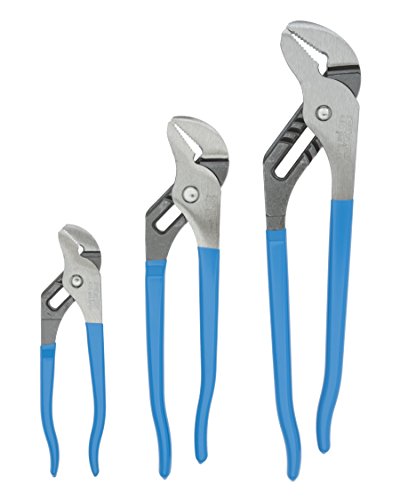
Channellock 3pc Tongue & Groove Pliers Set GS-3

Lanties 5 Pcs Compression Sleeve Puller Kit (Red)

Lanties 5 Pcs Compression Sleeve Puller Kit (Blue)

THORVALD PVC Pipe Reamer TriForce 7-Size Kit

KTC Nepros Ultra Long Straight Glasses Wrench NM11L-1012
The Picks, Examined More Closely
Tongue-and-groove pliers (often called Channellocks or water-pump pliers) adjust in steps along a grooved jaw, letting one tool grip pipes, nuts, and odd shapes across a wide range of sizes. The GS-3 set ships three lengths: 6.5 in, 9.5 in, and 12 in, which covers most residential jobs. The smallest fits comfortably under a sink; the 12 in. model gives you the leverage to break free a stuck union or stubborn packing nut.
For typical DIY plumbing work, the 9.5 in. version ends up being the everyday workhorse, while the others handle tight and tough cases. The laser heat-treated teeth (hardened with a focused laser to resist wear) hold their bite on chrome, copper, and galvanized steel without rounding the edges as quickly as untreated steel would. Owners commonly appreciate the undercut groove design, which seats the jaw closer to the workpiece for a more secure hold than flat-faced slip-joint pliers.
Everyday Advantages
- Three sizes cover everything from under-sink angle stops to drain tailpieces, replacing several single-purpose pliers.
- Laser heat-treated teeth stay sharp through years of repetitive grip work, which matters on a tool you’ll reach for weekly.
- High-carbon steel body handles the torque needed to free corroded fittings without flexing in the jaws.
- The undercut groove lets the jaw sit deeper on a nut, reducing the chance of slipping and skinning knuckles in tight spaces.
- Versatile enough for non-plumbing chores: automotive, bike repair, and furniture assembly all benefit from the same adjustability.
Honest Caveats
- Not insulated for live electrical work, so you’ll want a dedicated linesman tool for any wiring job.
- The 12 in. pair can feel heavy during overhead work, such as loosening a showerhead arm held above your head for several minutes.
Made For
Homeowners and renters handling fixture swaps, drain work, and general household repairs who want one adjustable grip tool for most situations.
A Better Fit Elsewhere
Specialists rebuilding compression fittings repeatedly may reach for the Lanties 5 Pcs Compression Sleeve Puller Kit (Red) instead, since it pairs a dedicated puller with an angle-stop wrench.
Compression fittings (the brass rings that seal supply lines to valves and faucets) are everywhere in older homes, and they rarely want to come off cleanly. This five-piece Lanties kit bundles the specialty tools a first-timer actually needs: a 9.25 in. pipe wrench, a 6 in. angle stop wrench, a four-way utility key, a dedicated compression sleeve puller, and a red ring removal tool. Each piece solves a specific step in the process, so you’re not improvising with pliers that damage the pipe wall.
The sleeve puller slides under the brass ring and pushes it along the pipe, freeing the fitting without cutting into the copper underneath. For homeowners dealing with a single sticky shutoff valve, the angle stop wrench alone often justifies the kit. The compact sizes fit in a small toolbox drawer or even a kitchen junk drawer, which is useful when the repair can’t wait for a trip to the garage.
Strengths Worth Knowing
- The compression sleeve puller is sized for 1/2 in. fittings, the standard for most residential supply lines.
- Angle stop wrench reaches the shallow valve nuts under sinks where standard adjustable wrenches can’t get a clean bite.
- Five specialty tools in one package beat buying piecemeal from a hardware store, where you might end up with a drawer of near-duplicate adjustable wrenches.
- Compact tools fit in tight vanities and behind washing machines, where bulkier pipe wrenches are awkward to swing.
Points To Keep In Mind
- Not built for heavy mainline work: the 9.25 in. pipe wrench lacks the leverage of a full 14 in. or 18 in. version.
- Color-matched red and blue versions can be confused in storage, so labeling your kit helps when you grab tools in dim under-sink lighting.
- Steel components will develop surface oxidation if stored in a damp basement or outdoor shed without a protective coating of oil.
Best Suited To
First-time DIYers tackling a single compression fitting repair, especially under-sink supply work where a full pipe wrench is overkill.
Look Elsewhere When
You mainly need grip-on-anything versatility, since the Channellock GS-3 set covers a wider range of tasks for general household repairs.
The blue Lanties kit is a near-twin of the red version reviewed above, trading color for the same core toolset. The 9.25 in. pipe wrench, 6 in. angle stop wrench, four-way utility key, compression sleeve puller, and blue compression ring removal tool handle every step of a typical supply-line repair. The real differentiator is practical: keeping a second color-coded kit prevents cross-contamination on job sites where copper, brass, and stainless fittings each get their own dedicated tools.
For homeowners, the blue version makes sense as a spare or a loaner for a family member tackling their own project. The compression sleeve puller works on 1/2 in. brass fittings, which is the most common residential standard. The angle stop wrench’s narrow profile slips behind toilets and into cramped vanity corners where a standard adjustable wrench rides up over the valve stem.
Useful Highlights
- Color-coded blue helps separate this kit from other tool sets in a shared drawer or rolling cart.
- Compression sleeve puller designed for 1/2 in. fittings, the most common residential supply line size.
- Six-inch angle stop wrench is short enough for tight vanities but long enough to generate decent torque on stuck valves.
- Four-way utility key handles gas valve shutoffs, sump plugs, and various square stem fittings.
Small Caveats
- Functionally interchangeable with the red Lanties kit, so buying both is only worth it for a busy household or job site.
- Same compact pipe wrench limitation: it’s not a substitute for a heavy 14 in. model on main shutoff valves.
The Right Fit
Shops or households wanting a dedicated secondary kit for color-coding or a separate workstation, rather than a single primary toolset.
Swap It Out When
You need a general-purpose grip tool, because the Channellock GS-3 set handles a wider variety of non-plumbing tasks around the home.
PVC pipe reamers clean the inside of a cut pipe so a fitting seats fully, eliminating the burrs and shavings that cause slow leaks or weak joints. The THORVALD TriForce covers seven sizes, ranging from 1/2 in. all the way up to 4 in., spanning supply lines, drain lines, and vent stacks. Tungsten carbide blades (a much harder material than standard tool steel) hold a clean edge across many reaming cycles, so the tool stays effective long after cheaper reamers dull out.
The kit arrives with three blades and includes a video tutorial plus a written user guide, which lowers the learning curve for anyone new to plastic pipe work. For homeowners running new irrigation lines, replacing a section of drain, or rebuilding a pool plumbing manifold, having the right reamer size on hand avoids trips back to the hardware store mid-project.
What Earns Its Place
- Seven size options cover 1/2 in. through 4 in. pipe, the full range of residential PVC, CPVC, and ABS applications.
- Tungsten carbide blades resist dulling, which matters on abrasive plastic shavings that wear down standard tool steel quickly.
- Included video tutorial and printed user guide walk first-timers through the proper reaming technique, including depth and speed.
- Reaming salvages slightly mis-cut pipes that would otherwise require starting over with a fresh fitting and pipe segment.
Trade-Offs
- Specialty tool with no use outside plastic pipe work, unlike the Channellock pliers that earn their keep on dozens of job types.
- Limited to Schedule 40 plastic pipe compatibility, so schedule 80 or non-standard wall thickness applications may need a different reamer.
Key Product Details
Who Should Grab It
Homeowners and remodelers running new PVC supply, drain, or irrigation lines who want one reamer kit to cover the full residential size range.
Another Choice May Suit
For non-plumbing work or general repair, the Channellock GS-3 pliers set delivers far more day-to-day value than a PVC-specific reamer.
A “glasses wrench” is a specialty wrench with a closed-end box shape designed for hex nuts and bolts in very tight spaces where a standard open-end wrench can’t fit. The KTC Nepros NM11L-1012 takes that concept further with an ultra-long straight body, giving you reach into deep recesses behind walls, under sinks, and around faucet mounting hardware. KTC’s Nepros line is engineered around slim outer dimensions, so the wrench slips where bulkier brands simply won’t go.
For plumbers and serious DIYers, this tool solves the most frustrating faucet and supply-line problems: the hex nut on a single-handle kitchen faucet, the mounting nut inside a wall-mounted valve, or the packing nut on an old compression stop. The aperture geometry spreads load across the flats of the nut rather than the corners, which preserves both the wrench and the fitting over years of use.
Bright Spots
- Ultra-slim outer diameter reaches hex nuts that block standard open-end and adjustable wrenches.
- Aperture profile distributes force on the flats of the nut, reducing wear on both fastener and wrench over time.
- Long straight shaft provides reach into deep cavities and improves leverage for stubborn fittings.
- Nepros series construction balances slim geometry with the strength needed for repeated professional use.
A Few Limitations
- Single-size tool, so you’ll need a full set for the various hex sizes found across plumbing fixtures.
- Premium positioning means it costs noticeably more than general-purpose adjustable wrenches of similar length.
- Long, thin profile is more specialized than versatile, so casual users may not justify the investment.
Whose Shelf It Belongs On
Working plumbers and serious DIYers who frequently deal with recessed faucet nuts, wall valves, and hard-to-reach supply connections.
Reach For A Different Pick When
General household repairs dominate your work, since the Channellock GS-3 pliers set covers far more task types at a lower entry cost.
What Matters Most Before Choosing Plumbing Tools
Match the tool to the fitting type. Compression, threaded, soldered, and push-fit each call for different approaches. Buying a general-purpose adjustable wrench before a specialty puller usually leaves you fighting the fitting rather than removing it cleanly.
Size the tool to the job, not the job to the tool. A 12 in. pipe wrench is overkill for a bathroom sink and useless under a vanity. Smaller wrenches, stubby angle stops, and slim box wrenches often outperform their full-size cousins in residential settings.
Weight and grip matter on long jobs. A heavy, slippery handle turns a 15-minute repair into a hand-cramping ordeal. Tools with textured grips, balanced weight, and slim profiles reduce fatigue and improve control on corroded fittings.
Plan for storage and organization. Compact kits fit in kitchen drawers and small tool bags, which matters when the repair can’t wait for a garage trip. Color-coded sets help when multiple people share a tool inventory or you own duplicate kits for separate work areas.
Key Considerations Across These Picks
Where Shoppers Go Wrong
Choosing a single adjustable wrench and expecting it to handle every plumbing job leads to stripped nuts and damaged fittings. Specialty tools like compression sleeve pullers and box wrenches exist because standard adjustable wrenches are clumsy on certain tasks. Skipping a dedicated reamer for PVC work often results in joints that seep under pressure.
What The Higher Tier Buys
Premium picks like the KTC Nepros glasses wrench command more because the slim geometry requires precision machining, not just thinner steel. You pay for tighter tolerances, hardened apertures, and finishes that hold up to daily professional use. The upgrade makes sense for working tradespeople, while occasional DIYers usually find mid-tier tools more than adequate.
Frequently Asked Questions
What plumbing tools should every homeowner own? A pair of tongue-and-groove pliers, an adjustable wrench, a basin wrench, and a plunger cover most clogs, drips, and fixture swaps. Add a compression sleeve puller if your home has older brass supply fittings.
How do I know if I need a specialty tool? Repeated stripping of the same fitting type is the clearest signal. General-purpose pliers force-fit a role that a dedicated tool handles cleanly, and the cost of a specialty wrench is usually less than replacing a damaged valve.
Can one tool kit cover both plumbing and electrical work? Not safely. Plumbing tools aren’t insulated for live wires, and electrical tools lack the grip geometry for fittings. Keep separate kits for each trade.
How do I prevent corrosion on plumbing tools? Wipe metal tools dry after use, store them in a low-humidity environment, and apply a light machine oil coating before long-term storage in a damp basement or shed.
Are metric and imperial sizes really that different? Yes, even a millimeter or two off rounds a hex nut. Many modern fixtures use metric, while older American homes often have imperial supply lines. A mixed wrench set covers both.
Wrap Up
A thoughtful plumbing toolkit grows with the jobs you tackle, and these five picks cover the most common scenarios homeowners face. Start with versatile pliers, add specialty wrenches as the repair demands, and reach for a PVC reamer when plastic pipe enters the project. The right tool in hand makes the difference between a quick fix and a callback.