


Plunge routers earn their spot in any serious woodshop by doing what fixed-base models can’t: starting a cut in the middle of a workpiece. That single capability makes them essential for mortises, stopped dadoes, sign-making, and any internal cutout you can sketch on paper. You’re in the right place if you’re choosing your first combo kit or upgrading from a trim router that can’t quite handle hardwoods. The five kits below represent the strongest mainstream options for hobbyists, DIYers, and small-shop pros heading into 2026.
A Closer Look At The Lineup

BOSCH 1617EVSPK 2.25 HP Router Combo Kit

Bosch 1617EVSPK with RA1054 Edge Guide Bundle
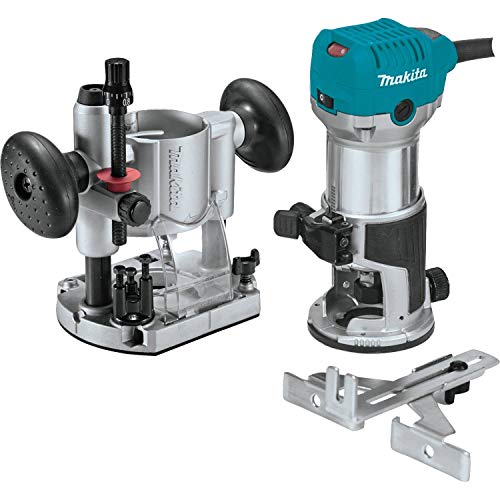
Makita RT0701CX7 1-1/4 HP Compact Router Kit
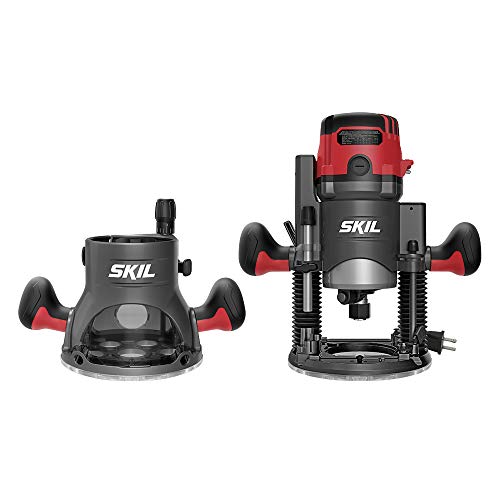
SKIL 14 Amp Plunge and Fixed Base Router Combo RT1322-00

DEWALT DWP611PK Fixed/Plunge Router Kit
More On The Choices That Made The List
The 1617EVSPK has earned its reputation through years of small-shop service, and the reason is simple: the 12-amp motor pairs with a variable-speed range that handles dense hardwoods without bogging down. You get both a fixed base and a plunge base in the same kit, so swapping between edge profiling and internal cuts takes only a few seconds rather than a second tool.
One-piece armature shaft construction cuts vibration at the source, which translates to cleaner edges and less fatigue on long runs. The threaded three-hole base pattern locks cleanly into most router tables, and constant-response circuitry stabilizes torque the instant the bit contacts dense grain. It’s an honest workhorse for the woodworker who already knows what a 1/2-inch collet buys you.
A Few Strong Suits
- 2-1/4 horsepower motor handles hardwoods and large-diameter bits without stalling.
- Soft-start electronics reduce kickback when plunging into dense stock.
- Both 1/4-inch and 1/2-inch collets ship in the box, so bit compatibility isn’t a question.
- Standard threaded base pattern drops into most router tables without an adapter plate.
Trade Offs
- The kit is heavier than compact alternatives, so overhead work can wear your arm on extended sessions.
- No LED work light, which makes shadowed cuts under the bit a little harder to read.
Who It Suits Best
Intermediate and advanced woodworkers who already run a router table and want a proven motor that can take daily abuse in a small production shop.
Where Another Pick Suits Better
The DEWALT DWP611PK makes more sense for hobbyists who need lighter weight and built-in LEDs, especially for one-off furniture projects at a bench.
This bundle takes the same 1617EVSPK motor and adds the RA1054 edge guide with an integrated dust extraction hood, which is the upgrade most woodworkers buy separately about six months in. The edge guide lets you cut along a workpiece edge or up to 8 inches in from it, and it converts to a circle guide for arcs up to 32 inches in diameter.
For anyone planning to mount this router in a table, the dust hood is the real story. It hooks to a vacuum hose and pulls chips down at the source, which keeps your bit cooler and your lungs happier over a long session. The variable-speed dial covers 8,000 to 25,000 rpm, giving you the low end needed for big panel-raising bits and the top end for clean profile work.
Useful Highlights
- RA1054 edge guide handles straight cuts and converts to a 32-inch circle guide.
- Built-in dust extraction hood connects to a shop vacuum for cleaner table routing.
- Micro-fine depth adjustment on the plunge base makes stopped cuts easier to dial in.
- Soft-start circuitry protects workpieces and your grip on the first plunge.
- Same proven 2-1/4 HP motor as the standalone kit, so power is not a compromise.
Points To Note
- Carrying case space gets tight once the edge guide and vacuum adapter are packed alongside both bases.
- Dust hood performance depends heavily on your shop vacuum’s suction, so weaker units leave fines behind.
Right Fit For
Table-mounted woodworkers who want a single bundle that includes dust control and edge guidance without sourcing those accessories later.
Skip It When
The SKIL RT1322-00 is a smarter pick if you mostly route handheld and don’t need a circle guide or table-focused accessories right away.
The Makita RT0701CX7 is the smallest plunge-capable router in this lineup, and that size is its defining feature. The slim, ergonomically shaped body fits comfortably in a top-handle position, which matters when you’re trimming laminates, rounding over small edges, or doing sign work where the bulkier Bosch 1617 would feel clumsy.
Under the hood, a 1-1/4 HP motor spins from 10,000 to 30,000 rpm, which is a wider top end than most compact routers offer. The rack-and-pinion depth adjustment feels precise rather than sloppy, and the quick-release cam lock makes bit changes fast when you’re swapping between profiles. It’s a real plunge router, not a trim router with a kit add-on.
Benefits That Matter
- Lightweight body reduces arm fatigue during overhead or extended trim sessions.
- 30,000 rpm top speed handles small-diameter bits cleanly without burning the workpiece.
- Rack-and-pinion depth adjustment stays consistent across repeated setups.
- Quick-release cam lock system makes bit swaps a one-tool job.
Worth Noting
- 1-1/4 HP struggles with large-diameter bits in dense hardwood, so heavy stock removal is not its strength.
- Smaller base footprint means less stability on wide workpieces, especially for first-time users.
Made For
Detail-oriented woodworkers and trim carpenters who prioritize control and comfort over raw cutting power for small to medium profiles.
Look Elsewhere When
The SKIL RT1322-00 delivers far more torque for thick hardwoods, and it’s a better match if your projects involve raised-panel bits or deep cuts.
SKIL’s RT1322-00 punches above its class with a 14-amp motor, which is more current draw than any other kit on this list. That extra amp headroom shows up when you’re pushing a raised-panel bit through figured maple or running a flush-trim pattern across a full sheet of plywood. Soft-start technology ramps the motor slowly so the bit doesn’t grab on entry.
The kit ships with both a plunge and a fixed base, and the ergonomic handles are tuned to limit vibration transfer over long cuts. Variable speed control and precise depth adjustment round out a feature set that closely mirrors machines costing significantly more. For first-time combo kit owners, the value math is hard to argue with.
What It Does Well
- 14-amp motor delivers strong torque for hardwoods and larger bit diameters.
- Soft-start ramp gives you a moment to brace before the bit reaches full speed.
- Both bases included at a price point where competitors often sell the fixed base separately.
- Vibration-dampening handles reduce fatigue on long shaping runs.
- Speed control dial adjusts to match bit size and material density.
Small Caveats
- Owners commonly report that the included bit-changing wrench fits loosely, so a replacement hex key is a worthwhile add-on.
- Heavier than the Makita, so handheld work on vertical surfaces can tire you out faster.
Best Suited To
First-time combo kit shoppers and weekend woodworkers who want real plunge capability without paying for a premium-brand badge.
Reach For A Different Pick When
The Bosch 1617EVSPK makes more sense if you already own a router table and want a motor with a longer track record in stationary setups.
Feature Snapshot
The DWP611PK leans into comfort and visibility, two things that matter more than most spec sheets admit. Dual LEDs and a clear sub-base light up the bit and the cut line from above, which is genuinely useful when you’re routing darker woods or working under shop lighting that casts shadows. The 1-1/4 HP motor is the same class as the Makita but adds full-time electronic feedback that holds speed under load.
An adjustment ring on the fixed base lets you change bit depth to within 1/64 inch, which is the level of precision you want for inlay work or tight joinery. The soft-start motor ramps gently, and the motor pack removes quickly for fast base changes. It’s a kit that feels designed around the actual workflow of hobbyist furniture builders, which is exactly who tends to pick it.
Strengths Worth Knowing
- Dual LEDs plus a clear sub-base improve visibility on dark or figured stock.
- Electronic feedback maintains motor speed through the cut for cleaner edges.
- Adjustment ring delivers 1/64-inch depth precision on the fixed base.
- Quick motor pack removal speeds up base changes between plunge and fixed setups.
- Variable speed control optimizes bit speed for changing materials and profiles.
A Few Limitations
- 1-1/4 HP tops out earlier than the SKIL or Bosch 1617 on deep hardwood passes.
- No edge guide or dust extraction in the base kit, so those accessories add to the total spend.
Who Should Grab It
Hobbyist furniture builders and weekend woodworkers who value visibility, smooth speed control, and precise depth adjustments for joinery projects.
Where A Sibling Pick Shines
The Bosch 1617EVSPK with RA1054 bundle is a stronger choice if you want a router table setup with edge guides and dust control from day one.
What Matters Most Before Choosing Plunge Routers
Motor Power And Variable Speed
Horsepower alone doesn’t tell the full story, since torque under load matters more than peak numbers when you’re pushing a bit through figured grain. A 2-1/4 HP motor like the Bosch 1617 holds speed through deep cuts, while compact 1-1/4 HP motors excel at detail work but struggle on larger bit diameters. Variable speed control is the companion feature that lets you slow down for big bits and speed up for small profile cutters, matching rpm to the application.
Plunge Action And Depth Control
The whole point of a plunge router is starting a cut in the middle of a workpiece, so the plunge mechanism needs to feel smooth and lock solidly at depth. Micro-fine depth adjustment separates hobby-grade kits from pro-grade ones, because joinery work depends on repeatable depth settings across multiple cuts. Lock quality matters too, since a base that drifts mid-cut ruins tolerances fast.
Base Configuration And Accessories
Combo kits that include both plunge and fixed bases give you a router table workhorse and a handheld trim tool in one purchase. Accessories like edge guides, circle guides, and dust extraction hoods add real workshop value if you actually use them, but they bulk up the carrying case. Think about whether you’ll mount the router or run it handheld before deciding which accessories matter.
Ergonomics And Visibility
Weight, handle shape, and visibility around the bit shape how long you can work before fatigue sets in. LED work lights and clear sub-bases aren’t luxury features on darker woods, they’re the difference between a clean cut and a wandering one. For overhead or vertical routing, lighter compact routers like the Makita win out over heavier 14-amp workhorses.
Key Considerations Across These Picks
Common Shopping Slip Ups
Buying the highest-horsepower router on the market often backfires for first-time owners, since heavy motors wear out wrists before they wear out the bearings. The smarter move is matching the motor class to the bit sizes you actually use, then upgrading later. Another trap is skipping the dust extraction question, because router chips are fine and pervasive, and a shop vacuum hookup becomes essential after the third session.
Where The Extra Money Goes
Premium-tier kits earn their higher price through precision components: tighter depth-adjustment tolerances, smoother plunge locks, and motors that hold speed under sustained load. You’re also paying for build quality that survives years of clamp-down use in a router table, where cheap plastic bases can crack. For a serious shop that routes weekly, that long-term durability justifies the step up. For occasional weekend projects, mid-tier kits deliver most of the capability at a friendlier entry point.
Frequently Asked Questions
What Is A Plunge Router Used For?
A plunge router lets you start a cut in the middle of a workpiece, making it ideal for mortises, stopped dadoes, sign-making, and internal cutouts. It combines that capability with standard edge-profiling work when you lock the plunge mechanism at a set depth.
Can A Plunge Router Replace A Fixed Base Router?
Yes, a quality combo kit covers the same ground as a dedicated fixed-base router for most projects. The trade-off is a slight learning curve with the plunge lock, and combo bases are sometimes heavier than a purpose-built fixed base.
How Important Is Variable Speed Control?
Variable speed matters more than most spec sheets suggest, because different bit diameters and materials need different rpm ranges to cut cleanly. Large-diameter bits need lower speeds, while small profile bits want higher rpm for a clean finish. Most woodworkers find themselves reaching for the speed dial often after a few projects.
What Collet Size Should I Look For?
A 1/2-inch collet accepts larger-shank bits that resist chatter better, while a 1/4-inch collet covers the wide range of standard router bits. Kits that include both collets, like the Bosch 1617EVSPK, give you bit compatibility without buying adapters.
Are LED Lights On A Router Worth It?
For darker woods, figured grain, or shop lighting that casts shadows, built-in LEDs are genuinely useful rather than gimmicky. They help you see the cut line clearly and catch burn marks before they ruin a workpiece.
Final Verdict
Plunge routers span a wide range of workshop needs, and the right pick depends on how often you cut mortises, how heavy your stock gets, and whether you mount the tool or run it handheld. Serious woodworkers building router tables will appreciate the Bosch 1617EVSPK’s raw power, while hobbyists who want visibility and comfort land naturally on the DEWALT DWP611PK. The Makita and SKIL round out the field for compact detail work and budget-friendly first kits respectively. Match the motor class to your bit sizes, and any of these five will serve you well for years.




