


Picking the right screw for plywood projects comes down to matching head style, length, and steel grade to the job at hand. The five Wensilon packs below cover the main combinations woodworkers reach for: shallow truss heads, hex washer heads for driving power, and a longer flat head for thicker assemblies. Stainless matters too, since exterior projects or shop floors with humidity punish cheaper steel. Each pack below solves a slightly different problem, so the right fit depends on your project type, your driver, and how often you need a clean flush finish.
A Fast Comparison Of The Options

Wensilon #8×3/4″ 410 Stainless Steel Truss Head Screws (300pcs)

Wensilon #8×3/4″ 410 Black Stainless Truss Head Screws (300pcs)

Wensilon #8×3/4″ Hex Washer Head Self-Drilling Screws (300pcs)

Wensilon #8×3/4″ Black Hex Washer Head Self-Drilling Screws (300pcs)
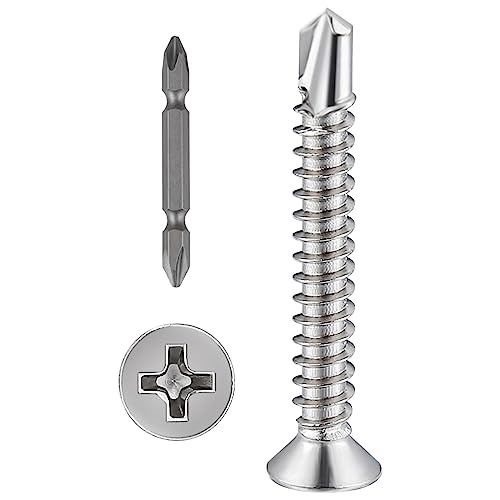
Wensilon #8×1-1/4″ 410 Stainless Steel Flat Head Screws (250pcs)
A Closer Look At Each Pick
Short screws with a wide, flat truss head solve a specific headache in plywood work: grabbing thin material without punching through. The 3/4-inch length suits cabinet backs, drawer bottoms, and craft projects where a longer fastener would either poke through the face or split the core ply.
For most weekend woodworkers, this pack covers the small-but-frequent fastening jobs that eat through hardware. The 410 stainless body resists rust in a damp garage or basement shop, and the head spreads load across a wider footprint than a pan head would.
Strong Points
- Truss head sits low, reducing snag points in tight assemblies
- 410 stainless steel body holds up in humid shop environments
- Short 3/4-inch length prevents blow-through on thin plywood
- 300-count pack covers many small projects without frequent restocking
Things To Consider
- Not suited for joining thicker plywood panels where deeper bite is needed
- 410 stainless is magnetic, so it may not pair with non-ferrous-friendly environments
Who It Suits Best
Cabinet builders and hobbyists working with thin plywood and need a low-profile fastener that won’t split the core.
Look Elsewhere When
You’re fastening thicker plywood panels and need more reach, since the Wensilon #8×1-1/4″ Flat Head pack was built for deeper bites.
The black finish on this version of the truss head pack solves a problem the bare steel version can’t: visible fasteners on dark-stained or painted projects. Where a bright silver head would interrupt a clean black finish, this screw blends in.
You trade a little for that aesthetic gain, since the black coating changes how the surface feels and behaves over time. For interior furniture, signs, or display builds where the screw head is part of the look, that’s a worthwhile swap compared to the standard truss head above.
Good Reasons To Consider
- Black finish reduces visual interruption on dark or painted wood
- Same low-profile truss head spreads clamping load across thin plywood
- 410 stainless core keeps corrosion resistance intact under the coating
Points To Keep In Mind
- Coating may wear at high-friction contact points over long-term use
- Same 3/4-inch length limits use to thinner plywood stock
- Color match is approximate, so test on scrap before final installation
Feature Snapshot
Made For
Finish-focused woodworkers building dark-stained furniture, signs, or display pieces where visible fasteners should disappear into the design.
Skip It When
You’re working on raw, unfinished plywood where the bright finish of the Wensilon #8×3/4″ Truss Head pack would actually look cleaner.
The hex washer head on this pack does two things at once: the hex drive accepts a nut driver for high torque without bit cam-out, and the integrated washer face spreads load like a small clamp. Combined with a self-drilling tip, it cuts a step out of repetitive assembly work.
For shop owners running the same fastening pattern across dozens of joints, that speed adds up. You may find the hex drive less convenient than a Phillips for tight interior corners, but for open framing and utility builds, the grip is hard to beat.
A Strong Showing
- Self-drilling tip eliminates pilot holes on most plywood-to-plywood joints
- Hex washer head grips firmly under high-torque driving without stripping
- Integrated washer face acts as a built-in clamp for softer plywood edges
- 410 stainless body handles shop humidity and occasional outdoor exposure
- 300-count volume suits production-style builds and small shops
Worth Noting
- Hex drive requires a matched nut driver bit, which adds a tool to your kit
- Washer face sits proud of the surface, so it’s not ideal for flush-mount aesthetics
Quick Facts
Right Fit For
Production shops and serious DIYers running high-volume plywood assemblies where speed and torque matter more than flush finish.
Consider Something Else When
You’re working on visible face-joinery where a flush head matters, since the Wensilon #8×1-1/4″ Flat Head pack seats cleanly below the surface.
Pair the self-drilling hex washer head with a black coating and you get a screw built for outdoor plywood projects where the head needs to disappear but the drive still needs muscle. Think shed framing, fence panels, and utility builds that see weather.
The combination is the most versatile of the five packs if your workload mixes interior and exterior jobs. You may find the black finish scuffs at the drive socket over time, but for general use it holds up well.
Positive Points
- Black coating helps the head blend into dark or weathered plywood finishes
- Self-drilling tip skips the pilot-hole step on most standard plywood thicknesses
- Hex washer head delivers the highest torque transfer in this roundup
- 410 stainless core handles moisture exposure better than plated steel
Trade Offs
- Black coating can chip at the drive socket after high-volume driving sessions
- Short 3/4-inch length restricts use to thinner stock and surface-fastening tasks
Best Suited To
Outdoor builders and frequent-use hobbyists who want a self-drilling screw that looks clean on dark projects and stands up to weather exposure.
Not Your Match When
You need a screw that seats flush below the surface, since the Wensilon #8×1-1/4″ Flat Head pack was designed specifically for that finish.
When plywood thickness exceeds 3/4 inch or you want a fastener that disappears into the surface, the flat head design pulls its weight. The 1-1/4-inch length drives deep enough to bite through standard 3/4-inch plywood plus a substrate, which is the common case in furniture making.
For most home workshops, this is the everyday generalist screw, since it handles cabinet assembly, shelving, and structural joints where the others above are too short. The trade-off is a smaller pack at 250 pieces.
What Stands Out
- Flat head design seats flush or below the plywood surface for clean finishing
- 1-1/4-inch length reaches through standard 3/4-inch plywood into backing material
- 410 stainless body holds up to repeated driving without easy thread stripping
- Works for cabinetry, shelving, and furniture where appearance matters
Small Caveats
- Requires a countersink step for true flush seating on harder plywood faces
- Smaller pack count at 250 pieces versus the 300-count options above
- Not self-drilling, so thicker stock may need a pilot hole first
Feature Card
Who Should Grab It
Furniture makers and serious DIYers building cabinets, shelves, or structural joints where a flush, finished surface is the goal.
Where Another Pick Suits Better
You’re doing high-volume repetitive fastening and want to skip pilot holes, since the Wensilon #8×3/4″ Hex Washer Head Self-Drilling pack handles that workflow faster.
Matching Screws To The Job At Hand
Plywood screws aren’t a one-size decision, since the head style, length, and steel grade each affect how the joint holds and how it looks once driven. Head style drives the visible outcome: a truss head sits low and spreads load across thin stock, a hex washer head grips hard under torque with a built-in clamping face, and a flat head disappears into the surface for a paintable finish. The trade-off shows up in driver access and final appearance, so match the head to whether the screw will be seen or hidden.
Length matters more than most beginners expect. A 3/4-inch screw suits thin plywood like cabinet backs, but anything thicker than 3/4-inch plywood often needs 1-1/4 inches to bite into a substrate without bottoming out. For repetitive jobs, self-drilling tips save the pilot-hole step entirely, though they cost a bit more per pack.
Steel grade is the third call. 410 stainless steel balances hardness with corrosion resistance, holds threads under repeated driving, and tolerates shop humidity better than plated carbon steel. Outdoor projects benefit most, though, since 410 is magnetic and can show surface rust in harsh coastal or marine settings over time.
Key Considerations Across These Picks
Where Shoppers Go Wrong
The most common slip-up is grabbing whatever length is on the shelf without measuring the actual material stack. A screw that’s too short won’t grip the substrate, while one that’s too long will either blow through the face ply or poke out the back of the assembly. Check the combined thickness of every layer the screw passes through before you commit to a size.
A second trap is assuming all “stainless” means the same thing. 410 stainless steel is magnetic and harder than 304, but it’s also less corrosion-resistant in extreme conditions. For most interior shop work and mild exterior exposure, 410 performs well, but coastal or chemical-heavy environments may need an upgrade.
When Paying More Pays Off
The premium tier in plywood screws usually buys a self-drilling tip, a higher-grade stainless alloy, or a coated finish designed for outdoor exposure. The upgrade pays off in two scenarios: high-volume assembly where the saved pilot-hole step compounds across hundreds of screws, and exterior builds where cheaper plated steel would rust and stain the surrounding wood within a season.
For occasional interior projects, the basic 410 stainless pack handles the job without the extra spend. The upgrade earns its place when time savings or weather resistance are real factors, not theoretical ones.
Frequently Asked Questions
What length plywood screw should I use for 3/4-inch plywood?
For a single layer of 3/4-inch plywood, a 1-1/4-inch screw gives enough bite without blowing through the face. For two layers of 3/4-inch plywood joined together, step up to 1-5/8 inches or longer to ensure the threads fully engage the bottom layer.
Is 410 stainless steel good enough for outdoor plywood projects?
For most outdoor builds like sheds, fence panels, or raised garden beds, 410 stainless performs well and resists rust better than plated carbon steel. In coastal or marine environments with constant salt exposure, you may want to upgrade to 316 stainless for longer service life.
Do I need to drill pilot holes in plywood first?
For standard softwood plywood, a pilot hole is rarely needed, and a self-drilling screw eliminates the step entirely. Hardwood plywood or dense engineered boards benefit from a pilot to prevent splitting, especially near edges or in thin face veneers.
What’s the difference between truss head and flat head screws?
A truss head is wide and low, designed to spread load across a surface without sitting flush, while a flat head tapers and is meant to seat flush or below the surface. Use truss head for clamping thin material, and flat head when you want a clean, paintable finish.
Can I use sheet metal screws in plywood?
Yes, sheet metal screws with sharp self-tapping threads work well in plywood, since the threads bite into the wood fibers. The main consideration is matching the head style to whether the screw will be visible or needs to sit flush.




