


Choosing a framing nailer shapes how every wall, deck, and roof feels under your hands. The wrong tool drags, jams, and punishes your shoulder, while the right one disappears into the work. This list breaks down five options worth your attention, from light homeowner chores to jobsite-grade framing.
The Lineup, Simplified

Batavia 2-in-1 Staple Gun Brad Nailer 18 Gauge

BATAVIA 2-in-1 Cordless Brad Nailer & Stapler Kit
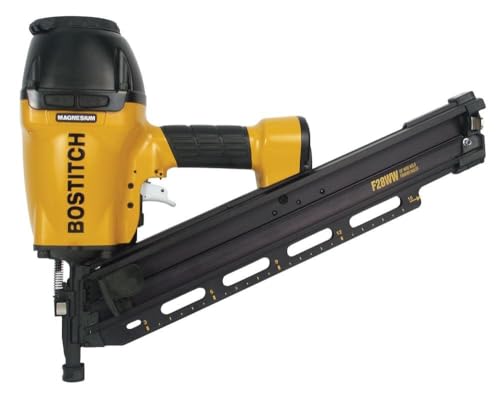
BOSTITCH Framing Nailer F28WW Pneumatic Clipped Head

meite V1015B V-Nailer Picture Frame Joiner

Metabo HPT NR90AES1 Framing Nailer 21 Degree
A Closer Look At Each Pick
The Batavia 2-in-1 stapler and brad nailer is a corded electric tool aimed at people who want to skip the compressor entirely. It runs on standard 120V household current, so all you need is an outlet and an extension cord. That alone removes a meaningful barrier for first-time tool owners.
It drives 18-gauge brad nails from roughly 5/8 inch up to 1-1/4 inch, plus 1/4-inch narrow crown staples. Furniture reupholstering, picture frame trim, and small pet houses sit squarely in its comfort zone. The kit ships with 200 staples and 800 brads, so you can start firing the moment the box opens. For anyone working on a kitchen chair or a stretched canvas, this thing is easy to live with.
Real Benefits
- No compressor or air hose means less setup noise and zero oil spray on your workpiece.
- Dual firing modes handle both brad nails and narrow crown staples without swapping tools.
- Bottom-loading magazine reloads fast when you get into a long run of trim work.
- The included fasteners cover small upholstery jobs and craft projects out of the box.
Things To Consider
- It is not a framing nailer, despite the broad “nail gun” naming. Real 2×4 framing falls outside its reach.
- Drywall, dense hardwoods, and flooring subfloor work are not realistic targets for this gauge and power class.
- The corded design limits mobility compared to a battery-driven unit like the BATAVIA Cordless Brad Nailer Kit covered below.
Right Fit For
DIYers tackling upholstery repairs, trim, fabric panels, and light craft work who want a plug-in tool that stays out of the way.
Consider Something Else When
You need framing power for walls and decks, where the BOSTITCH Framing Nailer F28WW is the more honest tool for the job.
The cordless version of the Batavia platform trades the wall plug for a 4V lithium-ion pack and earns its spot on this list through pure convenience. You carry it like a power drill, and there is no hose to drag across a half-finished room. For crafters working in a spare bedroom or a basement corner, that simplicity matters more than raw power.
Like the corded Batavia before it, this is a 2-in-1 brad nailer and stapler, but it ships with a generous 1,000 staples and 1,000 brads. Softwood, fabric, foam, leather, and carpet padding are the sweet spot. If you are building a headboard, recovering bar stools, or tacking insulation in a small workshop, you will likely find it covers your needs without forcing a compressor into the room.
Useful Touches
- Battery-powered operation means you can work on a porch, in a closet, or anywhere without a nearby outlet.
- Generous fastener supply covers most small home projects straight out of the box.
- Lightweight body keeps arm fatigue low during long craft sessions.
- Simple bottom-loading design reduces reload downtime between fabric layers.
Worth Noting
- Run time per charge is modest given the 4V platform, so heavy production runs call for planning around the battery.
- Soft materials are the comfort zone. Hardwoods and structural framing are out of scope.
- Owners commonly report that long brads in dense material sometimes require pre-pilot holes to seat cleanly.
Feature Snapshot
Made For
Mobile crafters, apartment dwellers, and weekend upholsterers who want a quiet, hose-free tool for soft-material work.
A Better Fit Elsewhere
Anyone framing a wall or subfloor will be better served by the Metabo HPT NR90AES1, which is built for that workload.
Now we step into the actual framing tier. The BOSTITCH F28WW is a pneumatic framing nailer, which means it runs on compressed air rather than a battery or wall plug. You will need an air compressor and a hose to drive it, but the payoff is real drive energy for 2-inch to 3-1/2-inch framing nails. A clipped head lets the nails sit tight together so the magazine holds more per load.
Two features earn the F28WW its reputation on the jobsite. A push-button adjustable depth guide lets you dial nail depth without fumbling for tools, and a 16-inch layout indicator etched into the magazine speeds up stud spacing. Compared to the lighter Batavia tools above, this is a different species of gun. The magnesium body keeps weight reasonable during overhead work, and the rafter hook gives you a place to hang it when you climb down from the trusses.
What Works In Its Favor
- Lightweight magnesium housing helps offset the heft of a true framing nailer.
- Push-button depth adjustment makes switching between subfloor and wall framing fast.
- Magazine layout marks nail out stud spacing without a tape measure.
- Clipped head design packs more nails per strip, reducing reload stops on long runs.
Trade Offs
- Requires a separate air compressor and hose, which adds cost and shop noise.
- Not a fit for upholstery, fabric, or finish trim because of its power and nail size.
- Air tools need occasional lubrication to keep the internal seals from drying out.
Best Suited To
Remodelers and small framing crews who already own or plan to invest in a compressor setup.
Skip It When
You only need to frame a small shed or occasional flooring project, where the Metabo HPT NR90AES1 may be a friendlier daily carry.
The meite V1015B is the specialist of the group. Where the BOSTITCH F28WW above is built for structural framing, this V-nailer is built for picture frames and door assembly. V-nails are wedge-shaped fasteners that lock mitred corners together without visible glue lines, and they are the standard in any serious framing shop. The V1015B drives v-nails from 9/32 inch up to 19/32 inch.
It is pneumatic like the BOSTITCH, so a compressor is on the requirements list. The bottom-loading magazine holds roughly 200 v-nails at a time, and the depth ruler on the side keeps your insertion length matched to the stock. Picture framers who build batches of frames each week tend to treat this kind of tool as essential shop equipment. For a hobbyist, it earns its keep once you start producing consistent work.
Where It Delivers
- Specialised for picture frame and door joinery where standard nails would split mitres.
- Bottom-load magazine holds around 200 v-nails, which keeps production flowing.
- Onboard depth ruler helps match v-nail length to the moulding profile.
- Pneumatic drive means consistent, repeatable seating on every corner.
Honest Caveats
- Useful for almost nothing outside of frame and door assembly work.
- Requires a compressor to operate, with the same hose management as the BOSTITCH above.
- Not a framing nailer in the structural sense, so it cannot replace tools like the Metabo HPT NR90AES1.
Whose Shelf It Belongs On
Independent frame shop owners, gallery framers, and serious woodworking hobbyists producing consistent frame work.
Reach For A Different Pick When
You are building walls or subfloors, where the BOSTITCH Framing Nailer F28WW belongs in your hand instead.
The Metabo HPT NR90AES1 sits at the top of the framing list and earns the spot through stamina. It drives 21-degree plastic collated framing nails from 2 inches up to 3-1/2 inches, which is the range most residential framing crews work in. The plastic collation strips shed debris easily and resist jamming when the magazine sees rough jobsite handling.
At roughly 7.5 pounds, the NR90AES1 is light for a full-size pneumatic framing nailer. Truss build-up, subfloor nailing, window assembly, and deck framing all sit in its working range. Compared to the BOSTITCH F28WW, the Metabo HPT trades a clipped head for a 21-degree paper-collated alternative, which some building codes and inspectors prefer. For anyone nailing a deck or sheathing a roof, it is the kind of tool you grab first thing in the morning and barely put down.
Good Reasons To Consider
- 7.5 lb body keeps all-day framing work manageable on ladders and trusses.
- Plastic collated strips resist jobsite moisture and shed snow, sawdust, and debris.
- Drives the full 2 to 3-1/2 inch nail range used in most residential framing.
- Suited for flooring, framing, window build-up, and truss assembly.
Points To Note
- Pneumatic, so a compressor and hose are still required.
- Not a fit for fine finish work or upholstery, where the lighter Batavia tools make more sense.
- Air seals benefit from routine oiling, which is a small maintenance habit to keep up with.
Feature Snapshot
Who Should Grab It
Active carpenters, deck builders, and remodelers who frame often enough to justify a dedicated pneumatic tool.
Where Another Pick Suits Better
You mainly recover furniture or tack fabric, where the BATAVIA Cordless Brad Nailer Kit stays simpler and quieter.
Picking The Right Pneumatic Framing Nailer For Your Work
Match The Tool To The Fastener, Not The Hype
A framing nailer in the strictest sense drives structural nails from about 2 inches up to 3-1/2 inches into dimensional lumber. The two pneumatic picks in this guide, the BOSTITCH F28WW and the Metabo HPT NR90AES1, both live in that lane. A brad nailer like the corded Batavia or the cordless BATAVIA Kit drives much shorter 18-gauge brads and staples for trim and upholstery. Picking the wrong category is the single most common mistake in this space, and the spec sheets make it obvious once you compare numbers.
Consider The Angle And Collation Style
Framing nailers come in different collation angles, and the choice affects nail availability, magazine capacity, and local code acceptance. The BOSTITCH F28WW uses a clipped head design that packs more nails per strip, while the Metabo HPT NR90AES1 uses a 21-degree plastic collated strip. Building inspectors in some regions prefer one over the other, so check your local code before you commit.
Think About Power Source And Workflow
Pneumatic framing nailers need an air compressor rated for the tool’s consumption, plus a hose that reaches the work area. Electric and cordless nailers, like the Batavia pair in this list, skip the compressor entirely but trade away structural framing power. Daily workshop owners often own both a compressor-fed framing gun and a portable cordless brad nailer. Choosing between them comes down to how often you frame versus how often you finish.
Mind The Weight And Balance
Framing a roof or subfloor means holding the tool overhead for hours. The Metabo HPT at 7.5 lb and the BOSTITCH F28WW with its magnesium body are both engineered for that reality. Heavier tools slow you down and strain your shoulder. If you are only running a few sheets of plywood, weight matters less than if you are sheathing an entire house.
Where Shoppers Go Wrong
Pitfalls Shoppers Hit
The most common error is buying a brad nailer thinking it will frame a wall. Brad nailers and framing nailers share a name but do completely different jobs, and the resulting disappointment is entirely avoidable by reading the fastener range. A close second is choosing a collation angle that local inspectors will not accept, which forces a return trip or a frustrating call with the building department. The third slip is forgetting the compressor cost. A pneumatic framing nailer is only as useful as the air supply behind it, and a budget compressor will starve the tool and shorten its life.
The Upgrade Payoff
Stepping up from an entry-level pneumatic framing nailer to a refined model like the Metabo HPT NR90AES1 buys you tangible gains: lighter weight for all-day use, plastic collation that resists jobsite weather, and a depth adjustment system that holds its setting. You also tend to get better balance, which matters more than people expect on a long day. For occasional weekend projects, the cheaper end of the spectrum is fine. For daily framing work, the upgrade pays back through your shoulder and your speed.
Frequently Asked Questions
What is a pneumatic framing nail gun?
A pneumatic framing nail gun is an air-powered tool that drives large structural nails, typically 2 to 3-1/2 inches long, into wood framing. It requires a separate air compressor to supply the pressure that drives each nail.
Can a pneumatic framing nailer handle hardwoods?
Most pneumatic framing nailers handle standard softwood framing lumber with ease. Hardwoods like oak or dense maple can be driven into, but you may need to pre-drill or adjust pressure to avoid splitting.
What size compressor do I need for a framing nailer?
A typical framing nailer calls for a compressor that delivers around 4 to 5 cubic feet per minute at 90 psi. Smaller pancake compressors often struggle to keep up with continuous framing work, so check the tool’s air consumption rating before pairing.
What is the difference between clipped head and full head nails?
Clipped head nails have a portion of the head cut away, which allows the magazine to hold more nails per strip. Full head nails carry a complete round head, which some building codes and inspectors prefer for structural framing.
How do I maintain a pneumatic framing nailer?
Routine maintenance includes a few drops of pneumatic tool oil in the air inlet before each use, keeping the magazine clean of dust, and draining the compressor tank regularly. These small habits prevent the most common pneumatic failures.
The Takeaway
A framing nailer only earns its place when it matches the work in front of you. Corded and cordless brad nailers like the Batavia pair handle trim and upholstery, while pneumatic options like the BOSTITCH F28WW and Metabo HPT NR90AES1 take on structural framing. Pick by fastener range, compressor capacity, and how often you frame, and the rest tends to fall into place.




