


A pneumatic nailer earns its place the moment framing lumber, trim, or a stack of pallets hits the workbench. Choosing the right one comes down to gauge, magazine style, and how the tool balances in your hand during a long afternoon. This list rounds up nine options across framing, finish, flooring, roofing, siding, and nail removal, each suited to a different kind of workday.
The Choices Worth Comparing

Metabo HPT Framing Nailer, 21° (NR83A5)
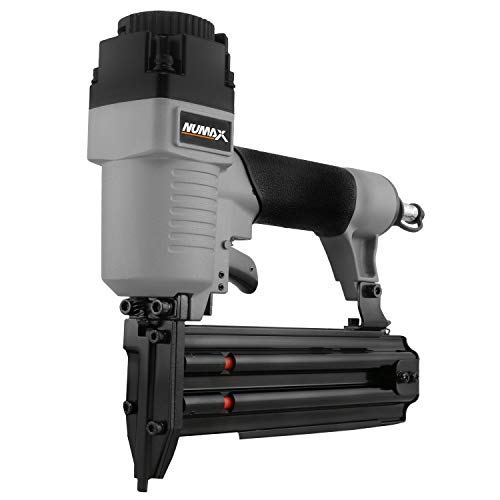
NuMax SBR50 Pneumatic 18-Gauge Brad Nailer

WEN 18-Gauge Pneumatic Brad Nailer Kit (61723K)

Metabo HPT Coil Siding Nailer (NV65AH2)

3PLUS HAPT50SP Pneumatic Punch Nailer

Bostitch 2-in-1 Flooring Pneumatic Nailer

3PLUS HDA1564SP 15-Gauge Angled Finish Nailer

NuMax SPNNR Pneumatic Punch Nailer

AeroPro CN45N Pneumatic Roofing Nailer
A Deeper Look At The Lineup
The Metabo HPT NR83A5 frames walls, floors, and roof decks without ceremony, which is exactly what a working crew needs from a pneumatic framing nailer. The 21° magazine angle accepts the round-head nails most lumber yards stock, so you won’t be hunting for unusual fasteners. On a long framing day the selectable trigger lets you bounce between single-shot precision at the end of a top plate and rapid bump fire for sheathing runs, depending on your hand and the task. Compared to the lighter brad tools later in this list, this one carries serious weight, so the trade-off is real fatigue during overhead work.
Builders tackling a full residential framing package or a remodel that includes subfloor and roof deck will find the most to like here. DIYers framing a single shed wall may find the heft and magazine capacity more than the job requires.
What Pays Off
- Selectable trigger adapts between sequential and contact modes without retooling.
- 21° magazine accepts common round-head framing nails from your local supplier.
- Depth adjustment, meaning the tool handles lumber of varied densities without changing pressure settings every time.
- Suited to long framing days where the tool stays in your hand for hours at a stretch.
Things To Consider
- Heavier than trim or finish nailers, so overhead work tires the arm faster.
- Requires a compressor with enough volume to keep up with continuous firing on larger jobs.
Key Product Details
Right Fit For
Framing crews and remodelers who need one tool to handle the structural side of a residential build day after day.
Consider Something Else When
The NuMax SBR50 Brad Nailer is a better match for someone hanging crown moulding or building picture frames, where a lighter tool and smaller fastener make more sense.
Pick up the NuMax SBR50 and the first thing you notice is the weight, or rather the lack of it. This 18-gauge brad nailer, a tool that fires thin, small-head nails up to 2 inches long, was built for trim work where a heavy framing tool would just get in the way. The hardened steel drive blade holds up to repeated firing, and the ergonomic body keeps the tool from twisting in your hand during long runs of baseboard or chair rail. For a homeowner finishing a basement rec room or a hobbyist building floating shelves, this is the kind of tool you can grab without warming up first.
Relative to the WEN kit reviewed just below, the NuMax SBR50 skips the case and starter nails but rewards you with a slimmer profile. Trim installers and weekend woodworkers will get the most out of this one.
Standout Benefits
- Light enough for overhead crown moulding without wearing out your shoulder.
- One-piece steel drive blade stands up to frequent use on small trim jobs.
- Reload indicator on the magazine, a small but real time-saver when you are mid-run.
Worth Noting
- Does not ship with a carry case or a starter pack of brads, so factor that into your first project.
- 18-gauge brads are not structural, so this is the wrong tool for subfloor or framing.
Made For
DIYers running baseboards, window casings, and decorative trim in rooms where a smaller nail head leaves a cleaner finish.
Skip It When
The 3PLUS HDA1564SP 15-Gauge Angled Finish Nailer suits cabinet builders better, since 15-gauge nails carry more holding power for face frames and thicker trim.
WEN’s 61723K is the kind of kit you hand to someone setting up their first shop. The brad nailer itself fires 18-gauge nails from 3/8 inch up to 2 inches, but the real hook is the bundle: a hard case, a starter set of brads, and a tool that pairs with any compressor you already own. The rubber-lined grip absorbs vibration well enough that a first-time user won’t dread the second hour of work. Magazine capacity sits around 100 nails, which means fewer reloads when you are running long casing boards across a wall.
For someone stepping up from a hammer and finishing nails, this is the cleanest path into pneumatic work. Compared to the NuMax SBR50, you trade a touch of refinement for the convenience of everything arriving in one box.
Good Reasons To Consider
- Comes with a carrying case and starter brads, so you can start a project the day it arrives.
- Spring-loaded magazine reloads quickly when you are working through a stack of trim.
- Works with virtually any home-shop air compressor, no special fittings required.
- Rubber-lined handle reduces vibration during long casing or baseboard runs.
Honest Caveats
- Owners commonly report that the included brads run out fast on bigger projects, so plan a refill order.
- The case is useful but not heavy-duty, so treat it gently if you haul the kit to job sites.
Best Suited To
First-time pneumatic tool owners and weekend renovators who want a complete kit without sourcing parts separately.
Look Elsewhere When
Remodelers running heavy siding should look at the Metabo HPT NV65AH2 Coil Siding Nailer, since coil magazines hold far more fasteners per load.
The NV65AH2 takes everything a siding crew needs and puts it into a coil-format tool that keeps you firing instead of reloading. Coil nails, in this case plastic-collated to resist rust and weathering, pack many more fasteners per load than a stick magazine, so you spend more time nailing and less time on the ground. The depth-of-drive dial sits in a natural thumb position, and the selective actuation switch lets a single tool handle everything from cedar shingles to fiber-cement panels.
Siding contractors and remodelers wrapping a house in a week will appreciate the speed. Compared to the framing-focused NR83A5, this is a more specialized tool, optimized for the rhythm of exterior work where the tool rarely leaves your side.
The Case For It
- Coil magazine holds many more nails per load, reducing reloads on long exterior runs.
- Drives fasteners up to roughly 2-1/2 inches, so it covers common siding thicknesses and sheathing combinations.
- Selective actuation switch adapts the firing mode to the material in front of you.
Trade Offs
- Larger and heavier than a brad nailer, so working overhead on soffits takes stamina.
- Plastic-collated nails cost more than basic wire-collated stock, so plan a fastener budget.
Whose Shelf It Belongs On
Siding contractors, fence builders, and exterior remodelers who run a compressor on the truck all day.
Swap It Out When
The NuMax SBR50 Brad Nailer is the right call for interior trim work, where coil capacity and fastener length would be overkill.
A punch nailer works the opposite way from the rest of this list, since it pushes nails out of wood so the lumber can be reused. The HAPT50SP handles 10- to 20-gauge nails, a wider range than most removers in this class, which makes it practical for breaking down pallets, crates, and deconstructed framing. The die-cast aluminum body keeps the weight manageable across a long afternoon of reclaim, and the slim, elongated nose reaches into tight corners where pry bars simply do not fit.
Wood reclaimers, small-shop restorers, and anyone trying to rescue old barn boards will find this tool pays for itself fast. Compared to the NuMax SPNNR reviewed later, the 3PLUS trades a slightly narrower gauge range for a slimmer nose profile.
Why It Works Well
- Accepts a wide gauge range, so you do not swap tools when tackling mixed salvage jobs.
- Slim nose fits between boards and into tight corners where pry bars cannot reach.
- Die-cast aluminum body keeps weight down during long teardown sessions.
- Rubber grip reduces hand fatigue when reclaiming large pallet stacks.
Points To Keep In Mind
- Punch nailers push nails out the back of the workpiece, so backer boards or open air are needed to avoid damage.
- Requires a compressor capable of consistent pressure, since low PSI reduces punch force.
Perfect Match For
Reclaimers, pallet refurbishers, and restoration woodworkers who routinely pull nails from salvaged lumber.
Another Choice May Suit
The Metabo HPT NR83A5 Framing Nailer is a better fit for someone building new walls rather than disassembling old ones, since it drives fasteners in rather than pushing them out.
Hardwood floor installers live and die by their nailer, and the Bostitch 2-in-1 earns its place by covering both 15.5-gauge staples and 16-gauge L-cleats, the two fasteners most flooring materials call for. The interchangeable base plates (1/2 inch, 5/8 inch, and 3/4 inch) let you match the tool to the plank thickness in front of you, which is the difference between a flush fastener and a proud one. The long handle and rubber grip keep your wrist neutral during the thousands of strokes a typical room demands, a real consideration on a full-day install.
Flooring pros laying solid hardwood or engineered planks will appreciate the dual-format design. Compared to the finish-focused 3PLUS HDA1564SP, this tool is purpose-built to kneel next to and slide across the floor.
Everyday Wins
- Switches between staples and L-cleats, so one tool covers most solid and engineered flooring installs.
- Interchangeable base plates adapt to common plank thicknesses without shims or jury-rigging.
- Ergonomic long handle with rubber grip protects the wrist on multi-room installs.
Some Limits To Know
- Specialized to flooring, so it is not a versatile addition to a general trim collection.
- Heavier than handheld trim nailers, so the tool rewards a kneeling posture rather than overhead use.
Feature Snapshot
Who Will Love This
Hardwood and engineered floor installers who lay several rooms per week and want one tool for staples and cleats.
Not Your Match When
The 3PLUS HDA1564SP 15-Gauge Angled Finish Nailer suits trim and cabinet work better, where an angled nose gets into corners a flooring tool cannot reach.
The 3PLUS HDA1564SP fires 15-gauge “DA” style angled finish nails, meaning the magazine sits at an angle to reach into corners where a straight tool cannot. That angled nose, plus a no-mar tip, makes this nailer a natural fit for cabinet face frames, door casings, and the kind of work where a scuffed workpiece ruins an afternoon. The tool-free depth adjustment is the real time-saver, since you can dial in flush fastening without breaking stride to find an Allen key.
Cabinet builders, trim carpenters, and finish carpenters will get the most out of the angled design. The trade-off is that the angle takes a little practice if you have only used straight magazines before.
Where It Excels
- Angled magazine reaches into tight inside corners that straight tools cannot access.
- Tool-free depth adjustment lets you change settings mid-run without hunting for tools.
- No-mar tip protects finished wood from the kind of scratches that ruin a final coat of paint.
- Work contact element helps prevent accidental firing when the tool is set down on a bench.
Small Caveats
- Angled magazine takes a few projects to feel natural if you have only used straight nailers.
- 15-gauge nail heads are larger than 18-gauge brads, so this is the wrong tool when you need a near-invisible hole.
Who Should Grab It
Finish carpenters, cabinet builders, and trim installers who regularly work in corners and need a tool that protects finished surfaces.
Reach For A Different Pick When
The Bostitch 2-in-1 Flooring Nailer handles horizontal floor work better, where the long handle and flat base keep fasteners consistent across wide plank runs.
The NuMax SPNNR earns a spot on this list because it tackles the side of woodworking most nailers ignore: pulling fasteners back out. It handles nails from 9-gauge to 14-gauge, a much wider range than the 3PLUS HAPT50SP, so it can punch out the heavy common nails used in old framing as well as the lighter brads in salvaged trim. The 360-degree adjustable exhaust is a small but welcome feature when you are working at odd angles on a deconstructed wall.
Restoration carpenters, reclaimers, and small-shop craftspeople who routinely rescue material will get the most value here. The wide gauge range is the headline feature, and it is what sets this tool apart from most removers.
Points In Its Favor
- Accepts 9- to 14-gauge nails, covering everything from heavy framing fasteners to lighter brads.
- 360-degree adjustable exhaust keeps debris off the workpiece and out of your face during awkward angles.
- Ergonomic body with comfort grip handle reduces fatigue during long teardown sessions.
- Lightweight enough to control one-handed when freeing boards from a stacked pile.
Practical Considerations
- Punching forces the nail out the back of the board, so orient the workpiece over an open space or scrap backer.
- Air consumption is meaningful, so pair it with a compressor that can keep up with repeated firing.
Built With In Mind
Wood restorers, deconstruction contractors, and pallet refurbishers who need to pull both heavy framing nails and fine brads from reclaimed lumber.
Where A Sibling Pick Shines
The 3PLUS HAPT50SP is the better choice when you need a slimmer nose for tight corners, since its elongated profile fits where the NuMax nose is bulkier.
The AeroPro CN45N is built for the specific punishment of a roofing day: hot asphalt, steep pitches, and thousands of fasteners in a single shift. It drives 15-degree coil nails from 3/4 inch to 1-3/4 inch, a range that covers most asphalt shingle and underlayment combinations, at a rate of roughly three nails per second. At 5.5 pounds, the body stays light enough that an afternoon of overhead shingle work does not destroy your shoulders. The balanced design also makes the tool easier to control on wide roof decks where one-handed accuracy matters.
Roofing crews and exterior remodelers handling tear-offs and re-shingles will get the most out of this one. Compared to the siding-focused Metabo HPT NV65AH2, the CN45N is purpose-built for shingle fastening rather than long exterior planks.
Well-Handled Touches
- Drives up to about three nails per second, keeping pace with a shingle-by-shingle install.
- 5.5-pound body stays balanced during overhead work on steep pitches.
- 15-degree coil magazine holds plenty of fasteners so reloading interrupts the rhythm less often.
- Operates across a wide PSI range, so it adapts to portable compressors common on job sites.
Less Ideal Details
- Specialized for roofing and similar exterior fastening, not a general-purpose addition to a trim kit.
- Roofing coils of this size are sold in heavy packaging, so storage on a small shelf is awkward.
Feature Overview
Right Fit For
Roofing crews and exterior remodelers handling tear-offs, re-shingles, and roof deck installations.
Consider Something Else When
The NuMax SBR50 Brad Nailer is a better pick for interior trim, where lighter fasteners and a smaller tool leave cleaner results on finished wood.
What To Weigh Before Choosing a Pneumatic Nailer
Match the Tool to the Fastener
Gauge, or the thickness of the nail, is the first filter. An 18-gauge brad leaves a near-invisible hole in trim, while a 15-gauge nail holds cabinet face frames firmly. Magazine style comes next. Stick magazines feed in straight lines and suit trim work, while coil magazines hold far more fasteners and keep siding or roofing crews in rhythm. Picking the wrong combination usually means redoing the project with a different tool.
Consider Compressor Compatibility
A pneumatic nailer only works as well as the compressor behind it. Framing and siding tools need steady CFM (cubic feet per minute, the volume of air a compressor delivers) to keep up with continuous firing, while small brad nailers sip air and run fine on a pancake compressor. Confirming pressure range and air consumption before buying prevents the frustrating “tool fires twice, then stalls” experience on a real project.
Think About Weight and Trigger Style
A heavy framing tool feels solid for an hour, then punishing for a day. Overhead trim work demands a light body and a comfortable grip. Trigger style matters too. Sequential triggers fire one nail at a time and improve accuracy, while contact or bump triggers fire faster but demand more hand control. The right choice depends on whether the work rewards speed or precision.
Match the Tool to the Job Site
Roofing and siding call for weather-resistant components and coil magazines, while indoor trim favors no-mar tips and quiet exhaust. If the tool will live in a small shop, a compact body with a carrying case is easier to store than a long-handled specialty tool. Choosing with the job site in mind keeps the tool working where it actually gets used.
Smart Choices Across This Lineup
Where Shoppers Go Wrong
The most common mistake is buying a framing tool to install baseboards. Framing nailers drive fasteners that split trim and leave visible holes, the opposite of what trim work needs. Another slip is ignoring compressor size: a small brad nailer runs on a small compressor, but a coil siding tool will starve on the same setup. Match the tool to the project, then confirm the compressor can feed it.
The Upgrade Payoff
Higher-tier pneumatic nailers usually add tool-free depth adjustment, no-mar tips, and selective actuation switches. These features save real time across a full day of work, even if they look minor on paper. The honest read is that weekend renovators rarely need every premium touch, but daily users recover the added cost quickly through faster, cleaner results. Paying up makes sense when the tool earns its keep week after week.
Frequently Asked Questions
What is a pneumatic nailer?
A pneumatic nailer is a fastening tool driven by compressed air rather than electricity or batteries. It connects to an air compressor via a hose and uses that pressure to drive nails quickly and consistently, making it a staple in framing, trim, flooring, and roofing work.
How do I choose the right gauge for my project?
Gauge refers to nail thickness, and lower numbers mean thicker, stronger nails. Use 15- or 16-gauge for cabinets and heavier trim, 18-gauge for most interior trim and molding, and framing nails for structural work. Thicker gauges leave larger holes, so match the gauge to the holding power you need without over-fastening.
Can one compressor run different nailers?
Most home-shop compressors handle brad and finish nailers easily, but larger framing and coil siding tools draw more CFM. Check each tool’s air consumption against your compressor’s output. A compressor that bogs down under continuous firing will stall the nailer mid-project.
What is the difference between sequential and contact triggers?
A sequential trigger fires one nail each time the nose is pressed and the trigger pulled, which improves accuracy. A contact, or bump, trigger fires as long as the trigger is held and the nose bumps the workpiece, which speeds up repetitive work but demands more control. Many tools offer both through a selector switch.
How should I maintain a pneumatic nailer?
Keep a few drops of pneumatic tool oil in the air inlet before each use, and drain the compressor tank regularly to prevent moisture from corroding internal parts. Occasional cleaning of the magazine and nose keeps jams rare, especially on tools that see daily use.
Wrap Up
The right pneumatic nailer depends less on brand and more on the project in front of you, since framing, trim, flooring, and roofing each call for a different combination of gauge, magazine, and weight. Start with the work you do most often, then match the tool to that job. The rest of the lineups in this guide are there for when your projects grow in scope and demand a second or third tool that handles what the first one cannot.




