


A pneumatic staple gun takes the wrist strain out of upholstering a chair, securing house wrap, or tacking down insulation. The right one fires cleanly all day, while the wrong one jams, splits softwood, or chews through cheap seals. This list covers five solid options across common gauges and price points, with an honest look at where each one fits and where it falls short.
The Leading Options At A Glance

KEENTECH 21GA Pneumatic Staple Gun 1/2″ Crown

KEENTECH T50 20GA Pneumatic Staple Gun 3/8″ Crown

KEENTECH 22GA Pneumatic Staple Gun 3/8″ Crown

KEENTECH 22GA Pneumatic Staple Gun 3/8″ Crown
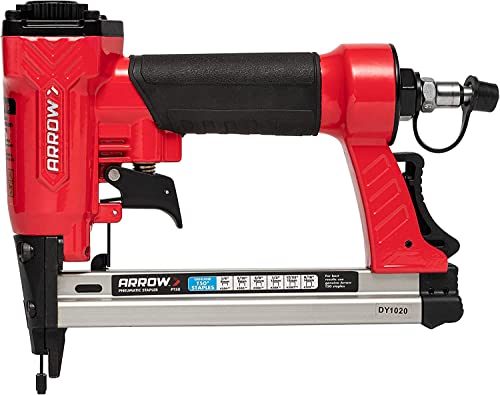
Arrow PT50 Oil-Free Pneumatic Staple Gun (Red)
What Each Pick Brings To The Table
The KEENTECH 21GA model fires a wide 1/2″ crown staple, the kind of broad-foot fastener that holds fabric, foam, and thin plywood without tearing through the work surface. You press the contact tip to the material, the safety disengages, and the gun drives a staple home in a single short burst. For most home workshops, that means a cleaner finish on chair backs, headboards, and cabinet liners than you’d get from a narrower 3/8″ crown.
It runs on standard 21GA staples from 1/4″ up to 5/8″ long, which covers the common upholstery range without forcing you to swap tools mid-project. The wide-crown footprint spreads holding power, so thin fabrics don’t pucker where the staple lands.
A Strong Showing
- Wide 1/2″ crown holds thin fabrics and foam without puckering or tearing
- Staple length range from 1/4″ to 5/8″ covers most upholstery tasks
- 3,000 included staples mean a full reupholstering project can finish without restocking
- Standard 21GA loading fits common replacement packs at any hardware store
- Light enough for overhead work on headboards and ceiling-mounted panels
Things To Consider
- Requires a separate air compressor, not a standalone tool
- 21GA is light-gauge, so it’s not suited for hardwood, MDF, or structural fastening
- Hose and coupler quality affect how cleanly it cycles in cold weather
Who It Suits Best
This one fits hobbyists tackling a dining chair set, a headboard, or a basement bar rebuild who want fabric to sit flat and stay put.
Consider Something Else When
Shoppers who need 22GA refinement for trim and screens will get cleaner results from the KEENTECH 22GA model further down the list.
Anyone who has used a manual Arrow T50 knows the frustration of palm blisters after stapling a single sheet of insulation. This KEENTECH version swaps the hand-squeeze action for compressed air, so a long day of fastening house wrap, vapor barrier, or screen mesh becomes a finger workout instead of a forearm one. The 20GA medium-gauge wire sits in a sweet spot for both delicate and semi-rough work.
Compatibility with the ubiquitous T50 staple format is the real story here. Replacement packs are stocked at every hardware store, so a mid-project run-out doesn’t stall the job. Compared to the wider 1/2″ crown on the KEENTECH 21GA above, this 3/8″ crown leaves a smaller visible footprint, which matters on trim, screening, and visible repair work.
Real-World Strengths
- T50 staple compatibility means easy resupply from any hardware store
- 3,780 included staples cover a full weekend of house wrap or screening
- 3/8″ crown keeps the fastener footprint tight on visible trim
- 20GA wire balances holding power with wood-friendly penetration
Worth Noting
- Narrower crown than the 21GA, so it’s less ideal for thin fabric upholstery
- Air compressor required, sold separately
Made For
Homeowners and remodelers wrapping a shed, building a screen door, or fastening insulation in an attic get reliable all-day use without hand fatigue.
Skip It When
Fabricators chasing the cleanest finish on fine trim should pick up the KEENTECH 22GA instead, since its lighter gauge is less likely to split narrow molding.
Step up to a finer craft project, picture a jewelry box lid, a window screen rebuild, or a delicate lattice panel, and the 22GA gauge is the size that stops wood from splitting while still holding tight. This KEENTECH tool is the lighter sibling to the 20GA above, using thinner wire and a more compact staple profile. The trade-off is obvious the moment you fire it: less visible scarring on soft cedar, pine, and poplar.
The 3/8″ crown keeps fasteners discrete, which matters when the staple sits next to a finished edge or visible molding. The 1/4″ to 5/8″ length range covers most cabinet, screen, and craft applications. Where the 20GA is the workhorse, the 22GA is the scalpel.
Benefits That Matter
- 22GA fine wire minimizes splitting on softwoods and thin trim
- 3,765 included staples support several small projects before restocking
- 3/8″ crown sits discreetly next to finished edges
- Lower air demand than heavier gauges, easier on small compressors
Trade Offs
- Not strong enough for structural framing or subfloor work
- Requires a compressor; no cordless option here
Quick Facts
Best Suited To
Cabinet makers, screen repairers, and crafters working with softwoods get a clean, low-splitting fastener drive that won’t mark up finished pieces.
Not Your Match When
Shoppers building a subfloor or fastening sheathing will find the 22GA too light, and should look at the Arrow PT50 reviewed below for that kind of heavy duty work.
Spec-wise, this 22GA model mirrors the previous KEENTECH almost exactly, same 3/8″ crown, same 1/4″ to 5/8″ length range, same 3,765-count staple pack. The reason it earns its own slot is the support layer: this listing ships with a 3-year replacement coverage and a protection plan option that covers accidental drops, spills, and broken parts from the date of purchase.
For someone firing staples into a packed workbench or a second-story renovation, a few rough drops over a tool’s life aren’t unusual. The replacement-over-repair support model is the practical win here, and it suits a small contractor or a serious DIYer who would rather swap a tool than wait on a service ticket.
Positive Takeaways
- 3-year replacement-focused support instead of repair delays
- Optional protection plan covers drops, spills, and broken parts from day one
- 22GA wire and 3/8″ crown produce clean results on soft trim and craft work
Soft Spots
- Same gauge limits as the other 22GA, no good for heavy framing
- Air compressor still required, not included
Whose Shelf It Belongs On
Job-site carpenters and remodelers who run a tool hard and value fast replacements over repair turnaround will appreciate the support setup most.
A Better Fit Elsewhere
For pure upholstery projects, the 1/2″ crown on the KEENTECH 21GA covered earlier gives better fabric hold, so swap to that if you mostly reupholster.
The Arrow PT50 is the tool your neighbor probably has hanging in the garage, the manual version at least. This pneumatic upgrade keeps the familiar T50 staple format but swaps the hand-squeeze for air power, with the added bonus of being oil-free. That last detail matters: no daily oiling ritual means less mess on house wrap, and no oily mist bleeding through drywall.
The standout feature is bump-fire capability, where holding the trigger and pressing the nose repeatedly against the work surface keeps the gun cycling without a separate trigger pull. It’s faster on long runs of sheathing, roofing felt, or subfloor, and the contact safety mechanism helps prevent accidental discharge between fasteners.
Positive Points
- Oil-free operation keeps the air stream and work surface clean
- Bump-fire mode speeds up long runs of sheathing and roofing felt
- Contact safety reduces accidental firing between fasteners
- Adjustable exhaust cover directs air away from your face or the workpiece
- T50 staple compatibility pairs with the same supplies you already own
Honest Caveats
- Heavier body than the lighter KEENTECH models, more tiring on overhead jobs
- Requires a compressor with adequate CFM, so a small pancake unit may struggle to keep up
- Bulkier nose can crowd tight inside corners
Feature Snapshot
Perfect Match For
Roofers, remodelers, and serious DIYers fastening underlayment, sheathing, or subfloor get the speed and durability that lighter 22GA and 21GA tools can’t match.
Look Elsewhere When
Finish carpenters and upholsterers should reach for the KEENTECH 22GA or 21GA instead, since the PT50’s bump-fire power is overkill and its weight slows down detail work.
Key Things To Weigh Before You Pick A Pneumatic Staple Gun
A pneumatic staple gun, sometimes called an air-powered stapler, fires staples using compressed air rather than a spring or your hand. The trade-off is that you need a compressor to run one, but you gain speed, consistent driving depth, and far less hand fatigue on long projects.
Gauge and Crown Width
The gauge tells you how thick the staple wire is: 21GA and 22GA are fine and friendly to softwoods, while 20GA and T50 sit in the middle for house wrap and screening. The crown width is the horizontal spread of the staple legs. A 1/2″ crown holds fabric and foam flat, while a 3/8″ crown stays discreet on visible trim.
Compressor Compatibility
Every pneumatic tool on this list needs a compressor, and not every compressor can keep up. Smaller 6-gallon pancake units handle 21GA and 22GA work fine, but heavy bump-fire use on the Arrow PT50 may starve a small compressor mid-cycle. Match the tool to the tank you already own before you commit.
Staple Format and Length Range
T50 staples are the most common format, stocked at every hardware store, and they’re what the Arrow PT50 and KEENTECH T50 use. KEENTECH’s 21GA and 22GA models use their own standard formats with 1/4″ to 5/8″ length ranges. Check the length range against your project, since longer staples need deeper penetration and more air pressure to seat cleanly.
Firing Mode and Safety
Single-fire mode, where you press and fire one staple at a time, is the standard and the safest choice for detail work. Bump-fire, available on the Arrow PT50, is faster but only appropriate when the contact tip stays against the work surface the entire time.
Sharpening Your Approach Before You Buy
Mistakes Worth Dodging
Picking the lightest gauge because it sounds gentler on wood often backfires on upholstery, where a 1/2″ crown actually holds fabric flatter. The other common slip is buying a pneumatic tool without checking compressor CFM (cubic feet per minute) output, which leaves the tool starved mid-project.
What The Higher Tier Buys
The jump from a budget 22GA model to a heavier T50-class tool buys bump-fire speed, oil-free operation, and a contact safety mechanism that survives a busy jobsite. You also get a more robust exhaust and magazine design, which matters more on full-day work than on a weekend chair repair.
Frequently Asked Questions
What size air compressor do you need for a pneumatic staple gun?
Most 21GA and 22GA staple guns cycle on a 6-gallon pancake compressor with no trouble. Heavier T50-class tools with bump-fire work best on a 20-gallon or larger tank so the motor has time to refill between shots.
Can you use T50 staples in any pneumatic staple gun?
No, T50 staples only fit tools designed for that format, like the Arrow PT50 and the KEENTECH T50 model in this list. 21GA and 22GA guns use thinner wire and a different crown, so the staples are not interchangeable.
What is the difference between 21GA and 22GA staples?
21GA wire is slightly thicker than 22GA, giving a bit more holding power on upholstery fabric. 22GA is finer and splits softwood less, which is why cabinet and craft projects tend to use it.
Do pneumatic staple guns need oil?
Some do and some don’t. The Arrow PT50 is oil-free, which keeps the air stream clean. Older or budget pneumatic tools often need a few drops of pneumatic tool oil in the air line daily to keep the internal seals from drying out.
What is bump-fire mode on a staple gun?
Bump-fire means the gun fires every time the contact tip is pressed against the work, no separate trigger pull required. It speeds up long runs of sheathing or roofing felt, and the contact safety prevents it from firing in midair.
The Takeaway
Your best pick comes down to the material you fasten most often. Upholsterers and fabric workers will appreciate the 1/2″ crown on the KEENTECH 21GA, while trim carpenters and crafters benefit from the lighter 22GA models. For rougher work, the Arrow PT50’s bump-fire and oil-free design earn their keep. Match the tool to the project, confirm your compressor can keep up, and you’ll get clean results that hold up over time.




