A pocket hole jig is one of those tools that quietly transforms how you build. It drills angled holes so a screw can join two boards at a strong, hidden angle, no clamps gymnastics, no exposed fasteners. For weekend builders and small-shop pros alike, a good jig speeds up cabinet builds, face frames, and repair work around the house.
The challenge is figuring out which model fits your work. Kreg dominates this category, so the lineup below leans into their range: a portable 320 for quick jobs, the 520PRO for grab-and-go versatility, the K4 for proven benchtop reliability, the 720PRO for higher-volume DIY projects, and a 520 starter bundle for newcomers who want screws in the box. Each one solves a different problem, and the differences show up in how often you reach for it.
A Closer Look At The Lineup
PickWhy We Picked ItBest ForAction
Editor’s Choice
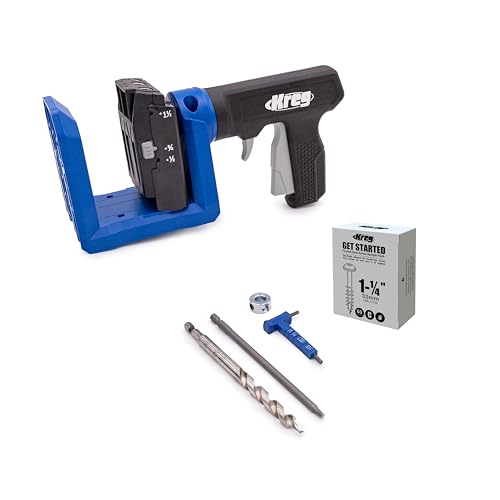
Kreg Pocket-Hole Jig 520 (KPHJ520PRO2)
Versatile grab-and-go design
Mobile DIY builds
Beginner Friendly
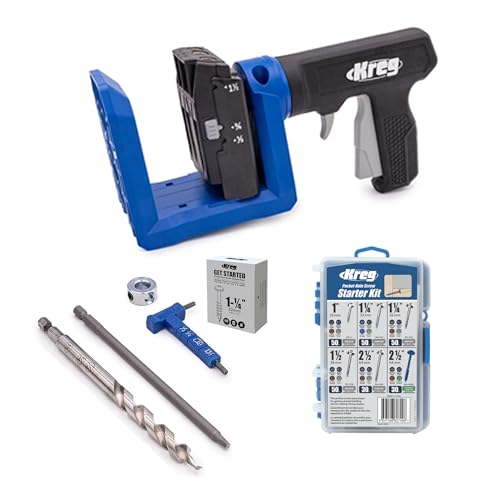
Kreg Pocket-Hole Jig 520 with 260-Screw Starter Pack
Screws in the box
First-time builders

Workshop Pick
Kreg Pocket Hole Jig K4
Time-tested benchtop design
Shop-based projects

Frequent-Use Pick
Kreg Pocket-Hole Jig 720PRO
Faster setup and repeatability
Repeat project builds

Compact Choice
Kreg Pocket-Hole Jig 320 (KPHJ320)
Small footprint, simple setup
Tight workspaces
What Each Pick Brings To The Table
The 520PRO is built around a simple idea: take a solid pocket hole setup off the bench and let it travel with you. Its rotating handle swings a full 360 degrees, so the jig clamps comfortably onto boards of nearly any shape, even on awkward repair pieces where a benchtop jig would feel stuck. You can drill a pocket hole almost anywhere on a workpiece, not just along an edge, which matters when you’re patching cabinet sides or building face frames in place.
For most home woodworkers, this is the sweet spot. It handles 1/2-inch to 1-1/2-inch material without swapping out parts, and the included screw pack is enough to finish a small project on day one. Compared to the K4 below, you trade some benchtop stability for portability, and that is the right call for anyone who works in a garage, on a driveway, or in a shared shop space.
Notable Gains
- ✓360-degree rotating handle adapts to unusual angles and tight clamping zones.
- ✓Drills pocket holes on faces, edges, and corners, not just along straight edges.
- ✓Works with material from 1/2-inch to 1-1/2-inch thick, covering most home projects.
- ✓GripMaxx anti-slip surface holds workpieces steady during drilling, reducing walk.
- ✓Compact enough to throw in a tool bag for on-site repair calls.
Things To Consider
- •Less stable than a full benchtop jig for long production runs, since the clamp body is the work surface.
- •Only 60 screws in the box, so larger builds mean reordering sooner rather than later.
Key Specs
| | Feature | Specification | Why It Matters |
|---|
| Material thickness range |
1/2-inch to 1-1/2-inch |
Covers cabinet plywood, dimensional lumber, and most trim stock without changing setups. |
| Handle rotation |
360 degrees |
Lets the clamp engage on irregular shapes and corners where fixed-handle jigs struggle. |
| Clamping surface |
GripMaxx anti-slip |
Holds the workpiece in place so the drill bit tracks straight, even on smooth melamine. |
Made For
DIYers and remodelers who build in multiple spots and want a jig that travels without losing accuracy.
Consider Something Else When
The Kreg K4 is a better fit for stationary workshop use where you want a dedicated drill guide block on the bench.
This is the same 520PRO chassis, paired with a generous 260-screw starter pack so you can build a real project on the first weekend. The added screws are a quiet but meaningful upgrade: nothing stalls a new builder faster than finishing a cut list and realizing they have to order fasteners before the assembly can begin. The screws come in the most common length for 3/4-inch plywood, which is the material most beginners end up working with first.
If you are stepping into pocket hole joinery for the first time, this bundle removes the guesswork. The jig itself does the heavy lifting, and you can focus on learning how to lay out boards, clamp the jig, and drill a clean hole. For experienced builders, the smaller 60-screw KPHJ520PRO2 above is the better buy since you likely already stock your own screws.
Good Reasons To Consider
- ✓Includes 260 pocket hole screws, enough for several medium projects out of the box.
- ✓Same 360-degree handle and clamping range as the standard 520PRO.
- ✓Reduces the “what else do I need to buy” friction that stops many first builds.
- ✓Works on the same 1/2-inch to 1-1/2-inch material range as the rest of the 520 line.
Worth Noting
- •The extra screws push the overall cost above the standard 520PRO bundle, so seasoned builders pay for hardware they already own.
- •No protective case included, so storing the jig and screws neatly takes a bit of drawer space.
Whose Shelf It Belongs On
First-time pocket hole users who want a complete starter kit and are ready to build a project right away.
Reach For A Different Pick When
The Kreg 320 suits you better for small repairs and tight workspaces where portability matters more than screw count.
The K4 has been on workshop benches for years because it earns its place through repeatability. The 3-hole drill guide block lets you space pocket holes consistently across a workpiece, and the ratcheting clamp holds boards steady while you drill. Once you dial in the right setting for your material thickness, you can run a stack of identical parts and get the same joint every time. That kind of consistency matters on face frames, cabinet sides, and bookshelf carcasses.
It does not pretend to be portable, and that is the point. If your pocket hole work happens at a dedicated bench with a drill press or corded drill mounted nearby, the K4 rewards that setup. The trade-off compared to the 520PRO is reach: the K4 wants you to bring the board to the jig, while the 520PRO is happy to go to the board.
A Few Highlights
- ✓Time-tested design used by both DIYers and pros over many production cycles.
- ✓3-hole drill guide speeds up repetitive builds with consistent spacing.
- ✓Adjustable setup handles the same 1/2-inch to 1-1/2-inch thickness range as other Kreg jigs.
- ✓Sturdy benchtop footprint resists walking under heavy drilling pressure.
Trade Offs
- •Bulkier than the 520 or 320, so it stays put on a bench rather than moving with you.
- •Older design language means setup is a touch more manual than the 720PRO below.
Key Specs
| | Feature | Specification | Why It Matters |
|---|
| Drill guide |
3-hole design |
Lets you drill multiple pocket holes at consistent spacing in a single setup. |
| Material thickness range |
1/2-inch to 1-1/2-inch |
Covers the same cabinet and furniture stock as the rest of the Kreg line. |
| Use environment |
Benchtop |
Stable for high-volume drilling where you bring the workpiece to the jig. |
Right Fit For
Woodworkers with a fixed bench who repeat similar joinery on cabinetry, built-ins, and furniture projects.
Look Elsewhere When
The Kreg 720PRO is the smarter upgrade for builders who want faster setup on frequent project runs.
The 720PRO is what Kreg built for builders who run the same type of project over and over. Its automatic material-thickness setting and click-and-drill workflow cut the steps between clamping and drilling, which adds up when you are cranking out a dozen cabinets for a garage build. The steel-reinforced body gives it a planted feel on the bench, and owners commonly report that the clamping action stays firm even after extended use.
Where the K4 above asks you to set things by feel, the 720PRO aims for a more repeatable, dial-it-once experience. For most people, the K4 is plenty. But if you are building a kitchen’s worth of face frames, a closet system, or multiple workbenches, the 720PRO earns its higher price through saved setup time.
The Value In It
- ✓Automatic material-thickness setting removes a step from the drilling workflow.
- ✓Sturdy construction handles frequent production use without flex.
- ✓Compatible with the same Kreg screw lineup as the rest of the line.
- ✓Drills clean pocket holes in 1/2-inch to 1-1/2-inch plywood, the bread and butter of cabinetry.
Honest Caveats
- •Priced above the K4 and 520PRO, so casual builders may not recoup the cost in saved time.
- •Larger footprint than the 320, so small workbenches feel the squeeze.
Feature Snapshot
| | Feature | Specification | Why It Matters |
|---|
| Material thickness range |
1/2-inch to 1-1/2-inch |
Covers plywood, MDF, and dimensional lumber used in typical DIY projects. |
| Setup style |
Automatic thickness adjustment |
Reduces manual setup, useful when running many identical joints. |
| Use profile |
Mid-to-high volume DIY builds |
Best fit for repeated cabinetry or furniture runs, not one-off pocket holes. |
Best Suited To
Serious DIYers who build the same type of project repeatedly and want consistent results with less setup time.
A Better Fit Elsewhere
The Kreg 520 is the more practical pick for mobile work and occasional repairs where portability matters most.
The 320 is the smallest Kreg jig in this lineup, and it leans into that. It is a straightforward clamp-and-drill setup with a single drill guide, which is honestly all you need for quick cabinet repairs, drawer builds, or assembling flat-pack furniture stronger than the original. The compact body fits into a drawer, a small toolbox, or the side of a workbench without dominating the space.
For a hobbyist who only pulls out a pocket hole jig a few times a year, the 320 covers the work without overbuilding the tool. The honest read is that you give up the speed of the 720PRO and the versatility of the 520PRO, but you get a tool that is small enough to always be within reach. Compared to the K4, this is the “grab and go” answer for less committed work.
The Upside
- ✓Compact footprint stores easily in a drawer or small toolbox.
- ✓Simple clamp-and-drill operation works well for first-time users.
- ✓Drills accurate pocket holes at the correct angle for strong joints.
- ✓Lower entry point for hobbyists who only need a pocket hole jig occasionally.
Points To Keep In Mind
- •Single-hole drill guide means slower spacing on larger projects compared to the K4 or 720PRO.
- •Less versatile for unusual angles than the 520PRO’s rotating handle.
- •Owners commonly report that the included hardware is minimal, so extra screws are a likely follow-up purchase.
Who Should Grab It
Hobbyists and apartment dwellers who need a pocket hole jig for occasional repairs and small builds in tight spaces.
Swap It Out When
The Kreg K4 is a better match for workshop builds where you want consistent spacing across long assemblies.
What To Weigh Before Choosing A Pocket Hole Jig
Material thickness range matters more than most first-time shoppers expect. A jig that only handles 3/4-inch plywood sounds fine until you try a 1/2-inch cabinet back or a 1-1/2-inch leg. The Kreg jigs above all cover 1/2-inch to 1-1/2-inch stock, which is the practical sweet spot for cabinets, furniture, and trim work.
Clamping And Setup Style
Clamping is where daily use shows its quality. A rotating handle, like on the 520PRO, adapts to corners and odd shapes. A bench-mounted block, like the K4, is faster on straight runs. Automatic thickness settings, like on the 720PRO, save time when you repeat the same project. The right call depends on how often you reset the jig between boards.
Portability Versus Stability
There is a real trade between a jig that travels and one that sits on a bench. Portable jigs (320, 520PRO) work on site and on awkward repairs. Benchtop jigs (K4, 720PRO) stay planted and feel more solid under heavy drilling. The honest read is that for garage and driveway work, you want the portable end. For a dedicated shop corner, the bench models pay off.
Screw Availability And Starter Packs
Pocket hole screws are a separate ecosystem from regular wood screws. The wrong thread length or coating can split plywood or fail to seat cleanly. Starter packs, like the 260-screw bundle on the 520, take the guesswork out of the first build. Long-term, you will likely buy screws in bulk by length and head style, so factor that into how much “extra” feels worth paying up front.
Key Considerations Across These Picks
Common Shopping Slip Ups
A frequent misstep is buying the cheapest pocket hole jig and assuming it covers the same joints as the well-known names. Budget jigs often skip the hardened drill guides, which means wobbly bit tracking and inconsistent joint strength. Another slip is ignoring screw length: pocket hole screws are sold by project thickness, and a 1-1/4-inch screw in 1/2-inch stock will blow through the back face. Match the screw to the material, and the joint will sit flush and tight.
Where The Extra Money Goes
Higher-tier Kreg jigs add steel-reinforced bodies, automatic thickness adjustment, and faster clamping action. Those features pay off when you build the same cabinet or shelf unit over and over. For one weekend projects, the savings on a simpler 320 or standard 520PRO are real and worth keeping. The upgrade makes sense once your project count climbs past a few per year, and setup time starts to feel like a tax on every build.
Frequently Asked Questions
QWhat thickness of wood can a pocket hole jig handle?
Most Kreg jigs in this lineup work with stock from 1/2-inch to 1-1/2-inch thick. Thinner material may need a spacer block to keep the drill bit at the right depth.
QDo I need special screws for pocket hole joints?
Yes. Pocket hole screws have a washer head and a self-tapping tip designed for the angled hole. Standard wood screws can split the joint or not seat properly.
QCan a pocket hole jig join boards at any angle?
A pocket hole joint is designed for 90-degree corner assemblies, like face frames, cabinets, and boxes. Angled or mitered joints need a jig with adjustable drill guides, which most portable Kreg models do not offer.
QIs a portable jig accurate enough for cabinet work?
For most DIY cabinetry, yes. The 520PRO and 720PRO both produce consistent joint strength on plywood, which is what cabinet construction relies on. Precision depends more on consistent setup than on the jig being bolted down.
QHow long does it take to drill and assemble a pocket hole joint?
A typical pocket hole takes about 10 to 15 seconds to drill once the jig is set, and driving the screw adds another few seconds. Most of the time goes into clamping the jig and aligning the boards, not the drilling itself.
Closing Remarks
A pocket hole jig pays you back the first time you build something stronger than the sum of its parts. Match the jig to the work you actually do: a compact 320 for occasional repairs, the 520PRO line for grab-and-go builds, the K4 for benchtop consistency, and the 720PRO for repeat projects. The right tool is the one that fits both your workshop and the projects you want to finish this year.







