


A good pocket multimeter disappears into your shirt pocket until you need it, then earns its keep diagnosing a dead outlet, tracing a broken wire in a ceiling fan, or confirming a battery is truly spent. Field electricians, HVAC techs, and serious DIYers all know the gap between a flimsy discount meter and a trustworthy one shows up the moment a reading matters. This list covers nine pocket-friendly options across professional, prosumer, and budget tiers, so you can match the tool to the work.
The Leading Options At A Glance

Fluke 17B+ Digital Multimeter for Electrical Applications

Fluke 15B+ Digital Multimeter for Electrical Applications

Fluke 106 Palm-Sized Digital Multimeter

AstroAI Digital Multimeter TRMS 2000 Counts (DM200M)

ALLOSUN Pocket Size Digital Multimeter (EM3085A Upgraded)

ANENG Pen Type Digital Multimeter 6000 Count with NCV

Neoteck 6000 Counts 2 in 1 Pen Type Digital Multimeter

Klein Tools MM420 Auto-Ranging TRMS Digital Multimeter
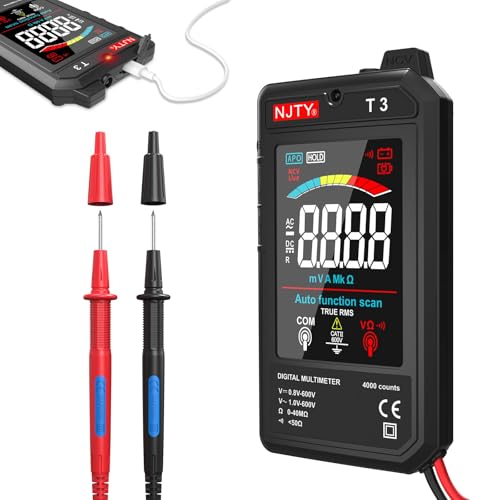
NJTY T3 Auto-Ranging Digital Multimeter Type-C Rechargeable
The Picks, Examined More Closely
The Fluke 17B+ is the meter you hand to an apprentice on day one and still trust five years later, which is exactly why it sits at the top of this roundup. Where the 15B+ covers the basics, the 17B+ stretches further with frequency and temperature measurement on top of voltage, current, resistance, continuity, diode, and capacitance checks. That extra range matters for HVAC techs reading compressor discharge temps or controls techs tracing sensor signals on a 24V circuit.
Real-world ownership looks like a meter that survives a drop off a scissor lift, keeps reading true, and runs on a fresh set of AAs long enough to forget when you last swapped them. The one-handed rotary dial is glove-friendly, and the CAT III 600V safety rating is the right baseline for residential and light commercial panels. For pros logging daily hours on the tool, the price premium over cheaper brands is the kind of math that pays for itself the first time a reading is decisive.
Positive Takeaways
- Full measurement suite: voltage, current, resistance, continuity, diode, capacitance, frequency, and temperature in a single unit
- CAT III 600V safety rating covers most residential and light commercial panel work
- One-handed rotary dial stays usable while wearing insulated gloves
- Fluke build quality tends to hold calibration through years of field use, which is why shops standardize on the brand
- 10A current range handles motor and compressor diagnostics without tripping internal protection
Trade Offs To Consider
- Sits at a noticeably higher price tier than the budget picks on this list, which may be hard to justify for a once-a-year home user
- Adds bulk compared to the Fluke 106 reviewed below, so it pushes the upper limit of “pocket” for shirt-pocket carry
- No backlit display mentioned in the source data, so dim panels may slow you down
Key Product Details
Who It Suits Best
Career electricians, HVAC technicians, and facility maintenance staff who need a full-feature meter that holds up to daily truck-duty abuse.
Consider Something Else When
Home DIYers doing occasional outlet and battery checks will find the Fluke 15B+ covers the same essentials at a friendlier price point.
The Fluke 15B+ is the meter that made professional-grade handheld testing accessible to non-pros, and it remains the practical sweet spot for most readers on this list. It keeps the same one-handed glove-friendly dial, the same CAT III 600V safety rating, and the same rugged build the brand is known for, while trimming the measurement list to voltage, current, resistance, continuity, diode, and capacitance. The trade shows up clearly: you lose frequency and temperature, which the 17B+ reviewed above still covers.
For residential electricians, appliance repair techs, and ambitious homeowners, the 15B+ hits a daily-driver profile that rarely disappoints. The 1000V AC/DC ceiling handles anything in a home panel, and the 10A range is enough for compressor and motor spot checks. Owners commonly report these meters surviving drops, dust, and years of truck-cab temperature swings without losing calibration. The honest read is that this is the safer default for anyone not specifically needing temperature or frequency.
Where It Helps
- Same CAT III 600V safety rating and rugged build as the larger 17B+, at a lower entry price
- One-handed operation stays workable with insulated work gloves on
- 1000V AC/DC and 10A current range cover the bulk of residential troubleshooting tasks
- Includes capacitance, diode, and continuity for board-level and appliance diagnostics
- Replacement cost of test leads and fuses stays low, which matters for shops buying several units
Points To Keep In Mind
- Drops frequency and temperature measurement compared to the 17B+, which HVAC and controls techs may miss
- Heavier than the Fluke 106 in a shirt pocket, so it leans more toward a jacket pocket or tool bag
- No backlight in the source data, so dim crawl-space work may require a headlamp on the meter too
Feature Snapshot
Made For
Residential electricians, appliance repair technicians, and serious DIYers who want a professional-grade daily driver without paying for advanced measurement modes they would rarely use.
Look Elsewhere When
HVAC techs working on refrigerant systems and combustion circuits will get more mileage out of the temperature-capable Fluke 17B+.
At roughly 142 x 69 x 28 mm, the Fluke 106 is the genuine shirt-pocket option in a brand that usually lives in a tool bag. It is purpose-built for go/no-go testing, meaning quick confirmations that a circuit is live, a fuse is blown, or a resistor is open, rather than deep system diagnostics. Compared to the 15B+ and 17B+ above, the 106 strips the feature list down to voltage, resistance, continuity, and capacitance, with an input terminal for AC and DC current measurements when you need them.
Real-world use looks like clipping the meter to a shirt pocket, walking a residential service loop, and reading each outlet in seconds without unholstering anything. The catch is the “India” version note in the source: this SKU is manufactured for the Indian market, and U.S. warranty coverage does not apply. For shoppers in the U.S. that detail matters, so confirm warranty terms before checkout, especially if you are buying a tool for daily job-site use.
The Practical Payoff
- Compact palm-sized body genuinely fits a shirt or jeans pocket, unlike most handheld Fluke models
- One-handed operation designed for fast go/no-go checks on outlets, fuses, and simple circuits
- Includes an input terminal for AC and DC current when occasional draw measurements come up
- Lightweight enough to stay clipped to a belt loop for full-day site walks
Honest Caveats
- Marked as a U.S. warranty-ineligible India-market SKU, so post-purchase support may be limited in North America
- Measurement list is narrow compared to the 15B+ and 17B+, so it cannot replace a full meter on heavy diagnostic days
- Best viewed as a secondary or pocket meter rather than a shop primary, given the warranty and feature trade-offs
Right Fit For
Electricians, technicians, and field service pros who already own a full-size meter and want a grab-and-go pocket unit for quick checks between service calls.
Another Choice May Suit
Home DIYers looking for a single, general-purpose meter will find the AstroAI DM200M covers more functions at a lower price.
The AstroAI DM200M brings True RMS (a method of reading AC signals accurately even when the waveform is not a clean sine wave) measurement to a budget price point, which is the headline reason it lands on this list. The 2000-count display is modest next to the 6000-count units further down, but for AC/DC voltage, AC/DC current, resistance, continuity, and diode checks around the house, the resolution is rarely the limit. The catch is that TRMS accuracy on a low-cost meter still trails a Fluke, so for industrial motor work, a real pro meter is the right call.
For DIY use, the DM200M is comfortable to live with. A silicone protective case and built-in kickstand make bench and garage work easier, while a backlit display helps in dim panels and crawl spaces. The data hold and max value recording features are genuinely useful when you are squeezing probes into a tight outlet box and cannot look at the screen mid-measurement. A 15-minute auto-off keeps the batteries alive, and the low-battery indicator prevents the classic “reading seemed wrong” surprise.
Practical Advantages
- True RMS AC measurement at a budget tier, helpful for variable-speed drives and modern electronics in the home
- Backlit display plus included silicone case and kickstand support real garage and crawl-space work
- Data hold and max value recording make one-handed probing much easier in tight spaces
- Auto power-off and low-battery indicator reduce the chance of a dead meter mid-job
Factors To Consider
- 2000-count display has lower resolution than the 6000-count pen meters reviewed later in this list
- TRMS performance on a budget unit generally trails a Fluke, so industrial motor work is not its sweet spot
- Safety rating and category are not specified in the source data, so confirm suitability before any panel work
Quick Facts
Best Suited To
Home DIYers, hobbyists, and apartment dwellers handling outlet checks, appliance diagnostics, and electronics tinkering without needing pro-tier certification.
Reach For A Different Pick When
Tradespeople working in live panels daily will want the CAT III 600V assurance that comes with the Fluke 15B+ or Klein Tools MM420.
The ALLOSUN EM3085A is the cheapest entry on this list and the one to reach for when a meter is needed mostly for confidence checks rather than daily diagnostics. It runs on a single AAA battery, fits in a jacket pocket easily, and auto-ranges through 3-3/4 digit resolution across DC and AC voltage, DC and AC current, resistance, continuity, diode, capacitance, and frequency. The non-contact AC voltage detection is a useful bonus for the price, letting you sense live wires without making contact, which is handy for quick outlet and cable scans.
The honest read on ownership is that a budget unit like this lives in a kitchen drawer, gets pulled out a few times a year, and works fine for the tasks it was designed for. A built-in 500 mA/250V fuse and data hold round out the basics. Where it is less suited is heavy shop use, where calibration drift, probe quality, and safety certifications start to matter. For the cost, it delivers more than enough for occasional household troubleshooting.
Strengths Worth Knowing
- 3-3/4 digit auto-ranging across voltage, current, resistance, continuity, diode, capacitance, and frequency at a low price
- Non-contact AC voltage detection is rare at this tier and useful for quick live-wire checks
- Single AAA battery keeps the running cost down and the battery swap simple
- Built-in 500 mA/250V fuse adds a small layer of protection for casual household use
Where It May Fall Short
- AAA battery is not included, so you will need to buy one before the first use
- Safety rating is not specified in the source data, so it is not the right pick for live panel diagnostics
- Calibration and probe quality will not match a Fluke or Klein, which matters for any professional work
Who Should Grab It
Homeowners, renters, and hobbyists who need a meter a few times a year for outlet, battery, and small-electronics checks without committing to a higher price.
Where Another Pick Suits Better
Anyone troubleshooting modern electronics with variable-frequency drives or non-sinusoidal waveforms will get more accurate readings from the AstroAI DM200M’s TRMS circuit.
Pen-style meters earn their spot in a kit when the work happens in tight spaces where a traditional handheld body simply does not fit. The ANENG A3008 sits in that category, shaped more like a thick marker than a brick, with a 6000-count display and non-contact voltage detection on board. The “High Version” label in the source refers to a software upgrade over the older A3005 normal version, with reportedly improved measurement sensitivity and a refined Hz function, though those gains show up in edge cases more than in everyday checks.
Real-world use looks like probing a crowded control board, reaching into a low-voltage cabinet, or tracing wires inside an appliance without removing the panel first. The trade is that the slim body means smaller probe spacing, which can make high-current measurements awkward. For homeowners and field techs who already carry a full-size meter for serious work, this pen-format unit is a smart secondary tool rather than a primary.
Practical Pluses
- Pen-style body reaches into control cabinets and crowded boards where a brick meter will not fit
- 6000-count display gives finer resolution than the 2000-count AstroAI DM200M at a similar price point
- Non-contact voltage detection built in for quick live-wire sense checks
- High-version (A3008) software reportedly improves sensitivity and Hz accuracy over the older A3005
Soft Spots
- Small probe spacing makes high-current measurements awkward, and the meter is less suited as a primary shop tool
- Build quality and long-term calibration are not specified in the source data, so it is best treated as a secondary or backup meter
- Pen format means a separate traditional meter is still needed for serious panel and motor diagnostics
Feature Rundown
Whose Shelf It Belongs On
Electronics hobbyists, IT technicians, and field service pros who already own a full-size meter and want a slim secondary tool for cramped wiring.
Skip It When
Anyone needing a single do-everything meter for home use will find the AstroAI DM200M easier to read and operate as a primary tool.
The Neoteck 2-in-1 is the most beginner-friendly pen meter on this list, mostly because it removes the dial-twisting step entirely. Its smart mode automatically identifies what you are measuring (AC voltage, DC voltage, resistance, or continuity) and selects the right range on its own, which lowers the learning curve for first-time users. The meter also distinguishes between the neutral and live wire in an AC circuit using different alarm frequencies, a small touch that helps when you are not yet sure what you are looking at.
With True RMS and a 6000-count display, the underlying hardware is solid for the price. Measurement range runs from 0.1 mV to 600V on DC and 10 mV to 600V on AC, covering most low-voltage electronics, appliance, and outlet work. The same body doubles as a voltage tester pen in dedicated AC mode. The trade is that auto-detection cannot read minds, so experienced techs may find themselves wanting manual control on ambiguous circuits.
Noteworthy Benefits
- Auto-detection picks the right measurement mode for AC/DC voltage, resistance, and continuity without manual switching
- True RMS 6000-count display delivers reliable readings on non-sinusoidal AC waveforms from modern electronics
- Live vs. neutral wire distinction by alarm frequency helps beginners identify conductors safely
- 2-in-1 design lets the same tool work as a pen-style voltage tester and a full multimeter
Less Ideal Details
- Auto-mode can guess wrong on unusual signals, and the source data does not confirm a manual override for every range
- Pen form factor still constrains probe spacing, so it is not ideal as a sole high-current meter
- Safety rating and category are not specified in the source data, so it is best kept to low-voltage work
Perfect Match For
Students, apprentices, and first-time DIYers who want a forgiving, auto-detecting meter to learn the basics without memorizing mode positions.
A Better Fit Elsewhere
Experienced techs who want manual range control and certified safety ratings will prefer the Klein Tools MM420 as a daily driver.
Klein Tools built the MM420 with electricians in mind, drawing on years of field input from the trade. The result is an auto-ranging True RMS meter that measures AC/DC voltage up to 600V, AC/DC current up to 10A, and resistance up to 50 MOhms, and adds temperature, capacitance, frequency, duty cycle, plus diode and continuity tests. That feature spread puts it in direct conversation with the Fluke 15B+ reviewed above, and depending on what is on the shelf, either could be the right call.
Where Klein tends to stand out is the physical design. The case, dial, and probe holders reflect a brand that has spent decades listening to working electricians rather than spec-sheet shoppers. For daily field service where a meter rides in a tool bag, gets tossed on truck seats, and sees a hundred outlet checks a week, that ergonomic familiarity is not a small thing. The honest read is that it competes head-to-head with the Fluke 15B+ on capability, so the choice often comes down to which brand’s feel you prefer.
Key Advantages
- Auto-ranging True RMS across AC/DC voltage to 600V and current to 10A covers typical service work
- Wide measurement set including temperature, capacitance, frequency, and duty cycle for controls and HVAC crossover work
- 50 MOhm resistance range handles high-impedance readings uncommon on most consumer meters
- Ergonomic design shaped by years of field input from working electricians
Practical Considerations
- Heavier than the pen-style and palm-sized options reviewed above, so it lives in a tool bag, not a shirt pocket
- Specific CAT safety rating is not in the source data, so confirm the rating matches your work environment before panel use
- True RMS performance is solid, but serious industrial motor diagnostics may still favor a higher-tier unit
Spec Overview
Built With In Mind
Working electricians, facilities techs, and HVAC service pros who want a rugged, brand-trusted daily driver with a broad feature set.
Swap It Out When
Tradies and homeowners who want the smallest possible Fluke-branded pocket option should look at the Fluke 106, keeping in mind its India-market warranty note.
The NJTY T3 is the meter on this list for people who are simply tired of buying AAA and 9V batteries. Its built-in rechargeable cell charges through a USB Type-C port, the same cable that probably already lives on your phone, laptop, and workbench. The 4000-count display is a useful middle ground between the 2000-count AstroAI and the 6000-count pen meters, and auto-ranging handles AC/DC voltage plus resistance without manual dial work.
In a home shop or small-business setting, rechargeability translates to less downtime hunting for batteries mid-project and lower long-term ownership cost. The trade is that the NJTY brand is not as established in the category as Fluke, Klein, or AstroAI, and the source data is thinner on safety ratings, measurement count, and certifications. For learning the craft, hobby electronics, and routine home use, the convenience is real. For daily commercial work, the established brands remain a safer bet.
Points In Its Favor
- Built-in rechargeable battery with Type-C charging removes the recurring cost and hassle of swapping AAs or 9V cells
- Auto-ranging across AC/DC voltage and resistance simplifies use for non-technical owners
- 4000-count display sits in a comfortable middle ground for home and hobby work
- Type-C charging pairs with cables and chargers you likely already own, reducing charger clutter
Small Caveats
- Source data is thin on safety rating, category, and CAT classification, so panel and commercial use is harder to justify without more detail
- Less established brand pedigree compared to Fluke, Klein, or AstroAI in this category
- Rechargeable battery is a long-term convenience, but like any built-in cell, it will eventually need service or replacement
Feature Snapshot
Who Will Love This
Home users, hobbyists, and small-shop owners who want a low-fuss, rechargeable meter for routine checks and dislike stocking coin and AAA cells.
Not Your Match When
Tradespeople who need a CAT-rated, commercial-grade daily driver will be better served by the Fluke 15B+ or Klein Tools MM420.
Picking The Right Pocket Multimeter For Your Work
The first call is whether a pocket form factor is genuinely the right shape for your work, or whether a full-size brick is what you actually need. Pen-style and palm-sized units like the Fluke 106, ANENG A3008, and Neoteck 2-in-1 are brilliant for go/no-go checks, outlet scans, and tight cabinet work, but they trade current range, dial ergonomics, and screen size for portability. If most of your day is at a panel or a service truck, a traditional handheld like the Fluke 15B+ or Klein MM420 will feel more natural in hand for sustained diagnostics.
True RMS is the second decision that actually matters. Plain meters assume a clean 60 Hz sine wave, and modern electronics from LED dimmers to variable-speed drives produce messy waveforms that throw those readings off. If you work around any of that, the AstroAI DM200M, Klein MM420, or Neoteck are the budget-to-mid-tier picks that handle the real-world signals you encounter. Safety rating, the third pillar, applies to anyone touching a panel: look for an explicit CAT III 600V marking from a known brand before any live work.
Count display, accuracy, and battery type matter less than they seem in marketing copy. A 2000-count meter reads 0 to 1999, a 4000-count reads 0 to 3999, and a 6000-count reads 0 to 5999; that resolution only matters when you are chasing small differences in low-voltage circuits. AAA, 9V, and rechargeable Type-C power sources each have their fans, and the right one is whichever you will actually keep topped up. The honest read is that durability, brand support, and safety certification matter more than raw display resolution for most shoppers on this list.
Key Considerations Across These Picks
Where Shoppers Go Wrong
The most common misstep is buying on display-count or feature-list length without matching the meter to the work. A 6000-count pen meter is useless if you actually need a CAT III 600V brick for daily panel work, and a Fluke 17B+ is overkill if you are checking car batteries twice a year. Confirming that the listed safety rating covers the highest-energy circuit you will touch is more important than any spec sheet bragging right.
Another trap is ignoring the warranty and region note on certain SKUs. The Fluke 106 in this list is explicitly manufactured for the Indian market, and U.S. warranty coverage does not apply, which is a meaningful detail if you are buying from a U.S. listing. Reading the small print before checkout saves a return headache.
What Separates Premium From Basic
The gap between a Fluke 17B+ and a budget meter is not the spec list; it is the build, the calibration, and the safety engineering behind those specs. Premium meters use better input protection, more robust rotary switches, and tighter quality control, which together mean a meter that still trusts you five years in. For pros logging daily hours, that is the math that justifies the price. For occasional use, the budget tiers on this list are designed to give honest readings without the long-term investment.
Frequently Asked Questions
What is True RMS and do I need it? True RMS measures AC signals accurately even when the waveform is distorted, which is common with LED lighting, dimmers, and variable-speed drives. Anyone working on modern electronics benefits from it.
Are pocket multimeters as accurate as full-size ones? For most home and field tasks, yes. The accuracy class is more about brand calibration and components than physical size, so a quality pen meter can match a brick on basic readings.
What safety rating should I look for? CAT III 600V is the right baseline for residential and light commercial panel work. Higher categories exist for utility and industrial environments, but most readers will not need them.
Can a pocket multimeter measure current? Some can, including several on this list, but the measurement requires breaking the circuit and inserting the meter in series. For most home use, a non-contact voltage check is the safer starting point.
How long do these meters typically last? A well-cared-for unit from a known brand can run reliably for many years. Drops, dust, and dead batteries shorten that timeline, so basic maintenance and storage matter more than people expect.
Closing Remarks
The right pocket multimeter is the one you will actually carry and actually trust. For most readers, that means starting with the Fluke 15B+ or Klein MM420 for daily work, the Fluke 106 for grab-and-go checks, and stepping down to the AstroAI or ALLOSUN for occasional household use. Match the meter to the highest-energy circuit you will touch, and the rest of the decision tends to take care of itself.




