


A good point driver takes the friction out of closing a frame, pressing a flexible fastener into rabbet (the recessed ledge along the inner edge of a frame) with a single push instead of a tap-hold-pray routine. If you mat, hinge, and finish a few pieces a year, a manual point driver handles the job without dragging a compressor into the room. Framers building in volume or pushing into harder hardwoods step up to pneumatic (air-powered) tools for repeatable drive depth and faster pacing. The shortlist below pairs hand tools, a pneumatic option, replacement points, and a glazing-specific driver, so you can match the tool to the kind of work you actually do.
The Main Contenders

meite HM515 Manual Point Driver with 1,000 Flexible Point Nails

meite P515 Pneumatic Point Driver with 1,000 Flex Nails 5/8″
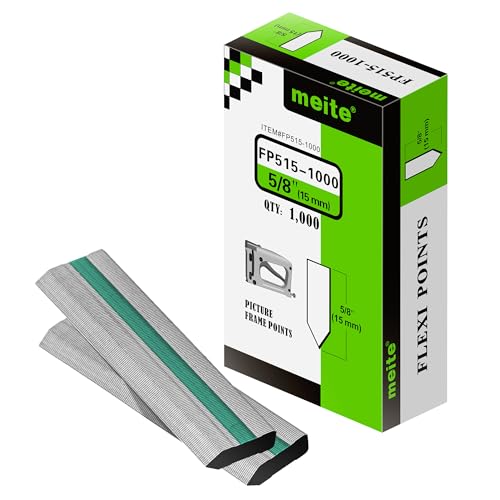
meite Flexible Point Nails 15mm 5/8″ Refill 1,000-Pack

Logan Dual Point Driver Elite with F54 Rigid Points 600-Pack
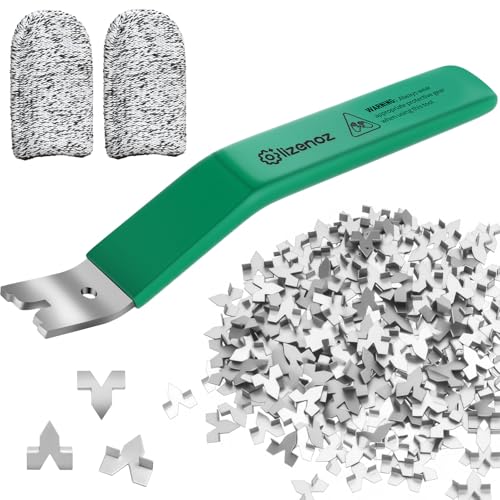
lizenoz Glazier Point Driver with 200 Glazing Points and Finger Cots
More On The Choices That Made The List
First-time framers usually want a tool that gets out of the way, and the meite HM515 fits that brief without forcing extra accessory purchases. The kit arrives with the driver and a thousand 5/8″ flexible points already in the box, so you can unbox it and close a frame the same afternoon. In a home workshop where you’re finishing two or three pieces a week, that hand-press design feels light and approachable.
Adjustable drive depth on a manual tool is a small but useful detail, since it lets you match how deep the point sits in softer pine versus a denser maple moulding. For most home matting and moulding work, you may find the spring pressure comfortable even during a long framing session. Compared to the Logan Dual Point Driver Elite reviewed later, the HM515 sticks to flexible points only and keeps the price lower.
Key Advantages
- All-in-one starter kit, no extra fastener purchase needed up front
- Manual operation means no compressor, hose, or power outlet to set up
- Adjustable depth helps you tune the drive to soft and hard woods
- 5/8″ flexible points suit most standard rabbet depths on retail moulding
- Light enough for extended sessions without hand fatigue, in most home workshops
Things To Consider
- Manual pressure can wear on your palm during long production runs
- Only handles flexible points, so rigid framing nails require a different tool
Key Product Details
Who It Suits Best
Beginners and hobbyists framing a few pieces a month who want everything in one box without buying extras.
Consider Something Else When
Shoppers producing high frame volumes should reach for the meite P515 Pneumatic Point Driver for faster, less fatiguing drive cycles.
Volume framers tend to hit a ceiling with hand-press tools, and the meite P515 exists exactly at that pain point. This is an air-powered point driver, meaning compressed air from a separate compressor drives each fastener with consistent force, designed to replace the manual press cycle with a faster, repeatable push. A standard 1/4″ NPT (National Pipe Thread, a common air-tool fitting) inlet and a recommended operating range of 60 to 100 PSI (pounds per square inch, the air-pressure measurement) make it a fit for most home-shop compressors.
If your shop already has a compressor and a hose reel, the P515 slots in cleanly and keeps your hand off the tool between shots. The included thousand 5/8″ flexible points mean you can test the tool on scrap moulding before committing to a production run. For framers working through a backlog of gallery orders, in our view, this is the kind of step that pays off within a season.
Everyday Wins
- Air-powered drive reduces hand fatigue on long production days
- Standard 1/4″ NPT inlet fits the hose you likely already own
- Consistent point seating across multiple frames in a single run
- Comes with 1,000 flexible points, ready for a full project cycle
Points To Note
- Requires a separate air compressor, which adds cost and shop space
- Needs a learning curve to dial in PSI for soft mouldings without over-driving
Made For
Framers with a compressor on the bench who push out batches of frames and want consistent drive depth without hand strain.
Look Elsewhere When
Anyone working from a small apartment workshop without compressor space will find the meite HM515 Manual Point Driver a simpler starting point.
Once you own a driver, the next shopping trip is usually for points, and the meite Flexible Points refill covers that gap in plain, practical fashion. The pack ships 1,000 collated 15mm (5/8″) flexible points across seven strips, which fits neatly into the meite HM515, the P515, and several other common drivers. If you’ve worked through the starter pack that came with your tool, this refill picks up where that left off.
The collated strips (points pre-loaded in a connected row that feeds into the driver) keep your workflow moving, so you spend less time fumbling individual fasteners and more time closing frames. In our view, the honest read is that point quality is the unglamorous half of framing, and a reliable refill prevents the mid-project stall. This sits in the cart next to a driver, not in place of one.
Bright Spots
- Broad driver compatibility across meite HM515, P515, and several Logan-compatible models
- Collated strips cut down on reload time during long sessions
- 1,000-point pack lowers the per-fastener cost over retail singles
- 5/8″ length covers the most common rabbet depth in retail moulding
Worth Noting
- Useless without a compatible point driver already on hand
- Strips should be stored dry to prevent corrosion on the fasteners
Right Fit For
Shoppers who already own a compatible driver and want a cost-effective bulk refill to keep projects moving.
Reach For A Different Pick When
First-time framers without a driver yet should start with the meite HM515 Manual Point Driver, since that kit ships with points included.
Logan has long been a recognizable name in the framing aisle, and the Dual Point Driver Elite is the brand’s answer to a common framer complaint. Where many manual drivers only accept flexible points, this one accepts both flexible and rigid styles, giving you the option to pick the fastener that fits the project. The handle is rubber-gripped and tuned to need roughly half the grip force of earlier Logan models.
The kit includes the driver, a sample of flexible points, and a 600-pack of F54 rigid points, so the box covers both common point types from the start. In a small studio where you bounce between standard moulding and heavier custom profiles, having one tool that handles both formats simplifies the bench. Compared to the meite HM515, this driver is more flexible on point choice but trades a bit of starter quantity for it.
Standout Benefits
- Drives both flexible and rigid points from a single tool
- Rubber-gripped handle is tuned for reduced hand force
- Stronger downward pressure helps seat points in harder mouldings
- Includes a 600-pack of F54 rigid points alongside flexible samples
Trade Offs
- Heavier price point than a single-format starter driver
- Rigid points can split very soft pine if you don’t pre-test on scrap
Best Suited To
Framers who switch between flexible and rigid fasteners and want one driver that handles both without swapping tools mid-project.
A Better Fit Elsewhere
Shoppers focused on light DIY work and flexible points only will find the meite HM515 Manual Point Driver a leaner, lower-cost entry.
Glazing points are a different fastener from the flexible framing nails used elsewhere on this list, and the lizenoz Glazier Point Driver is built for that specific job. Glazing points are small, flat metal tabs pressed into the frame rabbet to hold glass, artwork, or cross-stitch fabric in place, rather than flexible brads that flex with the moulding. The tool seats them with light pressure, which is helpful when you’re working over a glass pane and don’t want a heavy impact.
The kit includes 200 rust-resistant iron and zinc points, plus two finger cots to protect your fingers during repeated pressing. For crafters and cross-stitchers finishing small frames, that combination removes the need to source points separately. Compare that to the meite HM515, which targets wood-to-wood framing rather than glass retention, and the role of this tool becomes clearer.
Where It Helps
- Glazing-specific design suits glass, picture, and cross-stitch frames
- Rust-resistant iron and zinc points hold up against humidity
- Included finger cots protect fingers during repeated pressing
- Light pressure drive reduces risk of cracking thin glass
Soft Spots
- Limited to glazing points, not a general framing driver
- 200-point pack may run short on larger glass projects
Who Should Grab It
Crafters and framers who work with glass, cross-stitch, or thin artwork and need a gentle, purpose-built driver.
Swap It Out When
Framers building wood-to-wood moulding assemblies will get more use from the Logan Dual Point Driver Elite and its broader point compatibility.
Factors To Consider When Choosing Point Drivers For Picture Framing
Power Source And Workload
Manual drivers handle hobbyist volume without a compressor, while pneumatic models cut fatigue on bigger runs. If your bench has a quiet corner and a small moulding inventory, manual is often the cleaner fit. Pneumatic makes more sense once you find yourself finishing a dozen frames in a single session.
Point Type And Compatibility
Flexible points flex with the moulding, which suits most wood frames, while rigid points seat cleanly in harder materials and tighter tolerances. A single-format driver is usually enough for a focused workflow, but dual-accept tools like the Logan Elite cover both. Always check the point size and strip layout match your driver before ordering refills.
Drive Depth And Adjustability
Adjustable depth is a small detail that prevents over-driving into soft pine or under-seating in dense maple. On pneumatic tools, the regulator on your compressor plays a similar role. Choosing a tool with at least some form of depth control makes the same driver useful across mixed moulding inventories.
Key Considerations Across These Picks
Pitfalls Shoppers Hit
The most common buying slip-up is grabbing a driver without checking the point format it accepts, then discovering the refill aisle only stocks the other style. Another is underestimating how much a compressor costs in space and noise, which matters in apartment workshops. You may also find that some “starter kits” ship with limited points, so comparing refill costs up front avoids surprises later.
Where The Extra Money Goes
Spending more on a tool like the Logan Dual Point Driver Elite buys you dual-format flexibility and a redesigned handle that reduces grip force. Stepping up to a pneumatic model like the meite P515 buys faster, more consistent drive cycles that matter when you’re framing in volume. The honest read is that upgrades pay off most when your workload already justifies them, not as a hedge against a project you might never run.
Frequently Asked Questions
What is a point driver used for in picture framing?
A point driver presses small flexible or rigid fasteners into the rabbet of a frame to hold the artwork, mat, glass, and backing board in place. It replaces the older method of tapping brads with a hammer, which can split moulding or slip.
Can I use flexible points in any frame?
Flexible points work in most standard wood frames with a rabbet deep enough to seat the 5/8″ length. For very soft pine or unusually hard hardwood, you may want to test on scrap to confirm the point seats cleanly without over-driving.
Do pneumatic point drivers require a specific compressor?
Most pneumatic point drivers work with a standard home-shop compressor in the 60 to 100 PSI range and use a common 1/4″ NPT fitting. Always check the tool’s pressure range and confirm your compressor can sustain that output during repeated cycles.
How do I store point nails to prevent rust?
Keep point refills in a dry, sealed container away from humidity, since exposed steel fasteners can corrode quickly in damp basements or garages. Storing them in their original packaging with a small desiccant pack is a simple way to extend shelf life.
Are glazing points the same as flexible framing points?
Glazing points and flexible framing points serve different roles and are not interchangeable. Glazing points are flat metal tabs designed to hold glass or fabric without flexing, while flexible framing points bend with the moulding to secure the back of the frame.
The Takeaway
Point drivers come in a few distinct flavors, and matching the tool to your workload is the simplest path to a smoother framing bench. Hobbyists will be well served by a manual kit, volume framers benefit from a pneumatic step-up, and glass-focused crafters need a specialty glazing driver. Pick the format that matches the work in front of you, and the tool will earn its spot on the shelf.




