


Porcelain tile frustrates a lot of homeowners. The slab looks gorgeous in the showroom, then your standard cutting wheel scorches it, chips the edge, or dies halfway through a single backsplash. A proper diamond blade turns that whole experience around, slicing through hard, dense porcelain the way a wood blade moves through pine.
Below are five 4-1/2 inch angle grinder wheels worth your attention, each tuned for a slightly different kind of cutting work. Use the table to scan the lineup, then jump to the individual reviews for the details that actually matter on the job.
How The Shortlist Stacks Up

FOXBC 4-1/2 Inch Cut Off Wheel Discs for Angle Grinder (50 Pack)

FOXBC 4-1/2 Inch Tile Cutter Diamond Saw Blades (3 Pack)

FOXBC 4-1/2 Inch Indestructible Multi-Material Cut Off Disc (3 Pack)
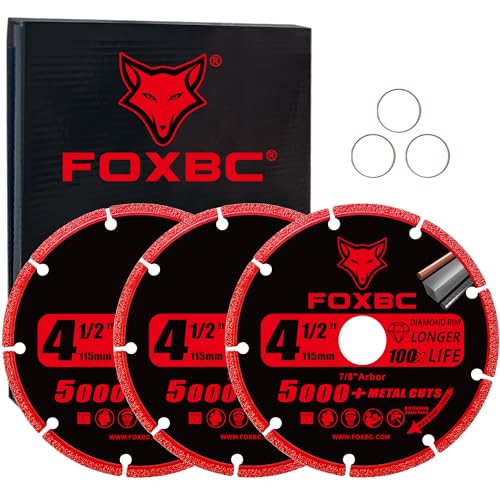
FOXBC 4-1/2 Inch Diamond Cutting Wheel Metal Cut Off (3 Pack)

FOXBC 4-1/2 Inch Tile Glass Cutting Disc for Angle Grinders (3 Pack)
A Closer Look At Each Pick
This first entry earns its spot mainly as context for the rest of the list. The FOXBC cut-off wheel is an aluminum-oxide abrasive disc, not a diamond blade, so it has no business slicing porcelain. What it does well is chew through steel, stainless, and sheet metal at a brisk pace, and a 50-pack gives you the kind of supply a busy fab shop runs through in a few weeks.
For homeowners who already own an angle grinder and want a cheap stack of metal discs, this fits the bill. The trade-off is that it chips ceramic and burns through stone. If your project touches porcelain at any point, skip straight to the diamond options below.
Noteworthy Benefits
- Bulk 50-count packaging keeps the cost per disc low for shops burning through wheels
- 0.045 inch thin profile slices metal quickly with minimal kerf, the channel width your cut leaves behind
- 7/8 inch arbor fits the vast majority of 4-1/2 inch angle grinders without an adapter
- 13280 maximum rated speed covers the top end of any handheld grinder on the market
Honest Caveats
- Designed for metal only, so any contact with porcelain will likely chip the glaze and ruin the cut
- Wheels wear down quickly compared to diamond options, and owners commonly report going through several on bigger jobs
Whose Toolbox It Belongs On
Metalworkers, fabrication hobbyists, and anyone running an angle grinder primarily on steel or stainless.
A Better Fit Elsewhere
The FOXBC 4-1/2 Inch Tile Cutter Diamond Saw Blades are a smarter pick the moment tile enters the project.
Here is the blade the rest of the list is really built around. The FOXBC Tile Cutter uses a diamond-grit rim, meaning industrial diamonds bonded to the cutting edge, to grind through hard materials rather than saw at them. That matters with porcelain because the surface is so dense that a standard abrasive disc just skates across it and overheats.
The wheel ships in a 3-pack with both a 7/8 inch and a 5/8 inch bushing, so it slips onto most angle grinders without hunting for adapters. It supports dry or wet cutting, so you can take it to a job site with a spray bottle or hook it up to a wet tile saw at home.
Practical Advantages
- Ultra-thin diamond rim scores porcelain cleanly with reduced chip-out along the cut line
- Doubles as a grinding disc for smoothing tile edges after the cut, saving a tool swap
- Handles porcelain, ceramic, marble, granite, and glass in a single blade
- Wet or dry cutting flexibility adapts to a kitchen reno or an outdoor patio job
Points To Note
- Dry cutting produces a lot of fine dust, so outdoor use or a respirator is wise
- Not the best choice for heavy rebar or thick steel, where the metal-focused wheel handles more volume
Key Specs
Made For
DIYers and tile installers who need a dependable porcelain tile blade that won’t chip a pricey slab.
Consider Something Else When
The FOXBC 4-1/2 Inch Tile Glass Cutting Disc for Angle Grinders fits better for delicate glass or bottle work.
Renovation rarely stays in one material. You cut tile, then trim a piece of PVC pipe, then notch a wood trim board, all in the same afternoon. The FOXBC Indestructible Multi-Material disc leans into that reality with a diamond rim rated for wood, metal, plastic, cement, ceramic, stone, tile, granite, marble, slate, and glass.
The catch is real, though: a jack-of-all-trades blade is rarely the best blade for any one material. On a long day of pure porcelain cutting, you may notice the dedicated tile cutter above delivers a slightly cleaner edge. Where this disc wins is convenience. You swap one wheel in once and stop hunting for spares between cuts.
Strong Points
- Wide material range covers most residential renovation tasks in a single disc
- 3-pack gives spares on hand for the inevitable “oops” moment
- Compatible with 5/8 inch spindles via the included bushing
- Eliminates the downtime of swapping discs on every material change
Trade Offs
- Cut quality on porcelain trails a dedicated tile blade, with slightly more chipping on glassy glaze
- Multi-material blades tend to wear faster than purpose-built wheels under heavy use
Right Fit For
Homeowners tackling mixed-material projects like a bathroom remodel where tile, drywall, and PVC pipe all need trimming.
Skip It When
You spend the day doing nothing but porcelain slabs. The FOXBC Tile Cutter Diamond Saw Blades handle that workload with cleaner edges.
Standard aluminum-oxide wheels burn out fast on rebar and angle iron. The FOXBC Diamond Cutting Wheel for metal takes a different approach, using an electroplated diamond edge (a process that fuses diamond particles directly to a metal base) to extend wheel life well past bonded abrasive options. The result, in spec terms, is a wheel rated for thousands of cuts on heavy stock before it needs replacing.
Where it fits in a tile-focused article is mostly as a sibling option for shop projects that run alongside tile work. If your renovation involves any metal framing, rebar, or pipe, having a diamond metal wheel on the bench saves constant disc changes.
Well-Handled Touches
- Electroplated diamond edge outlasts bonded abrasive wheels on rebar and stainless
- Even diamond distribution along the rim helps with cleaner, more controlled cuts
- Handles a wide range of metals from thin sheet to thick angle iron without bogging down
- Standard 7/8 inch arbor fits most 4-1/2 inch grinders directly
Worth Bearing In Mind
- Not designed for porcelain or ceramic, so tile cuts need a separate blade
- Cutting speed on the first pass can feel slower than a thin abrasive wheel until the rim breaks in
Best Suited To
Tradespeople and serious DIYers who cut rebar, pipe, and angle iron often enough that a diamond wheel pays for itself.
Another Choice May Suit
For pure tile installation days, the FOXBC Tile Cutter Diamond Saw Blades are purpose-built for the job.
The final pick lives in the detail work lane. The FOXBC Tile Glass Cutting Disc is a fine diamond blade that handles tile, glass, crystal, ceramic, and even wine bottles without splintering, as long as you let the wheel do the work and don’t force it. It also pitches in on tuckpointing (raking out old mortar between bricks) and masonry, which makes it handy for restoration work.
For most tile installations, the Tile Cutter in slot 2 is the stronger general-purpose choice. This one earns its keep when glass enters the picture, whether that means a custom mosaic backsplash or a craft project that calls for slicing a bottle.
The Good Stuff
- Fine diamond grit handles glass and crystal without the cracking a coarse rim causes
- Tuckpointing capability adds value for masonry repair work beyond tile cuts
- 13280 max RPM covers handheld grinder top speeds safely
- Comes with a 4/5 inch bushing for grinders with smaller spindles
Minor Gripes
- Thin diamond rims are easy to bend if the grinder gets torqued sideways in a cut
- Glass cutting is slower than tile, and the disc needs light pressure to avoid overheating
Who Should Grab It
Crafters, mosaic artists, and homeowners who want a single blade for tile plus the occasional glass or bottle project.
Reach For A Different Pick When
Your workload is all porcelain slabs. The FOXBC Tile Cutter Diamond Saw Blades cut denser tile more efficiently.
Matching The Right Wheel To Your Tile Project
A porcelain tile blade lives or dies by its rim. Continuous-rim diamond wheels (where the diamond edge forms an unbroken ring) score the cleanest edges on glazed porcelain, while segmented rims (with visible gaps that cool the blade) cut faster but chip more. For most home projects, continuous-rim is the safer pick.
Arbor size matters more than people expect. A 7/8 inch arbor is standard on 4-1/2 inch angle grinders, but some models use 5/8 inch. Check your grinder’s spec sheet before ordering, and confirm the blade ships with the bushing you need.
Wet versus dry cutting affects both dust and blade life. Dry cutting is convenient on a job site, but expect fine dust and a hotter rim. Wet cutting (or a light water drip) extends blade life and keeps dust down, which is helpful indoors.
Speed rating should always meet or exceed your grinder’s no-load RPM. Every blade above is rated for at least 13280 RPM, which covers virtually all 4-1/2 inch handheld grinders.
Common Shopping Slip Ups
Buying the cheapest diamond blade on the shelf usually means a thin, poorly bonded rim that chips tile and dies fast. Mid-tier continuous-rim blades from a known brand hold their edge far longer per cut, and the per-cut cost often ends up lower.
Another trap is assuming any “diamond” blade handles porcelain. Some cheap wheels are designed for masonry or concrete and have too coarse a grit for glazed surfaces. The result is chipping along the cut line and a ruined tile.
Where The Extra Money Goes
Premium porcelain tile blades use higher-grade diamond grit, tighter bonding, and continuous rims with careful tensioning. That extra engineering shows up in cut quality and longevity, not in flashy packaging. For a one-off backsplash, a value pick is fine. For a full bathroom or large floor, the upgrade typically pays for itself in fewer broken tiles and fewer blade swaps.
Frequently Asked Questions
Can a 4-1/2 inch blade cut large porcelain slabs? It can, but a larger 7 or 10 inch blade on a tile saw handles full slabs more comfortably. The 4-1/2 inch size is best for notches, curves, and trim cuts around plumbing or outlets.
How long does a diamond porcelain blade last? Lifespan depends on the blade, the material, and whether cuts are wet or dry. A quality continuous-rim diamond blade often survives several hundred linear feet of porcelain before needing replacement.
Do diamond blades need water cooling? They work dry with light pressure, but wet cutting extends blade life and reduces dust. For long sessions, water cooling is a smart habit.
Can one blade cut both tile and metal? Multi-material diamond blades can, but they rarely match a dedicated tile or metal blade for edge quality. Switching blades is the cleanest approach when cuts matter.
What safety gear do I need? Always wear safety glasses, hearing protection, a dust mask or respirator, and gloves. A face shield adds protection against flying chips, especially on porcelain.
The Takeaway
Porcelain rewards the right tool and punishes the wrong one. A dedicated diamond tile blade, matched to your grinder and your cutting style, is the difference between a clean install and a pile of chipped slabs. Pick the blade that matches your project, go light on the pressure, and let the diamonds do the work.




