


Porcelain tile cuts differently than ceramic. It is denser, harder, and far less forgiving of cheap abrasive wheels, which is why most weekend tile jobs end with chipped edges or cracked slabs. Picking the right blade for your angle grinder matters more than picking the grinder itself. The picks below cover the main jobs you will face, from pure porcelain work to mixed-material projects that throw in glass, metal, and stone. Each is a 4-1/2 inch blade with a 7/8 inch arbor, the most common fit for standard angle grinders, and each earns its place for a specific kind of cutter.
The Essentials At A Glance

FOXBC 4-1/2 Inch Cut Off Wheel Discs for Metal & Stainless Steel, 50 Pack

FOXBC 4-1/2 Inch Tile Cutter Diamond Saw Blades, 3 Pack

FOXBC 4-1/2 Inch Indestructible Multi-Material Cut Off Disc, 3 Pack
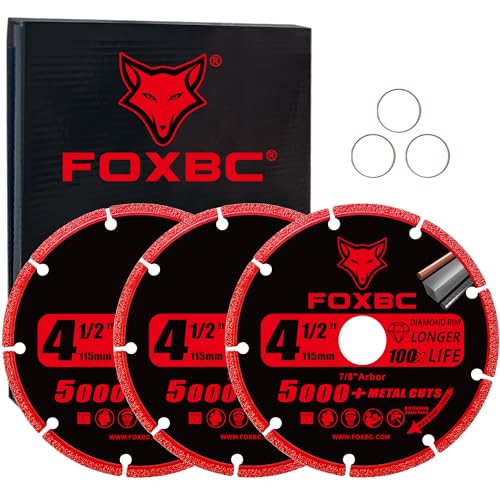
FOXBC 4-1/2 Inch Diamond Cutting Wheel Metal Cut Off, 3 Pack

FOXBC 4-1/2 Inch Tile Glass Cutting Disc, 3 Pack
Inside Each Recommended Option
Strictly speaking, this 50 pack of aluminum oxide cut-off wheels is built for metal, not porcelain. That distinction matters: abrasive wheels like this one grind rather than slice, and on porcelain they tend to chip edges and burn through fast. Where they earn their place is on the workshop bench, where a fabricator needs to slice rebar, trim steel angle, or notch stainless sheet before setting a single tile.
At 0.045 inches thick with a flat Type 1 profile, each disc is slim enough for straight-on cuts in tight spots. The 7/8 inch arbor fits most handheld angle grinders, and a maximum rated speed of 13280 RPM leaves headroom for common 11000 RPM grinders. The 50 count makes it a stash item rather than a one-off, useful when a project throws one metal task after another at you.
Positive Takeaways
- Bulk 50 pack covers long metal-heavy projects without mid-job disc swaps
- 0.045 inch thin profile reaches into tight corners a thicker wheel cannot
- Aluminum oxide bond handles steel, stainless, and cast iron in the same session
- Type 1 flat geometry keeps cuts straight and predictable on handheld grinders
Things To Consider
- Not a porcelain blade, and will chip glazed edges if used on tile
- Abrasive discs wear down faster than diamond rims, so a 50 pack replaces the durability of one diamond wheel
Feature Snapshot
Who It Suits Best
Fabricators and remodelers who do heavy metal prep work before any tile goes up will wear this 50 pack down steadily.
A Better Fit Elsewhere
Anyone focused purely on porcelain should reach for the FOXBC 4-1/2 Inch Tile Cutter Diamond Saw Blades instead, since diamond rims are designed for hard tile surfaces.
Of the five blades here, this one is closest to a pure porcelain tile cutter. The diamond-grit rim is engineered to grind through dense, glass-hard porcelain without the chipping and heat fracture you get from a generic abrasive disc. A 5/8 inch bushing ships alongside the 7/8 inch arbor, so the blade drops onto smaller spindle grinders without a hardware-store run.
For a bathroom remodel, the same blade handles porcelain, ceramic, marble, and stone, which removes the need to swap wheels between rooms. Owners running it dry on long cuts may notice a faint burning smell, since diamond rims prefer water cooling, but for short trim cuts the heat stays manageable. It is the blade you grab when porcelain is the headline task.
Where It Delivers
- Diamond rim cuts porcelain cleanly without the rough edges abrasive discs leave
- Multi-material rating covers glass, ceramic, marble, and stone in one wheel
- Ultra-thin kerf reduces dust and preserves more of the tile for tight layouts
- Works for both dry trimming and wet cuts when a shop vac or spray bottle is on hand
Trade Offs
- Dry cutting on long runs builds heat, so a water mist is recommended for heavy sessions
- 3 pack runs out fast on full-room tile jobs, so expect to reorder mid-project
Right Fit For
Homeowners tiling a bathroom or kitchen who want a single blade that handles porcelain, glass mosaic, and marble trim cuts without switching wheels.
Skip It When
Projects heavy on metal framing and tile should use the FOXBC 4-1/2 Inch Indestructible Multi-Material Cut Off Disc, which is built for that kind of mixed load.
Renovations rarely stick to one material. A single afternoon can move from tile trim to PVC pipe to a stubborn piece of cement board, and most blades only handle one of those well. The FOXBC multi-material disc is built to cover that mix, and in a 3 pack format, it stays affordable even when wear shows up faster than expected on rough jobs.
The advertised long life versus standard bonded cut-off wheels comes from the diamond grit, which holds its edge where aluminum oxide rounds off. For a remodeler, that translates to fewer mid-project blade swaps and more consistent cut quality. Where it falls short is in pure metal performance, which is where the dedicated diamond metal wheel in slot 4 takes over.
Strengths Worth Knowing
- Cuts wood, metal, plastic, cement, ceramic, stone, tile, granite, marble, slate, and glass on one wheel
- Diamond grit holds its edge longer than bonded abrasive alternatives
- 5/8 inch bushing included for grinders with smaller spindles
- Dry and wet cutting compatibility matches varied job-site conditions
Small Caveats
- Cutting hardened metal like thick rebar shows faster rim wear than dedicated metal blades
- Aggressive material range sometimes means slightly slower cuts on dense porcelain compared to a pure tile blade
Key Product Details
Made For
Homeowners running whole-room renovations that bounce between tile, drywall backer, and a stray piece of pipe or stone.
Reach For A Different Pick When
A pure porcelain backsplash job will be cleaner and faster with the FOXBC 4-1/2 Inch Tile Cutter Diamond Saw Blades, which is purpose-tuned for tile.
Most angle grinder wheels are disposable. This diamond cutting wheel pushes back against that. The electro-plated diamond rim is built to outlast standard bonded discs by a wide margin, which is the kind of durability you want when the cut list includes rebar, angle iron, cast iron, and stainless steel pipe. For a contractor, that longevity matters more than the upfront cost of the 3 pack.
You will likely notice the smoother cut feel first. The electroplating process spreads the diamond abrasive evenly, so the wheel tracks straight instead of wandering, and finish cuts come out cleaner with less deburring. Dry cutting is the intended setup, which suits outdoor or rough construction environments where water is not on hand. It is not the right tool for tile, but for metal-heavy framing, it earns its keep.
What It Does Well
- Long service life cuts down on replacement runs mid-project
- Electro-plated diamond edge keeps cuts straight on thick stock
- Handles rebar, angle iron, stainless, and aluminum on the same wheel
- Dry-cutting design suits shop and field use without water setup
Points To Keep In Mind
- Not designed for porcelain, so it is a metal-only addition to the toolkit
- Premium price per wheel is justified by life span, but costs more upfront than abrasive discs
Core Details
Best Suited To
Contractors and serious DIYers who cut metal framing regularly and want a single wheel that survives thousands of cuts without a swap.
Consider Something Else When
Tile-focused projects should pair the FOXBC 4-1/2 Inch Tile Glass Cutting Disc with their grinder instead, since diamond metal wheels are not optimized for tile.
The closing pick is a hybrid blade for the kind of household that fixes more than it builds. A diamond rim handles tile, glass, ceramic, and crystal without the chipping common with abrasive wheels, and the same wheel chews through rebar, concrete, and slate. For craft projects like trimming wine bottles or cutting a stained glass insert, the fine diamond edge keeps lines clean.
Tuckpointing and masonry touchups also fall in its lane, so older homes with a stray chimney repoint or cracked tile repair benefit from having one on hand. The 4/5 inch bushing broadens compatibility beyond a standard 7/8 inch arbor, which is helpful if you are running an older grinder. For pure tile-heavy work, the dedicated tile cutter in slot 2 is the cleaner pick.
Good Reasons To Consider
- Cuts tile, glass, ceramic, crystal, and wine bottles cleanly for craft and repair work
- Handles masonry, tuckpointing, and concrete for household fixes
- 4/5 inch bushing included expands grinder compatibility
- MAX RPM rating of 13280 keeps it safely within handheld grinder limits
Possible Compromises
- Broad material list means a slightly less refined cut on pure porcelain than the dedicated tile blade
- Lightweight construction requires a steady hand to keep finish cuts tidy on glass
Who Will Love This
Householders who split their time between tiling a backsplash, trimming a glass shelf, and fixing an old masonry joint around the house.
Not Your Match When
Professional tile setters running all-day porcelain jobs will get cleaner results from the FOXBC 4-1/2 Inch Tile Cutter Diamond Saw Blades, which is purpose-built for tile.
What Separates A Good Porcelain Tile Cutter From A Waste Of Money
The first thing to understand is why porcelain demands diamond. Porcelain is fired at higher temperatures than ceramic, which makes the surface harder and the body denser. Abrasive wheels round off fast against that surface, generate excess heat, and chip the glazed face. Diamond grit stays sharp, cuts cooler, and produces the clean edges tile work demands. If your project is mostly porcelain, a diamond blade is not optional, it is the baseline.
Arbor size and bore adapters matter more than they seem. The standard 4-1/2 inch angle grinder spindle is 7/8 inch, but a fair number of compact grinders run 5/8 inch or metric sizes. Look for a blade that ships with a bushing or reducer ring so the same wheel works on multiple grinders in your shop. This avoids the mid-project hardware-store run nobody enjoys.
Kerf thickness changes how much tile you waste. Ultra-thin diamond blades remove less material per cut, which sounds small until you are laying out a dozen 12 by 24 inch porcelain planks and every fraction of an inch counts. Thinner kerfs also reduce dust and put less lateral pressure on the tile, which lowers the risk of cracking along score lines.
Wet versus dry cutting is a real choice with consequences. Diamond rims last longer and cut cooler with a steady water feed, but indoor bathroom or kitchen work usually rules out wet cutting. Most quality diamond blades today are rated for either, but dry cutting on long runs will shorten wheel life. For typical DIY room-scale projects, dry cutting with a dust shroud and respirator is the practical compromise.
Finally, match the blade to the dominant material. A multi-material diamond disc is convenient for renovation days, but a tile-specific blade delivers noticeably cleaner edges on porcelain. Serious tile work benefits from a dedicated porcelain blade, with a multi-material wheel reserved for the odd rebar or pipe that shows up between tile courses.
Key Considerations Across These Picks
Where Shoppers Go Wrong
A common mistake is buying an abrasive cut-off wheel and expecting it to handle porcelain. The glaze chips, the cut wanders, and the disc burns through three or four times faster than expected. Another trap is ignoring the arbor size until the blade is already in hand, then discovering a missing bushing in the middle of a project. Check the spindle size on your grinder before you order.
Shoppers also underestimate how fast diamond rims wear down on jobs they are not suited for. Running a tile blade through heavy metal or masonry chews the diamond edge and leaves a once-clean cutter producing rough, slow cuts. Match the blade to the job, and rotate wheels between materials rather than forcing one disc to do everything.
What Separates Premium From Basic
Higher-tier diamond wheels earn their cost through electroplating or vacuum-brazed construction, which bonds diamond grit more evenly and firmly than basic sintered rims. The result is longer life, straighter cuts, and less heat buildup during extended runs. For a one-off bathroom tile job, a basic diamond blade is plenty. For a contractor or a multi-room renovation, the upgrade pays back in fewer wheel swaps and cleaner finish cuts.
Frequently Asked Questions
Can any 4-1/2 inch angle grinder cut porcelain tile?
Most can, as long as the blade is a diamond rim designed for tile. Standard abrasive cut-off wheels will chip porcelain edges and wear out quickly under dense tile.
Do I need water cooling for dry diamond blades?
Water cooling extends blade life and reduces dust, but quality dry-rated diamond blades handle short trim cuts without water. For long continuous cuts, pause often to let the wheel cool.
How long does a diamond tile blade typically last?
Lifespan depends on material hardness, cut frequency, and cooling. For typical DIY tile work, a quality 4-1/2 inch diamond blade should handle several bathroom or kitchen projects before replacement.
What is the difference between a Type 1 and Type 27 cut-off wheel?
Type 1 wheels are flat for straight cutting, while Type 27 wheels are depressed-center designs for grinding and angled cuts. Most tile and metal cutting jobs use Type 1 flat wheels.
Is a 7/8 inch arbor standard for angle grinders?
It is the most common size for 4-1/2 inch grinders in North America, but compact and European grinders often use 5/8 inch or metric arbors. A reducer bushing solves most fit issues.
Bottom Line
The right porcelain tile cutter depends on how much tile is in your project and what other materials you need to cut alongside it. Pure tile jobs benefit from a dedicated diamond blade like the FOXBC 4-1/2 Inch Tile Cutter Diamond Saw Blades. Renovation days that bounce between tile, metal, and stone call for the multi-material diamond disc instead. Build your kit around the dominant material in your project, and add specialty wheels for the rest.




