


A handheld drill gets you through most home projects, but the moment you need a clean, perfectly perpendicular hole, things get frustrating. Portable drill presses solve that problem without demanding a permanent spot on your workbench, and the current crop handles everything from delicate jewelry work to thick steel I-beams. Whether you’re setting up a small garage shop, fabricating on a jobsite, or just tired of wandering bit angles, there’s a press here that fits the way you actually work.
Your Options, Compared
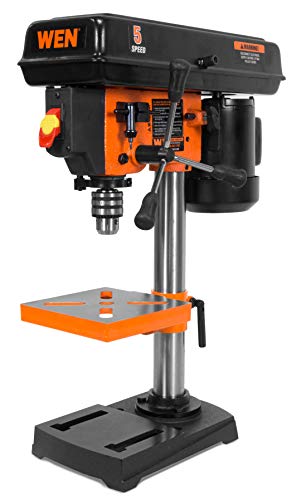
WEN 2.3-Amp 8-Inch 5-Speed Benchtop Drill Press (4206T)

SKIL 6.2 Amp 10-Inch 5-Speed Benchtop Drill Press DP9505-00
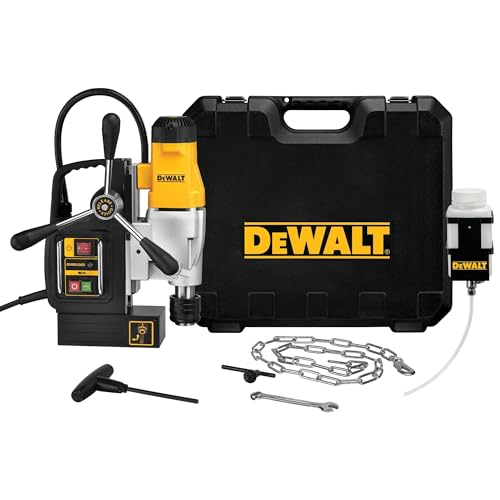
DEWALT Magnetic Drill Press 2-Inch 10-Amp (DWE1622K)
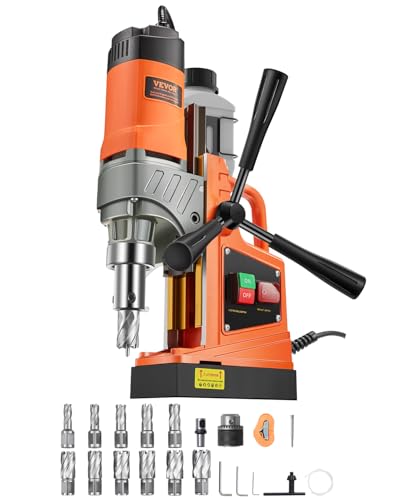
VEVOR 1300W Mag Drill Press 1.57″ Boring Diameter

VEVOR 1550W Mag Drill Press 2″ Core Drilling Machine

VEVOR 1450W Mag Drill Press with 6 Annular Cutters

NovelLife Precision Mini Drill Press B10 Upgraded

JET 12-Inch Variable-Speed Benchtop Drill Press (JWDP-12)

BERXOL Mini Drill Press Benchtop B10 Chuck
Meet The Standout Selections
The WEN 4206T has earned its spot in countless small workshops for good reason: it delivers cast-iron stability at a price that doesn’t require a second mortgage. Its 2.3-amp induction motor (a motor design that uses electromagnetic induction rather than brushes, which means quieter operation and longer life) runs through five speed settings, giving you enough range to handle soft pine, dense hardwoods, and light metal stock without swapping machines.
For someone setting up a first drill press in a garage or basement, the 8-inch swing (the largest-diameter workpiece the press can center under the spindle) is genuinely practical. You won’t bore 4-inch holes in thick plate, but that’s not the point. The benchtop footprint also means you can slide it against a wall or onto a shelf when the project ends, which matters more than people expect in shared spaces.
A Few Strong Suits
- Cast-iron table and base keep vibration low, so holes come out cleaner and your bits last longer
- Five-speed range covers most common drilling tasks without forcing accessory swaps
- Compact benchtop design fits shops where floor space is at a premium
- 2-inch spindle travel handles standard through-holes in most board thicknesses you’ll encounter
Things To Consider
- The 2.3-amp motor will bog down on thicker steel; plan to take lighter passes or step up to a mag drill for serious metalwork
- Owners commonly report the included chuck (the three-jaw clamp that holds your drill bit) needs a careful break-in period to run true
Key Specs
Who It Suits Best
Weekend woodworkers, DIYers, and hobbyists who want a reliable benchtop press without overspending on capacity they’ll never use.
Consider Something Else When
Steel fabricators and anyone regularly boring holes in thick plate should look at the DEWALT DWE1622K, which is built for that workload.
Where the WEN above keeps things simple, the SKIL DP9505-00 leans into features that take the guesswork out of placement. A Class II laser (a low-power alignment laser regulated for general consumer use) projects a crosshair onto your workpiece, and a built-in LED work light floods the drilling area so shadows don’t hide your mark. For anyone who’s drilled slightly off-center one too many times, those additions earn their keep fast.
The 6.2-amp motor gives you real headroom over the WEN, and the 10-inch swing accommodates wider stock. The five-speed range runs from 610 to 2,800 RPM (revolutions per minute, which controls how fast the bit spins), letting you slow things down for larger bit diameters in hardwood or speed up for small pilot holes.
Benefits That Matter
- Laser alignment system removes the constant back-and-forth of measuring and rechecking bit position
- 10-inch swing handles wider boards and panels that smaller presses can’t center
- LED work light keeps the work area visible, especially in shops with overhead lighting shadows
- Adjustable depth stop lets you repeat the same hole depth across multiple pieces, useful for batch work
Worth Noting
- The added electronics mean there’s more that can loosen or need recalibration over time compared to a pure mechanical press
- Some users find the table tilt mechanism (the lever that angles the work surface for angled drilling) less rigid than they’d like for precision work
Made For
Hobbyist woodworkers and home machinists who want extra accuracy aids without jumping to a full industrial press.
Skip It When
You primarily work with thick steel or need to mount the press vertically on metal; the JET JWDP-12 offers a sturdier bench footprint for that kind of work.
The DEWALT DWE1622K is a different beast entirely from the benchtop presses above. This is a magnetic drill press, meaning an electromagnetic base adheres the unit directly to a steel surface, freeing you from clamping and letting you bore holes in vertical I-beams, overhead supports, or flat plate where a traditional press simply can’t go.
Its 10-amp motor delivers serious cutting force, and the two-speed gearbox (300 and 450 RPM) lets you match torque to bit diameter. The overload protection electronics are a quiet but important addition: they cut power before the motor burns out when a bit binds in thick material, which happens more often than beginners expect.
The Upside
- Magnetic base adheres to ferrous surfaces (any iron-containing metal that a magnet will stick to), opening up vertical and overhead drilling that bench presses can’t touch
- 10-amp motor provides the torque needed to push annular cutters (ring-shaped bits that remove only the circumference of a hole) through thick steel plate
- Quick-change chuck system swaps between 3/4-inch Weldon shank (an industry-standard flat-sided mount for annular cutters) and a keyed chuck without tools
- Overload protection extends motor life on heavy production runs
Trade Offs
- Requires a clean, flat ferrous surface at least as thick as the workpiece to maintain magnetic hold safely
- Significantly heavier and more expensive than any benchtop press on this list, so it’s overkill for hobby woodwork
Feature Snapshot
Best Suited To
Steel fabricators, ironworkers, and mobile tradespeople who need a press that travels to the workpiece rather than the other way around.
Look Elsewhere When
Your work stays in the shop and centers on wood or plastic; the SKIL DP9505-00 offers a more comfortable fit for that workflow.
VEVOR’s 1300W magnetic drill lands in a useful middle ground between the DEWALT’s industrial pedigree and the lighter benchtop category. The 1300-watt copper motor (a motor with copper-wound windings, which handle heat better than aluminum versions) runs at 810 RPM and produces 2,922 pounds of magnetic holding force, which is enough to stay planted on thick steel plate during serious cuts.
The 1.57-inch boring capacity covers most common hole sizes you’ll encounter in fabrication work, and the 2-inch depth of cut handles standard structural steel applications. Compared to the DEWALT above, the trade-off is a single-speed design, so you give up some bit-matching flexibility. For most shops, that’s a fair exchange for the lower price.
Practical Pluses
- 2,922 lbf magnetic adhesion (lbf stands for pounds of force, a measure of how strongly the magnet grips the workpiece) holds the press steady on thick steel
- Copper-wound motor handles heat better than aluminum-wound equivalents during extended cutting sessions
- Compact enough to position in tight spots on a jobsite or in a fab shop
Points To Note
- Single-speed operation means you’ll want to plan bit choices around the 810 RPM rating
- 1.57-inch max boring diameter won’t cover the largest fabrication holes the DEWALT DWE1622K can handle
Whose Shelf It Belongs On
Small fabrication shops and serious DIYers tackling structural steel without the budget for a premium brand.
A Better Fit Elsewhere
Production welders who need 2-inch capacity and variable speed should invest in the VEVOR 1550W model instead.
The 1550W VEVOR takes everything the smaller mag drill above offers and adds genuine production-grade capability. With 2-inch core drilling capacity and a variable speed range of 0 to 550 RPM, you can dial in the right pace for everything from small pilot holes to large diameter cuts in heavy plate.
That same 2,922 lbf magnetic hold shows up here, anchoring the press to I-beams, thick wall tube, and flat stock without complaint. For I-beam fabrication specifically, this model handles the kind of repetitive, large-diameter work that defines structural metalwork. The variable speed control also makes it more forgiving when switching between different annular cutter sizes throughout the day.
Useful Strengths
- 2-inch max coring diameter opens up the larger hole sizes common in structural fabrication
- Variable speed range from 0 to 550 RPM lets you match cutting speed to bit size and material
- High-purity iron core in the magnetic base helps maintain consistent holding force at various angles
- 1550W motor has the headroom to push cutters through thick steel without bogging down
Honest Caveats
- Heavier than the 1300W model, so positioning on vertical surfaces takes more effort during overhead work
- Cooling and chip clearing become important at sustained high loads, so plan for periodic pauses during heavy cuts
Key Product Details
Right Fit For
Steel fabricators, welders, and ironworkers who regularly cut large holes in I-beams and heavy plate.
Not Your Match When
You’re only doing occasional light metalwork, where the DEWALT DWE1622K’s 2-speed design may be more than you need.
What sets this VEVOR 1450W mag drill apart from its siblings is the included cutter set: six annular cutters ship in the box, covering the most common boring diameters right out of the package. For a first-time mag drill owner, that bundle saves both the research and the separate purchase order.
The variable speed range from 0 to 750 RPM gives you a slightly higher top end than the 1550W model, useful when working with smaller diameter cutters in thinner material. The 2,922 lbf magnetic hold matches its stablemates, and the 1450W motor provides comfortable torque for the included cutter sizes.
Strengths Worth Knowing
- Includes six annular cutters so you can start cutting the day the press arrives, no extra shopping required
- 0 to 750 RPM range covers both large diameter slow cuts and smaller faster cuts in one machine
- 2-inch coring capacity matches the larger 1550W model for fabrication flexibility
Where It May Fall Short
- Lower motor wattage than the 1550W means you’ll feel more strain on the deepest cuts in thick plate
- The included cutters are entry-grade; production shops may want to upgrade them after extended use
Feature Rundown
Who Should Grab It
First-time mag drill owners and small fabrication shops who want a complete starter package without piecing components together.
Swap It Out When
Your shop already owns a quality cutter set and you want maximum motor power; the VEVOR 1550W model is the better pick.
The NovelLife B10 lives in a completely different world from the mag drills above. At roughly 5.9 x 4.7 x 8.7 inches, this benchtop mini press fits on a desk, a craft table, or a crowded maker bench. The 795 DC motor (a brushed DC motor rated for high-RPM precision work) runs up to 7,000 RPM, well above what any of the larger presses offer, which is exactly what you want for tiny bits in delicate stock.
For jewelry making, model building, PCBs, or small craft projects, that combination of small footprint and high speed is hard to beat. The upgraded structure uses three metal axes and two linear bearings (smooth rods that the quill slides along to keep motion straight and vibration low), which helps keep holes precise in materials where even a fraction of a millimeter matters.
A Strong Showing
- Compact dimensions let you set up a precision drilling station almost anywhere, even a craft table or apartment desk
- 7,000 RPM top speed is ideal for small drill bits in soft materials where slower presses would burn or wander
- 24V adjustable power supply lets you tune speed to bit size and material without gear changes
Small Caveats
- Not designed for metalworking at any meaningful scale, so don’t expect it to substitute for a benchtop press on steel
- The compact frame can flex under aggressive feed pressure, so light hand control matters more than with heavier presses
Quick Facts
Built With In Mind
Jewelry makers, model builders, and electronics hobbyists who need precision in a small package.
Another Choice May Suit
Anyone planning regular woodwork should choose the WEN 4206T, which has the rigidity and capacity this mini press lacks.
The JET JWDP-12 is the largest benchtop press in this roundup, and the upgrade is meaningful. A 12-inch swing accommodates wider stock, a 1/2-HP induction motor pushes through tougher material, and over 3-1/8 inches of spindle travel means you can drill deeper in a single pass than the WEN or SKIL can manage.
The variable speed system and X-shaped XACTA Laser round out a package aimed at serious woodworkers and small professional shops. The build quality reflects the JET reputation: heavier castings, smoother adjustments, and a fit-and-finish level that budget presses rarely match. You pay for it, but the consistency is real.
Bright Spots
- 12-inch swing handles wide panels and large workpieces that smaller presses can’t center
- Over 3-1/8 inches of spindle travel allows deeper through-holes in a single stroke
- 1/2-HP motor provides sustained torque for production cutting sessions
- XACTA Laser aids precise bit alignment on detailed work
Points To Keep In Mind
- Heavier than the WEN or SKIL, so you’ll want a dedicated bench spot rather than a foldaway setup
- Premium price may not make sense for casual hobbyists who only drill occasionally
Perfect Match For
Serious woodworkers, small cabinet shops, and professionals who want a benchtop press that bridges the gap between hobby machines and floor-standing units.
Reach For A Different Pick When
Your work happens on metal, not wood, in which case the DEWALT DWE1622K is a more appropriate tool for the job.
The BERXOL mini drill press shares much of its DNA with the NovelLife B10 above, including the 795 DC motor, 7,000 RPM top speed, and compact benchtop frame. Where it differentiates is in its dual-spring return system and a focus on straightforward operation, which makes it especially approachable for people drilling their first precision holes.
The B10 chuck is a common mini-press standard, so finding replacement collets (the small sleeves that grip tiny bit shanks) and accessories is easy. For first-time drill press owners, that ecosystem matters more than raw specs because the learning curve flattens when compatible tooling is everywhere.
Noteworthy Benefits
- Dual-spring return provides smooth, predictable quill action that helps new users avoid overdrilling
- Standard B10 chuck compatibility opens up a wide range of inexpensive collets and accessories
- Lightweight enough to move between work areas or store on a shelf between projects
Less Ideal Details
- Limited to small-diameter bits and light materials, so it won’t grow with you into larger projects
- Lightweight frame means aggressive cuts can cause walking or wandering in harder materials
Who Will Love This
First-time drill press owners, craft hobbyists, and anyone learning precision drilling without a big investment.
Where A Sibling Pick Shines
Shoppers planning regular woodwork should pick the WEN 4206T for its rigidity and capacity upgrade path.
What Really Matters When Shopping for Portable Drill Presses
The first thing to nail down is what you’ll actually be drilling. Woodworkers, metalworkers, and craft hobbyists all need drill presses, but the right machine looks completely different for each group. A woodworker pushing through thick oak wants a benchtop press with a wide swing and a robust motor, while a fabricator drilling 2-inch holes in plate needs a magnetic base and a motor with serious torque. Trying to make one tool cover both worlds usually means compromising on both ends.
Next, consider chuck capacity and spindle travel, which together determine the practical size of holes and workpieces you can handle. A 1/2-inch chuck accepts a wider range of bit sizes than a 3/8-inch chuck, and 3-plus inches of spindle travel opens up deeper cuts in a single pass. The mini presses around 8 inches tall obviously can’t compete with full benchtop units here, so match the numbers to the largest hole and thickest material you realistically expect to encounter.
Speed control matters more than people realize, especially across mixed materials. Fixed-speed presses force you to swap belts or bits when switching between softwood and metal. Variable-speed models let you dial in the right RPM (revolutions per minute) for each bit and material combination, which extends tool life and produces cleaner holes. For anyone planning to drill more than one material type, variable speed pays for itself quickly.
Finally, think about the work environment. Benchtop presses need a stable, flat surface and usually a dedicated spot. Magnetic drill presses travel to the workpiece and need a clean ferrous surface to hold. If your projects come to you rather than the other way around, mobility and magnetic hold matter more than raw capacity.
Common Shopping Slip Ups
One of the easiest traps to fall into is buying a benchtop press for thick steel work. The motors just aren’t built for it, and you’ll burn out windings or trip breakers trying to force through. Match the press type to the material: magnetic drills for steel, benchtop presses for wood and light metal.
Another common mistake is underestimating the importance of magnetic hold on a mag drill. A press that slips mid-cut is dangerous and ruins workpieces. Always confirm the magnetic adhesion rating suits the thickness of steel you’ll be working with, and inspect the base surface for paint, rust, or debris that weakens contact.
The upgrade from a budget mini press to a full benchtop or magnetic model is a real jump in cost, and worth planning for. If your needs are likely to grow, starting one tier higher than today’s minimum requirements often saves you from buying twice.
Frequently Asked Questions
What size portable drill press do I need for woodworking?
For most hobby woodworking, an 8 to 10-inch swing benchtop press covers the majority of projects. If you work with wider panels or larger stock regularly, a 12-inch model like the JET JWDP-12 gives you breathing room without jumping to a floor unit.
Can a magnetic drill press work on non-ferrous metal?
Magnetic drill presses require ferrous metal (iron-containing metals that magnets will stick to) to adhere. Aluminum, copper, and stainless steel in some grades won’t hold a magnetic base, so for those materials you’ll need a vacuum-mount system or a traditional bench press instead.
How important is variable speed on a drill press?
Variable speed matters most when you switch between materials or bit sizes. Larger bits in metal need slower RPMs, while small bits in wood work better at higher speeds. A variable-speed press handles both without belt changes or tooling swaps.
Are mini drill presses worth it for precision work?
Mini presses like the NovelLife B10 and BERXOL B10 are well-suited to small precision tasks such as jewelry, models, and electronics. They’re not designed for structural work, but for fine detail in soft materials, the high RPM and small footprint are genuinely useful.
Do I need a laser guide on a benchtop drill press?
Laser guides help with alignment but aren’t essential. If you already work with marking gauges, center finders, or templates, the laser is a convenience rather than a necessity. For repeat placement on production runs, however, it speeds setup considerably.
Final Verdict
The right portable drill press depends entirely on where and what you plan to drill. For home woodworking, the WEN 4206T delivers real value without bloat, while the JET JWDP-12 makes sense for serious shops. Magnetic drills like the DEWALT DWE1622K and VEVOR 1550W are the clear choice for steel fabrication, and the NovelLife and BERXOL mini presses handle delicate craft work that larger machines can’t. Start with the material and the work environment, and the right pick usually becomes obvious.




