Pulling a full-size welder across the shop floor gets old fast. Portable MIG welders have changed what hobbyists, weekend fabricators, and small-shop owners can realistically take on, and the gap between entry-level units and pro-grade gear has narrowed in a meaningful way. The five picks below span a tight budget tool, two mid-range multi-process machines, a pulse-capable upgrade, and a bundle-friendly option that ships with a helmet and gloves. Whatever you weld, you should be able to find a fit here without hauling a 70-pound transformer around.
The Shortlist At A Glance
PickWhy We Picked ItBest ForAction

Workshop Pick
ARCCAPTAIN MB15 15AK MIG Welding Gun Kit .035″
Spare consumables ready to go
Gun owners restocking
Beginner Friendly
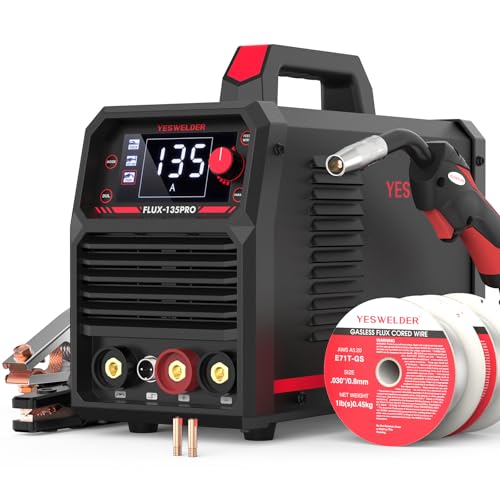
YESWELDER 135A MIG Welder 110V 3-in-1
Gasless simplicity on a budget
First-time welders

Multi-Use Pick
YESWELDER 205A MIG Welder 110V/220V 5-in-1
Five processes in one box
<Diverse fabricators and small shops

Smart Upgrade
YESWELDER Firstess DP200 Pulsed Multiprocess Welder
Pulse control on a portable frame
Sharper cosmetic welds

Ready For Routine
BESTMIG 145A 4-in-1 Welder with Helmet & Gloves
Starter bundle with PPE included
First-time home welders
Inside Each Recommended Option
Spare consumables rarely get the spotlight in a welder roundup, but anyone who has burned through a contact tip mid-project knows how much downtime a backup set saves. The ARCCAPTAIN MB15 15AK kit bundles the parts you reach for first: a .035″ contact tip, a nozzle, and a diffuser (the gas-distribution screen that sits inside the nozzle). The nozzle uses a nickel-plated copper body, which the maker says helps resist spatter sticking on and reduces cleanup between passes.
This is an accessory bundle, not a welder, so it earns a different kind of recommendation here. You pair it with the kind of 15AK-style torch that shows up on most entry-level and mid-range MIG welders, including the ones further down this list. The honest read is that it makes a smart add-on for someone who already owns a compatible gun and just wants a tidy restock instead of mixing mismatched parts.
Real Benefits
- ✓.035″ contact tip matches the most common wire size for general steel fabrication, so it lines up with typical daily use.
- ✓Nickel-plated copper nozzle cuts down on spatter adhesion, which means less time chipping and more time welding.
- ✓15AK-style compatibility covers a wide swath of the entry- and mid-range welder market, including several picks in this article.
- ✓A single kit replaces the three consumables you burn through fastest, simplifying restocking.
Things To Consider
- •This is consumables only, not a complete welder, so it suits someone already set up with a machine and a torch.
- •Owners commonly report needing to verify the gas diffuser dimensions against their specific gun neck before ordering, since 15AK-style parts can vary slightly by torch maker.
Who It Suits Best
Anyone who already runs a 15AK-style MIG torch and wants a clean, matched set of consumables within easy reach.
Where Another Pick Suits Better
Beginners who do not yet own a welder should start with the YESWELDER 135A instead, since it ships as a complete machine.
Plenty of first-time welders would rather skip the gas cylinder altogether, and the YESWELDER 135A answers that exact wish. It runs flux-cored wire, which is a tubular wire filled with flux that generates its own shielding gas as it burns, so the gasless path is the headline feature. The 110V input means it plugs into a standard household outlet, no special wiring required. Three processes, one compact box, and a price tag that does not scare off someone who is still deciding whether welding is a real hobby or a one-time repair.
The trade-off shows up in thickness capacity and accessories: at 135A, this is a thinner-metal machine first, and a stick and lift-TIG machine second. It comes with extra E71T-GS flux-cored wire in both .030″ and .035″ diameters, which is a thoughtful touch since first jobs usually need more wire than expected. Stick and lift TIG modes (lift TIG is a low-amp arc-start method where you touch the tungsten to the workpiece and lift to start) are present, but the lift TIG torch is sold separately, a detail to factor in before checkout.
A Few Highlights
- ✓110V plug-and-play on any standard household circuit, which removes the wiring upgrade barrier for first-timers.
- ✓Gasless flux-core operation cuts the cost and hassle of owning a shielding-gas cylinder.
- ✓Three processes in one unit let you grow from flux-core steel into stick and lift TIG without buying a second welder.
- ✓Includes spare .030″ and .035″ flux-core wire, so a beginner’s first weekend project does not stall waiting on consumables.
Worth Noting
- •135A output is comfortable for sheet metal and thinner plate, but heavy steel or thick aluminum will be a struggle.
- •The lift TIG torch is a separate purchase, so the third process is not fully turnkey out of the box.
Key Product Details
| | Feature | Specification | Why It Matters |
|---|
| Input voltage | 110V | Standard household outlet compatibility |
| Output | 135A | Suits sheet metal and light fabrication |
| Processes | Flux-core MIG, Stick, Lift TIG | Room to grow into new weld types |
| Included wire | E71T-GS .030″ and .035″ | Start welding without extra shopping |
Made For
Beginners, garage tinkerers, and apartment-dwellers without a 220V outlet who mainly weld thinner steel and want a low-friction first welder.
Skip It When
Welders planning heavy plate work should step up to the YESWELDER 205A instead, which adds 220V capacity and more output headroom.
The jump from a 135A starter to a 205A multi-process feels bigger than the numbers suggest, and the YESWELDER 205A is the most flexible unit in this lineup for someone who wants room to move between materials. The MIG-205DS PRO runs on 110V or 220V, which means a beginner can start on a household outlet and later move to a heavier circuit without replacing the machine. Five processes are listed: gas MIG, flux-core MIG, spool gun MIG (a separate small wire feeder that pushes soft aluminum wire without crushing it), lift TIG, and stick.
The catch is the accessory list. Spool gun aluminum MIG and lift TIG both require extra torches sold separately, so a fully-loaded shop adds to the total. For someone who welds steel most of the time and wants the option of aluminum later, the 200A output and dual-voltage input are the real story. Aluminum hobbyists will want to budget for that spool gun before checkout.
Where It Delivers
- ✓200A output handles thicker plate and longer beads than the 135A starter can comfortably manage.
- ✓Dual-voltage input grows with your shop, useful if you start on 110V and eventually add a 220V circuit.
- ✓Spool gun MIG mode opens the door to aluminum projects, a material the smaller YESWELDER cannot touch.
Points To Keep In Mind
- •Lift TIG and spool gun torches are sold separately, so plan a slightly higher total cost if those processes matter to you.
- •Owners commonly mention reading the wire-feed tension setting carefully on first setup, since it ships slightly tight out of the box.
Right Fit For
Small-shop fabricators and serious hobbyists who weld a mix of steel and aluminum and want one machine to do the bulk of the work.
A Better Fit Elsewhere
Beginners who do not need aluminum yet can save with the YESWELDER 135A, while those chasing cleaner cosmetic welds will prefer the YESWELDER Firstess DP200 with its pulse tech.
Pulse technology used to live on expensive industrial units, and the Firstess DP200 brings it into a portable frame at a friendlier cost. Pulse MIG rapidly cycles the output between a high peak current and a low background current, which controls heat input and produces a TIG-like bead appearance from a MIG gun. The maker lists eight process modes, including pulsed MIG, dual-pulsed MIG, flux core, spool gun MIG, spot welding, lift TIG, and stick. That is a long list for a machine you can still carry to a job site.
The 120V/240V input flexibility mirrors the 205A above, but the value here is the cosmetic side of welding, not the thickness side. Visible furniture, art-metal panels, and stainless trim benefit from the heat control pulse offers. The trade-off is the same accessory dependency as the 205A: lift TIG and spool gun are sold separately, and the controls take longer to learn than the 135A’s simpler panel.
Everyday Advantages
- ✓Dual-pulsed MIG produces cleaner cosmetic beads than standard MIG on stainless and mild steel.
- ✓Spot welding mode simplifies repetitive tack and plug welds on sheet panels.
- ✓120V/240V dual input matches the smaller 205A’s plug-anywhere flexibility.
Honest Caveats
- •Control panel has a steeper learning curve than entry-level units, so first sessions will involve more parameter reading.
- •Lift TIG and spool gun torches ship separately, and pulse setup rewards a careful first-pass settings approach.
Feature Snapshot
| | Feature | Specification | Why It Matters |
|---|
| Input voltage | 120V / 240V | Run on household or shop power |
| Process count | 8 modes including pulse MIG, spot, spool gun | One machine for nearly every weld type |
| Featured tech | Pulsed and dual-pulsed MIG | TIG-like cosmetic results from a MIG gun |
Best Suited To
Fabricators who care about bead appearance on visible joints and want a portable unit that can grow into a multi-process shop tool.
Reach For A Different Pick When
Pure beginners should start with the YESWELDER 135A and graduate to the DP200 once they want pulse and wider material flexibility.
Starting from a totally bare shop usually means a second shopping cart for the safety gear, and the BESTMIG 145A folds that into the box. It runs on 110V or 220V, supports both gas and gasless flux-core MIG plus stick and lift TIG, and includes a welding helmet and gloves alongside the unit. Wire compatibility spans .030″ solid wire, stainless steel wire up to .030″, and flux-cored wire from .030″ to .040″, which covers most household welding projects without buying more consumables.
The IGBT inverter (a modern switch-mode power supply that is lighter and more efficient than older transformer-based designs) keeps the weight reasonable for a four-process unit. Compared to the YESWELDER 135A above, the 145A adds dual-voltage input and gas MIG, which is a meaningful upgrade if you eventually want a clean gas-shielded bead on auto body or trailer panels. The included helmet is a basic auto-darkening model, fine for learning but worth upgrading if you weld daily.
Real-World Strengths
- ✓110V/220V dual-voltage design lets the unit move with you from garage to shop.
- ✓Both gas and gasless flux-core MIG are supported, useful when the project moves outdoors.
- ✓Helmet and gloves included means a true first-day-of-welding experience without extra orders.
Trade Offs
- •145A output still places it on the lighter side of the lineup, so thick plate work falls outside its comfort zone.
- •The included helmet is entry-level, and frequent welders may want a faster auto-darkening lens.
Whose Shelf It Belongs On
First-time home welders who want a complete starter package, including the safety basics, on day one.
Consider Something Else When
Anyone planning heavy plate or aluminum work should move up to the YESWELDER 205A or Firstess DP200 for the extra output and material range.
What Matters Most Before Choosing Portable Mig Welders
Match The Welder To Your Power Outlet
Voltage is the first practical filter, and it sets the ceiling on output. A 110V unit can plug into any household outlet, but it tops out around 145A in this category, which is comfortable for sheet metal and trailer repairs. Dual-voltage 110V/220V machines like the YESWELDER 205A, Firstess DP200, and BESTMIG 145A grow with your shop. Running on 220V unlocks thicker plate and longer weld times. For an apartment garage with only a 15A household circuit, a 110V-only unit is the realistic starting point.
Process Count Versus Learning Curve
Multi-process machines look like better value on paper, but each added process brings a control panel with more parameters. The YESWELDER 135A and BESTMIG 145A are friendlier entry points because the panel stays simple. The Firstess DP200 trades that simplicity for pulse and spot welding, which are genuinely useful features once you understand them. Newcomers usually do better learning on a three-process machine and adding complexity later.
Output Amperage And Material Thickness
Amperage roughly maps to how thick a material you can weld in a single pass. 135A to 145A handles sheet steel, exhaust tubing, and fence repairs. 200A and up opens the door to quarter-inch plate, heavier trailer frames, and thicker aluminum. If your projects stay under 1/8″ steel, the smaller units will serve you well. If you weld thicker material regularly, the output headroom on a 200A class machine pays off in fewer burned-through edges and stronger beads.
Accessories And Total Cost Of Ownership
The advertised price rarely covers a fully loaded setup. Spool guns for aluminum, lift TIG torches, extra consumables like the ARCCAPTAIN MB15 kit, and a better auto-darkening helmet all add to the total. The BESTMIG 145A bundles the helmet and gloves, which helps first-day cost. The 205A and DP200 require torches for full process coverage. Build a realistic budget before checkout.
Key Considerations Across These Picks
Common Shopping Slip Ups
Treating the cheapest unit as the best value is the first trap, since a welder that cannot handle your thickest project forces an upgrade within a year. Forgetting about shielding gas setup is a close second, since gasless flux core is fine for outdoor work but rougher on visible indoor welds. Skipping the wire diameter check is another, since the wrong contact tip or drive roll wastes setup time. Plan for the consumables, the safety gear, and a learning curve in the first month of ownership.
What The Higher Tier Buys
Stepping from a 135A starter to a 200A dual-voltage multi-process machine adds material flexibility, a stronger duty cycle (the percentage of a 10-minute window the welder can run before needing to cool down), and the option to add aluminum MIG and lift TIG with extra torches. The Firstess DP200 layers pulse technology on top of that, which is the difference between a functional weld and a showpiece weld on visible stainless or furniture-grade steel. For casual weekend repairs, the lower tier is plenty. For professional finish or fabrication work, the higher tier earns its keep.
Frequently Asked Questions
QWhat Is The Difference Between Gas MIG And Gasless Flux Core?
Gas MIG uses an external shielding gas (usually argon/CO2 mixes) to protect the weld pool, producing cleaner beads on visible steel. Gasless flux core uses a tubular wire that generates its own shielding gas as it burns, so no cylinder is needed and outdoor windy work is easier.
QCan A 110V Welder Run On A Standard Household Outlet?
Yes, most 110V portable MIG welders are designed to plug into a standard 15A or 20A household outlet. The catch is that 110V operation limits output, so thicker plate work is better handled on a 220V circuit.
QDo I Need A Spool Gun For Aluminum MIG?
Standard MIG guns cannot reliably feed soft aluminum wire without crushing it, so a spool gun is the practical answer for aluminum MIG. Some multi-process welders require a separate spool gun purchase, so factor that in before checkout.
QIs Pulse MIG Worth The Extra Cost?
Pulse MIG controls heat input better than standard MIG, which reduces warping on thin stainless and produces a cleaner cosmetic bead. It is worth the upgrade for visible welds, art metal, and thin stainless, but it is overkill for a backyard repair.
QHow Thick Can A 200A MIG Welder Cut Through?
A 200A class machine typically handles mild steel up to about 3/8″ in a single pass, with multi-pass welds going thicker. Aluminum and stainless are more sensitive to setup, so expect slightly less than that in real projects.
The Takeaway
Portable MIG welders have settled into a comfortable middle ground where even a budget unit can produce a respectable bead on the right material. The best fit depends on your outlet, your thickest project, and how much gear you want to buy on day one. Match the machine to those three answers, and the rest of the decision gets much easier.